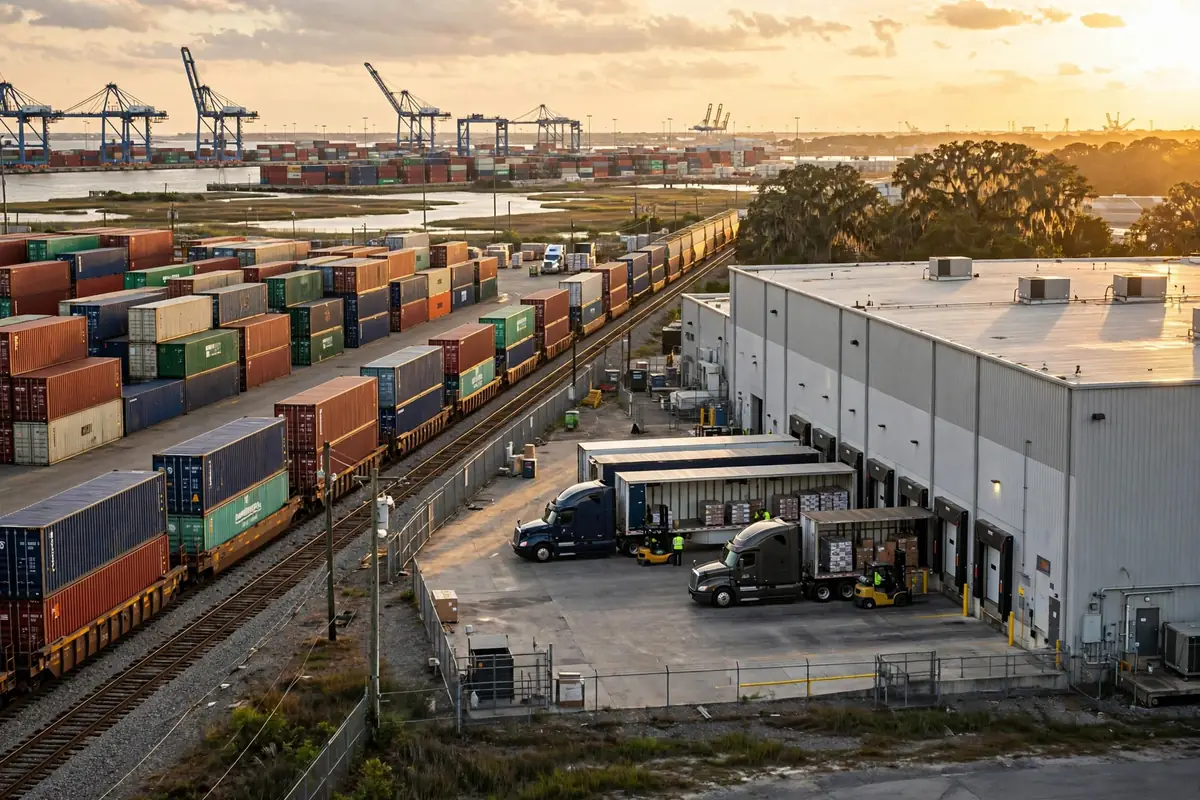
I have been driving trucks for 15 years, and I will tell you this straight: the worst part of a Charleston port run is not the miles. It is arriving at the gate and finding out your box is not where you thought it was. One Tuesday morning in June 2024, I left Columbia before dawn to pick up a container at Wando Welch Terminal in Charleston. The navigation said 40 minutes to go. Then I reached the gate and saw more than a dozen trucks ahead of me. The terminal was doing seawall work, pickup windows were squeezed, and I sat outside the gate for nearly 3 hours. Fuel burned, my appointment window expired, and the warehouse crew waited a whole morning for a truck that never came.
That run taught me how Charleston South Carolina port warehouse logistics really works. You cannot price it by freight alone. You have to price the port, the warehouse, and the rail link together, because if one of the three slips, the other two pay for it. In fiscal 2024 the Port of Charleston handled nearly 2.5 million TEU and 1.4 million pier containers. Wando Welch Terminal moved more than 1.2 million containers across its wharf, a record year. Those numbers do not make Charleston the biggest port in America. What makes it different is the water: a 52-foot harbor channel, the deepest on the US East Coast, after the deepening project finished in 2022. Big ships can come in fully loaded without waiting for the tide. For a shipper, that means the schedule holds, and when the schedule holds, the warehouse can actually plan.
Charleston port warehouse logistics starts with the auto trade
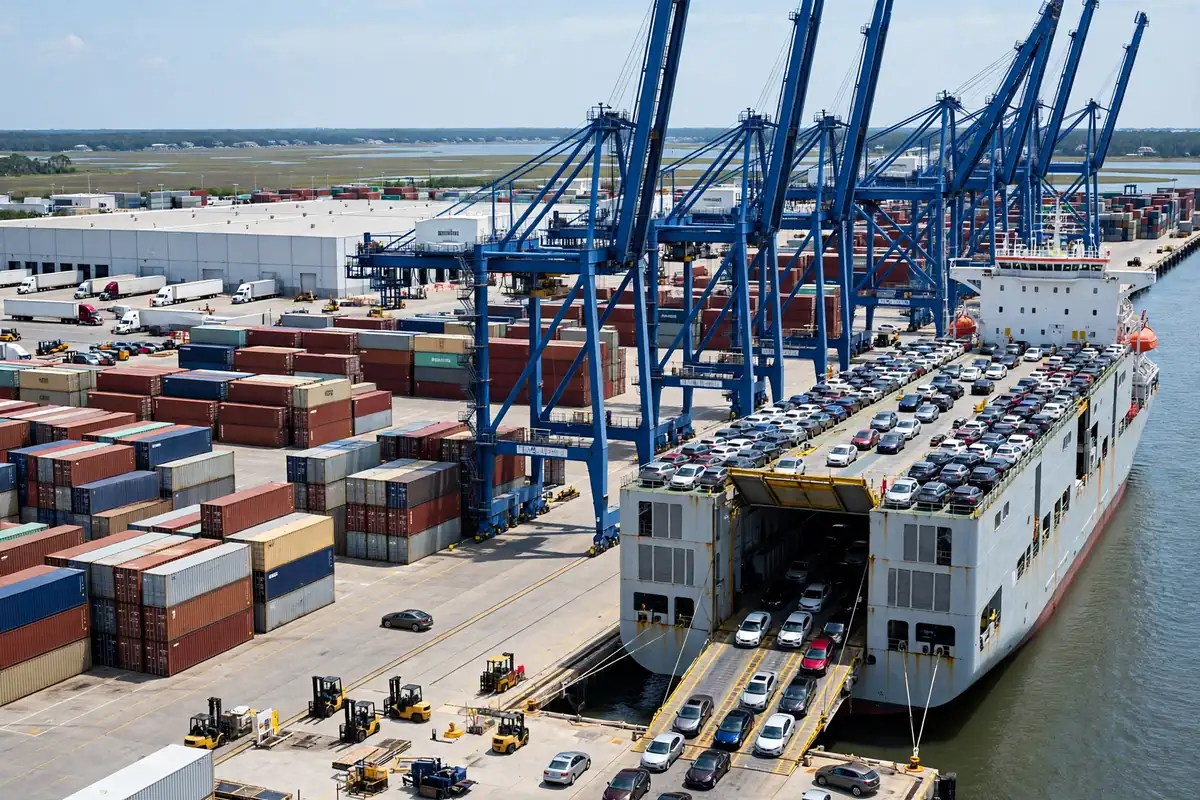
The port handled 210,817 vehicles in fiscal 2024, up 12 percent from the year before. Behind that number sits one factory: BMW Spartanburg, the largest BMW plant in the world, building more than 400,000 vehicles a year. Cars and parts move from Spartanburg to Inland Port Greer, ride the rail to Charleston, and roll onto car carriers for export. Greer handled 187,638 containers in fiscal 2024, up 28 percent year on year. That growth rate turns heads anywhere in the country.
I once hauled auto parts out of Greer, picked up at 7 in the morning and delivered to the Charleston port area by 3 in the afternoon, rail plus a short dray working exactly as drawn on paper. The shipper told me they chose Greer not because it was cheapest, but because it was predictable. The inland port can stage containers near the factory, so when the car carrier arrives, vehicles roll straight aboard instead of sitting in the port yard waiting for a slot. Here is the counterintuitive part: people assume a bigger port is always better. Charleston says otherwise. A port does not have to be the biggest. It has to be specialized. When the auto trade is the anchor, vessel schedules, yard space, and rail can all be planned around it, and the whole chain runs faster than at a general-purpose giant that takes everything.
But the auto trade has a temper. Car carrier sailings run on fixed schedules. Miss one sailing and the next may be days away, which means the warehouse carries those days of inventory. My advice is to stop measuring a warehouse only by its distance from the port. Measure its distance from Greer and from the rail yard. Space near the port costs more. Space near the inland port often saves a drayage leg, and when a sailing tightens up, freight can wait at Greer instead of clogging the port.
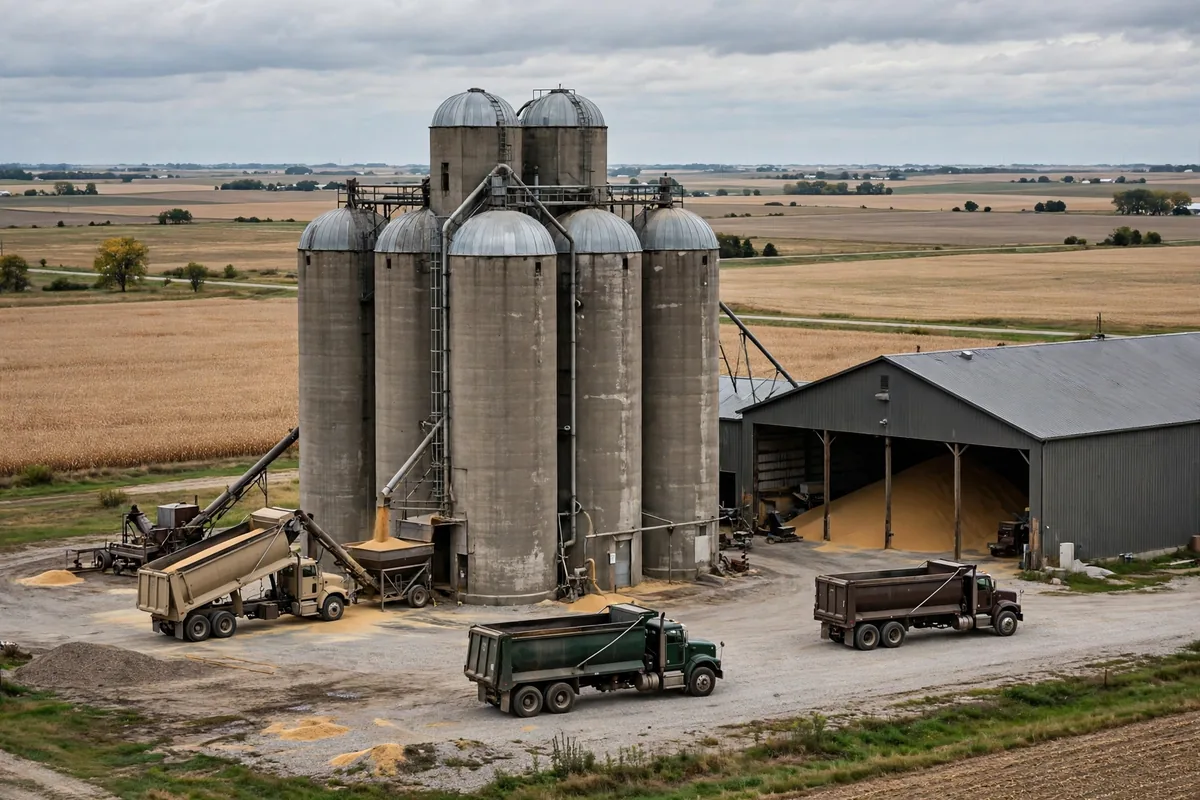
There is another number many shippers miss: Greer and Dillon together moved 230,409 containers in fiscal 2024, up 24 percent year on year. Dillon runs on CSX rail and serves a different corridor, so the two inland ports between them feed factory freight from across South Carolina into Charleston. I talked with a furniture exporter who used to truck everything straight to the port, and every peak season his trucks queued outside a full yard. He switched to staging freight at Dillon and sending it in by rail in full cuts. His biggest change was not the freight bill. It was that his sales team dared to take orders again, because delivery dates could finally be trusted. That is the real value of an inland port: it swaps an uncertain highway leg for a scheduled rail leg.
Here is a detail only a driver would think to mention: confirm the warehouse receiving appointment before you confirm the port pickup, not after. Plenty of warehouses book receiving by the hour, and the fastest port pickup in the world still leaves you waiting outside a warehouse with no slot. After that June 2024 run, I learned to confirm the receiving time a day ahead, line up berthing, pickup, and delivery as one chain, and leave half an hour of slack in the middle. It sounds fussy, but the waiting time it saves in one run is worth more than pressing the accelerator harder. The warehouse likes it too, because they can staff forklifts and people ahead of time instead of guessing.
Charleston Port warehouse, inland port warehouse, or factory warehouse
The same shipment costs a different amount and carries a different risk depending on where you put it. The figures below are a scenario illustration, not a quote. Confirm real rates before signing anything:
| Location | Advantage | Risk | Best for |
|---|---|---|---|
| Warehouse near the Charleston port | Closest to the vessel, fastest pickup | Highest rent, jams when schedules slip | Fast-turning freight on fixed sailings |
| Warehouse near Inland Port Greer | Close to BMW Spartanburg, direct rail | One extra rail handoff | Auto parts and export-heavy freight |
| Warehouse near the factory | Freight enters storage as soon as it is built | Farthest from the port, depends on linehaul | Stable output shipped in bulk |
One more thing shippers should watch: Leatherman Terminal reopened and added 700,000 TEU of capacity, with a long-term plan for 2.4 million TEU at full build-out. The warehouse map around the Charleston port is still changing, and port-area supply will grow over time, so rents may not keep climbing forever. Do not overread that, though. New capacity comes in phases. Wando Welch is still the workhorse in the near term, so keep the same buffer on gate appointments and pickup windows.
I will leave you with one more hard lesson. A shipper once stored export consumer goods in a cheap warehouse more than an hour from the port. The sailing moved up by 12 hours, the carrier had to add trucks at short notice, and the extra drayage nearly doubled. Every dollar saved on rent went into emergency trucking, and the shipment almost missed the vessel. After all these years on the road, my rule is simple: never price warehouse space by the rent line alone. Add drayage, waiting time, missed sailings, and expediting. Those four lines together are usually more expensive than the rent.
So here is my advice, plain as I can make it. First, if your freight is in the auto chain, put your warehouse near Greer and the rail yard, not just near the water. Second, never treat a sailing schedule as carved in stone. The 52-foot channel makes big ships reliable, but terminal works and schedule changes still happen, so leave at least half a day of slack in every pickup window. There is an old saying among drivers: the road always appears when you get to the mountain. In our business, the road is the one you planned in advance, not the one you bump into.
By Shifu Zhao, Trucking Veteran (15 yrs)