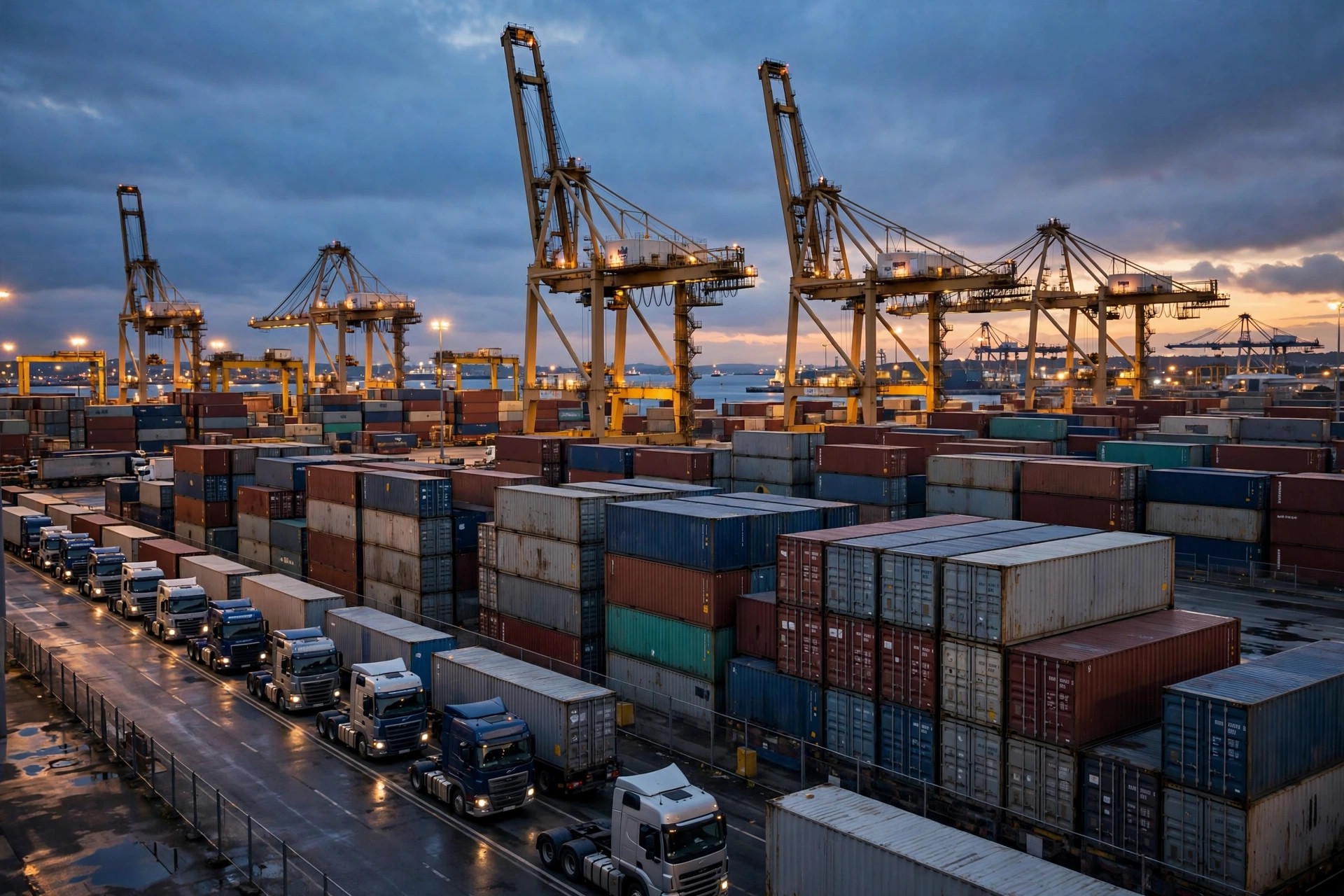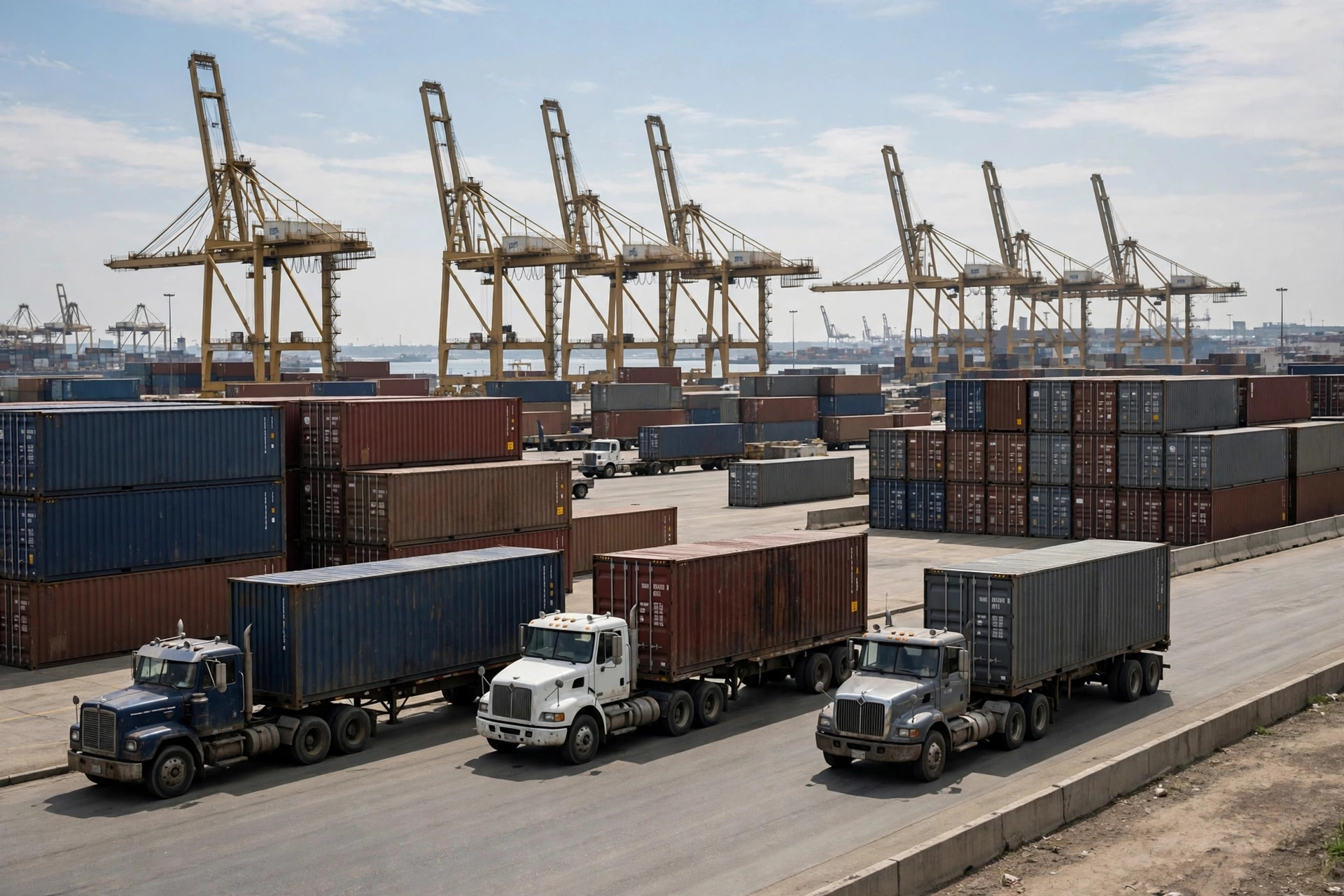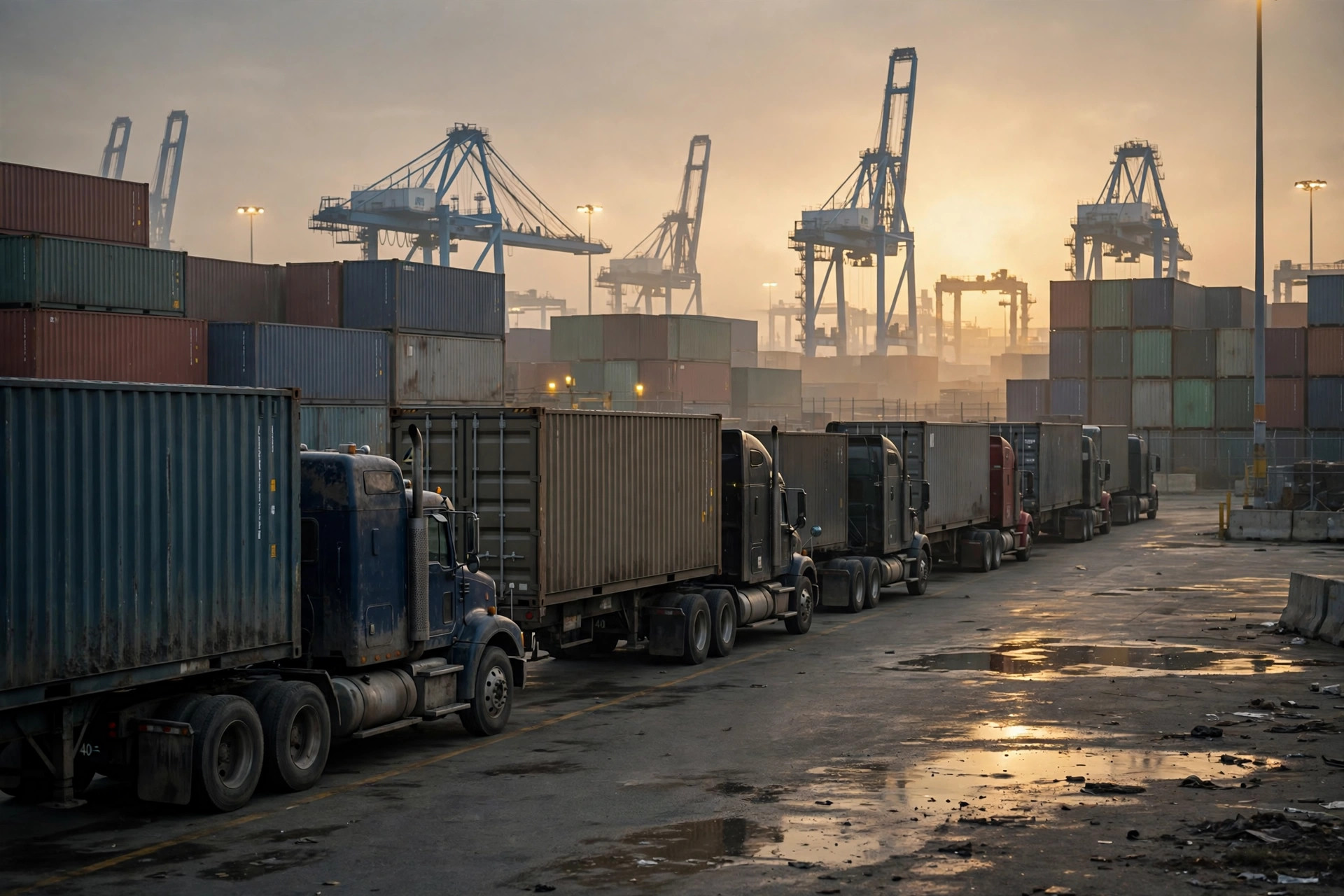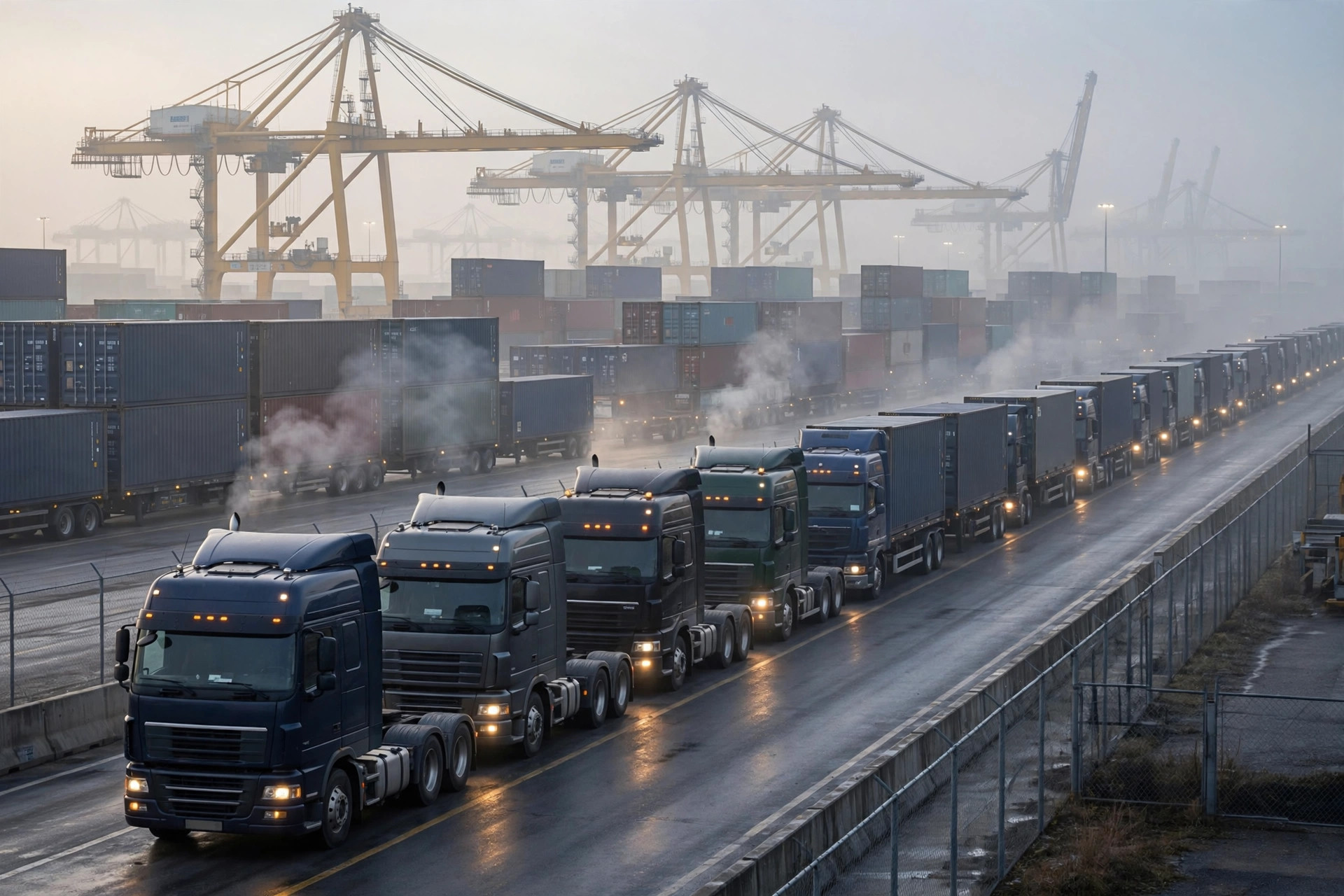
Let me tell you something. After all my years hauling containers in and out of the ports, traffic doesn't scare me, and long lines at the gate don't scare me. What scares me is this: you drive all the way to the terminal, you burn the fuel, you burn the hours, and you come back with nothing on the chassis. We call it a dry run. In plain English: a wasted trip.
Last fall, at the Port of Los Angeles. My dispatcher gave me a job the afternoon before: pick up a loaded 40-footer first thing in the morning, appointment set for 8 a.m. I reached the gate at 7:40, queued for nearly an hour, and the clerk scanned my appointment number and shook his head: canceled late last night. I called the forwarder. The customer had changed the sailing schedule. "We forgot to tell you."
Three words — "forgot to tell you" — and my whole morning went down the drain. An hour and change each way, fuel burned, hours gone, and the other load I could have taken went to somebody else. A loss like that, you eat it once and remember it forever.
Here's what that morning taught me, and what every year since has confirmed: a dry run is the most unfair cost in drayage. Traffic and queues at least move you forward. A dry run is pure negative — fuel gone, driver hours gone, chassis rental still ticking (the chassis company doesn't care whether you got your box), plus the paying load you had to turn down. And when you ask the forwarder for an explanation, all you get is "we'll watch out next time." Nobody reimburses a dry run. Ever.
Over the years I've boiled dry runs down to three scenarios. I've bled in every one of them.
Scenario one: the appointment no-show. The most common. The shipper or forwarder changes the plan, the appointment gets pulled, the word never reaches the driver, and the driver rolls anyway. That's what happened to me that morning. It's the most unfair kind, because it's a pure information failure — every drop of diesel burned on that road paid for somebody else's forgetfulness.
Scenario two: the box is on customs hold. A buddy of mine, Lao Chen, runs out of Ontario. One time he went to pull a box coming from Vietnam and the gate told him: CBP hold, customs grabbed it for exam. An exam can take a day or two, or stretch to a week or two. What can the driver do? Bobtail home and come back another day. The part that really stings: when customs released the box, the message went from the port to the forwarder to the driver, and a full day got lost in between. Chen went back a second time, the box still hadn't cleared the exam list, and he drove home empty again. Let me tell you — rolling out to pick a customs-held box without checking the hold status first is no different from driving with your eyes closed.
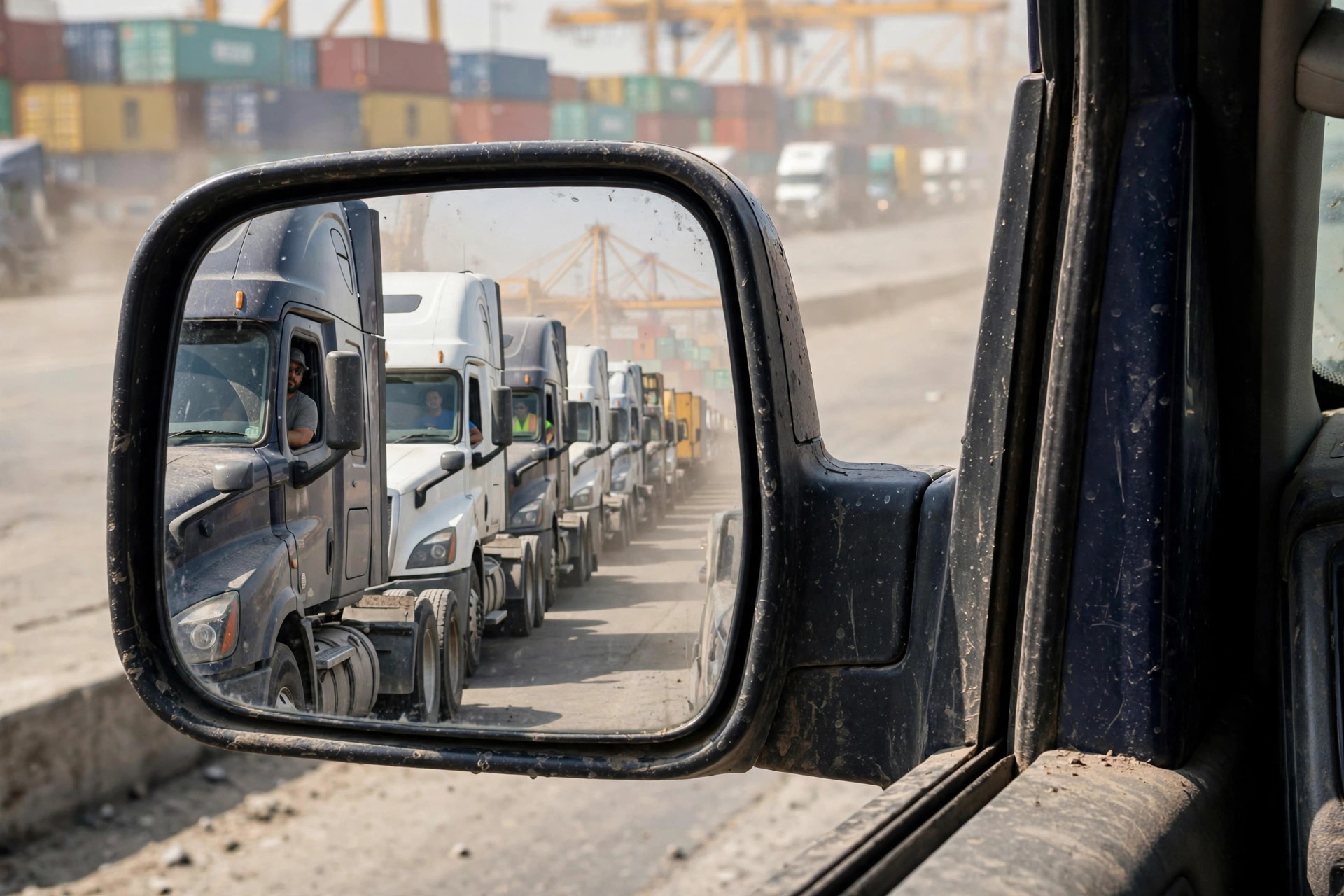
Scenario three: the terminal system goes down. A couple of years back, the appointment system at one of the terminals crashed hard, the gates went manual, and the line stretched for miles. Drivers sat three, four hours, got to the window, and were told: nothing moving today, come back tomorrow. A young guy pulled in right behind me that day — he was covering somebody's shift, his own fuel, his own time, and he left with nothing. A system outage is nobody's fault, but whether you hear about it before you roll — that's something you can control.
Stories are cheap, so let's do the math. A lot of people hear "dry run" and think "so what, a tank of diesel." Let me tell you, that's not how the math works. One dry run costs you at least four ways:
| Cost | How it burns | Rough scale | | Driver hours | Two to three hours round trip, a whole morning gone | Half a day of one driver's output | | Fuel | Heavy going out, empty coming back, diesel pouring through | Tens of dollars | | Chassis rental | You rented the chassis for the day, got no box, the rental is still due | A day's rental down the drain | | Opportunity cost | The paying load you had to refuse | A few hundred dollars of lost revenue |
One dry run eats a few hundred dollars, before the invisible part: a driver who bobtails home empty loses his fire, and the whole afternoon suffers. Four or five dry runs in a month is a few thousand dollars — for a small fleet, roughly a month's profit, worked for nothing.
Now here's the part most people get backwards: the dry run itself isn't the most expensive thing. The most expensive thing is a dry run you bought by trying to save pennies. Plenty of shippers and forwarders won't spend ten minutes on three confirmation calls before a pickup. "The appointment's already set, what could go wrong?" Then the driver runs empty and a few hundred dollars evaporate. Ten minutes of phone calls versus a few hundred dollars of diesel and daylight — that math isn't close. There's an old saying back home: sharpening the axe doesn't delay the woodcutting. In a pickup, information is the axe.
And here's a trade-off drivers learn the hard way: to "avoid coming back empty," some guys park near the terminal and sit, thinking "I'm already here, maybe a backhaul shows up." Let me tell you — sitting half a day by the port usually buys you expensive parking and a dead afternoon. Coming home empty hurts, but squatting at the terminal hurts more, unless you lined up the return load before you left. Waiting without a backhaul isn't saving money. It's a dry run that doesn't even move.
So what do you actually do about it? Three moves, all earned the hard way.
First: the pre-pickup checklist. Fifteen minutes before you roll, check every line, no skipping. Is the appointment still live — not changed, not canceled? Get the forwarder to send you a screenshot. Is the box on a CBP hold, or a terminal hold for unpaid fees or missing paperwork? Which yard is the box in, and is it releasing today? Does the chassis pool have the size you need? And what's the last free day — don't dodge a dry run by sitting on the pickup so long you eat storage charges instead. Five lines. Make the forwarder confirm each one before the wheels turn. Make it a habit and dry runs drop hard — that's from my gut, not a spreadsheet, but the direction is right.
Second: the dual transaction. One gate visit, two jobs done — drop your empty, pull your loaded box. Even if the loaded box falls through, you at least got the empty off your chassis, so the trip wasn't a total loss. But a dual transaction has conditions: the empty and the loaded box have to be at the same terminal, and the time windows have to line up. Forcing a dual that doesn't fit, and blowing both time windows, is its own kind of expensive. My rule: take the dual when it fits, don't force it when it doesn't.
Third: lock in the information flow with your forwarder. Nine dry runs out of ten are broken telephone. Set the rule with the forwarders you run with regularly: sailing change, appointment canceled — phone call plus text, immediately. Customs hold released — the news goes out the moment it lands. And it goes both ways: when the gate turns you away, the driver sends back exactly what the gate said, word for word, no guessing. Let me tell you, at the end of the day drayage is an information business. Whoever's information is fastest doesn't run empty.
One word for the shippers reading this: don't save those ten minutes of confirmation. Your rate sheet has no line item for "dry run," but the driver's empty miles always end up in your quote sooner or later — fleet owners aren't stupid, and lanes with frequent dry runs price higher. If you really want to cut costs, do one thing: make your forwarder send you that five-line checklist before every pickup. It's worth more than haggling twenty bucks off the rate.
All these years on the road taught me one thing: on the stretch of road outside the terminal gate, the most expensive thing isn't diesel. It's information. When the information arrives, the road is just a road. When it doesn't, the road is a ditch.
By Shifu Zhao, Trucking Veteran