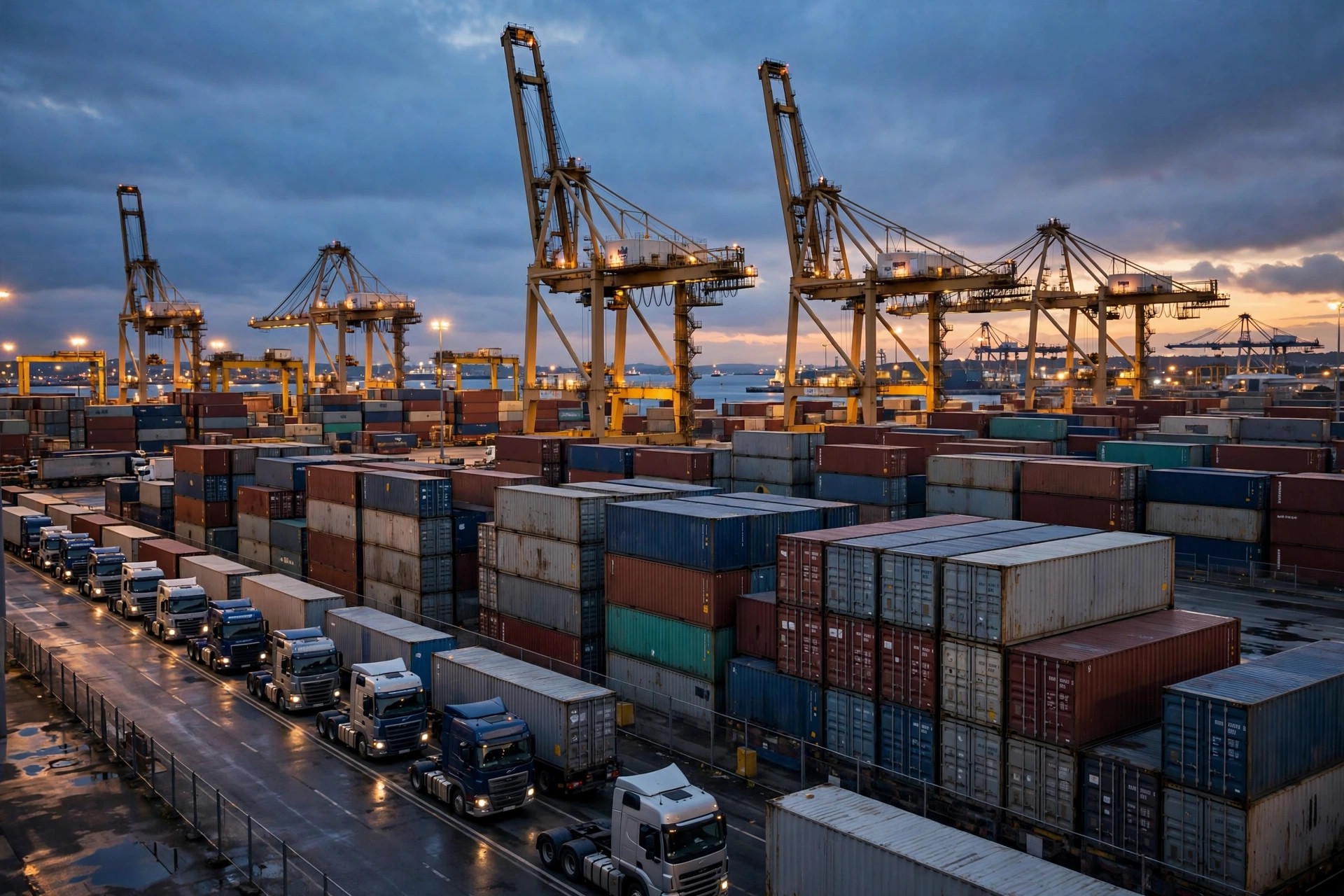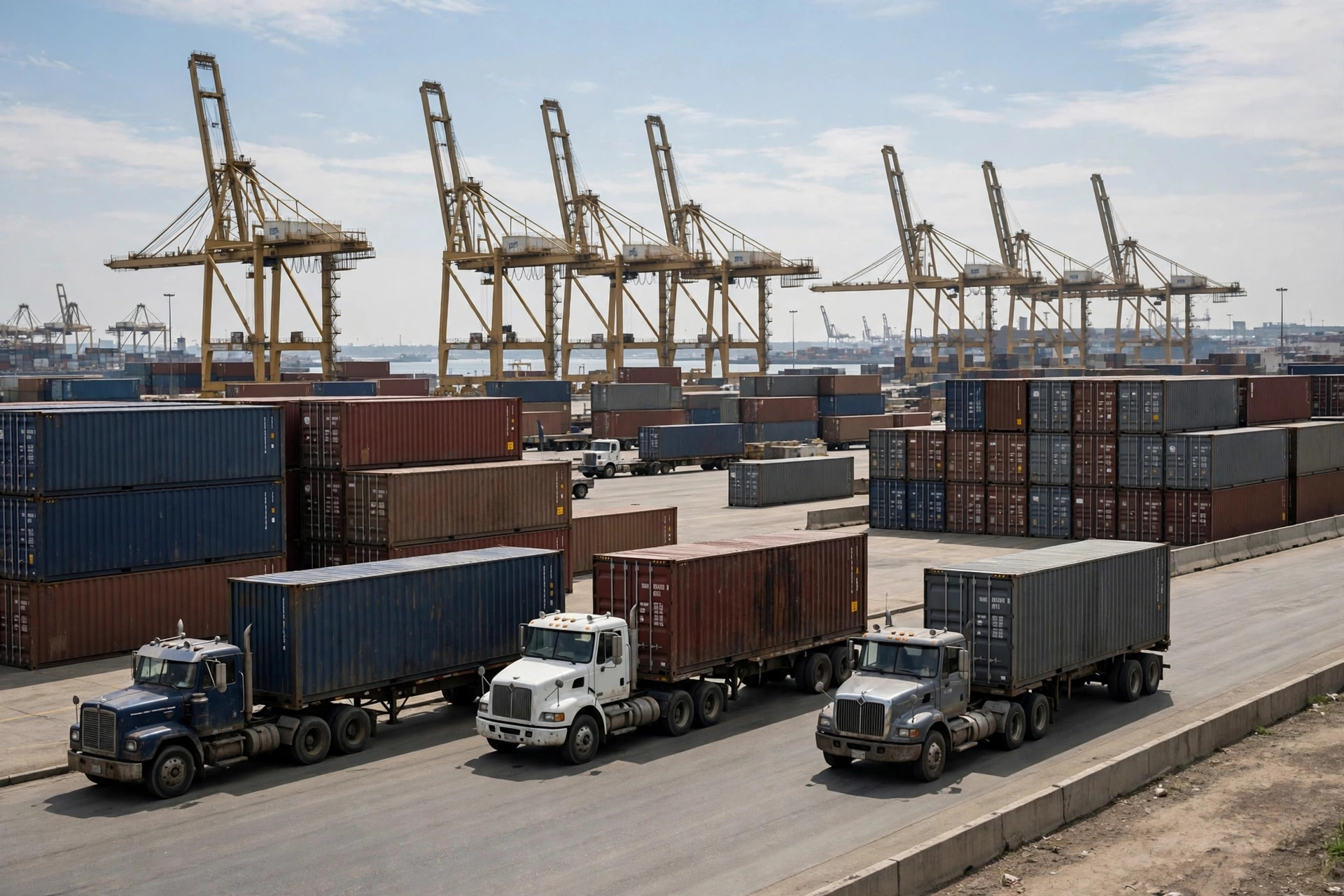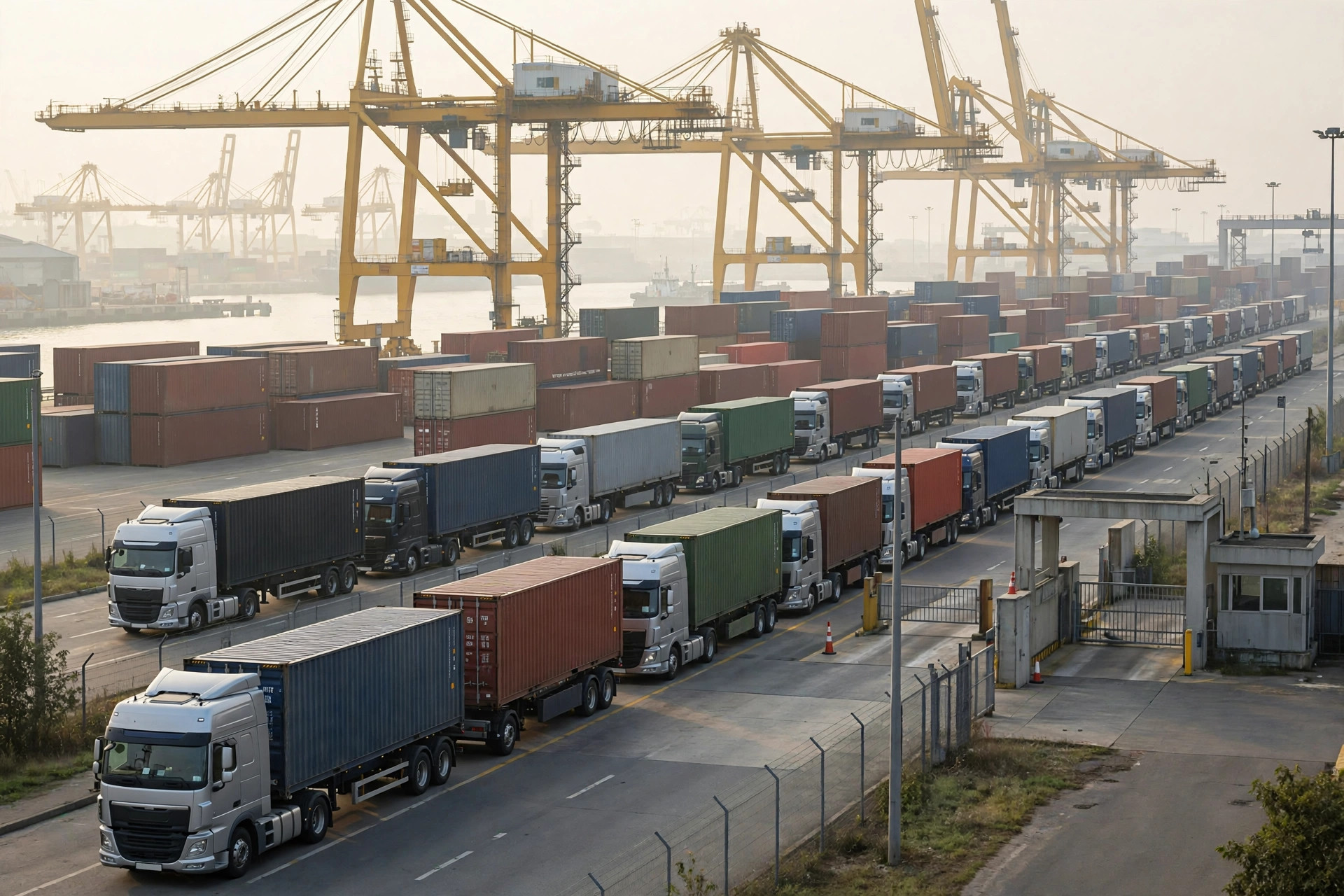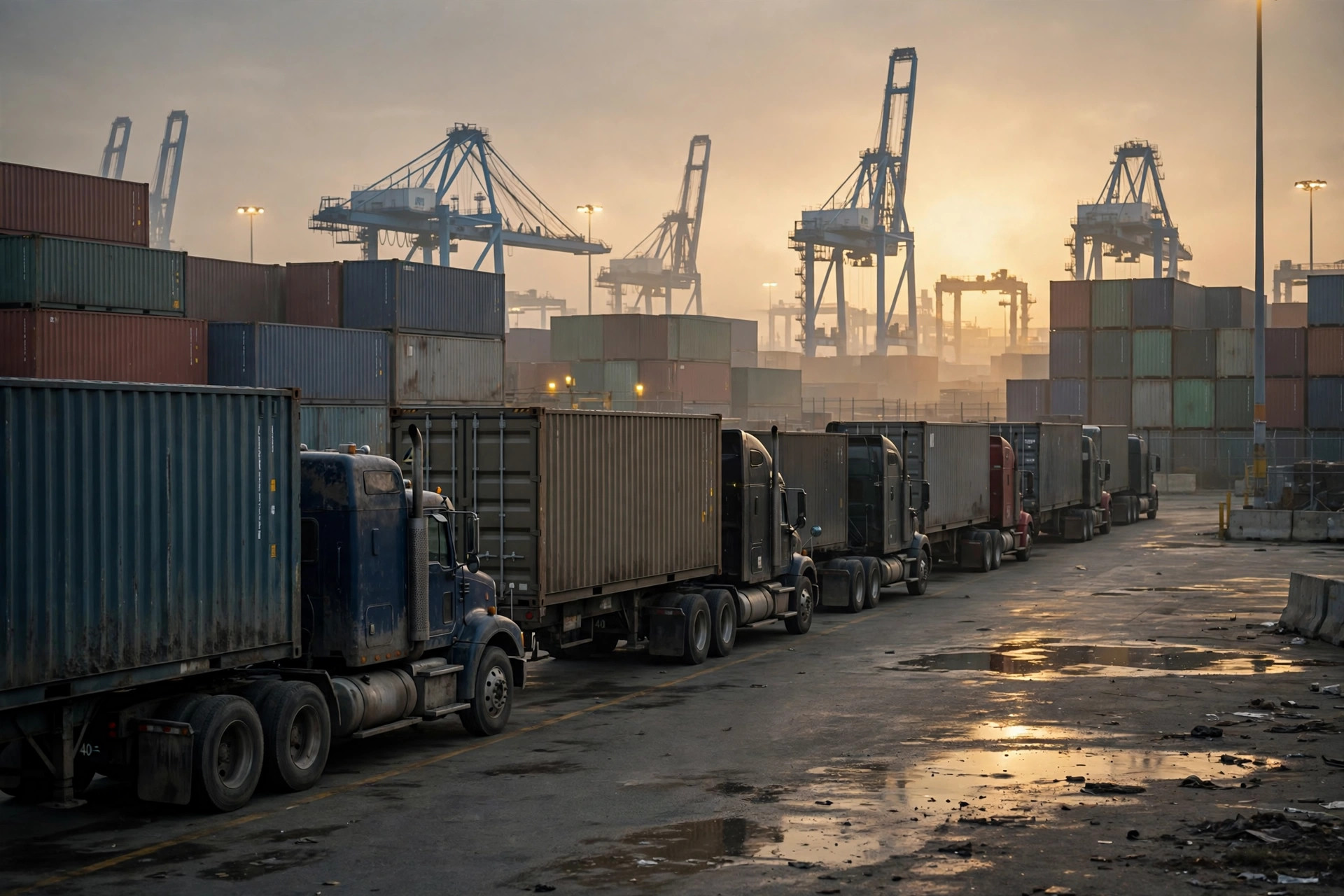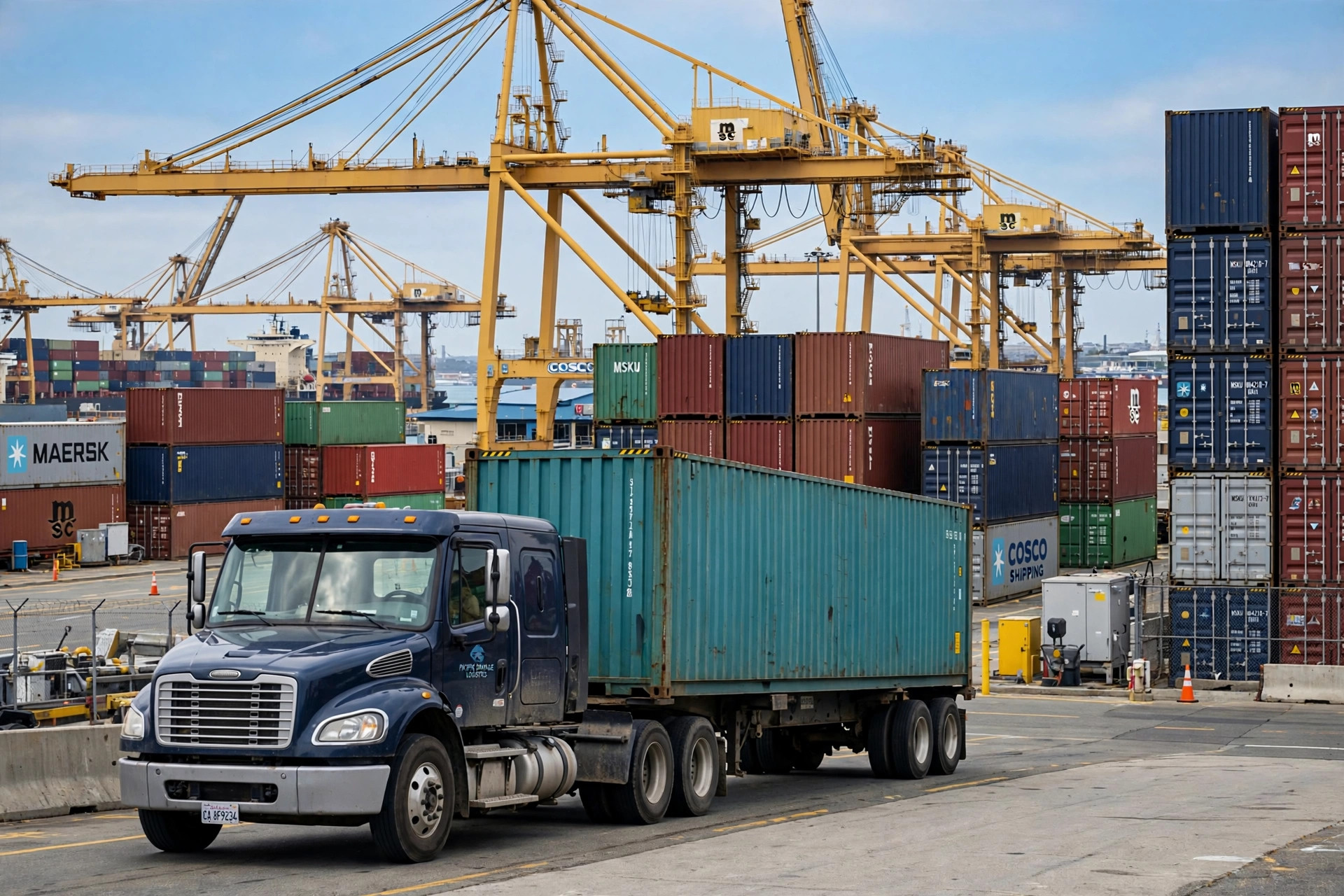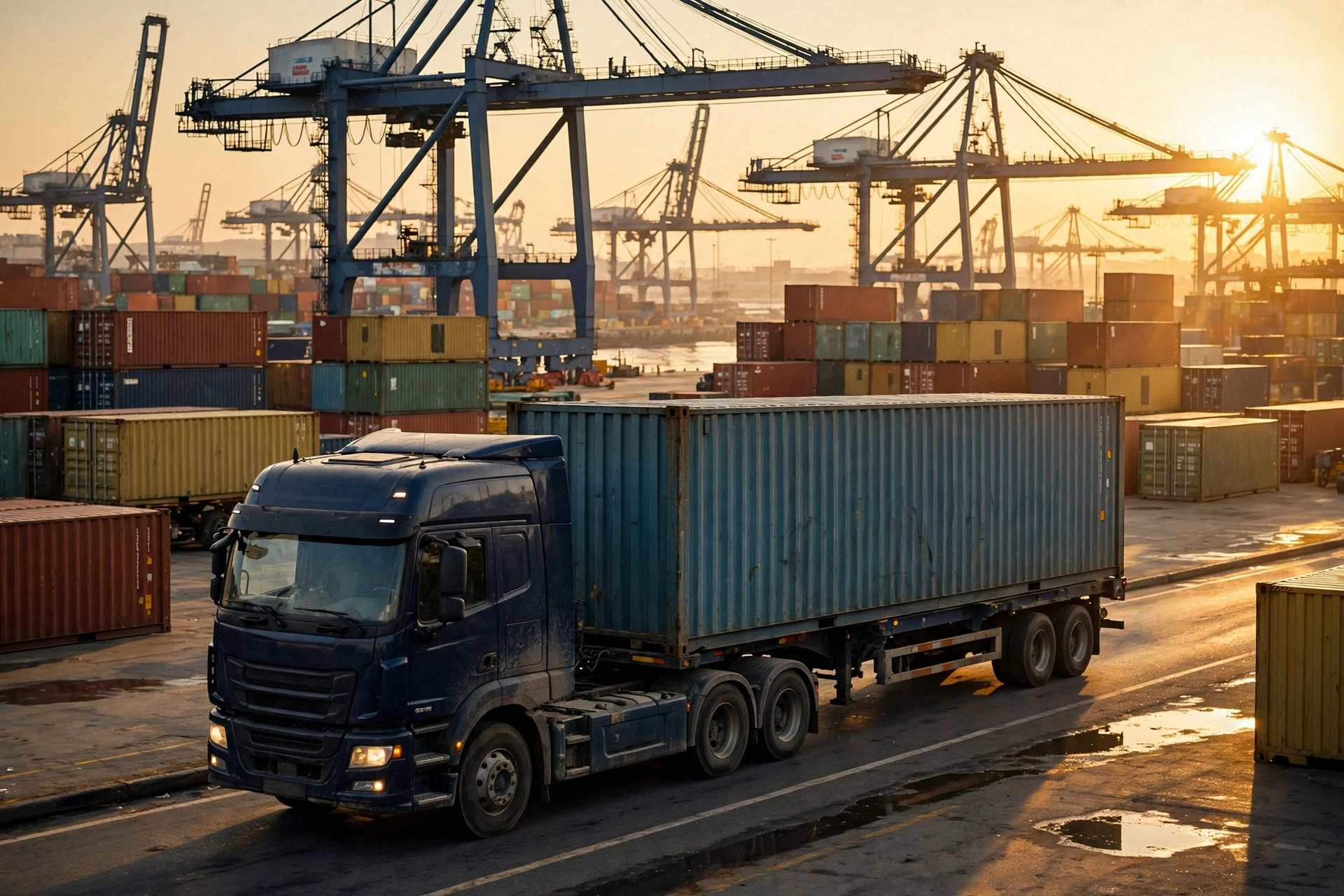
A dual transaction lets one truck handle a loaded pickup and an empty return in a single terminal visit. It is the most practical efficiency play in drayage. This piece walks through the math, the conditions terminals require, how to schedule around appointments and cutoffs, and the three situations where dual moves fall apart.
Let me start with the math, because that is what this whole game is about. At the Los Angeles-Long Beach port complex, a single truck visit to a terminal runs over an hour on a good day, and two to three hours when the queues build — and that is gate-to-gate time only, not counting the drive. Say you have two jobs on the board: one loaded container to pull out of the terminal, one empty to return.
Run them as two single moves and you burn roughly 170 minutes inside the gates, plus two round trips on the road. Run them as one dual transaction and you drive in with the empty, drop it, and drive out with the loaded box. In-terminal time lands around 100 minutes, and you only drive the lane once.
What you save is real: about 70 minutes of gate time, plus one full 30 to 40 mile round trip of fuel and mileage. For a local drayage fleet, a driver has maybe 10 productive hours in a day. Seventy minutes saved is roughly the time it takes to handle one more box. Across a 20-truck fleet, that is 20 boxes of daily capacity you did not have to buy trucks or hire drivers for.
When terminals actually allow a dual transaction
A dual move is not something you can just decide to do. Four conditions have to line up at once.
First, the loaded pickup and the empty return have to happen at the same terminal. Where an empty goes back is decided by the ocean carrier, not by you. Empties from different carriers routinely go to different yards. The Port of Los Angeles runs a tool called the Return Signal on its Port Optimizer platform that tells truckers exactly which terminal should receive a given empty. Experienced dispatchers check it first thing every morning before they start pairing up the day's loads.
Second, the carrier has to accept the empty return there. Since the carrier alliances reshuffled the port calls, picking up a box and returning an empty at the same terminal has become the exception rather than the rule, and it is the single biggest obstacle to dual moves. The port itself is on your side here. On February 1, 2021, the Port of Los Angeles launched its Truck Turn-Time and Dual-Transaction Incentive Programs: terminals that push dual transactions past 50 percent of gate moves earn between 40 cents and $1.40 per loaded TEU, with the port budgeting about $7.5 million for the first year. Terminals that get average turn times under 35 minutes can earn a top rate of $3 per TEU. The money is real, but whether you see any of it depends on the terminal and the carriers cooperating.
Third, the chassis has to match. Hauling out a 40-foot loaded box and bringing back a 40-foot empty means the chassis size has to work for both legs. Mixing your own chassis with pool chassis under different interchange rules is a reliable way to get held up at the gate.
Fourth, the appointment windows have to line up. Terminal appointments generally open 3 to 5 days before a container becomes available, and the 7 to 10 AM slots are the hardest to get. The pickup and the return should fall inside the same half-day window, or the driver gets in but cannot get out, and the whole exercise is wasted.
How dispatch should schedule it: appointments and free time
Dual-transaction dispatching follows different logic than normal dispatching. Normal dispatch assigns trucks by warehouse proximity. Dual dispatch pairs jobs by same terminal plus same ocean carrier. If you have ten loaded pickups and eight empty returns on the board, group them by terminal first, then by carrier. Only the pairs that match run as duals. The rest go single. Never force a pairing to pad your dual rate. Forcing it costs you, and I will explain how below.
The first thing to watch is the appointment. Get both moves into the same window. If the pickup lands in the morning and the empty return only has an afternoon slot, the driver sits outside the port for hours, and every minute you saved inside the gate gets handed back to waiting time. Split jobs like that into two singles without hesitation.
The second thing to watch is the loaded container's free time. It is typically 3 to 5 days, and demurrage starts around $75 a day after that, climbing past $150 a day after six days. Delaying a pickup to wait for a matching empty is penny-wise and pound-foolish: one day of demurrage wipes out a week of fuel savings. When you build the schedule, the boxes closest to the end of free time go first, and dual pairing does not get a vote.
One more note: daytime terminal moves carry the PierPass traffic mitigation fee, which is reviewed every August, so confirm the current schedule before you plan around it. Some terminals do not accept empty returns at the night gates, so if you are counting on an off-peak dual move, confirm with the terminal first instead of assuming.
Three ways dual transactions fall apart
The first is the carrier refusing the return. The empty is designated for a different yard or terminal than the one holding your loaded box. Since the alliances, this is the most common way a dual move dies. The fix is simple: ask where the empty goes back when you take the order, not after the truck is rolling.
The second is a chassis mismatch. A 20-foot chassis cannot do a 40-foot job. The fix: dispatch should keep a chassis inventory sheet and check it before assigning a dual move, not discover the problem at the gate.
The third is misaligned appointments. The pickup and the return land in different windows and the driver waits outside the port. My rule of thumb: if the two appointments do not fall within about four hours of each other, split the move. A dual transaction is arithmetic, not faith. Forcing a bad pairing loses money.
What dispatch can do tomorrow morning
First, open the Return Signal or whatever empty-return notice your carriers use, and group today's empty returns by terminal. Second, pair your loaded pickups by the same terminal and the same ocean carrier. The pairs that match run dual, the rest run single. Third, when you book appointments, aim both moves at the same half-day window, and split without regret when they do not land together.
One last question: what was your fleet's dual transaction rate last month? If you cannot answer that, what dispatch is missing is not a scheduling trick, it is a spreadsheet. Measure the dual rate first, then optimize it. In twenty years on the ground, I have not seen a cheaper or faster way to squeeze more capacity out of a drayage fleet.
tags: ['drayage', 'dual-transaction', 'port-operations', 'dispatch']