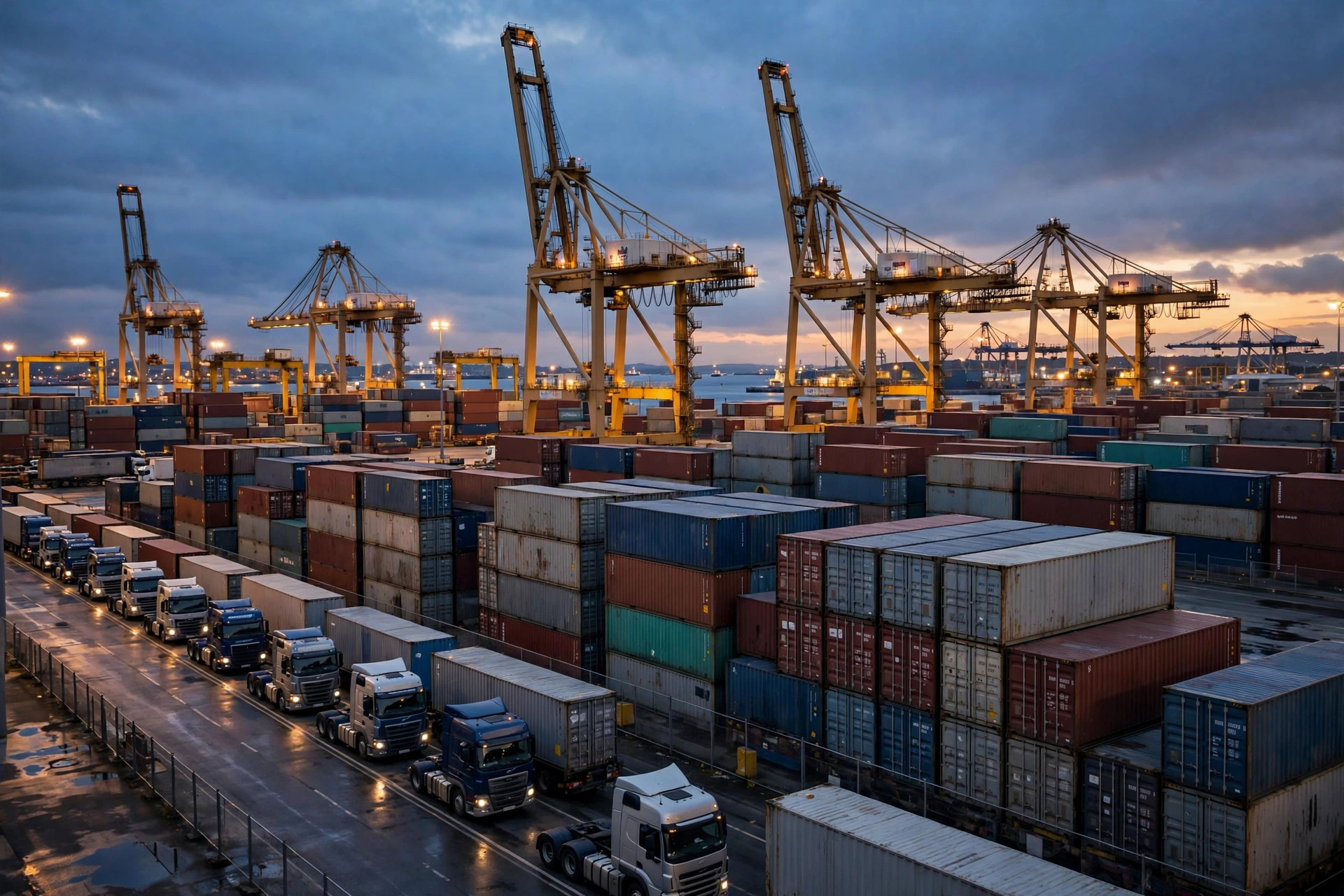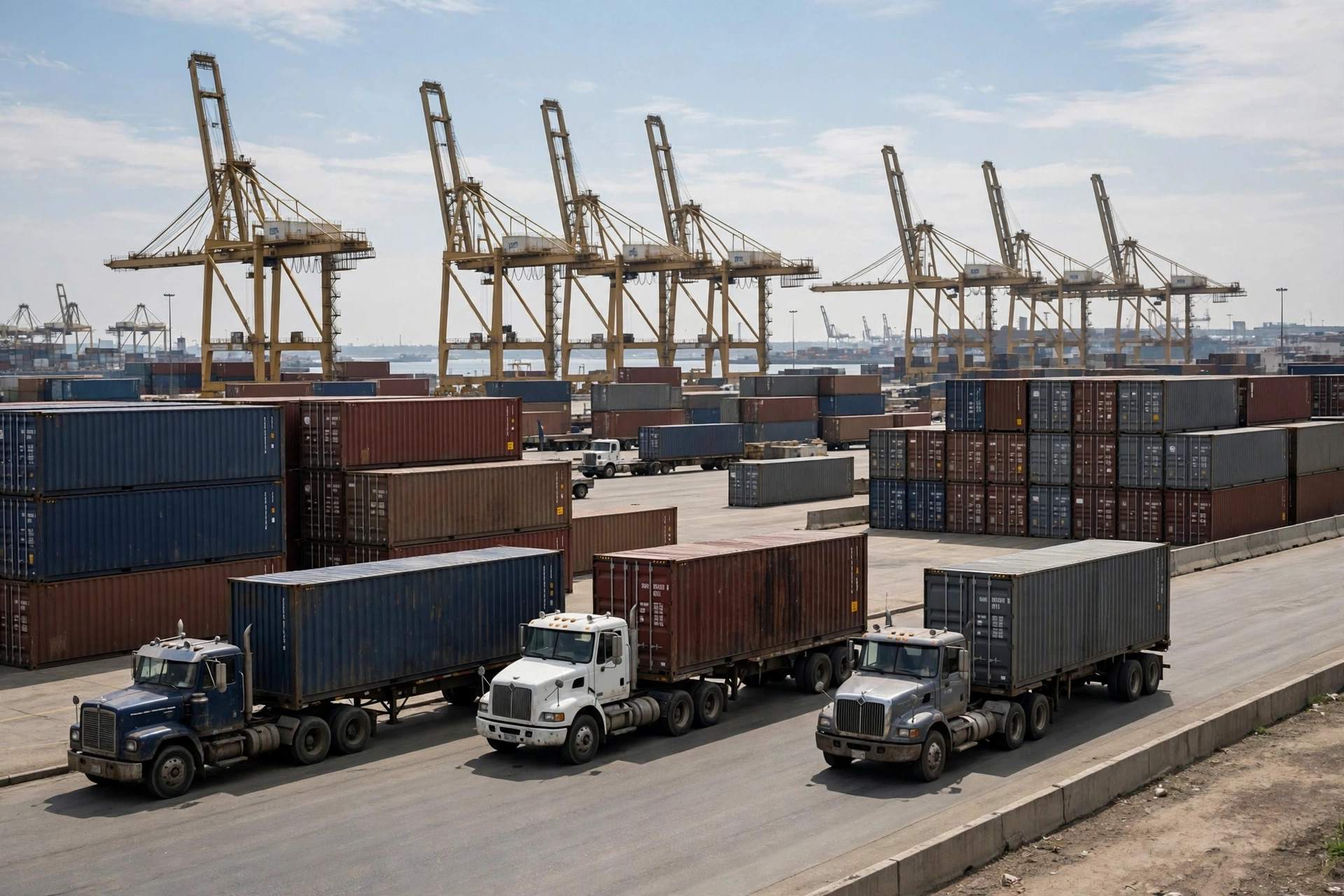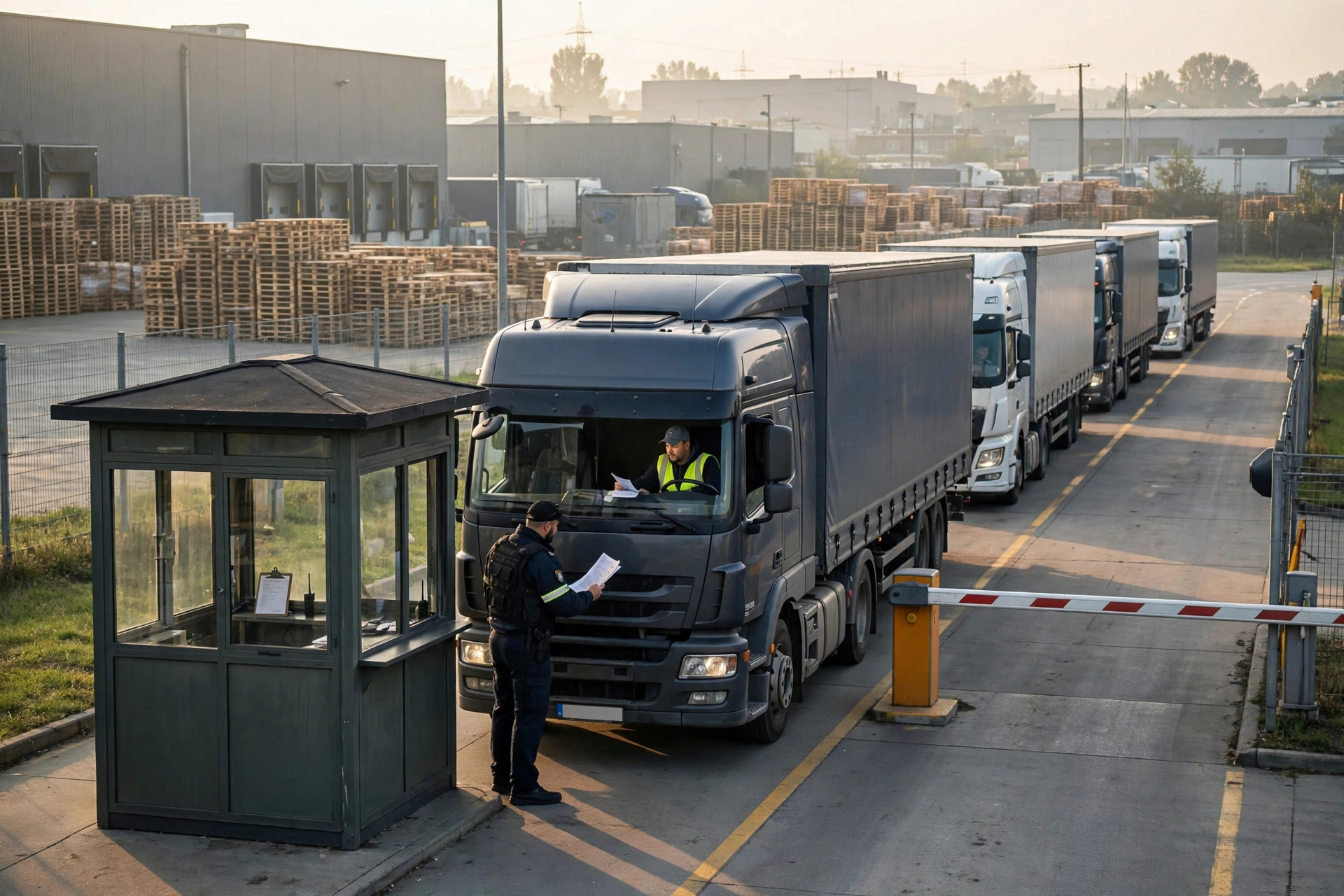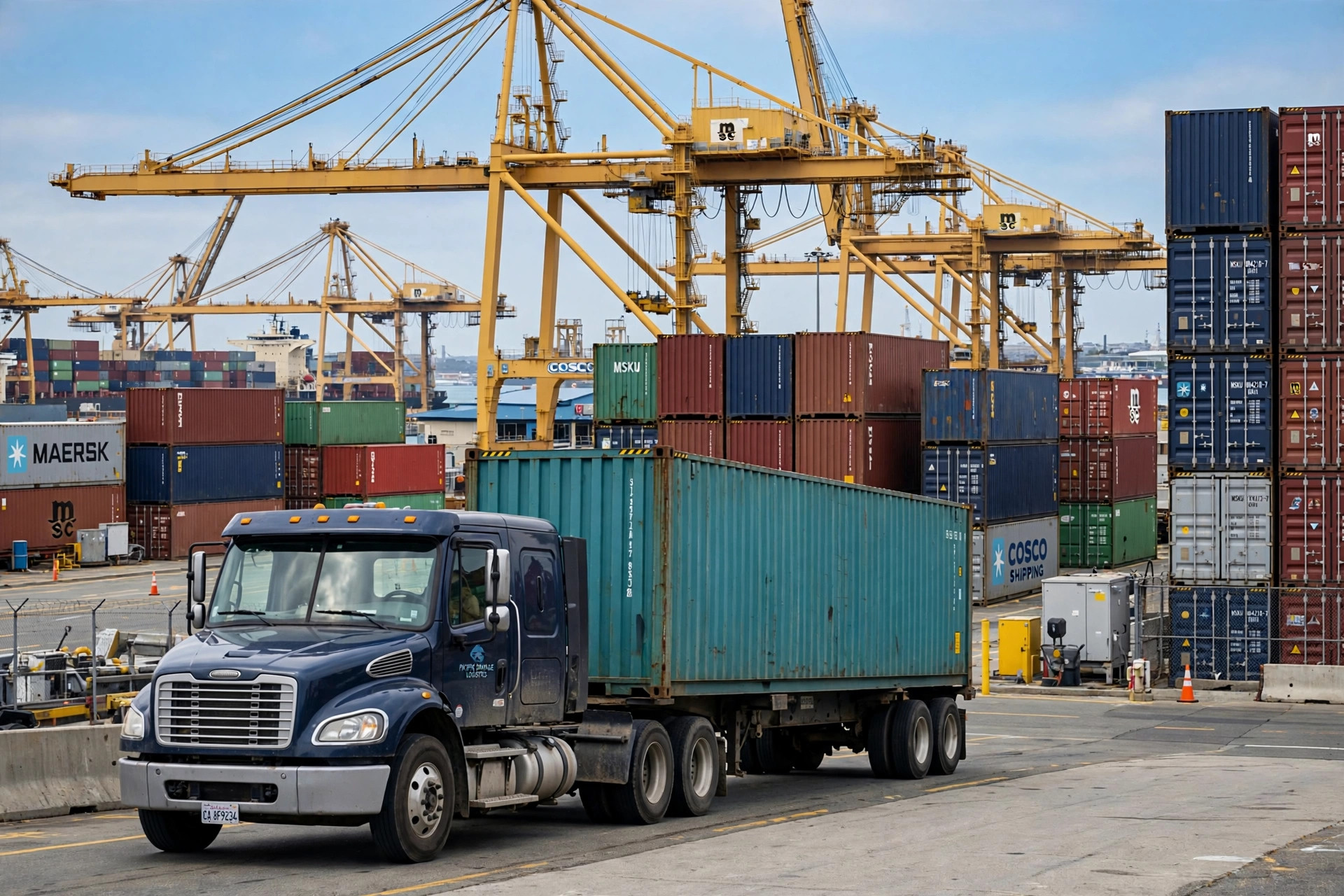
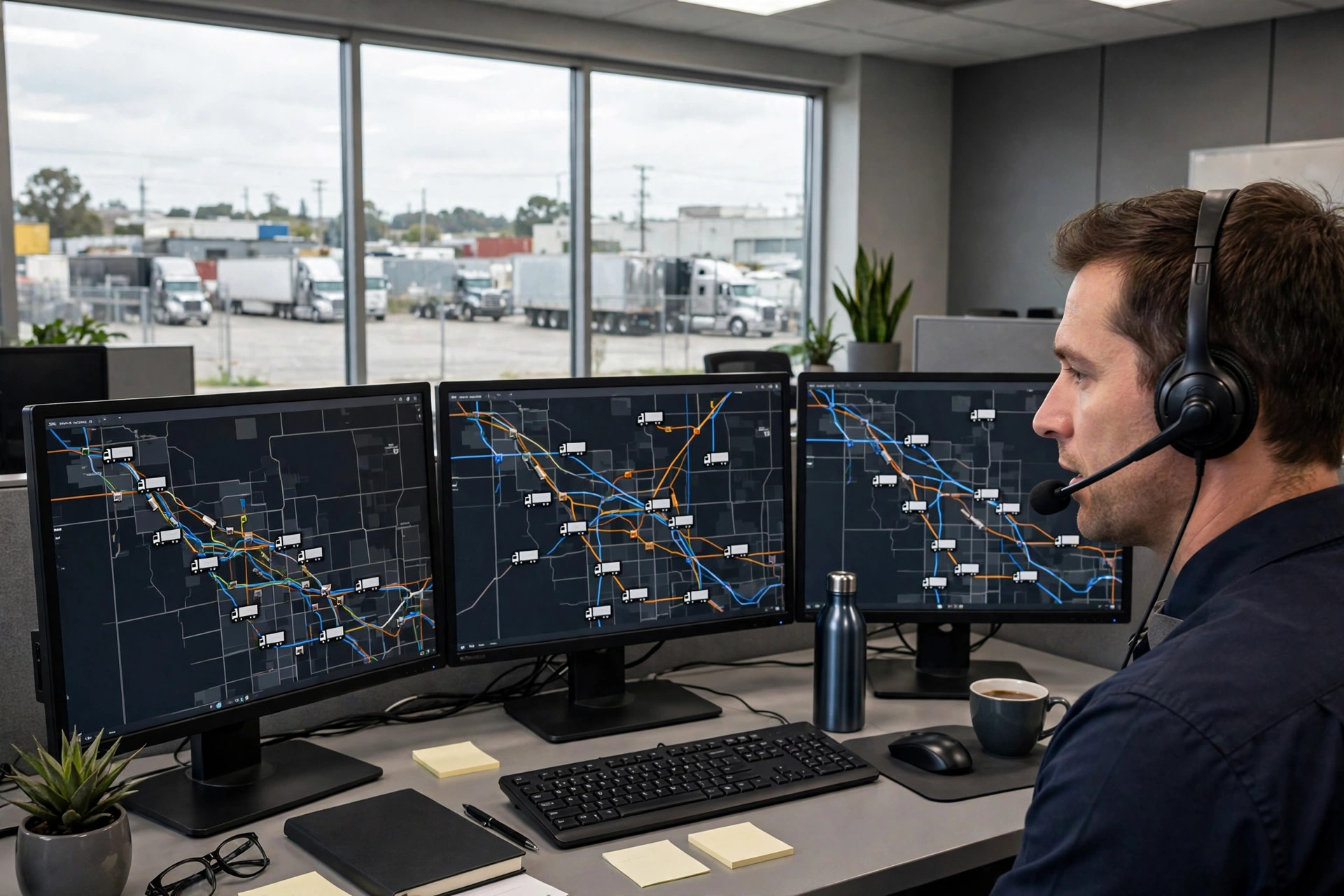
Let me tell you something about drayage: the dispatcher's brain is the single point of failure for the whole fleet. Fifteen years behind the wheel and around it, I've watched carriers burn thousands of dollars a month in diesel — not because drivers are lazy, but because dispatch is chaos. Lately, more and more drayage outfits around LA/Long Beach have moved onto drayage dispatch software: purpose-built systems for container pickups, empty returns, and empty repositioning, replacing the whiteboard and the group chat. Here's how it actually works on the ground, told through one fleet's real transformation — with the numbers.
The Dispatcher, the Whiteboard, and a 100-Mile Mistake
Fall 2024. I'm sitting outside the Port of Long Beach waiting on a release, and I run into Chen. He runs 12 trucks out of Carson, pure port drayage, mostly Chinese drivers. His dispatcher, Bin, had been running all 12 trucks off one whiteboard and one WeChat group for three years.
Chen vented to me that day: the month before, one of his trucks picked up a loaded container at the port, delivered it to a warehouse in Ontario, and was supposed to return the empty to a depot in Fontana. Bin sent the wrong depot address in the group chat. The driver drove 50 miles to the wrong yard, got told "we don't take that box here," and drove 50 miles back. Nearly 100 empty miles, a wasted afternoon of driver hours — and the second pickup appointment at the port expired, pushing it to the next day.
I asked how often that happened. He held up his fingers: five, six times a month. Wrong depot, wrong container number, wrong return location — a rotating cast of errors. "Bin's not careless," Chen said. "It's 12 trucks and thirty, forty containers a day, all in his head and his chat history. Nobody can keep that straight."
Early 2025, Chen bit the bullet and bought a drayage dispatch system. A year later he told me the biggest change wasn't "we run more loads." It was "we make fewer mistakes."
What Drayage Dispatch Software Actually Manages: Four Jobs
Forget the tech pitch. The software handles the same four things drayage dispatchers wrestle with every single day:
1. Pickup appointments. You need a time window at the terminal, and the container has to be released — no customs hold, no steamship line hold. The system puts release status, appointment windows, and driver positions on one screen. Bin used to call around one by one; now the system flags a container the moment it's released.
2. Empty returns. Which depot takes the empty is the steamship line's call, and it changes constantly — Long Beach today, a different yard in LA tomorrow. The software matches each container to its line and its assigned depot automatically. The driver sees the address and navigation on his phone. No more 100-mile detours.
3. Empty repositioning. This is where the real money burns. Most deadhead miles in drayage are empties moving stupidly: Warehouse A finishes unloading an empty while Warehouse B needs one, nobody knows, so one truck hauls an empty to the depot and another hauls one out. The system shows every empty in the fleet in real time, so dispatch repositions the closest one. Chen says this paid for the software fastest.
4. Dual transactions. One trip to the port: pick up a loaded container and drop off an empty on the same visit — no empty leg either way. It used to happen only when a dispatcher had a flash of inspiration. Now the software auto-matches: a truck heading in for a pickup gets checked for a nearby empty that needs returning. Over half of Chen's port trips are dual transactions now. It used to be under 30%.
The Second Story: What Dual Transactions Did to the Fuel Bill
Stories are nice; math is better. Chen showed me his own books — his fleet's numbers, not a vendor's brochure:
| Metric | Before software (fall 2024) | After software (fall 2025) |
|---|---|---|
| Deadhead rate (empty miles share) | about 35% | about 18% |
| Trucks per dispatcher | 12, at the absolute limit | 12, with room to add |
| Wrong depot / wrong box | 5–6 per month | Essentially zero |
| Driver settlement reconciliation | 2 days at month-end | Half a day |
| Dual-transaction share of port trips | Under 30% | Over 50% |
Rough math: 12 trucks, about 8,000 miles each per month, about 6.5 mpg, diesel around $4 a gallon — that's nearly $5,000 a month in fuel per truck. Cutting deadhead by 17 points saves roughly $800+ per truck per month, over $110,000 a year across the fleet. The software subscription costs a little over $20,000 a year. Even a kid can do that math.
But Chen says fuel savings aren't even the biggest win. The biggest win is traceability. Driver-dispatcher arguments used to be unsolvable — "you told me Depot A" / "I sent Depot B in the chat." Now every instruction and every change lives in the system log. Nobody can weasel out of it. Crude, but true: half of fleet management is managing people.
Per-Trip Driver Pay, Reconciled by the System
Most drayage drivers are paid per trip, and month-end settlement used to be the fleet's recurring nightmare — what counts as a trip, does deadhead pay, does a four-hour terminal wait get detention? Bin used to scroll through chat history line by line while a driver insisted "I waited four hours at the gate" and Bin swore it was two.
With the system, every trip's pickup time, return time, and GPS track are logged, and excessive waits get flagged automatically — one of the quieter reasons drayage dispatch software pays off in driver retention, not just fuel. Chen's driver settlements are now system-generated: trips, miles, wait time, detention line items, all itemized. A driver disputes something, you open that trip's track, done in five minutes. Chen says driver turnover dropped after settlements became transparent — drivers don't mind hard work; they mind fuzzy math on their pay.
The Counterintuitive Part: Good Drayage Dispatch Software Leaves Trucks Idle on Purpose
Here's the part most people get backwards. Folks assume dispatch software exists to pack every truck's schedule wall-to-wall, zero idle minutes. Wrong. Chen learned this the hard way in his first two months: the system scheduled all 12 trucks back-to-back, then one container got held for exam, and the cascade wrecked five subsequent trips. The dispatcher spent half the night re-planning in the system.
Lesson learned: they now deliberately keep 15–20% buffer capacity in the schedule. Looks wasteful on paper; in reality it's the margin that absorbs the daily surprises — terminal queues, exams, traffic. A fully packed plan is fiction; a plan with slack is a plan that actually finishes. The software's real value isn't "more loads" — it's "accurate loads, fast replans, and a paper trail."
And one more trade-off every fleet owner understands: the system's optimal schedule isn't always the schedule drivers want. To maximize dual transactions, the software once strung together three straight night-gate port runs for one driver. Fuel savings, sure — but the driver quit two months later, and training a replacement took three. So Chen made it a hard rule: the software decides the cheapest way to run; the dispatcher still decides who runs what. Driver morale and rest stay human decisions. Software manages trucks; people manage people. Don't mix up the two.
Three Pieces of Advice for Shippers Evaluating Drayage Dispatch Software
For those of you on the other side of drayage — shippers and warehouse operators — three things I learned the hard way:
1. When vetting a drayage carrier, ask: "system or brain?" A small fleet on manual dispatch isn't automatically bad, but a 10+ truck operation still running on a whiteboard and a group chat will misroute one of your containers eventually. Don't take their word for it — ask to see live container status in their system. If they can pull it up in real time, it's real.
2. Verify the return depot against the steamship line's latest instruction, every time. Depot changes are the most common trap. Good dispatch software syncs return instructions automatically. If your warehouse handles its own returns, do the same — check before every return, don't go by "that's where it went last time."
3. Leave slack in your schedule; don't plan to the minute. When you demand "must arrive by 8 AM sharp," the carrier packs its plan to take your load, one surprise cascades, and your freight is the one that's late. Experienced shippers know: build in half a day of buffer and on-time performance actually goes up.
There's an old saying: sharpen the axe before chopping wood. In drayage, the axe is dispatch. Twelve trucks on a whiteboard isn't management — it's gambling. Software turns luck into certainty, and that money is well spent. Fifteen years on the road taught me this: in trucking, the winner isn't the one with the most trucks. It's the one who makes the fewest mistakes. Every mistake avoided is a paying load earned.
By Shifu Zhao, Trucking Veteran (15 yrs)