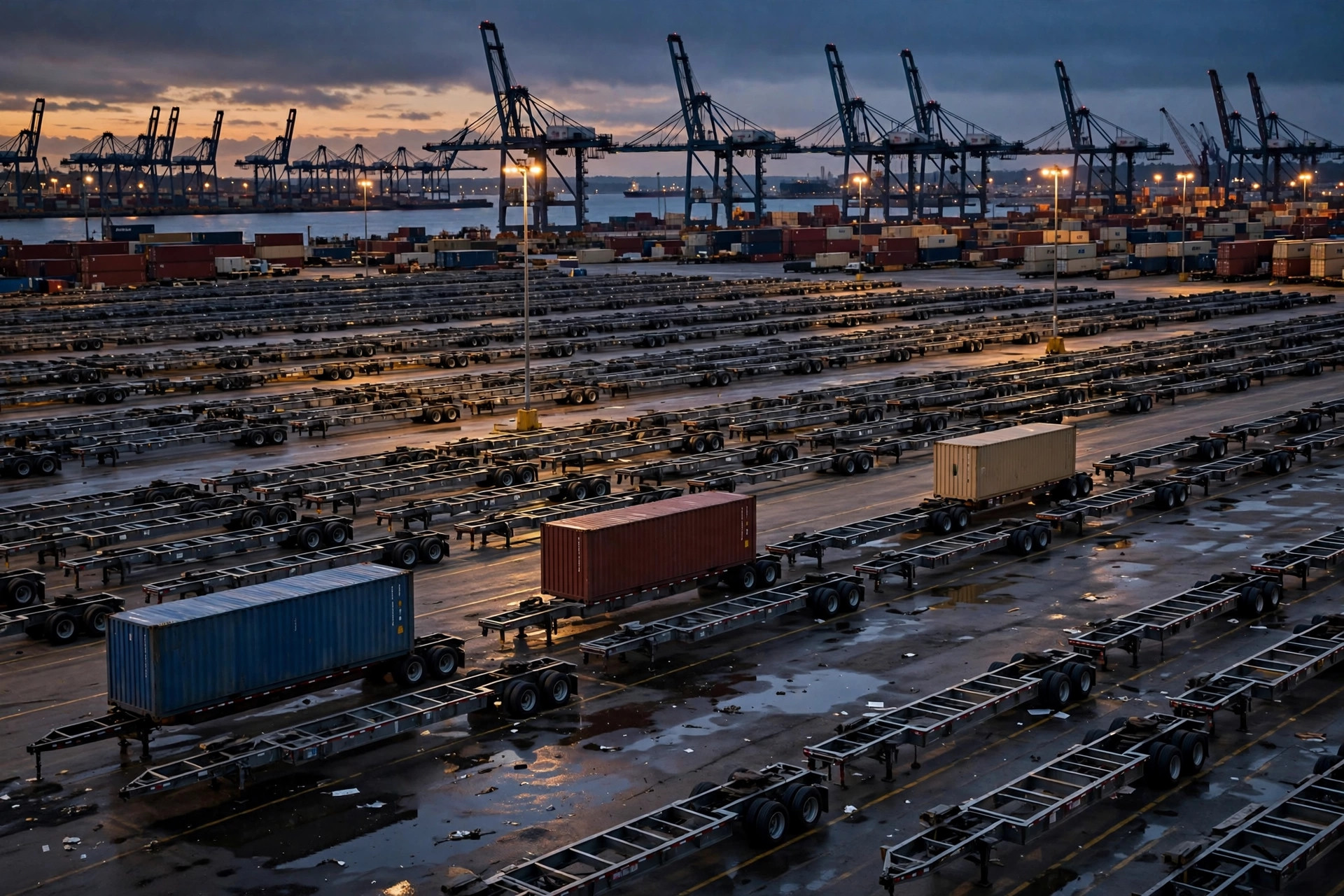
Here's a line item most drayage owners never scrutinize: the chassis. One 40-foot box, Port of Los Angeles to a warehouse in the Inland Empire, run a few hundred times a year — and the annual gap between owning your chassis and renting from the pool can run into the tens of thousands of dollars. Owners obsess over diesel and driver pay. The chassis math sits in a drawer.
I pulled it out of the drawer. Here's how it actually pencils out.
The real price of owning
A new 40-foot chassis costs several tens of thousands of dollars — check current dealer quotes, because steel prices move and so does the number. Used is far cheaper, but you're often buying someone else's maintenance backlog. The purchase price is the smallest part of the story.
Capital first: ten chassis is hundreds of thousands of dollars sitting in steel. For a small fleet, that's genuine weight on the balance sheet and on cash flow.
Then maintenance, which never ends. Tires, brakes, lights, annual inspections — none of it optional. An FMCSA roadside inspection that finds a dead lamp can put the unit out of service on the spot. The repair bill is the cheap part; the expensive part is the container sitting on a dead chassis while the customer starts talking about demurrage and claims. One bad stop pays for a year of pool fees.
Then storage. Chassis live near the port, and port-adjacent yard space rents by the month, with peak-season surcharges. Then people: somebody has to manage pickups, schedule repairs, track inspections. A small fleet has no such headcount, so it becomes the owner's 11 p.m. phone call.
Owning fits exactly one profile: twenty-plus tractors, lanes concentrated at two or three ports, and your own yard near the marine terminal. Missing any one of those three, and ownership is a side business you never asked for — a repair shop with trucks attached.
Renting from the pool: paying by the day, buying peace of mind
The ocean carriers largely exited the chassis business more than a decade ago, and the pool model took over. Consolidated Chassis Management (CCM) runs cooperative pools at major ports and rail ramps across the US; providers like TRAC Intermodal and DCLI offer daily and term leases. That's simply how the industry works now.
What you pay: a daily chassis usage fee, with rates published on each pool's website — check the current postings before you budget, because they move. Read the interchange terms line by line: free-time allowances and street-turn rules differ by pool, and margin leaks through the fine print.
What you get: no mechanics on payroll, no annual inspections to chase, no yard rent. Volume swings become someone else's problem — scale up in peak season, scale down in February. Flexibility that ownership can never match.
The catches are real, though. When the port congests, the pool can run dry too — a rented chassis you can't pick up is just a theory. Watch for the chassis split: box at one terminal, chassis at another, and the flip fee plus the lost hour go straight into your cost per move. Quote accordingly, or that load runs for free.
Learn the street turn. An import box, emptied, gets reloaded with export freight nearby instead of returning empty — one fewer empty repositioning, fewer chassis days burned. The daily fee looks trivial until you multiply it by a few hundred turns a year.
One piece of paperwork worth knowing: the UIIA — the Uniform Intermodal Interchange and Facilities Access Agreement — is the industry agreement governing how equipment changes hands between providers and motor carriers. New to drayage? Getting set up under it is step zero. Without it, you can't interchange pool chassis at all.
Surviving peak season when chassis disappear
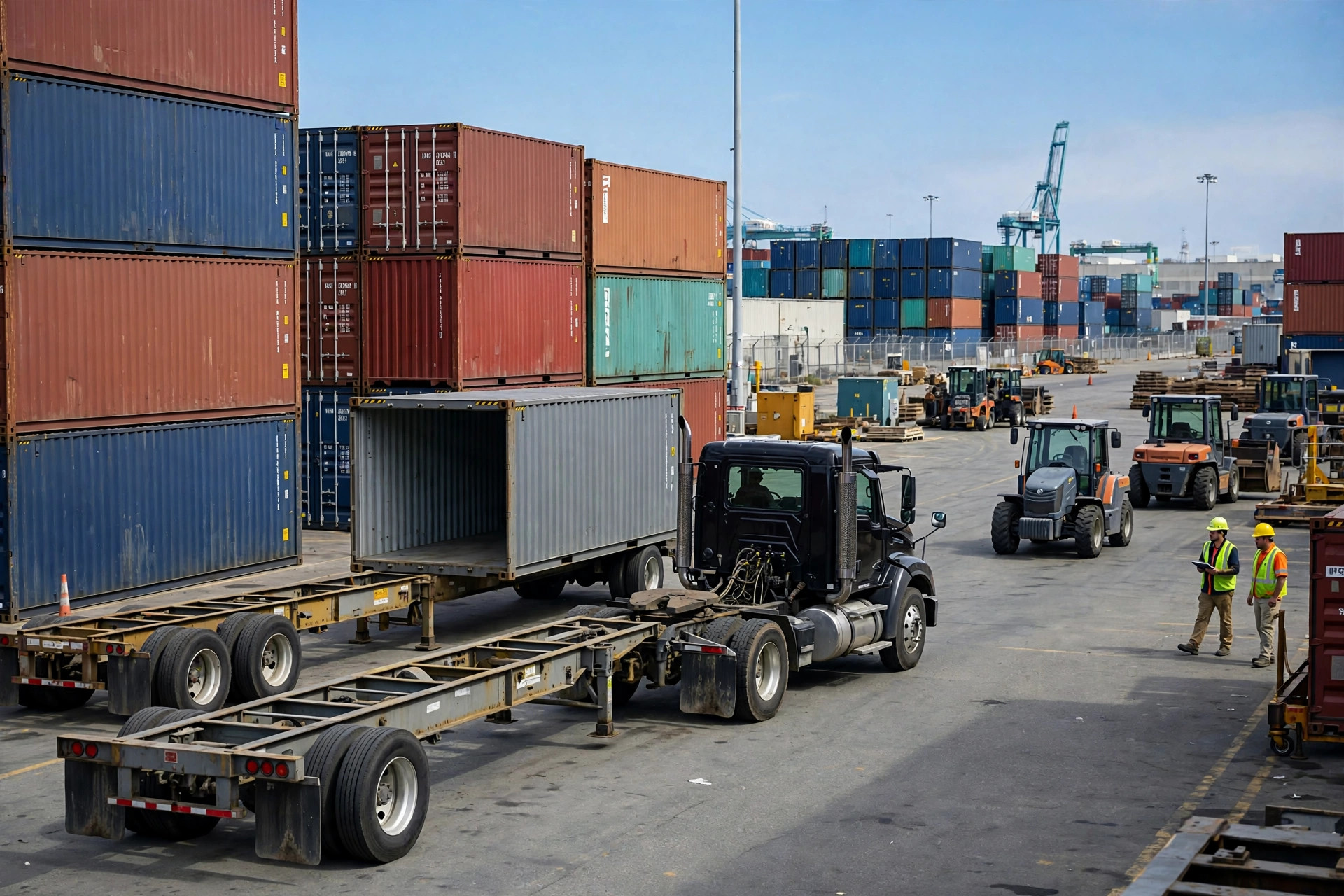
Every August through November, plus any port disruption, chassis become the scarcest resource in the drayage chain. A few things that actually work — all of them paid for in experience.
Lock in term agreements early. Negotiate annual or seasonal rates with priority pickup rights in the spring. By September you're a price taker, and the price will show it.
Build the relationship. Pool operators remember who pays on time and communicates clearly. When allocations tighten, the queue has an order — being a known quantity moves you up it.
Run hybrid. A handful of owned chassis as a guaranteed base, the pool for everything above it. Base load covered, peaks flexible — both advantages, without the full maintenance burden.
Watch the daily availability postings. Most pools publish chassis availability by location. Check it every morning and reposition 48 hours ahead. Discovering an empty pool when your driver arrives isn't bad luck; it's a planning failure.
Use the slow months. January and February are the best time to negotiate next year's term rates — everything is negotiable. In September, you take what you're given. And get detention and demurrage responsibility into your contracts with forwarders and shippers: when a chassis shortage strands a box, that's not the carrier's fault, and it's cheaper to agree on that upfront than to argue about it afterward.
The verdict, no hedging
When you run the total, don't skip the hidden costs. Owned chassis carry insurance, registration, and the labor of inspection scheduling — line items that don't exist in the pool model. The pool model's hidden cost runs the other way: peak-season stockouts. Losing a customer because you couldn't get a chassis won't fit in a spreadsheet, but every owner has felt it.
Under ten tractors: don't own. Use the pools with term agreements, outsource the maintenance, inspections, and yard headaches, and keep your focus where it belongs — moving boxes, not fixing steel.
Twenty-plus tractors on fixed lanes at a couple of ports, with your own yard: own a base fleet, rent the peaks. The hybrid is the sweet spot.
In between? One question: do you have a reliable mechanic and affordable yard space near the port? No? Then run it like a small fleet. The chassis business is a fine business — just make sure it's the business you're actually in.