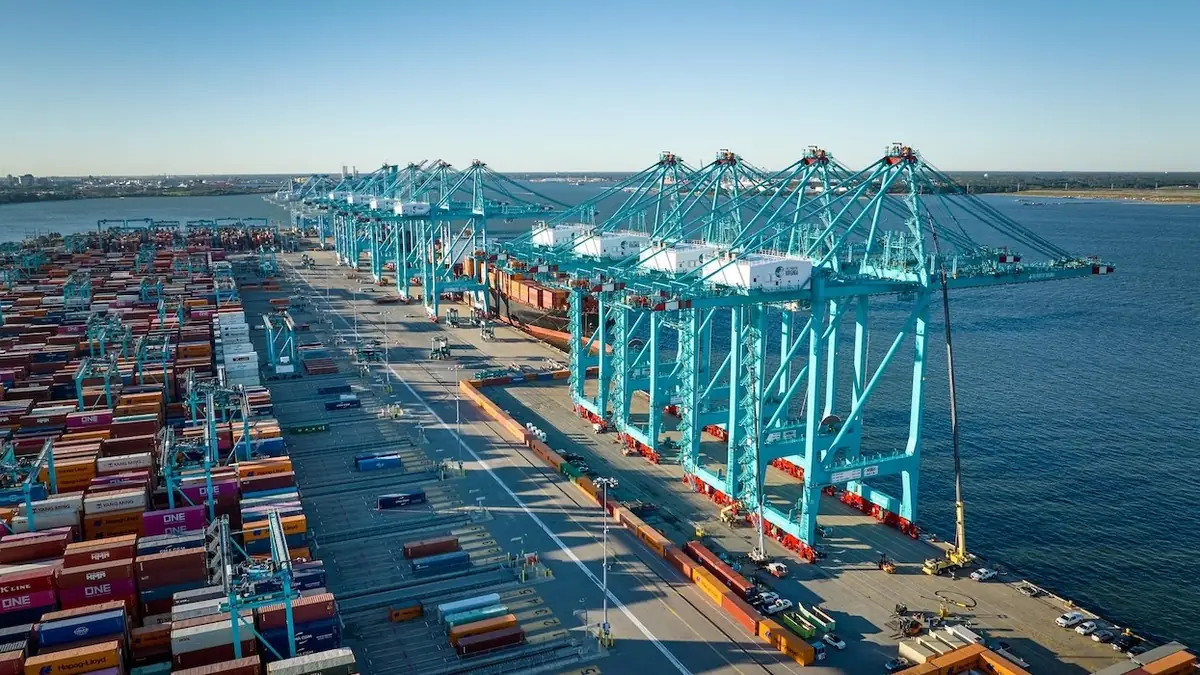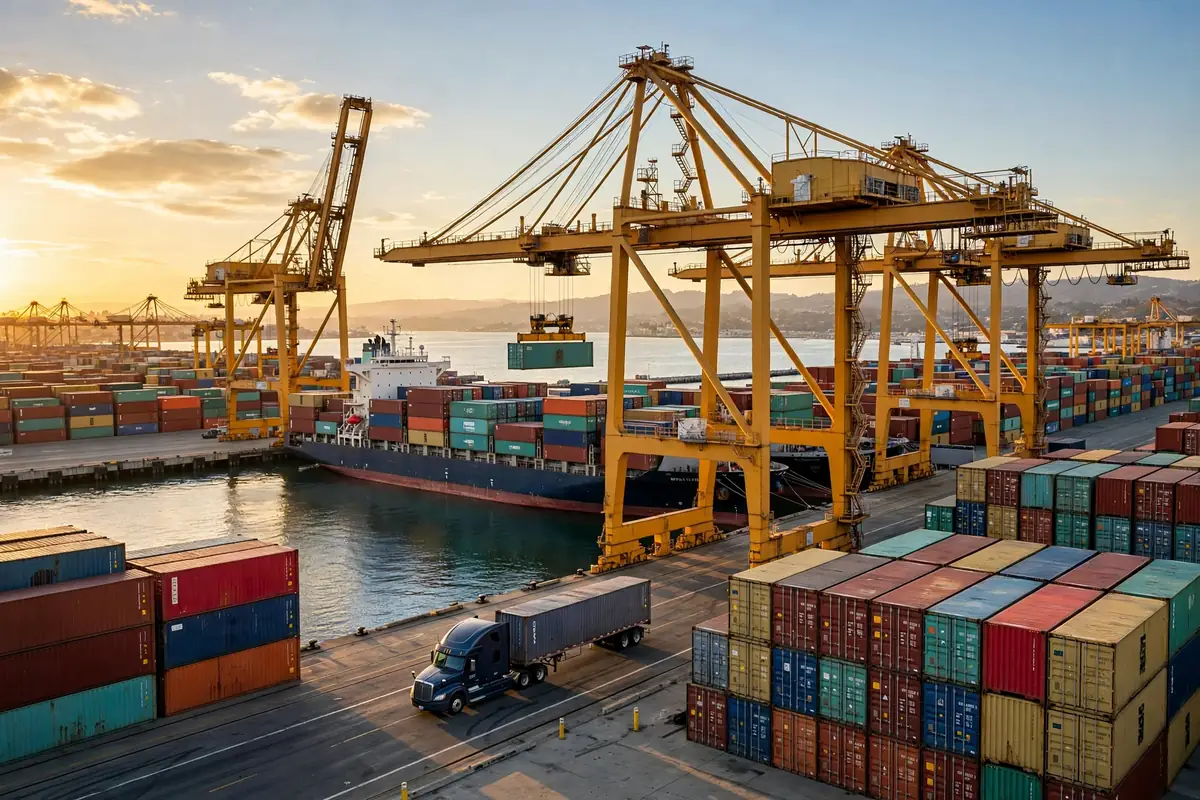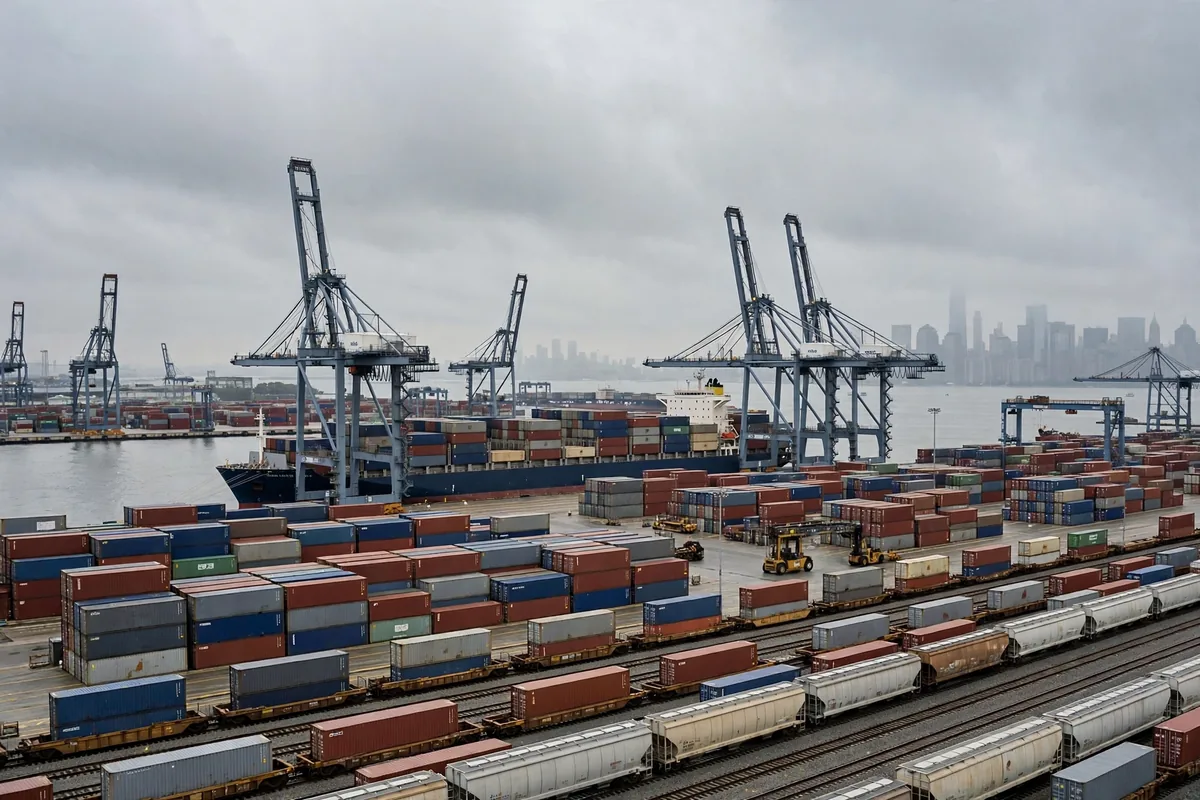
The situation at the port of Douala — the subject of this guide to Douala port warehouse logistics — can be summed up in a single contrast: it is Cameroon's largest port and the principal seaport for two landlocked neighbours, handling roughly 380,000 TEU of containers a year, while the port authority's published plan is to raise container terminal capacity to 1 million TEU.
According to figures published by Cameroon's National Port Authority, cargo handled at Douala, Kribi, and Limbe rose 3.9% year on year to 14.4 million metric tons in the second half of 2025. The more telling change was in transit cargo: over the same period, transit freight bound for Chad reached 938,002 metric tons, up 32.2%, while volumes destined for the Central African Republic rose 17.3% to 212,576 metric tons. Douala does not only serve Cameroon. It is a lifeline for two inland states, which means that when the port congests, the disruption travels north along the corridors.
Douala Port Warehouse Logistics: The Built-in Limits of a River Port
Douala sits on the Wouri River, about 24 kilometres from the sea. It is, in the full sense, a river port, and its constraints begin with draft. The approach channel is shallow, and the port's published maximum draft is about 8.4 metres. Large container vessels cannot enter fully laden, so lines either deploy smaller ships or sail in part-loaded. The economies of scale that big ships offer are discounted here from the start.
The second constraint is terminal saturation. At the foundation ceremony for the terminal extension in July 2025, the port authority stated plainly that the existing container terminal is already highly saturated and would be unable to handle expected traffic by 2030 without expansion. The project adds a fourth quay — Quay 17, 250 metres long — plus 7.9 hectares of yard and a full shift to rubber-tyred gantry operations, with the stated aim of reaching 1 million TEU of handling capacity by 2026. Under the authority's optimistic scenario, container traffic could double to around 796,000 TEU by 2030 and exceed 1 million TEU by 2050.
The cost of congestion is visible in the market. Carriers have imposed a port congestion surcharge of USD 250 per TEU on dry containers bound for Douala, and at times reefer containers have faced discharge restrictions or a suspension of new reefer bookings because the terminal could not absorb them. For a shipper, congestion surcharges, demurrage, and the cost of diverting to another port and trucking cargo inland can add several hundred dollars per container. It is worth noting, however, that vessel-tracking data for the first week of November 2026 showed a median waiting time of just 0.22 days at Douala, with congestion rated low. The pattern is volatility rather than permanent paralysis: the real risk concentrates in peak-season windows and bunched vessel arrivals.
Timber and Cocoa: Two Warehouse Crafts in Douala Port Warehouse Logistics
The export mix through Douala and Kribi in the second quarter of 2025 shows what the port actually handles: cocoa beans accounted for 35% of export value, cocoa paste 17%, sawn timber 12%, cotton 11%, and cocoa butter and related products 8%. Cocoa and timber together exceed 60% of the total. Cameroon also exports petroleum, coffee, and aluminium, but from a warehousing perspective, timber and cocoa are the cargoes that test a warehouse most.
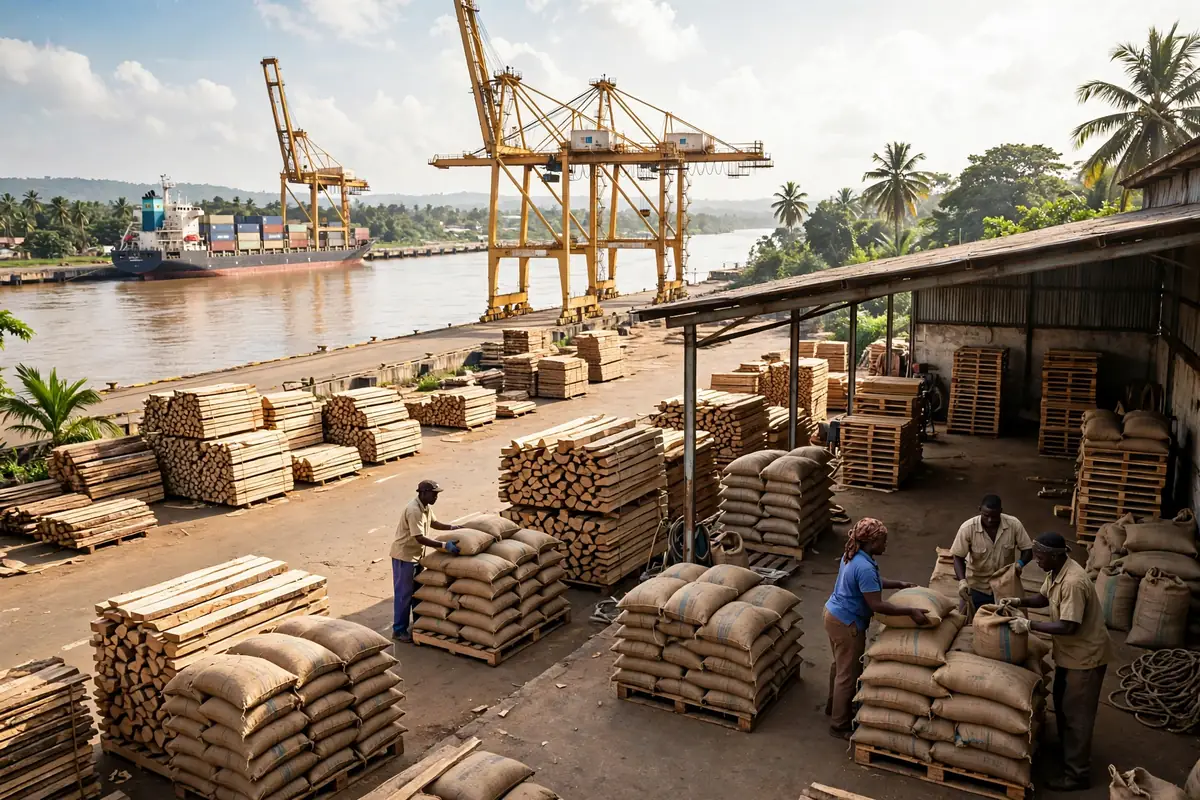
The core of timber handling in Douala port warehouse logistics is drying and pest control. Cameroon exports logs and sawn timber, with species including ayous, sapele, iroko, and azobé. Illustrative scenario: a consignment of sawn timber arrives from the inland forests at a timber yard near Douala. Boards are stacked by species and dimension, with ventilation gaps between stacks and raised dunnage underneath to keep them off damp ground. In the rainy season, open-yard stacks need tarpaulin cover, because boards loaded with excess moisture will mould inside a sealed container and face claims at destination. Export timber generally requires fumigation and a phytosanitary certificate, and the ventilation time after fumigation has to be built into the sailing schedule — cargo rushed to meet a vessel is most likely to fail at exactly this step.
Cocoa follows a different warehouse logic. Beans fear two things above all: moisture and foreign odours. They must be stored off the ground with good airflow, and lots of different fermentation and drying levels cannot be mixed, or the flavour grade of the whole lot is dragged down. The stakes have risen with prices: in the second quarter of 2025, cocoa bean export value rose 132% year on year, cocoa paste 53%, and coffee 163%. When prices are high, a warehouse error costs more, because the damaged cargo is valued at the season's peak price, not at a historical average.
The table below is a hypothetical example for a trader exporting about 20 containers a month of mixed timber and cocoa. The figures illustrate the cost structure and do not represent any port's or warehouse's actual rates:
| Cost item | Warehousing near port, fumigation planned ahead | Last-minute gate-in, processing at the port |
|---|---|---|
| Warehouse rent | Hypothetical: about $2,500/month | Hypothetical: about $800/month |
| Fumigation and inspection | Hypothetical: scheduled batches, about $1,200 | Hypothetical: rush handling, about $2,200 |
| Congestion surcharge and demurrage | Hypothetical: about $600 | Hypothetical: about $4,500 |
| Cargo damage claim risk | Hypothetical: low | Hypothetical: high |
Inland Corridors and Kribi: Douala's Second Route to the Sea
A second structural variable sits to the south: the Kribi deep seaport, which began operating in 2018 and reached 1.2 million TEU of annual container capacity after its second-phase expansion. In the first quarter of 2022, Kribi handled 53% of Cameroon's container cargo, overtaking Douala. The port landscape is shifting from a Douala monopoly toward a two-port division of labour.
The corridors deserve equal attention. The Douala–N'Djamena and Douala–Bangui corridors are the lifelines for Chad and the Central African Republic, and the World Bank approved a USD 1.12 billion programme in June 2026 to modernise the Douala–Bangui corridor, with an initial USD 525 million phase for priority road rehabilitation, road safety, and maintenance reform. As corridor conditions improve, the transit time and cost structure of overland cargo will change, and with them the logic of where to place a warehouse — facilities near the corridor's origin will gain value.
The counterintuitive finding in Douala port warehouse logistics is that the most important indicator for Douala is not throughput but volatility. A figure of 380,000 TEU is not in itself remarkable. What decides warehousing cost is the variance: the congestion surcharge in peak season, the discharge restrictions on reefers, and the days lost on the corridor. A port can perform well on average while its volatility consumes the entire margin.
Looking ahead, Douala's trajectory over the next few years depends on three things: whether the Quay 17 extension is delivered on its 30-month schedule, how far Kribi's diversion effect extends, and whether the Douala–Bangui corridor works stabilise transit times. Any change in one of these three forces a recalculation of the warehousing equation. For shippers doing business in Central Africa, the open question may not be whether Douala is good enough, but whether — as this river port approaches its capacity ceiling — their cargo has a second route to the sea.
By Dr. Chen, Supply Chain Researcher