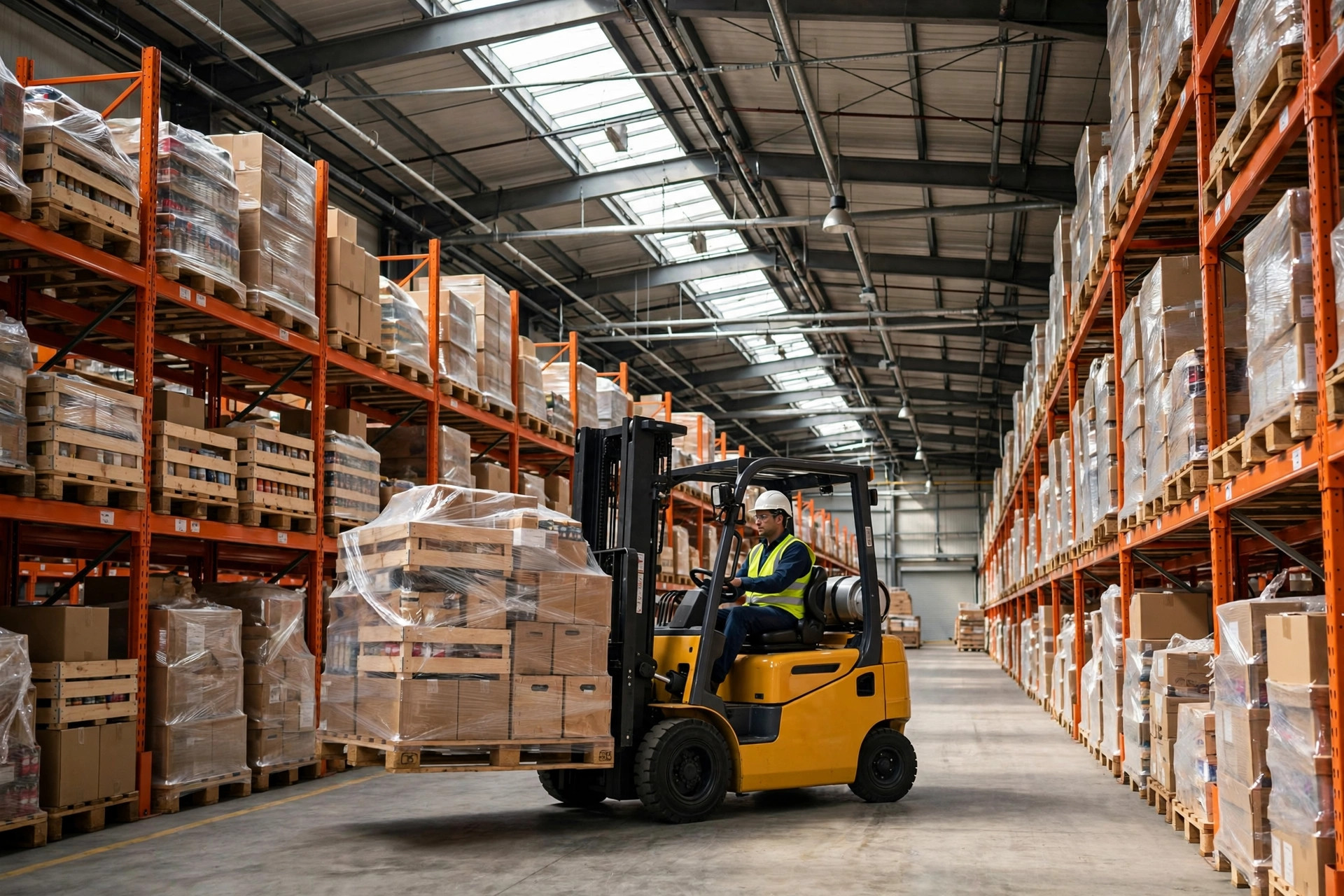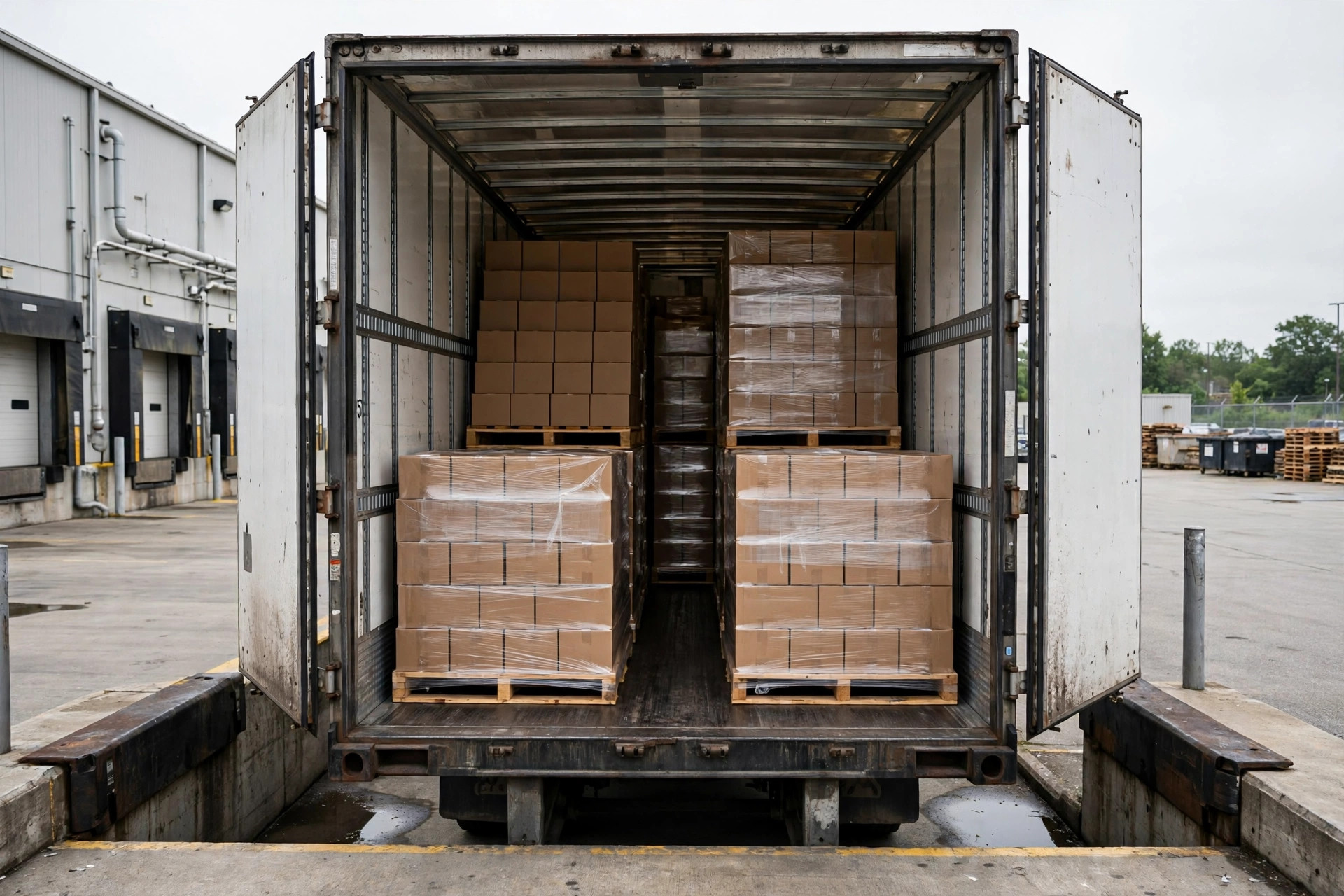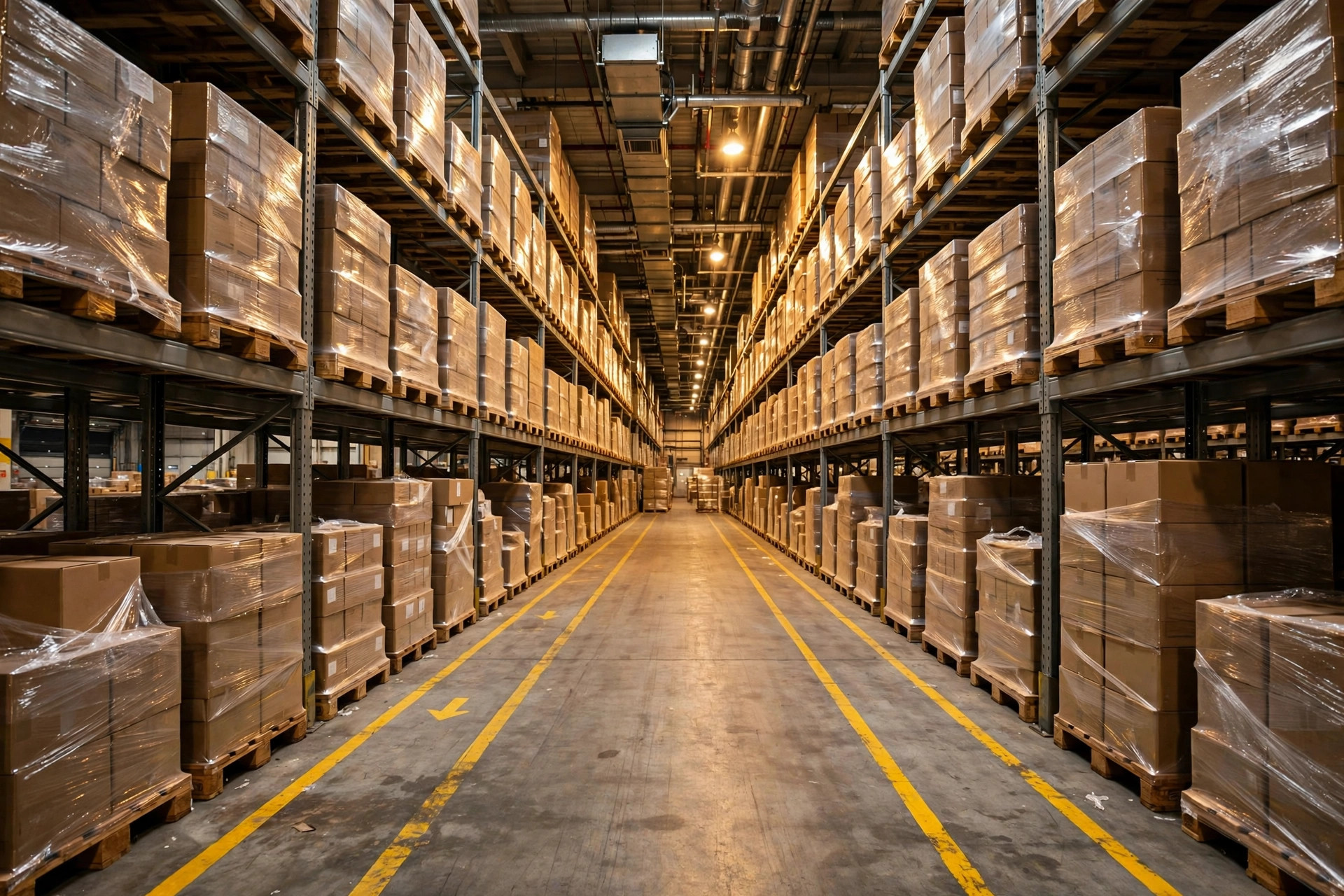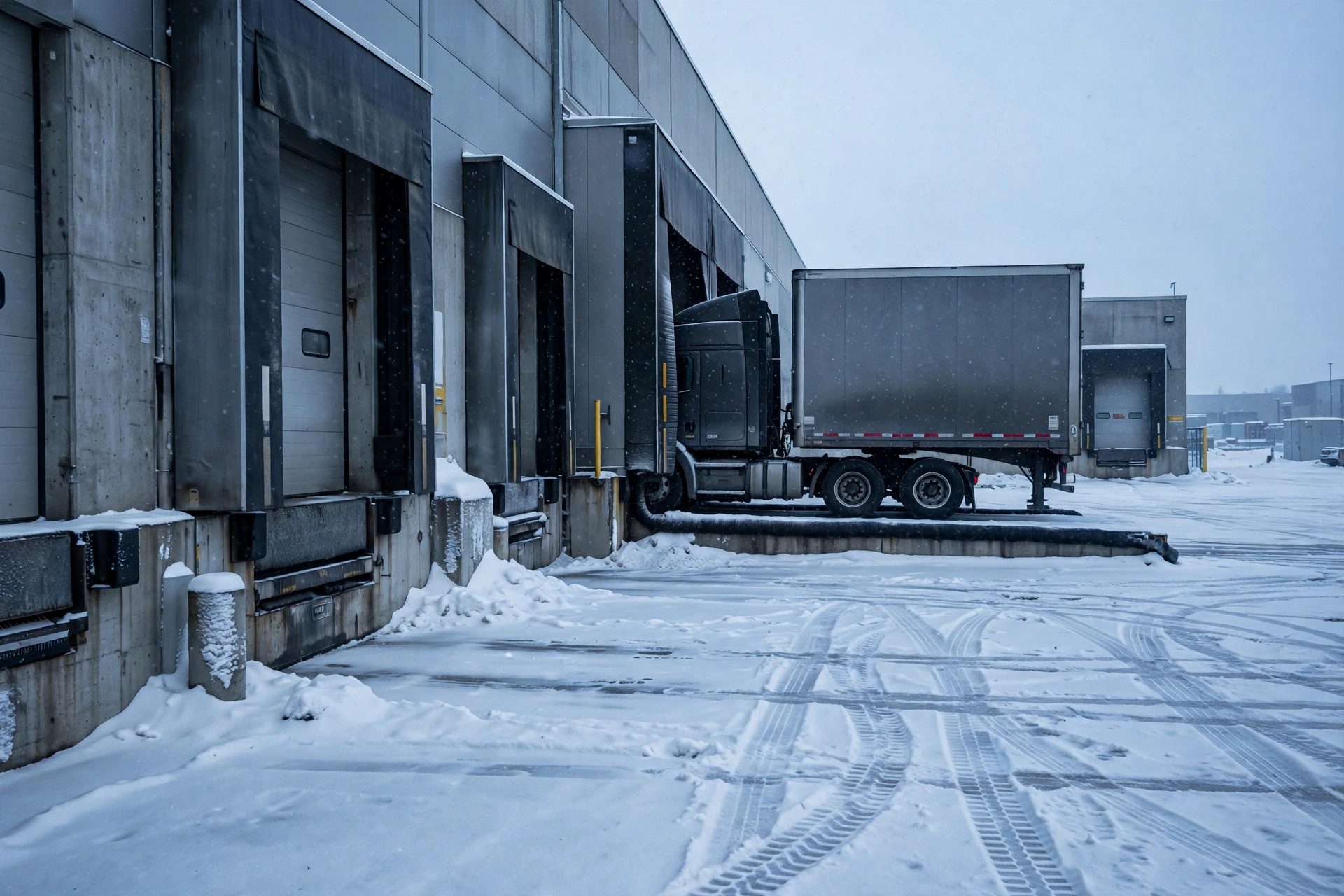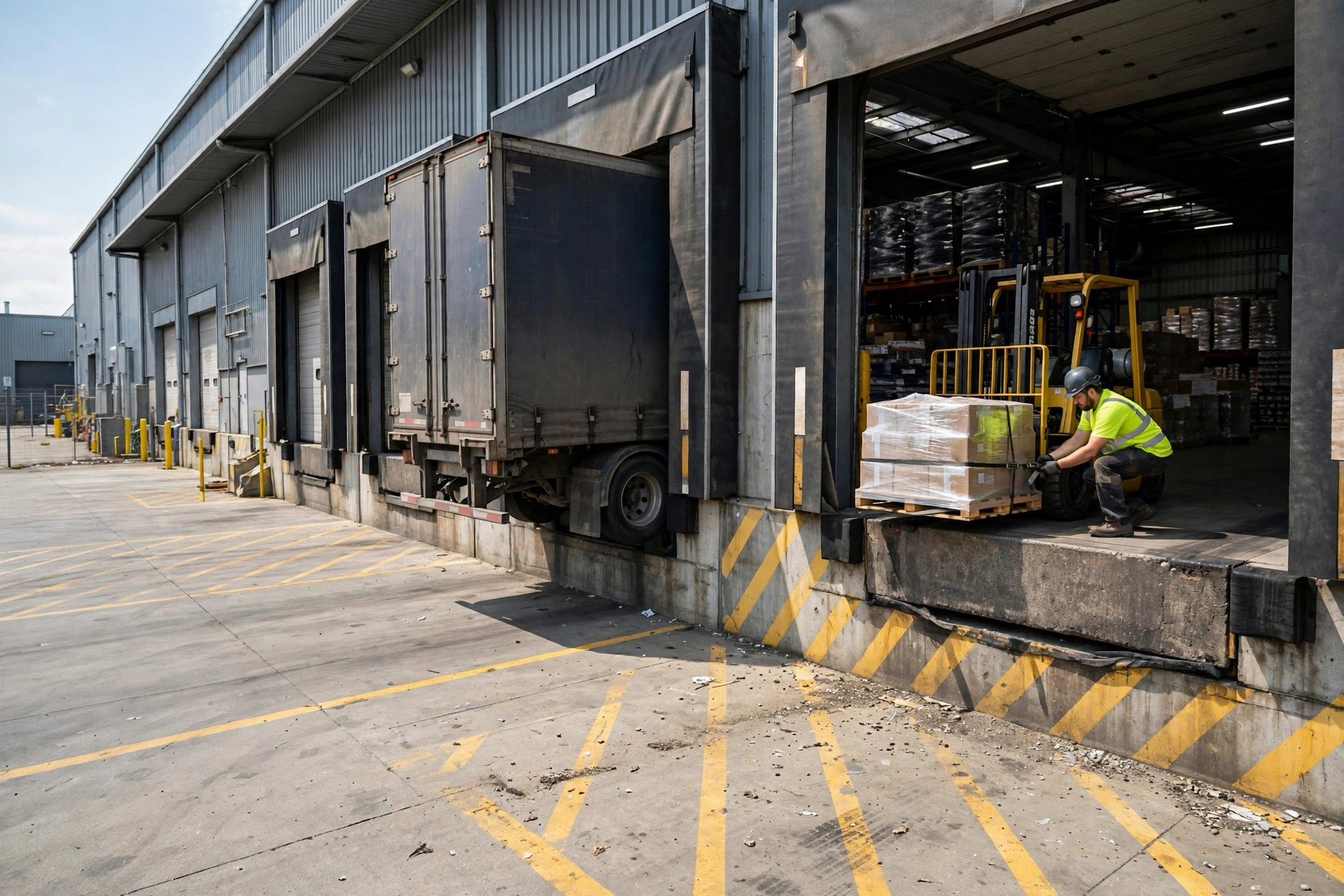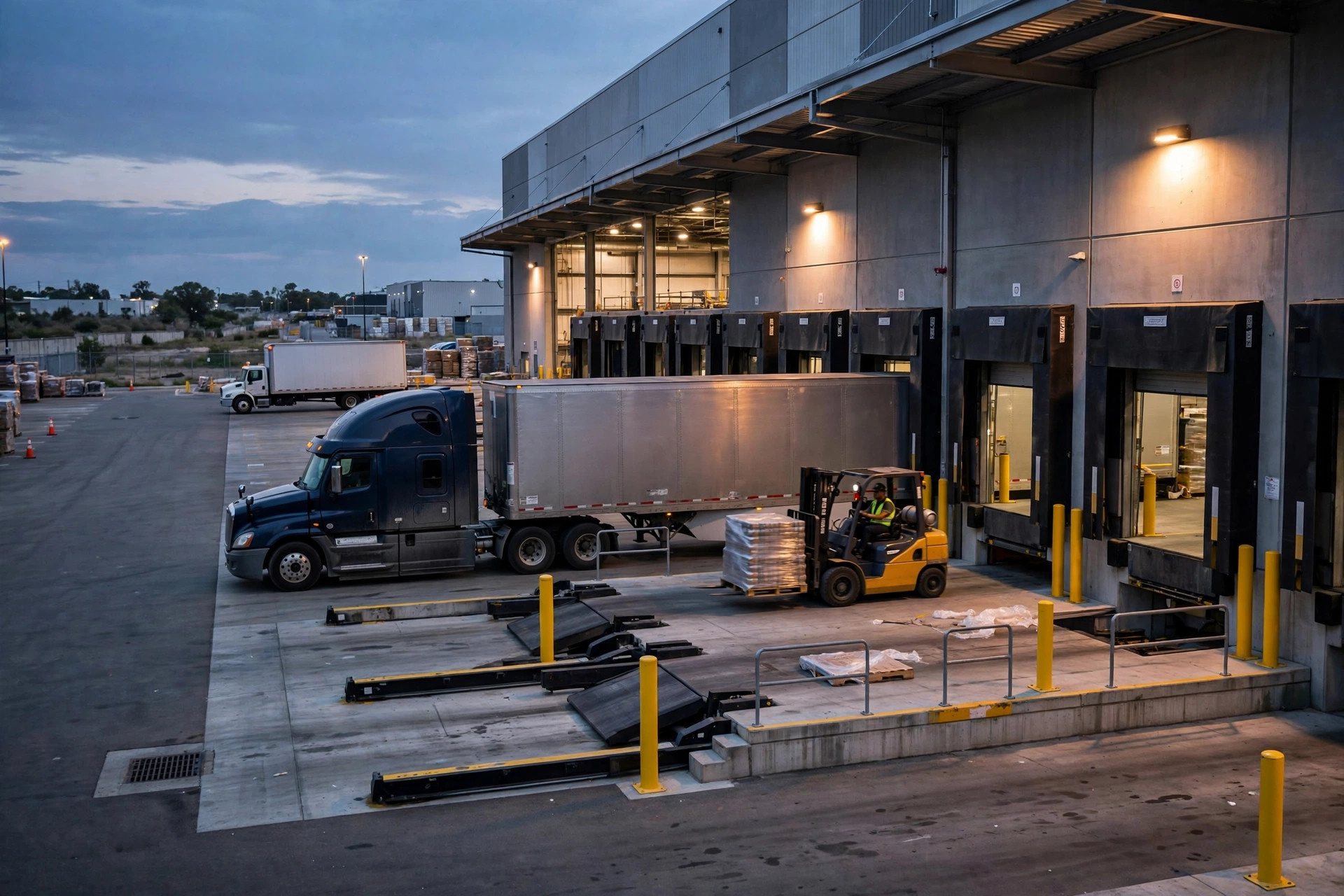
Last November I visited a 3PL warehouse in Ontario, California. Thirty-two dock doors, and fourteen trailers queued up in the yard. The dispatcher told me the longest-waiting driver had been there since 8 a.m. — it was past 2 p.m. He'd taken a nap in the cab and woken up still in line.
I asked: do you not have enough doors? He said no. Then I asked: what's the most doors you've ever had in use at the same time? He paused. "I don't think we've ever gone past twenty-four."
The doors weren't the problem. Nobody had ever done the math on the queue.
Not enough doors — or not enough planning?
Door utilization and floor-space utilization are two different animals. When you're short on space, you see it. When you're short on doors, you only feel it — there's always a truck waiting outside.
I always start with three numbers: arrivals per hour over the last 90 days, average load and unload time per trailer, and the true share of time each door actually has a trailer in it. Nine times out of ten the answer is the same: arrivals spike between 9 and 11 a.m., spike again from 2 to 4 p.m., and the doors sit empty the rest of the day.
That's not a door problem. That's an appointment problem. Without appointment windows, arrival times are at the mercy of drivers' moods and traffic. No number of doors survives fourteen trucks showing up at once.
The queue has a price tag, billed by the hour
Every extra hour a trailer waits costs three things: the driver's detention time (two free hours is the industry norm; after that it's tens to over a hundred dollars an hour), your own receiving plan getting blown up, and the invisible one — drivers who start refusing your loads, which makes peak-season capacity even harder to find.
I ran the numbers for that Ontario site: sixty trailers a day in peak season, averaging an extra 1.5 hours of wait each. Detention alone was running into the thousands of dollars a month. Money spent silently — there's no line item for it on the P&L.
So a queue isn't "drivers having a rough day." It's real money.
Making the queue plannable
Start with appointment windows. Slice arrival times into 30-minute or one-hour slots and have carriers book ahead. Drivers will complain for the first two weeks — then on-time rates climb. The hard part: a truck that misses its slot goes to the back of the line. Show mercy once and the rule is dead.
Then tie doors to freight types. Fast-turn freight — cross-dock, full-truckload direct — gets dedicated doors; slow receiving goes elsewhere. Mix them together and one difficult container jams the whole line.
And give the dispatcher a ruler everyone can see: the day's arrival plan and each door's status, on a whiteboard or a screen on the wall. In plenty of warehouses the problem isn't the lack of a system — it's that the whole plan lives in the dispatcher's head, and everything falls apart the day he calls in sick.
A dispatcher's day: how the queue spirals
The dispatcher arrives at 7:30 a.m. to three trailers left over from yesterday. At 8, three of five scheduled trucks show up; the other two are "on the way." At 9, unscheduled walk-ins start rolling in — drivers swinging by to "see if you can take me." By 10 every door is full and the yard starts filling. At 11, a slow four-hour unload occupies door 7 while three quick turns wait behind it.
See the pattern? The queue doesn't come from one broken link. Unplanned arrivals eat the buffer bit by bit. Scheduled trucks, walk-ins, quick turns, and slow unloads all mixed together, first come first served — the fairest and the most expensive way to queue.
Drop trailers: turning doors into parking spots
If your carriers cooperate, try drop trailers. The driver drops the trailer in the yard and leaves; your forklift crew unloads on its own rhythm, and the driver returns for the empty. The door stops being "truck waits for door" and becomes "freight waits for forklift."
This works beautifully for 3PL buildings with heavy full-truckload flow. That Ontario site later striped 20 drop-trailer spots; the night forklift crew unloaded drops while daytime doors handled only quick turns. Twenty "virtual doors," zero construction cost.
It takes yard space, plus clear agreements with carriers on trailer liability. Not every building can play this game — but those that can, should.
Before peak season, run a stress test
Discovering in November that you don't have enough doors is discovering it too late. Every September, I have warehouses run a stress test: take last year's peak-week arrival data, multiply by this year's growth expectation, and simulate it against current doors and staffing to see what breaks first.
Three steps. First, list each door's standard unload time — 45 minutes for quick-turn doors, three hours for slow ones; no hiding behind averages. Second, slot the simulated arrivals into appointment windows and see which time blocks overflow. Third, count labor: unloading crew, forklifts, verification — how many trailers can each link actually handle?
Nine times out of ten, what breaks isn't the doors — it's the people. Doors sit empty, freight doesn't get unloaded, trucks queue anyway. One test, and you know before peak season which temps to hire and which forklifts to rent.
The real value of a stress test isn't forecast accuracy — it's getting the whole building into "peak mode" a month early: processes, labor, vendors, all warmed up. When November arrives, the chaos stays bounded.
Before you build, run this math
If you've done all of the above and still need doors, then talk construction. A new dock door — civil work plus equipment plus annual upkeep — isn't cheap. The math is simple: total last year's detention fees, overtime unloading labor, and lost carrier goodwill into a "cost of queuing," and compare it against the annualized cost of two new doors.
I've seen the math justify new doors. I've also seen the queuing cost come in at one-third of construction — and the site spent the savings on a big scheduling screen and a dedicated dispatcher instead, with better results than new doors would have delivered.
Doors are fixed assets; dispatching is management. Fixed assets can't fix management problems, but management can defer fixed-asset spending. Worth pinning on every warehouse owner's office wall.
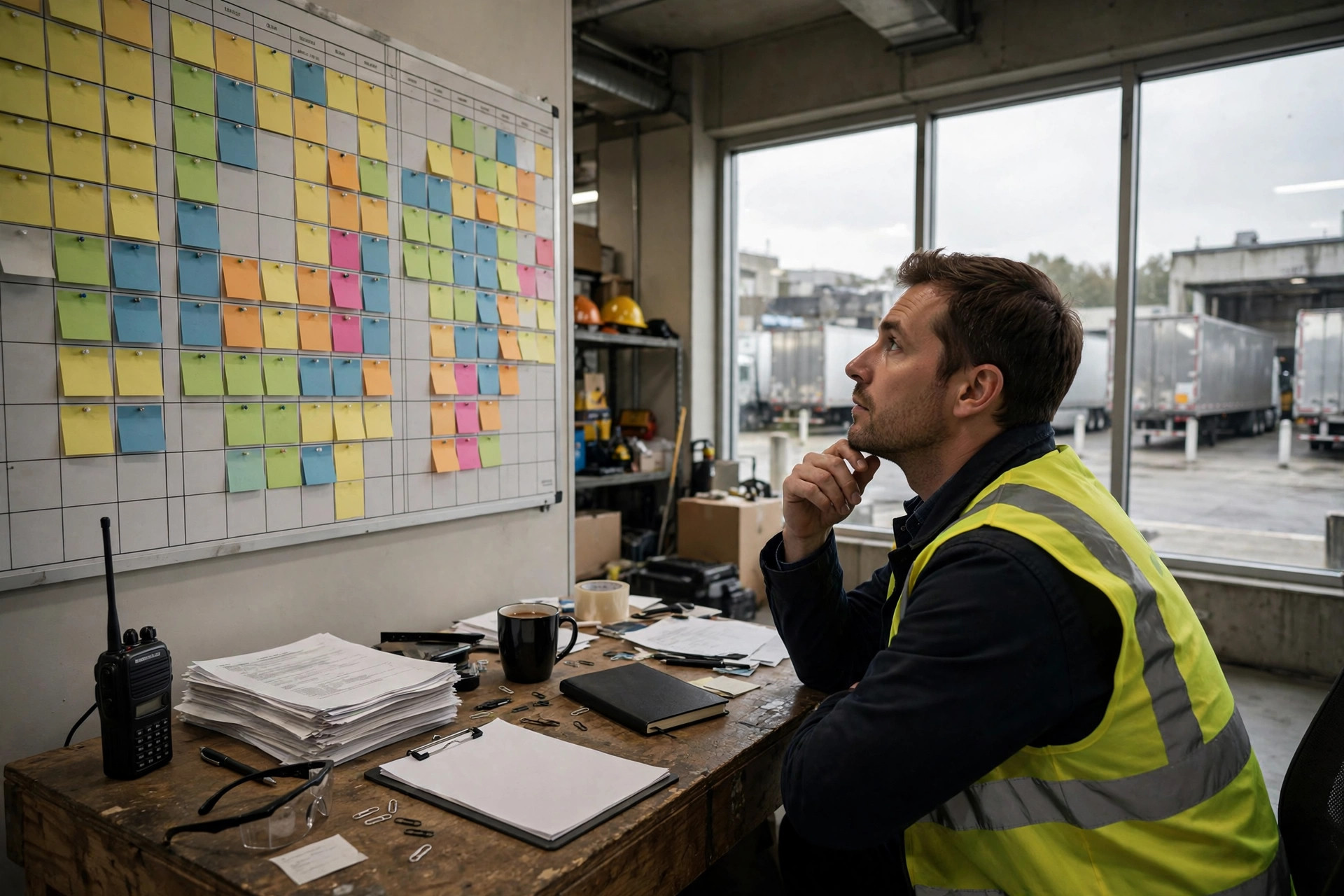
That Ontario warehouse implemented appointment windows and put the plan on the wall. Two months later, days with more than five trailers queued dropped from four a week to one. Still thirty-two doors. Not one added.
So before you start planning an expansion, pull those three numbers and do the math. The line of trucks outside might just dissolve on its own.