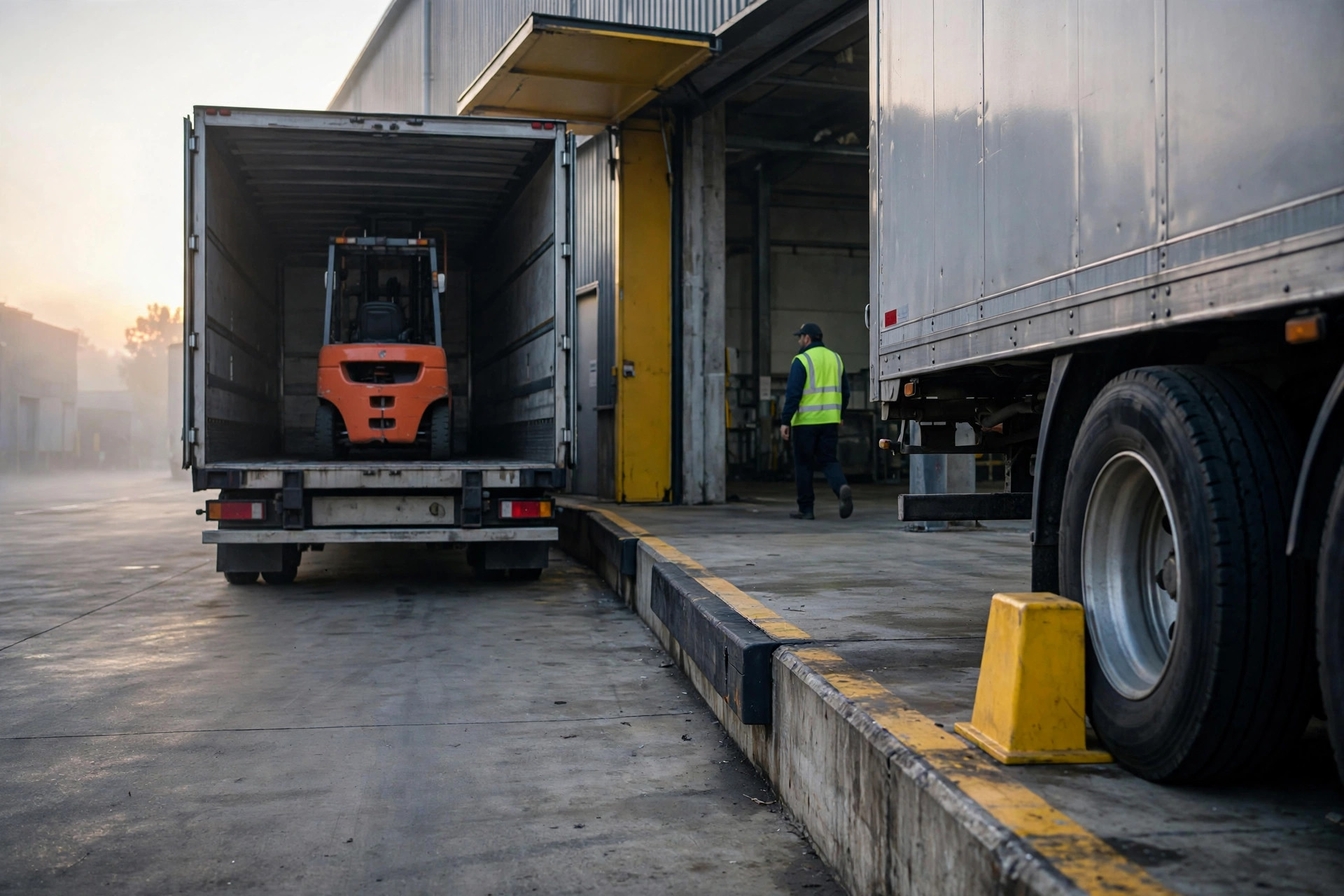
Let me put it this way: when OSHA walks in to check your loading dock door safety requirements, they're not inspecting whether the panels look new or the paint is fresh. They check three things — whether the springs are about to snap, whether the interlocks are actually wired in, and whether the light curtains really work. I've seen too many warehouses with doors that looked fine and maintenance logs that looked complete, right up until someone got hurt. So here's my conclusion up front: a dock door is cheap to fix and catastrophic to ignore, and nearly every door-related injury I've come across traces back to one of those three failing.
My verdict first: loading dock door safety is not about the door
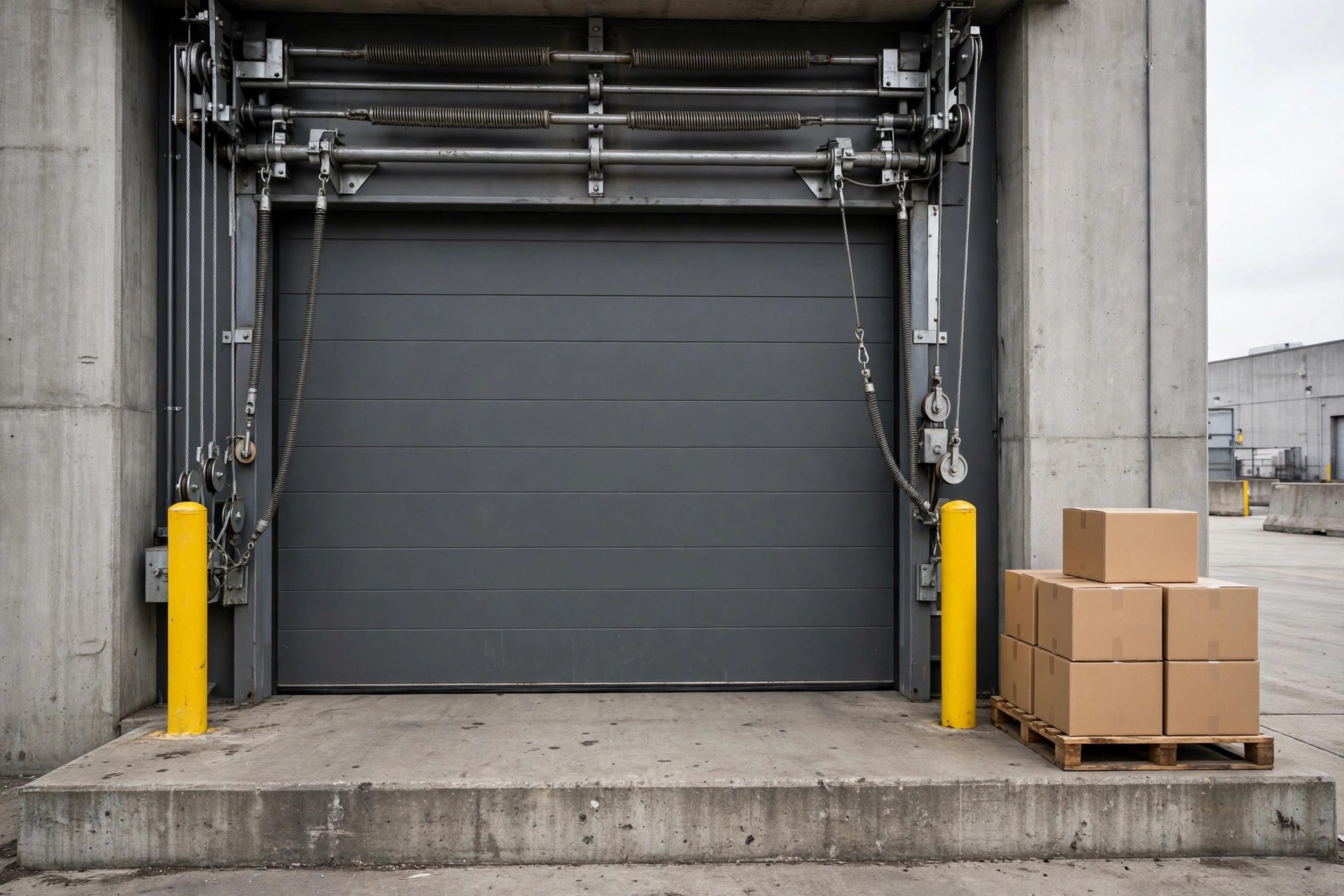
Plenty of operators think an OSHA door inspection is about the door — panel strength, track alignment. There's another side to it: the panel matters, but the sturdiest panel in the world still free-falls when the spring breaks, and the most expensive light curtain is decoration if its beam is misaligned. An OSHA inspector thinks in terms of "can this door hurt someone," not "is this a good door." That's why their first look is always at spring corrosion, whether the door rises evenly, and whether the light curtain indicators are lit — never at how new the panels look.
I won't recite regulation numbers here — OSHA's specific provisions get tweaked every year, so always check the latest on OSHA's official site. But "springs don't break, interlocks don't get bypassed, light curtains get calibrated" holds true no matter what year it is. Two stories below, both mine, both with the numbers inside the scenes. You'll see the pattern: dock door safety was never a technology problem. It's a "does anyone actually care about these three things" problem.
The pit I fell into: 36,000 cycles on one spring
March 2023, Ontario, California, a 3PL warehouse. Around 9 a.m., the torsion spring on dock door number 12 snapped. The door dropped straight down from half-open — about six feet off the ground. A 10-foot-wide steel sectional door, several hundred pounds, in free fall. A forklift happened to be driving underneath. The overhead guard caved in, the driver's left wrist got caught under the bottom edge of the panel: 14 stitches, three weeks off work.
OSHA showed up the next day. The inspector's first question wasn't "when was this door last serviced." It was: "How many times a day does this door cycle? When were the springs last replaced?" The warehouse manager couldn't answer. The usage math told the story: that door cycled about 40 times a day, 300 days a year — 12,000 cycles a year, 36,000 over three years. A standard torsion spring is publicly rated for roughly 10,000 cycles (high-cycle springs go 25,000 to 50,000 and cost 20 to 30 percent more). Thirty-six thousand cycles on a ten-thousand-cycle spring — put plainly, it didn't "unexpectedly break." It was overdue. Nobody was counting.
Two serious citations. For reference, the maximum OSHA penalty for a single serious violation runs about $16,000 — it was $16,550 in 2025 and adjusts with inflation every year, so verify the current figure on OSHA's official site. Add workers' comp, downtime, the spring replacement, and legal fees, and that one door ended up costing enough to have replaced every spring in the building's 40 doors with high-cycle ones, with money to spare.
That's the two sides of the spring story. The cost side: a pair of springs costs a few hundred dollars, and a cycle-count card costs basically nothing. The benefit side: no snapping, no one crushed. Yet most warehouses manage springs on a "don't fix it till it breaks" basis — which is, ironically, the most expensive management philosophy there is.
Light curtains and interlocks: installed doesn't mean working
Fall 2024, Fresno, a food warehouse. During a routine OSHA visit, the inspector did something I'll never forget: he walked up to an open dock door, waved his hand between the door jambs — and the door kept coming down. The light curtain didn't react at all.
The cause was almost funny: three months earlier, a forklift had clipped the light curtain bracket while backing up, knocking the through-beam off by less than two inches. A light curtain with a misaligned beam is effectively blind — but it doesn't alarm, doesn't warn, and the panel light stays green. From the outside, everything looked normal.
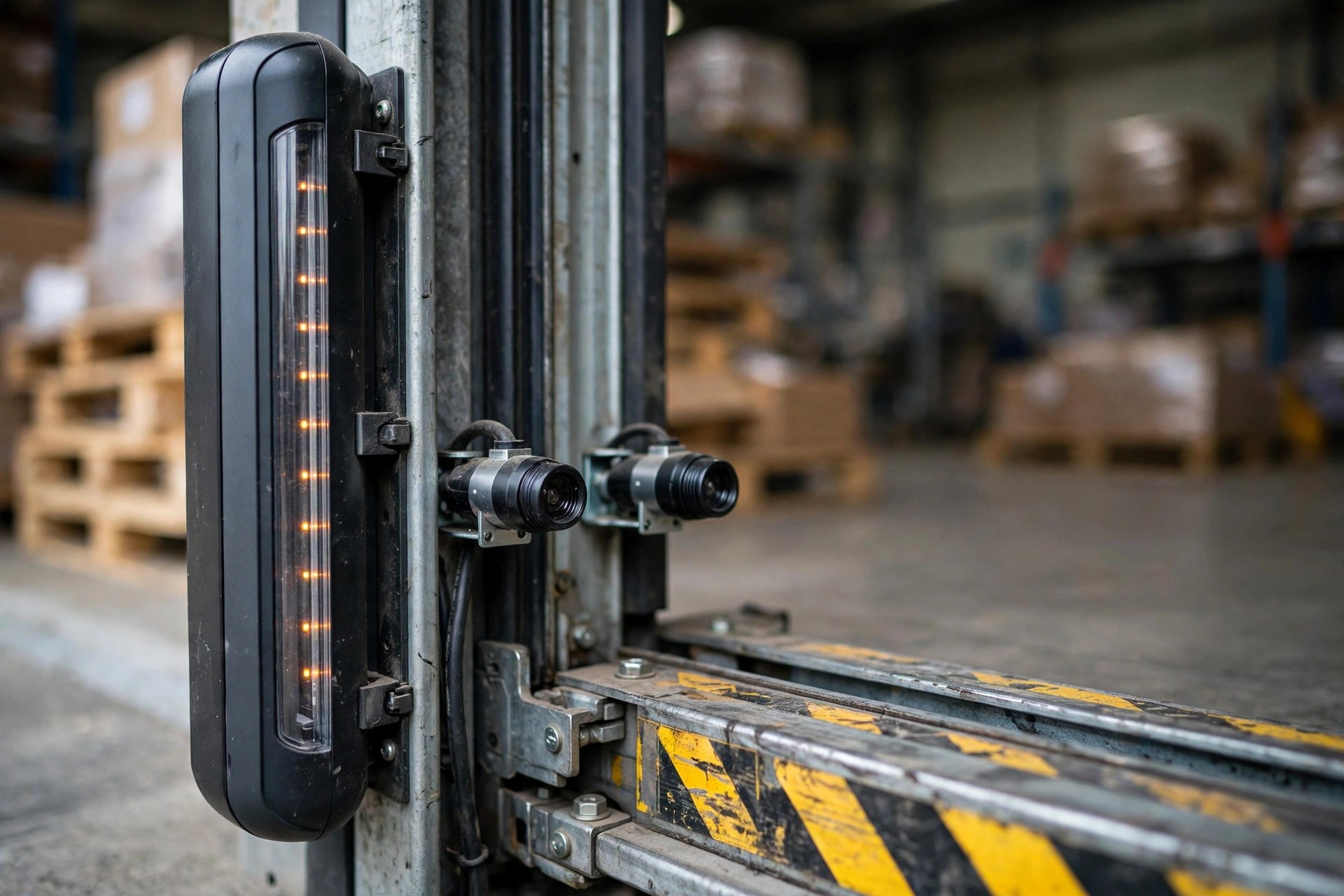
Another serious citation. The fix was cheap: crash guards around the brackets, monthly calibration, five minutes each time. But here's the deeper point I want to make: plenty of warehouses spend thousands of dollars per door on light curtains and then never touch them again. On installation day it's safety equipment; after three years without calibration, it's a psychological comfort blanket. Two sides again — the money for the device and the hassle of calibration are both costs. Skip those two small costs and you pay the big one.
Interlocks are the same story. The logic between a dock door, the vehicle restraint, and the dock leveler is simple: truck not locked, door doesn't fully open; door not closed, restraint doesn't release. But I've seen too many facilities where the interlock got "temporarily bypassed" — a driver found it annoying, an electrician snipped the wire, and the door opened however anyone pleased. Nothing happened the day of the bypass. Three months later, a trailer pulled away early with a forklift sitting right at the door edge, and the whole rig went down into the gap between dock and trailer. OSHA sees "early departure" incidents every year, and when they find a bypassed interlock, the citation gets heavier — because that's no longer negligence, it's knowing disregard.
One detail most people miss: springs give warning before they break. A door that drifts down on its own halfway up, panels rising unevenly side to side, a loud bang on each cycle — those are fatigue signals. On our door in Ontario, the night-shift lead later recalled the door had been "a little heavy lifting" for two weeks before it snapped. Nobody listened. Put plainly: a spring doesn't break without warning. It warned for two weeks. Nobody was listening.
The math: what dock door safety costs vs. what an accident costs
| Item | Preventive cost (per door, order of magnitude) | Cost of an accident |
|---|---|---|
| High-cycle torsion springs (25k-cycle grade) | 20–30% more than standard, a few hundred dollars | Snapped spring injury: workers' comp + downtime + citations, tens to hundreds of thousands |
| Monthly light curtain calibration | Five minutes, near-zero cost | Failed curtain injury: same as above, possibly upgraded to "willful" |
| Interlock install / restore | A few thousand dollars | Early-departure incident: forklift drop-off, often severe injury |
| Annual third-party door inspection | One to two thousand dollars for the whole building | An OSHA visit: max serious penalty ~$16k per violation ($16,550 in 2025, adjusted yearly — check OSHA's site) |
Put plainly, the conclusion of this table is one sentence: dock door safety costs small money and prevents big disasters.
And here's the counterintuitive truth: the newer the door panels look, the easier it is for a manager to ignore the springs — because the door looks fine, while the springs may be sitting at 30,000 cycles, one lift away from snapping. An OSHA inspector's first move is always checking spring corrosion and door balance, never admiring new panels. New panels on old springs is the most common "looks safe" in the warehouse.
Our standing procedure now: a "cycle count card" on every door — just estimate at end of shift, no precision needed; replace springs on cycle count, not on "is it broken"; calibrate light curtains monthly with signed records; first interlock bypass gets retraining, second gets written up. Plus one more rule: any operator who notices a door drifting, sagging, or banging reports it the same day — no "let's watch it." A spring's warning window is only a week or two. Watching is gambling. Dumb rules, all of them. Dumb rules work.
Go take a look at your own warehouse right now: pick any door, ask when its springs were last replaced, then wave your hand through the light curtain and see if the door stops. If you can't answer one of those — that's your last chance before OSHA asks instead.
By Lao Mi, Supply Chain Veteran (20 yrs)