Here's my verdict up front: the direct thermal vs thermal transfer question isn't answered at the printer. It's answered by one number — how many days this label needs to live. A parcel shipping label that lives 90 days and a rack location label that lives five years are two different animals. Measure them with the same ruler and you'll get the wrong answer every time.
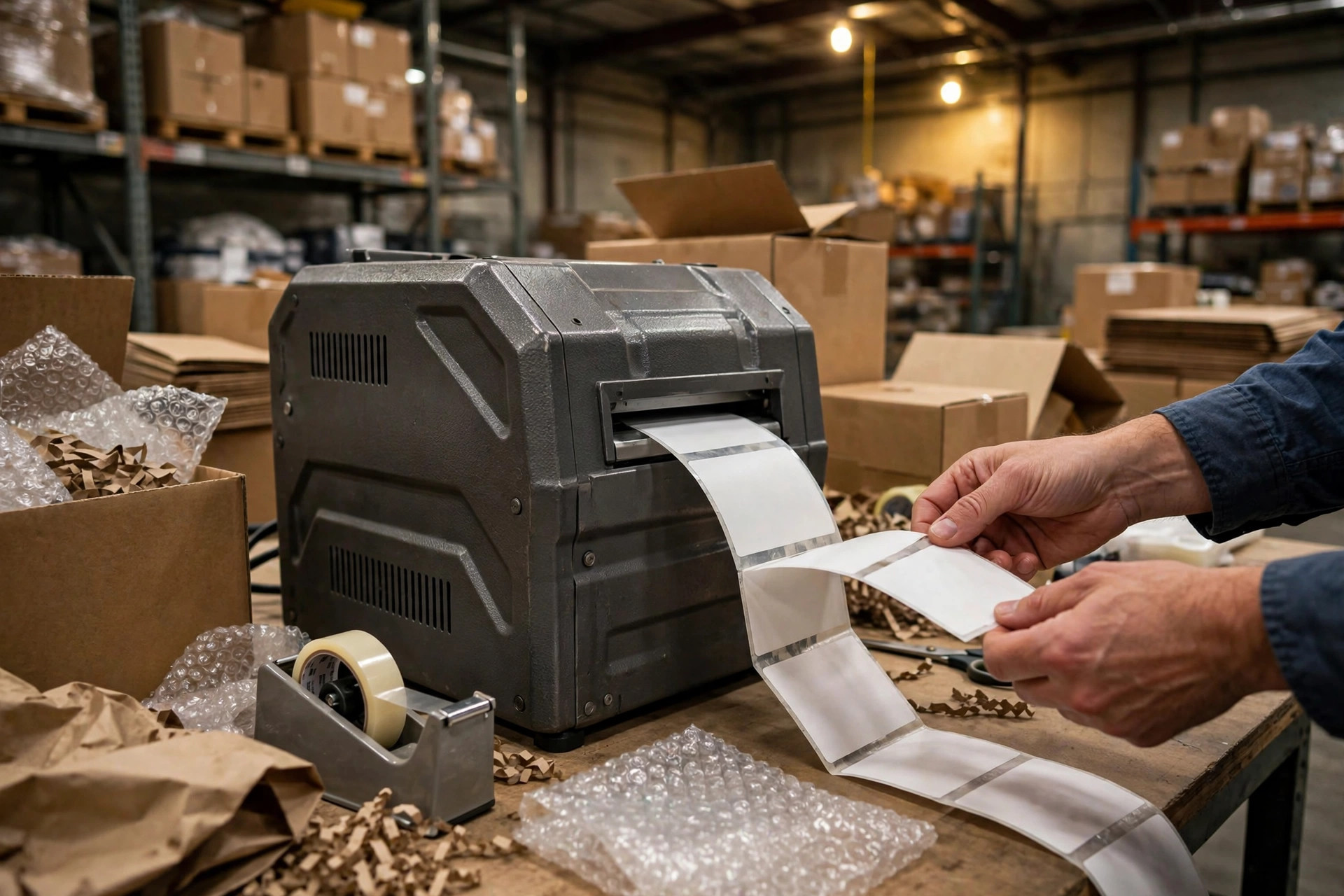
The principle is two sentences. Direct thermal: the printhead heats thermal paper directly, the chemical coating on the paper turns black where heated, and there's your text. Think of it like branding with a hot iron on carbon paper — heat it and it goes black, no ink, no ribbon. Thermal transfer: there's a ribbon between the printhead and the label. The head heats the ribbon, the wax or resin on the ribbon melts and gets ironed onto the label stock. Think of it like a T-shirt heat transfer — the image is transferred on, not grown out of the paper.
That one structural layer changes all the math downstream. First, consumables: direct thermal has a single consumable, the paper — and it's expensive, because the thermal coating IS the cost. Thermal transfer is cheap paper plus a ribbon you pay for separately. Second, printhead life: in thermal transfer the ribbon sits between head and paper like a lubricating film, so the head wears slowly; in direct thermal a hot printhead grinds directly against chemically coated paper, and under the same duty cycle a head typically lasts a third to half as long — order of magnitude. Third, durability: direct thermal text is a chemical color change — it hates heat, light, and abrasion, and fades on its own within three to five months. Thermal transfer text is wax or resin welded onto the surface, and a resin ribbon on synthetic stock survives years outdoors.
The Selection Line: Parcel Labels, Location Labels, Cold Storage, and Outdoor Labels Each Get Their Own Answer
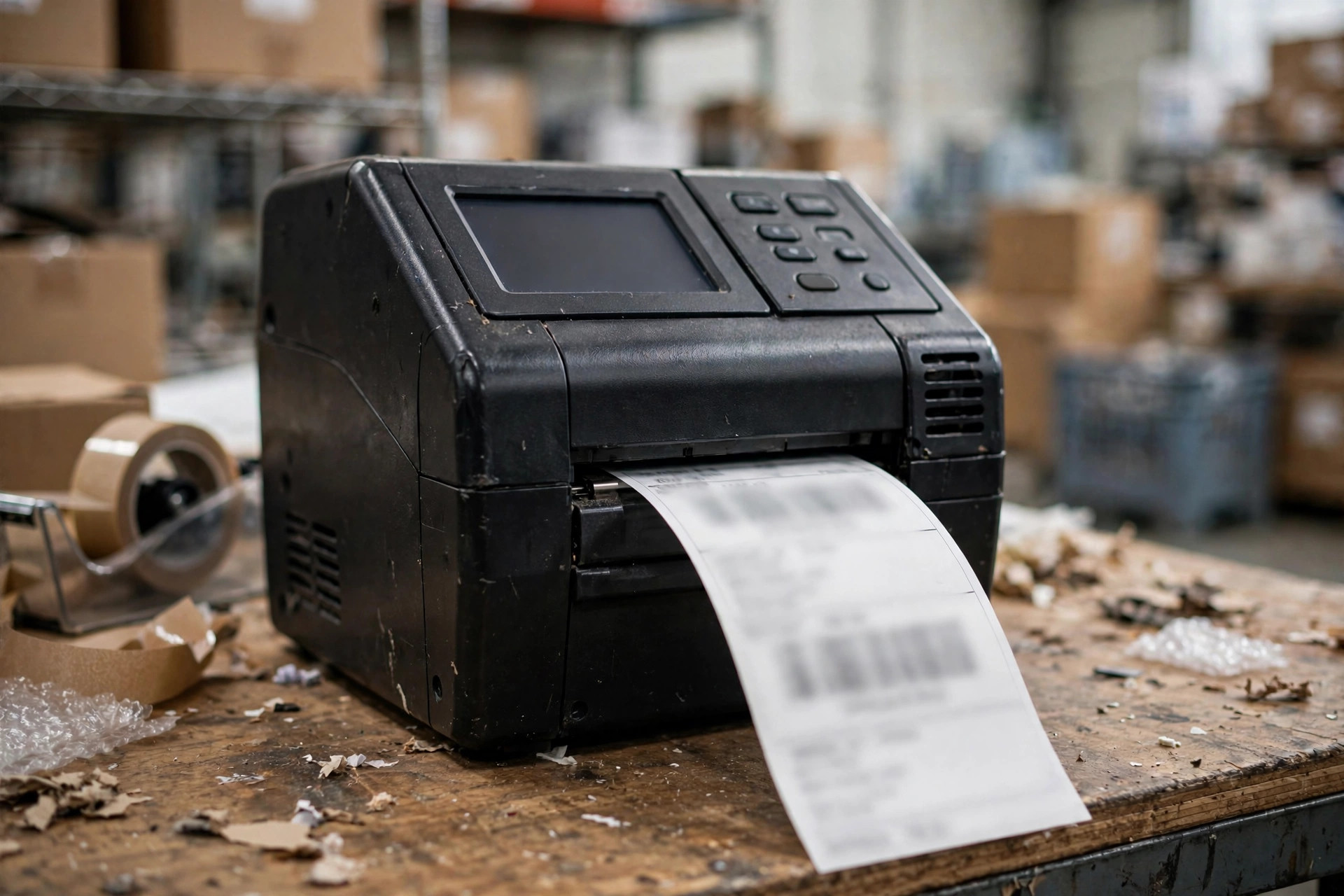
Parcel shipping labels first. A parcel label lives on a timescale of days: it goes on the carton, gets scanned once or twice at the sortation hub, and its job ends at delivery — 90 days tops. For these, direct thermal, eyes closed. Use top-coated thermal stock (water, oil, and smudge resistant), not the cheapest grade, at a few cents a label.
In 2023 I was at an e-commerce DC in Hangzhou doing 20,000 parcels a day when the equipment vendor's rep told the owner that "thermal transfer prints blacker and sharper — you should switch all your shipping labels over." I ran the numbers on the spot: thermal labels cost a few cents each; adding ribbon roughly doubles the per-label cost or more; at six million-plus labels a year that's tens of thousands of dollars extra annually — in exchange for what? "Blacker." A parcel label gets scanned once or twice at the hub; 203 DPI direct thermal scans with zero issues, and extra blackness contributes exactly nothing to scan success rates. That's a textbook pseudo-requirement: spending real money on a metric nobody needs. I told the owner flat out that money would be tuition paid to the vendor.
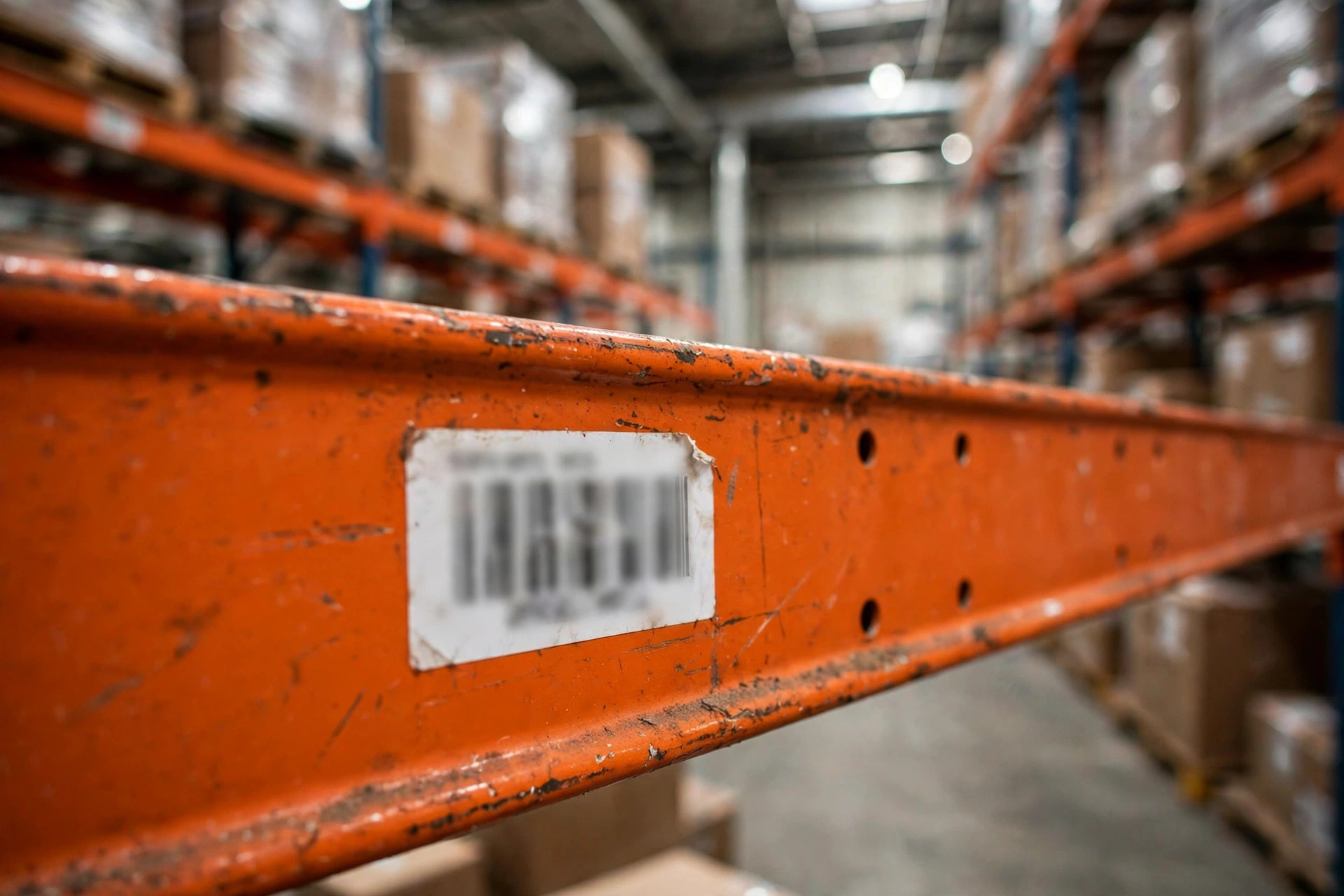
Location labels are the opposite. These need to live three to five years, get scanned thousands of times, and survive forklift rubs, dust, and a warehouse's seasonal temperature swings. Direct thermal here is suicide: the text starts fading after half a year, barcode contrast drops, scanners need three or four passes, pickers curse, and cycle-count variances spike. Location labels get thermal transfer with at least a wax-resin ribbon. No shortcuts.
Cold storage labels are the extreme case. In 2022 a cold-chain 3PL in Tianjin ran minus 25°C freezers with direct thermal location labels to "keep it simple." Half a year later the bill came due: thermal paper goes brittle in deep cold, adhesives fail under condensation, labels whitened and fell off in sheets — nearly 30% of locations unscannable at cycle count. Two days of downtime, more than 20,000 location labels reprinted and relabeled, all switched to thermal transfer on low-temperature stock with low-temperature adhesive. The rule: for freezer, outdoor, and chemical environments, don't even look at lifespan — go thermal transfer directly. Outdoor gets one more tier: resin ribbon on PET synthetic stock, UV-stable, rain-proof, chemical-wipe resistant. That's standard for chemical, building-material, and auto-parts yards.
So the selection line is one sentence: how many days does this label need to live? Under half a year — direct thermal. Over half a year — thermal transfer. Freezer, outdoor, chemical — thermal transfer regardless. That's it.
The Cost Math: Direct Thermal vs Thermal Transfer, What a Year of Consumables Really Costs
Take parcel labels, the biggest-volume case: 20,000 labels a day, 300 days a year. All order-of-magnitude math:
| Direct thermal | Thermal transfer (wax ribbon) | |
|---|---|---|
| Per-label consumable | Top-coated thermal stock, ~$0.06–0.08 | Coated paper ~$0.03 + ribbon amortized ~$0.02–0.03 |
| Annual (6M labels) | ~$400K magnitude | ~$350K magnitude |
| Printhead replacement | Frequent — 2–3× the thermal transfer rate | Infrequent — the ribbon protects the head |
| Operations | No ribbon changes, simple | Ribbon swaps, ribbon-wrinkle handling |
See it? Annual consumable spend differs by less than 10%. Here's the counter-intuitive part: everyone obsesses over fractions of a cent per label, and nobody prices the printhead. An industrial printhead runs a few hundred to over a thousand dollars; a high-duty direct thermal station burns through several a year, each swap costs half an hour of downtime — and half an hour down in peak season means the whole pack line backing up behind it. Amortize heads and downtime and the two options basically tie. So the reason to pick direct thermal for parcel labels was never "cheaper" — it's "simpler." One fewer consumable, one fewer failure class, one fewer thing to train operators on. That's how an engineer should do the math: total cost, not unit price.
The Maintenance Traps: How Printheads Get Ground to Death
Principle covered, selection set — now the maintenance traps. The printhead is the most expensive consumable in the whole system, and 90% of premature deaths are man-made.
Trap one: ribbon narrower than the label. The iron rule is the ribbon must always be wider than the label stock, by several millimeters at least. A narrow ribbon lets the printhead edge grind directly on paper, and within days it wears a groove — every label after that prints with a dead line. In 2024 an auto-parts DC in southern China bought ribbon 5mm narrower to save money and killed two printheads in three months. The ribbon savings didn't cover one replacement head.
Trap two: mismatched ribbon and stock. Wax, wax-resin, resin is a three-step durability ladder, but more expensive is not automatically better. Resin on plain coated paper actually adheres worse — using resin where wax-resin belongs means paying premium prices for worse results. And wax labels outdoors shed their text in three months, invalidating all your careful selection work. Buy ribbon and stock as a matched pair; don't price them separately.
Trap three: DPI worship. "600 DPI is sharper so it must be better" is a pseudo-requirement for parcel labels. 203 DPI is plenty; a 600 DPI head costs roughly double and prints at half the speed, and the sharpness gain contributes zero to scan success. Save 300 DPI for genuinely small barcodes and compact location labels. Specs serve the application, not the spec sheet.
Trap four: never cleaning the printhead. A weekly wipe with an alcohol swab can double head life. Every manufacturer MTBF and life rating is measured under "regular cleaning plus matched ribbon" — skip that and halve the rated life. That's not an equipment problem, it's a management problem.
Back to the opening verdict. Whether the money is worth it comes down to one number: how many days this label needs to live. A 90-day parcel label — direct thermal, no theatrics. A five-year location label — thermal transfer with wax-resin, done right the first time. Freezer and outdoor — thermal transfer with resin on synthetic stock, lifespan not even a question. The selection matrix can look complicated, but the decision line is exactly one line long.
By Da Liu, Automation Engineer