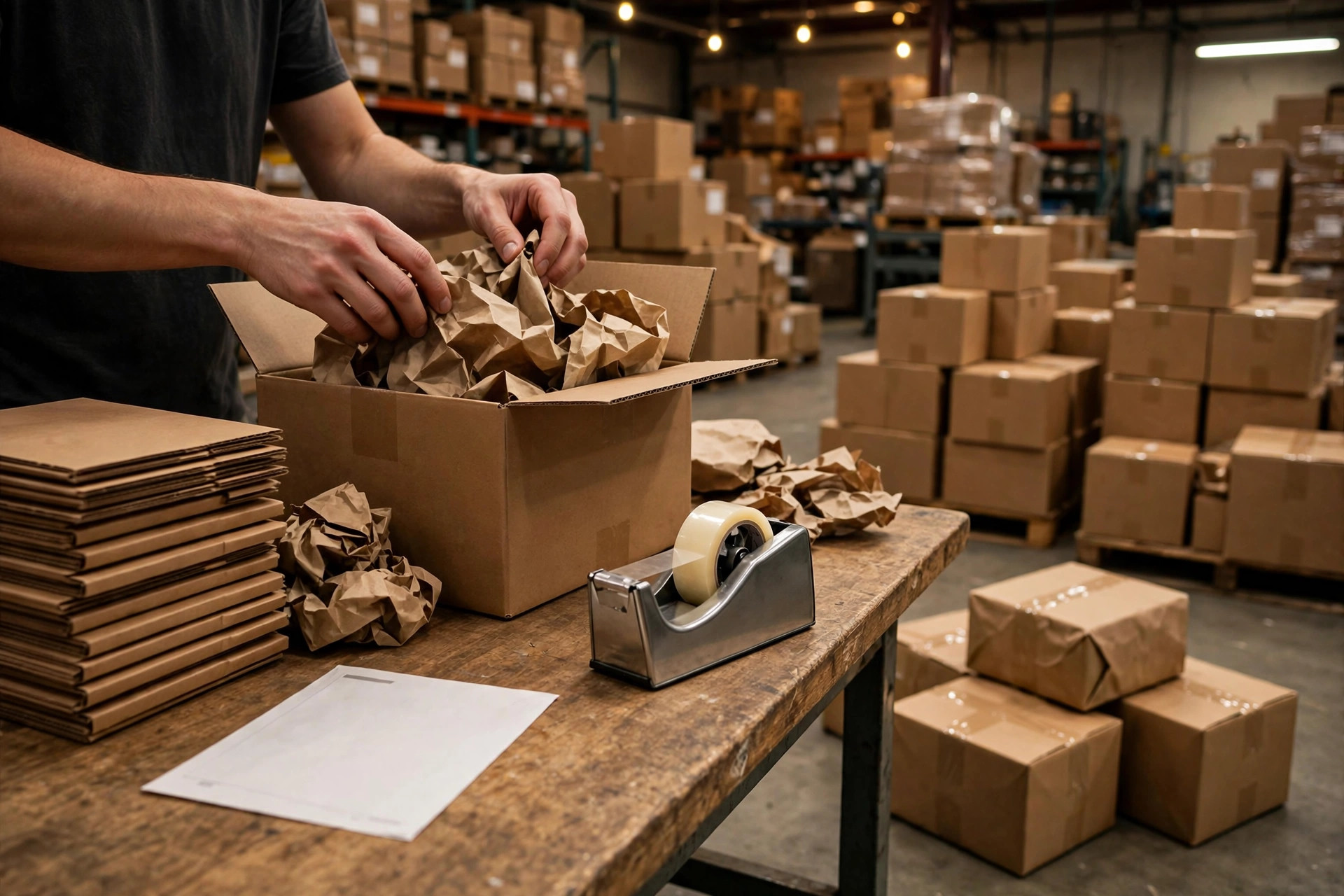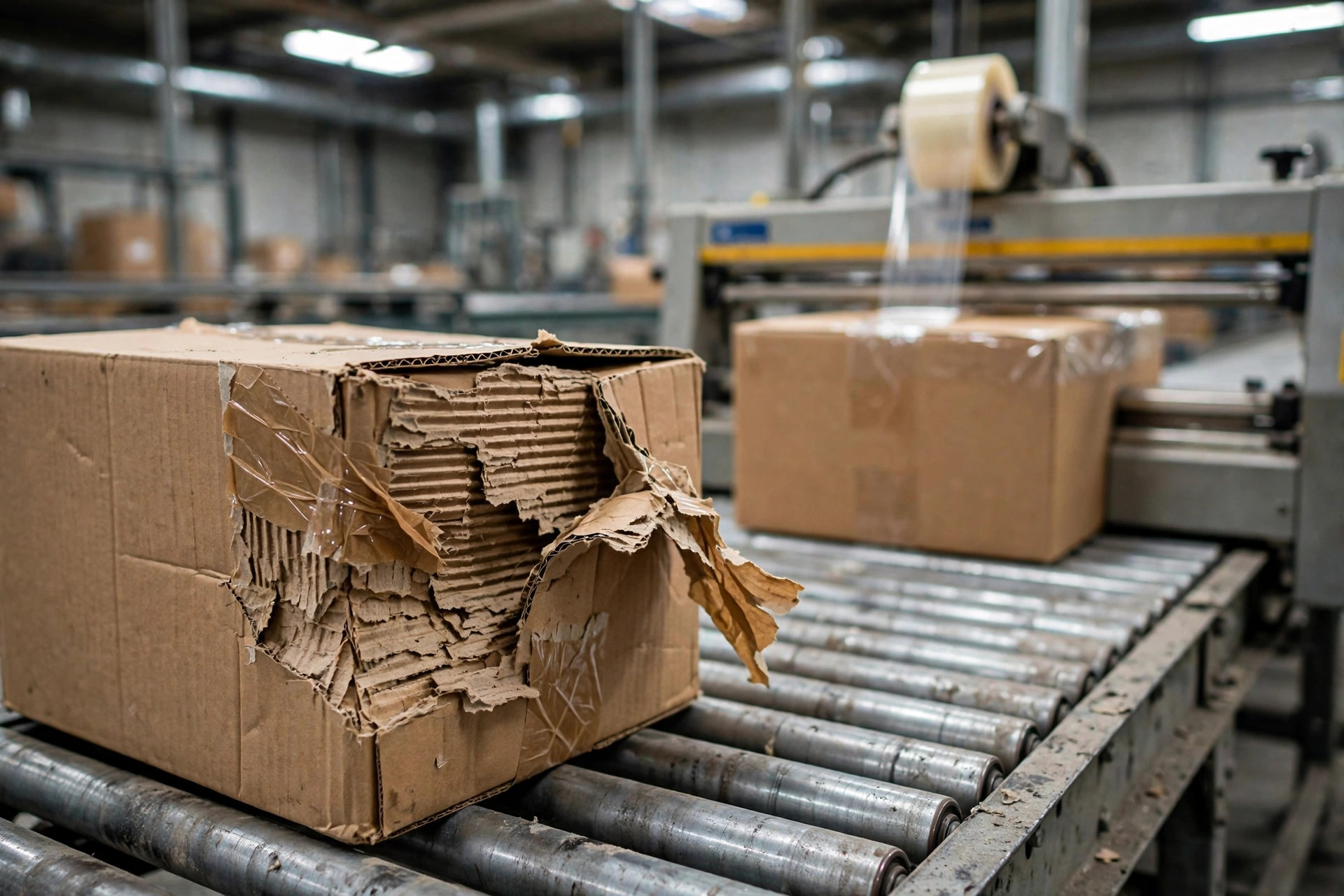
Last month I visited an e-commerce warehouse in Fontana pushing about 3,000 orders a day. The warehouse manager told me their carton damage rate had hit 2.3% — crushed boxes, popped tape, angry customers — and re-ships and refunds were burning close to $9,000 a month. The owner's first instinct was to upgrade the boxes, from 32 ECT to 44 ECT, which added more than $30,000 a year to the packaging budget. The result? Damage dropped from 2.3% to 2.0%. Basically nothing.
Here's the honest truth, from twenty years on warehouse floors: most carton damage isn't caused by a weak box. It's a misadjusted case sealer plus rough handoffs on the conveyor line. Upgrade from 32 to 48 ECT all you want — if the machine is the problem, the boxes will keep breaking, and each one just costs you a few more cents.
Trace the damage along the chain — don't blame the box first
A carton travels through four gates between the pack station and the trailer: the box itself, the case sealer, the conveyor transfers, and the final load stacking. The wound on the box tells you which gate did the damage.
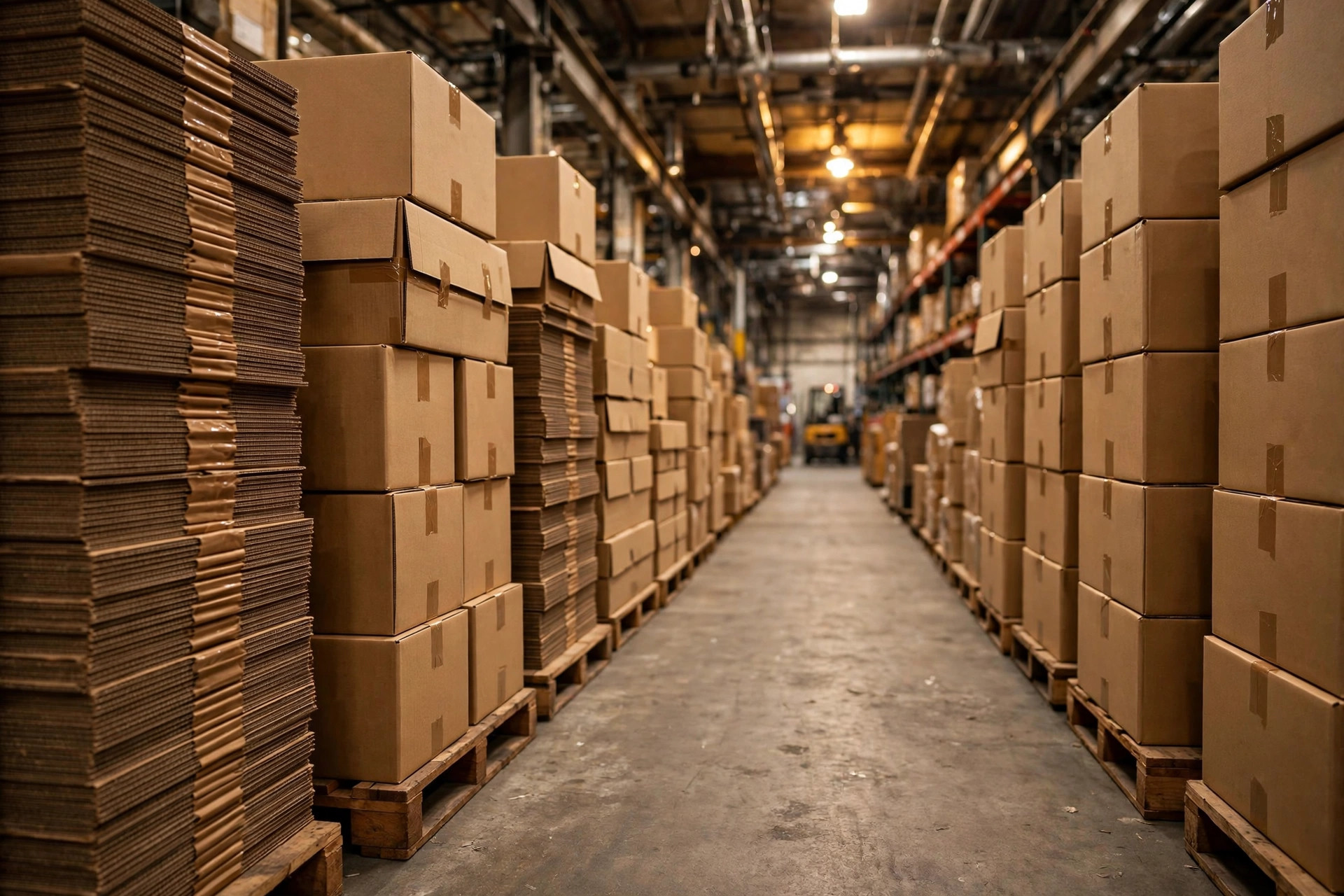
Start with the box itself. ECT — edge crush test — measures how much vertical stacking pressure the board can take. 32, 44, and 48 are the most common grades in the US. The common misconception is that higher ECT automatically means tougher. It doesn't. ECT measures compression strength, which is a different failure mode from being dropped or torn. A fresh 32 ECT box handles stacking just fine. What actually kills a box is three things: moisture, high recycled content, and old stock. Wet board can lose 30% or more of its strength, and plenty of warehouses stack cartons in an uncontrolled receiving area — one summer rainstorm and the bundles against the wall are done. Ask your supplier about recycled content: above 50%, tear resistance at the corners drops noticeably.
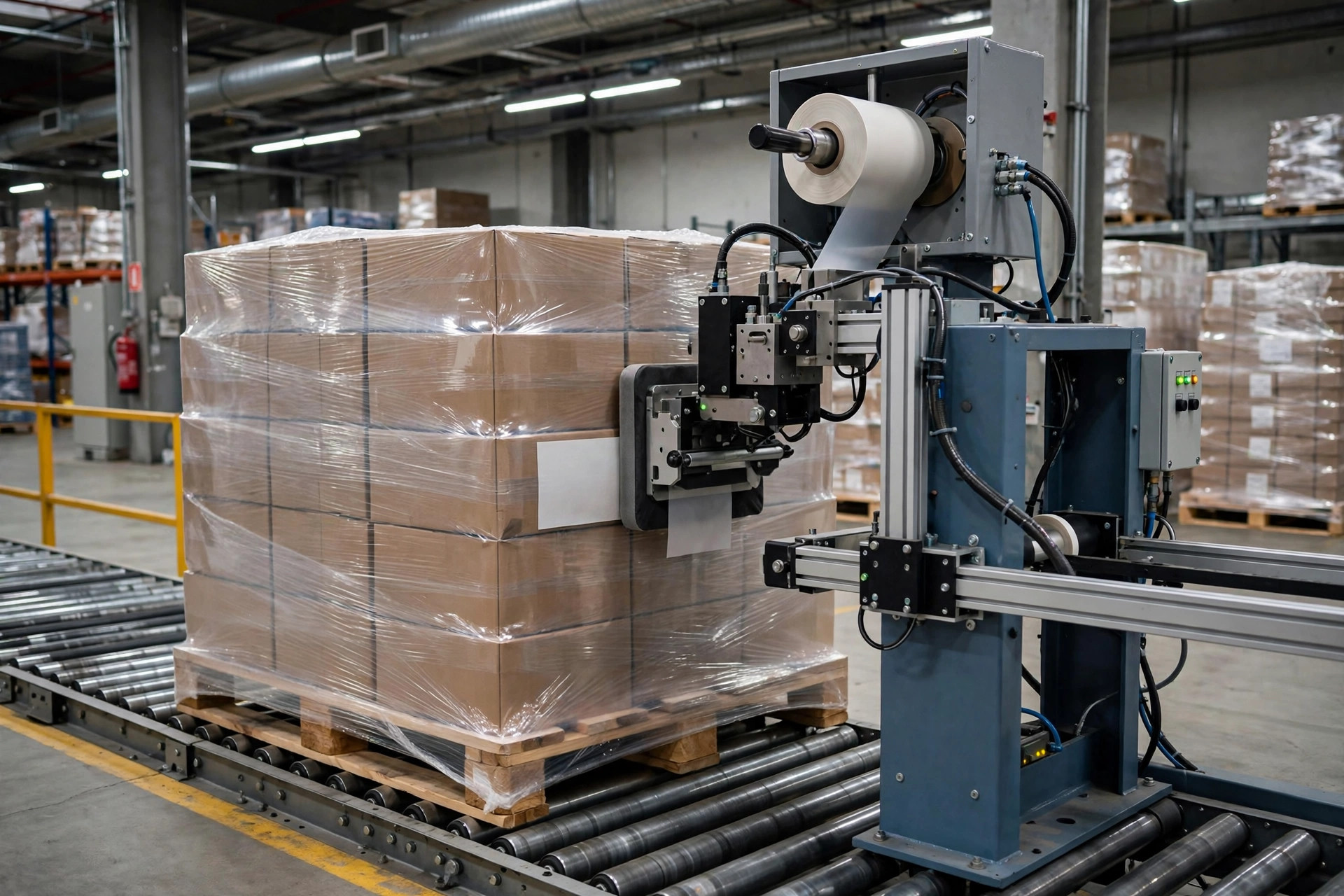
Then look at the case sealer — this is where most damage is born. Four things go wrong on a semi-automatic sealer: top and bottom belt pressure too high, the flap folder out of adjustment, wrong tape tension, and a dull blade. Belt pressure too high leaves two deep creases down the sides of the box. An empty box looks fine; load it with heavy product and those creases become crack lines. The worst one I ever saw was cranked tight enough to crush a soda can — and the operator thought "tighter is better." A misadjusted flap folder is sneakier: the top flaps don't lie flat before taping, the tape only grabs half the surface, one good bounce in transit pops the seal, the product shifts inside, and the corners split. Tape matters too: 48 mm is standard, but for heavy cartons (over 15 kg) step up to 72 mm, and set tension so the tape lies flat without deforming the board. A dull blade leaves long tape tails that don't seal and jam the next box.
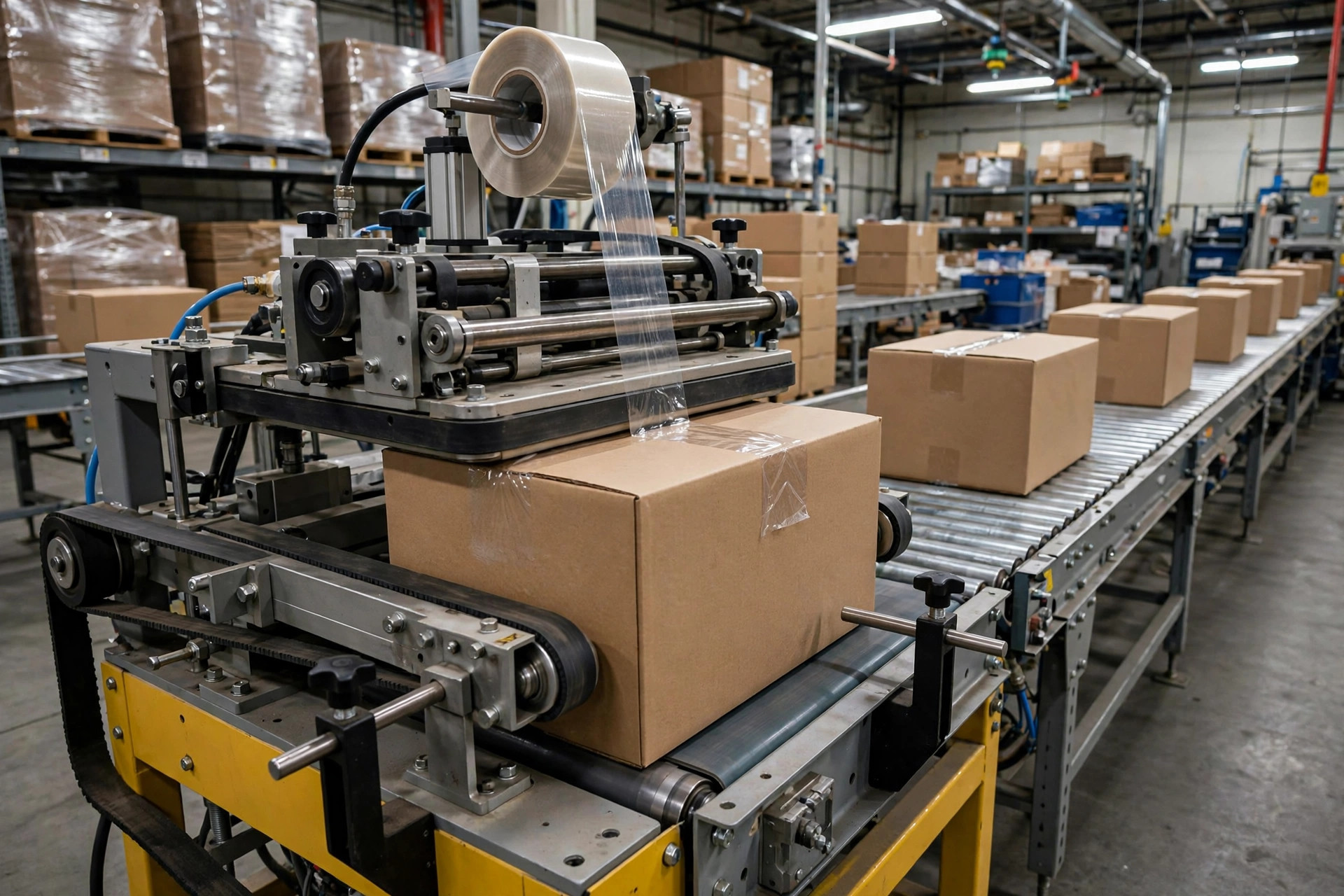
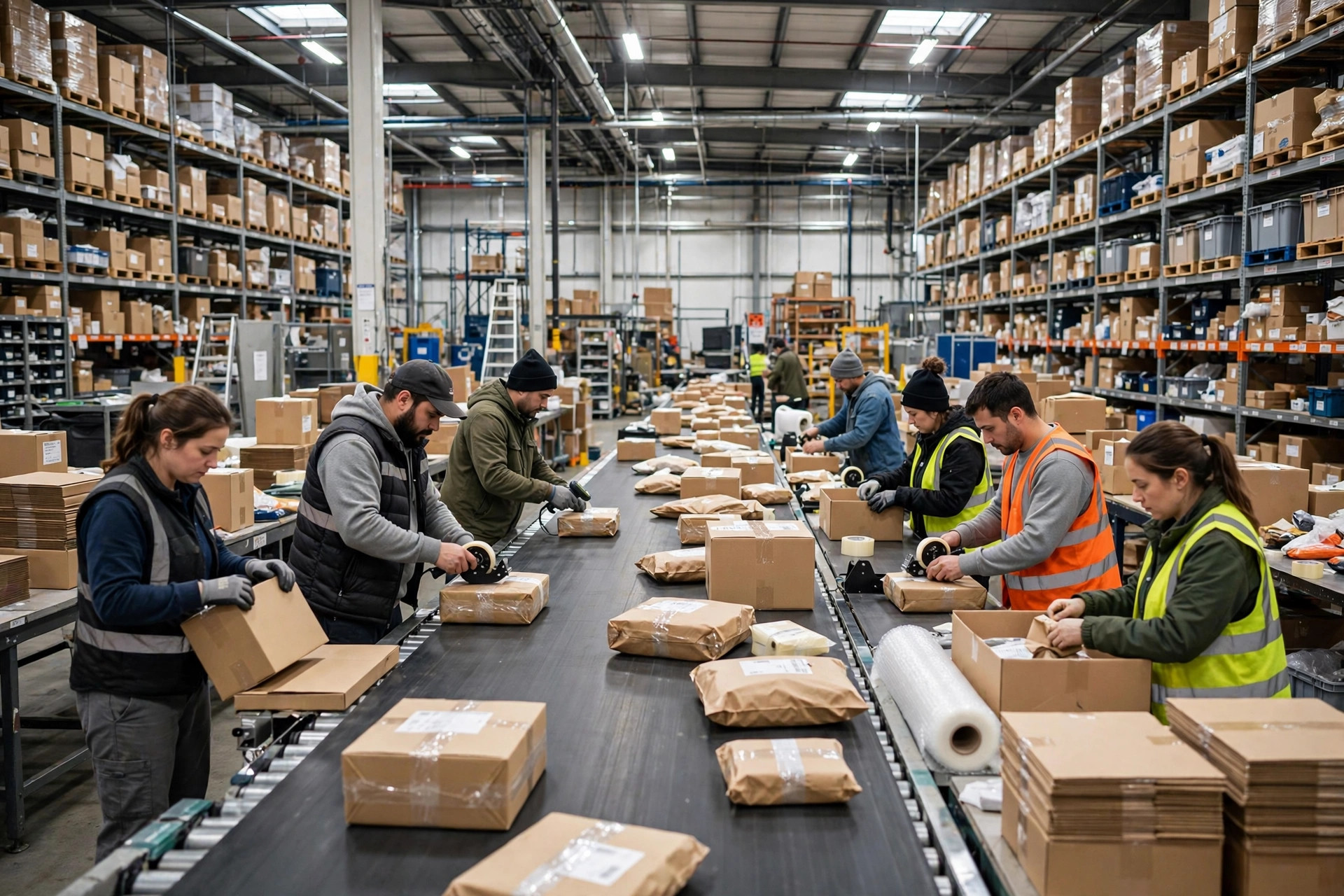
Then come the conveyor transfers. On an automated line, the damage always happens at handoffs and drops. A rough rule of thumb from the field: once the drop exceeds about 30 cm, damage risk for heavy cartons roughly doubles. Many small warehouses run pieced-together lines — cartons come out of the sealer and drop straight onto another belt, a 40-plus-centimeter fall, thud, thousands of times a day. Curves are worse: cartons get muscled around by guide rails, corners slamming into bare metal edges, and by end of shift every corner shows white scuff marks. And then there's the human factor: when the pack station sits far from the line, operators toss boxes onto the belt to save steps. The box tumbles through the air and lands on its corner. You can't trace that kind of damage from data — you have to stand there and watch.
How to diagnose it: change one variable at a time, sample 200 cartons
The biggest mistake in damage investigation is changing everything at once. New tape today, belt adjustment tomorrow, a new box supplier next week — and when the damage rate finally drops, nobody knows what fixed it, so the next flare-up starts from zero again.
My method is controlled troubleshooting: change exactly one variable at a time. Start with a baseline: pull 200 cartons off the outbound line (randomly, no cherry-picking) and log the damage location on each one — split corners, popped top seam, side creases, or collapsed bottom. The location pattern points straight at the cause: split corners mean drops and impacts at transfers; popped seams mean the sealer's flap folder or tape; twin side creases mean belt pressure; collapsed bottoms mean moisture or bad stacking.
Once you have the pattern, adjust one thing, run three days, and sample 200 again. Drop the sealer's belt pressure two notches first. If it works, lock it in. If not, revert and move to the next variable. One full cycle takes about two weeks, and it will find the root cause every time. I've used this method for over a decade because it forces you to follow the data instead of your gut.
One more quick check while you're at it: stick a hygrometer in the carton storage area. If relative humidity runs above 70%, you have a moisture problem. Get cartons off the floor onto pallets, 15 cm off the wall. Sounds trivial — I've seen a warehouse cut its damage rate by 0.4 points just by getting boxes off the concrete.
The math: what a 2% damage rate actually costs you
Two percent sounds small. Let's run the numbers. Say you ship 2,000 orders a day, 26 days a month — that's 52,000 orders. At 2% damage, 1,040 cartons are compromised.
Roughly half of those will trigger a complaint and a re-ship or refund. Re-shipping one parcel costs real money before you even count the replacement product: $8–12 in freight alone, plus $2–3 in labor and materials — call it $12 at minimum. 520 re-ships × $12 = $6,240. Then add reverse logistics for the returns that do come back, $5–8 per parcel to receive, inspect, and disposition. All in, a 2% damage rate costs you $8,000–10,000 a month — six figures a year.
Now compare that to the fix: half a day with a machine technician to tune the sealer, a few hundred dollars. Add cushioning to the drop points — a few hundred to a couple thousand for simple inclined chutes. Pallets under the cartons — free. Even if you do end up upgrading the box, going from 32 to 44 ECT adds $0.15–0.25 per carton, which on 52,000 orders is over $10,000 a month in extra packaging. Whether that's worth it depends entirely on whether the machine is tuned first. Get the order wrong and you're pouring water into a leaky bucket.
There's also the cost you can't spreadsheet: the one-star review that says "arrived crushed." Every e-commerce operator knows what that does to conversion. No ad budget buys it back.
My verdict: small warehouses should spend half a day tuning the machine, not upgrading ECT
Here's the punch list, in order:
First, sample 200 cartons, map the damage locations, find the dominant pattern. Second, tune the sealer: drop belt pressure until the belts just barely drive the box without slipping, verify the flap folder presses the top flaps flat, move to 72 mm tape for heavy cartons (or confirm 48 mm tension is right), and replace a dull blade — a blade costs a few dollars. Third, walk the conveyor: measure every drop, and anything over 30 cm gets cushioning — the cheapest fix is an inclined chute or just lowering the fall. Check curve guides for burrs and line them with UHMW plastic strip, a few dozen dollars. Fourth, cartons onto pallets, off the wall, and ventilate or dehumidify if humidity runs above 70%.
Done in this order, damage typically falls from 2% to under 0.8%, and the whole exercise usually costs less than $2,000 — an afternoon plus a technician's labor.
When is upgrading ECT actually the right call? When your sampling shows damage concentrated in collapsed bottoms and bulging sides, the product genuinely is heavy (over 20 kg per carton), and you're stacking five layers or more. That's when 44 ECT earns its keep. Remember: ECT solves compression, not drops and tears. If your boxes are dying on a conveyor transfer, 48 ECT won't save them.
One question to take with you: tomorrow morning, stand at the pack line for ten minutes and count how many cartons drop off the sealer onto the next belt. That number is a preview of next month's re-ship bill.