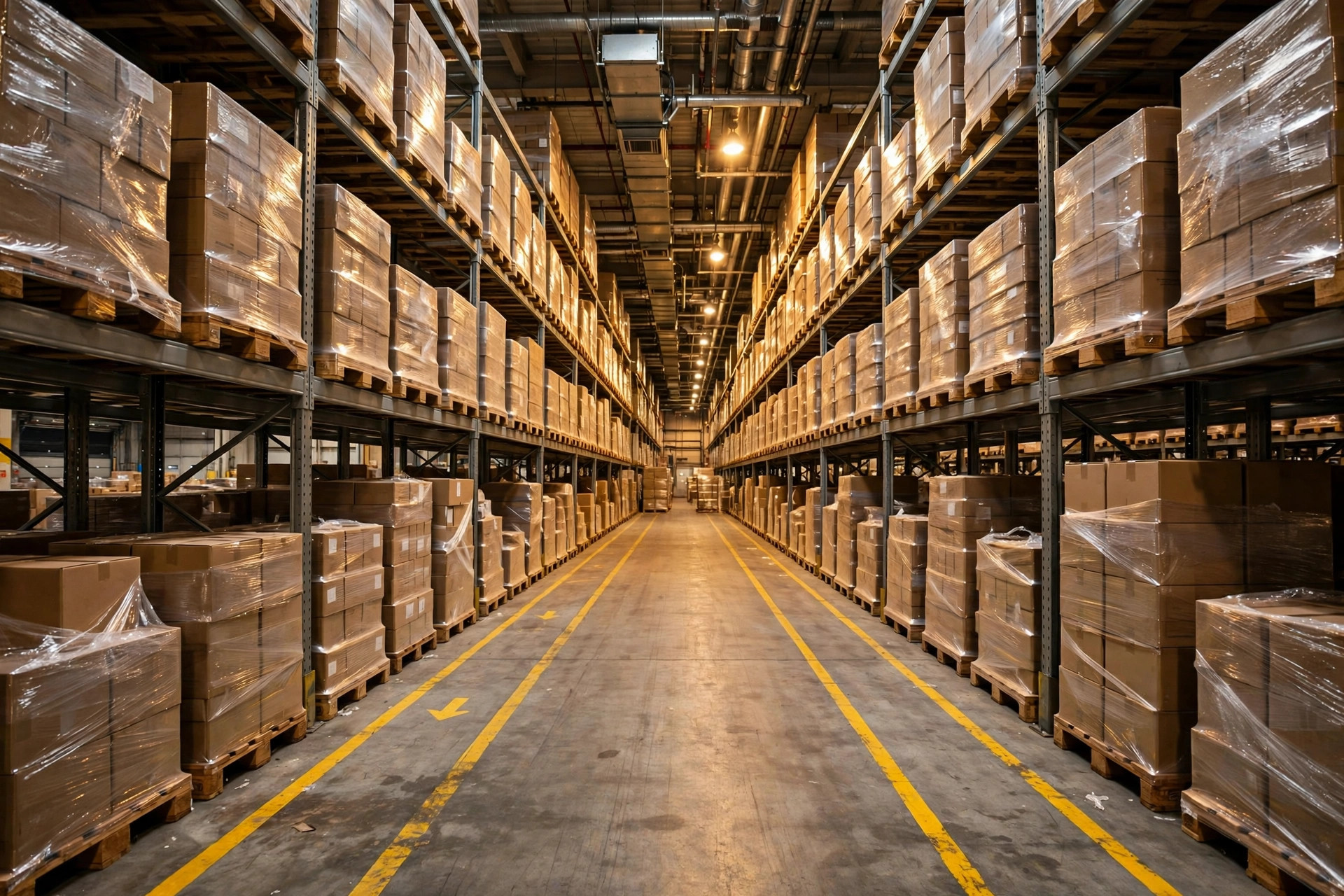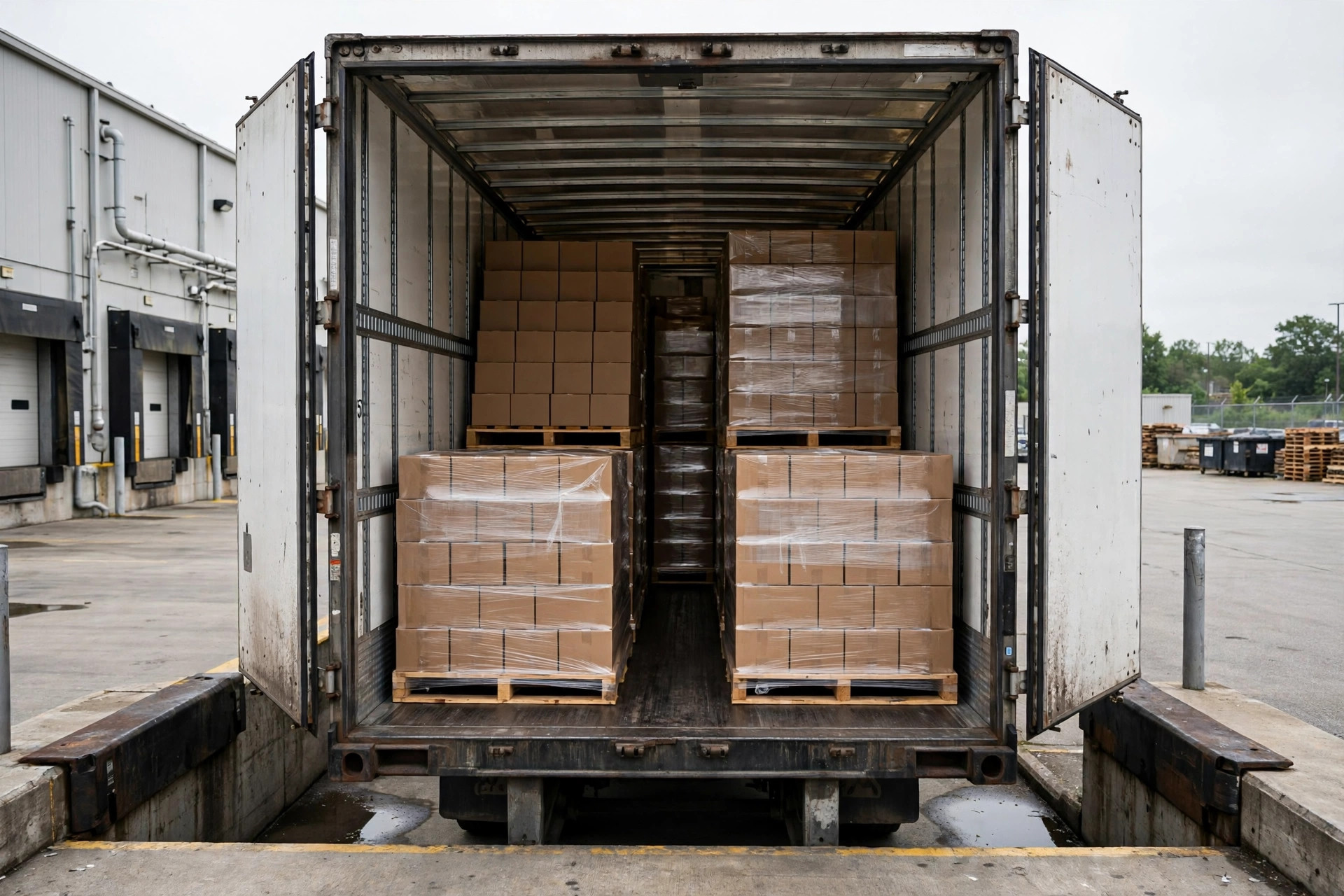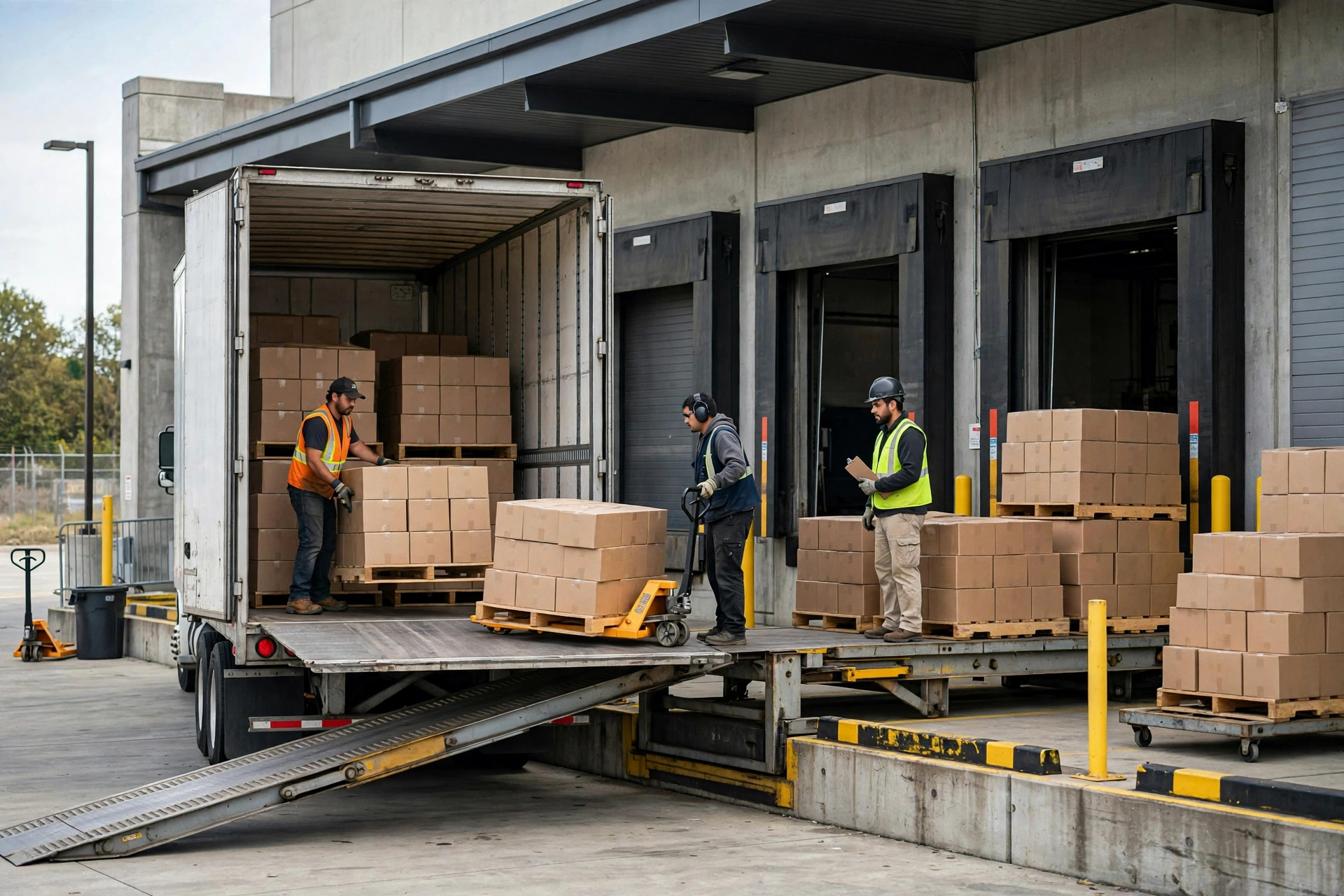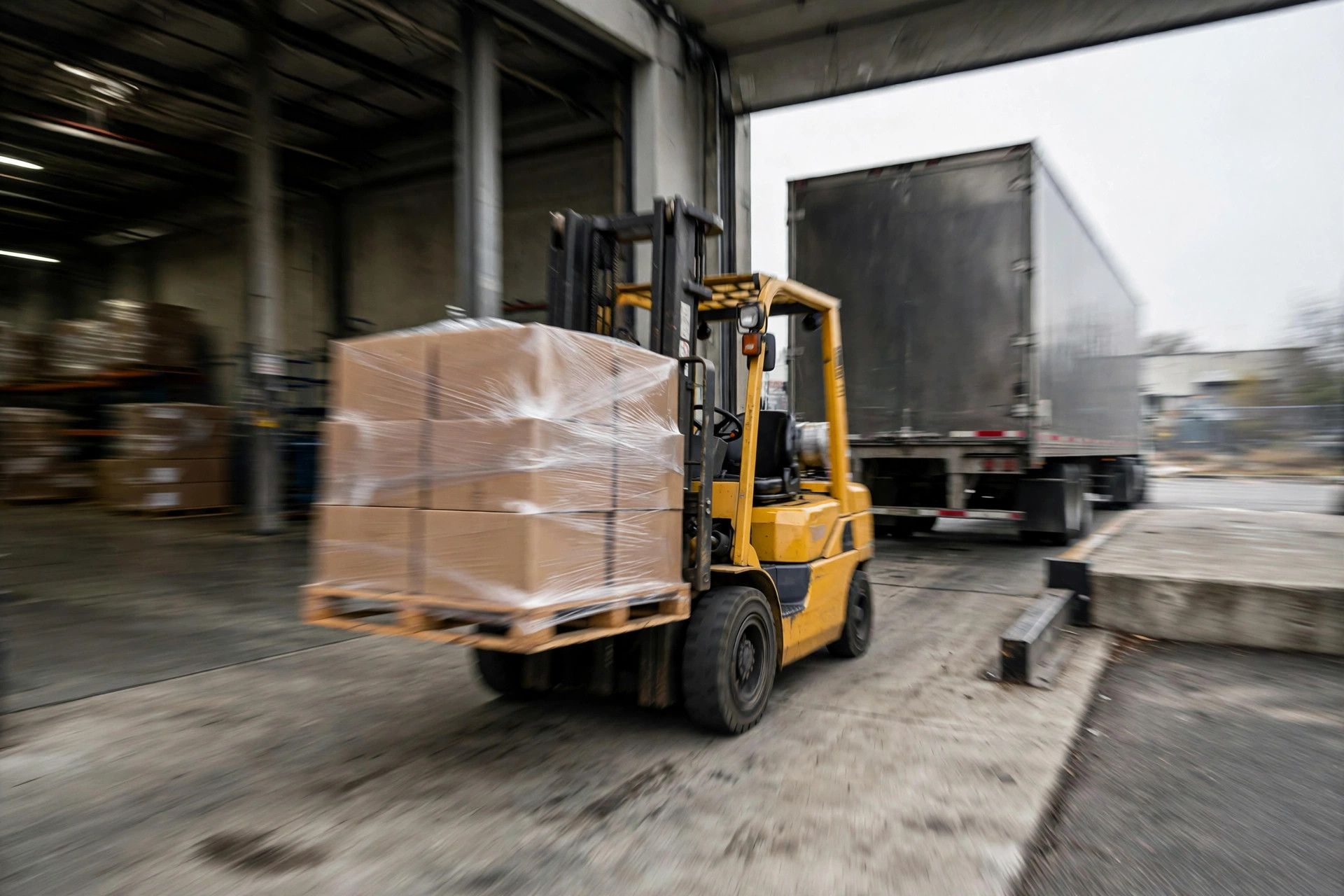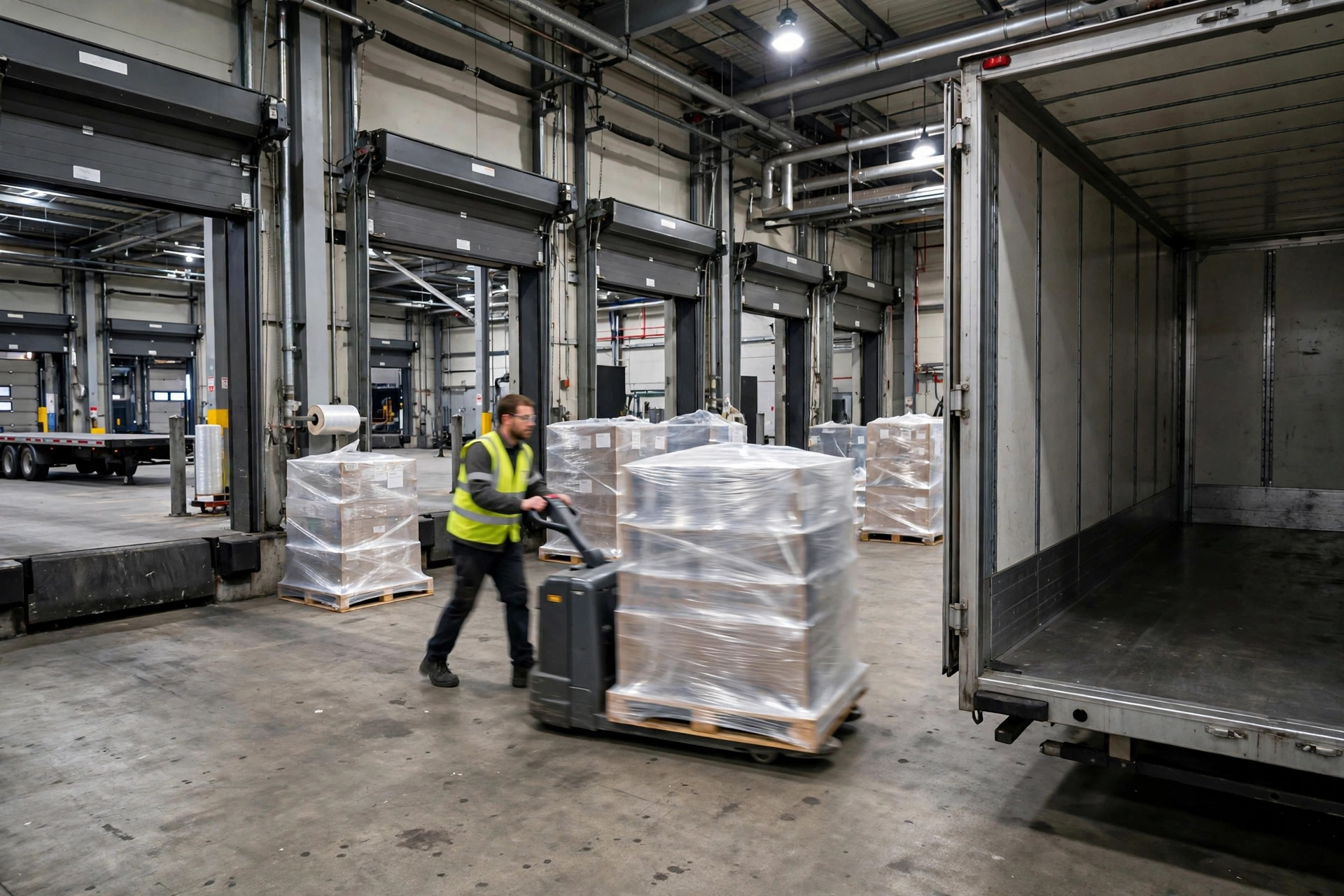
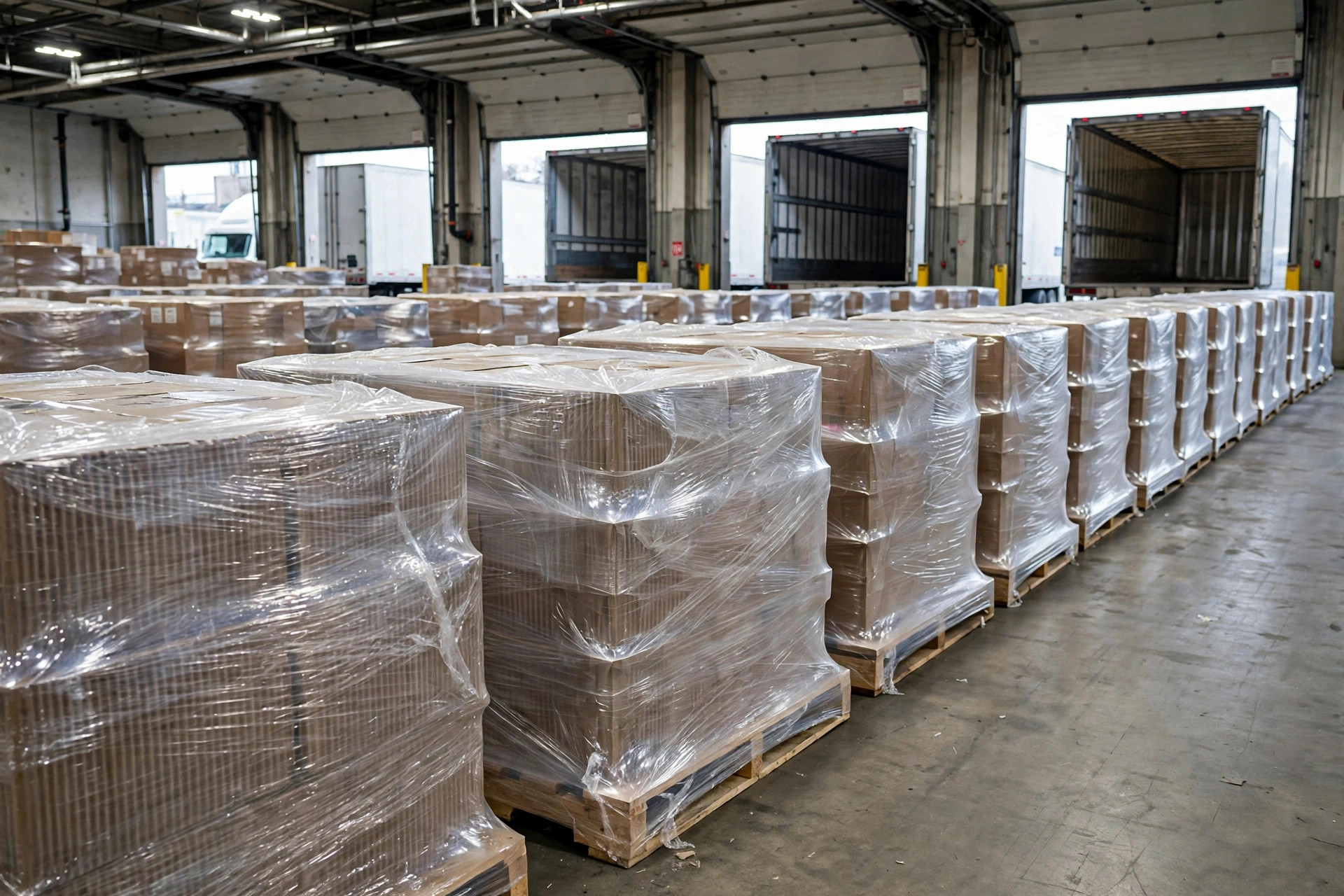
In the summer of 2023, a 3PL owner in Fontana told me he was converting his 120,000-square-foot warehouse to a pure cross-dock operation: "Pallets in and out within six hours — we eliminate all putaway cost!" Six months later I went back. The staging area was buried under 400 pallets that hadn't moved, seven trailers were sitting in the yard waiting, and the forklift drivers were doing three hours of overtime every day. The cross-dock didn't save money. It added two new line items to the bill.
Here's my verdict up front: cross-docking isn't magic. It only saves money when three hard thresholds are all met. Miss one, and your staging area becomes a second warehouse.
Three thresholds that decide everything
First threshold: inbound on-time performance. Key suppliers need to hit at least 95% on-time arrival, within a plus-or-minus two-hour window. The whole logic of cross-docking is that inbound and outbound trucks meet on the same day. A supplier four hours late means the outbound truck waits empty, and your staging dwell time goes from 6 hours to 30. I watched an auto-parts distributor try cross-docking at 88% on-time performance. After two months, average staging dwell had climbed from the designed 8 hours to 26. It was called cross-docking, but it was really just stacking freight on the floor and paying rent on it. Below 90%, don't touch it.
Second threshold: full-pallet outbound share. Look at your daily shipments and figure out what percentage of pallets ship out as full pallets, untouched. My rule of thumb is 60%. Below that, most of your freight still needs to be broken down, picked, and rebuilt into pallets — the "door-to-door" flow never gets going, and you're maintaining a separate process and crew for a handful of full pallets. The worst of both worlds. Retail DCs replenishing stores and 3PLs doing full-pallet distribution for chain accounts clear this bar naturally. E-commerce parcel operations and long-tail SKU warehouses should sit this one out.
Third threshold: SKU concentration. Cross-docking hates "a little bit of everything." Your top 20% of SKUs should account for at least 70% of outbound volume before the operation is "coarse" enough. High-velocity, low-SKU categories — beverages, paper products, consumer staples — are the natural fit. Warehouses with ten thousand SKUs shipping a few units per order will find that the scheduling complexity eats every dollar of savings. There's also a hidden requirement: suppliers must send advance ship notices, with ASN coverage ideally above 90%. Without ASNs, the receiving team doesn't know what's on the truck and can't pre-assign staging slots or labor. Cross-docking degrades into "unload it and figure it out later."
Doing the actual math
Let's use real 2025 Southern California rates. The traditional flow — receive, putaway, store, pick, ship — runs about this per pallet: putaway $4 to $6, storage roughly $0.65 per pallet per day (about $4.50 for a typical 7-day stay), picking plus shipping $8 to $12. Total: $17 to $22 per pallet. The cross-dock flow — receive, stage, transfer out — is mostly sort-and-move labor at $5 to $8 per pallet. On paper, you cut more than half the cost by eliminating putaway, storage, and picking.
But don't stop at the paper math. Cross-docking has three hidden costs that most people miss on day one. First, staging space. Staging is prime real estate by design — closest to the dock doors, highest opportunity cost per square foot. Second, labor peaks. Cross-docking compresses work that used to spread across eight hours into a two-hour handoff window. Miss the window and you're into overtime; temp labor runs 30% to 40% above your regular hourly rate, and error rates double. Third, mis-ships. At cross-dock speed, one wrong pallet label means an entire truck goes to the wrong store, and one claim plus rework can wipe out a month of savings.
So the real formula is: savings from eliminating putaway, storage, and picking, minus staging opportunity cost, peak labor premium, and mis-ship losses. It needs to be positive with at least a 20% safety margin before it's worth doing. That Fontana warehouse did the post-mortem: $9 saved per pallet on paper, $11,000 a month extra in overtime and mis-ships. Net zero — a lot of pain for nothing.
How big should staging and dock doors be?
Two formulas you can apply directly.
Staging area: first figure out how many pallets sit in staging at once. The formula is: average daily cross-dock pallets × average staging hours ÷ 24 × safety factor of 1.3. Example: 300 pallets a day, 6 hours average staging — that's 300 × 6 ÷ 24 × 1.3, about 98 pallet positions. Each position with aisle space runs 12 to 14 square feet, so 98 × 13 is roughly 1,270 square feet. Note that's the average; multiply by 1.5 for peak season. Paint the staging floor and zone it by outbound load or store — one load, one zone. Mixed piles are the number one cause of mis-ships.
Dock doors: calculate inbound and outbound separately. Inbound doors = peak-hour inbound trailers ÷ unloading capacity per door per hour. A 53-foot trailer with 26 pallets takes a seasoned crew 45 to 60 minutes to unload, so one door handles about one trailer per hour. Four trailers in the peak hour means four inbound doors, plus one spare. Outbound doors work the same way: outbound doors = peak-hour outbound trailers ÷ (60 ÷ loading minutes per trailer). Loading takes 45 minutes per trailer, so one door loads 1.3 trailers per hour; five outbound trailers in the peak hour needs four outbound doors. Keep inbound and outbound doors on opposite sides with non-crossing travel paths — that's the iron rule of cross-dock building design, a U-shape or straight-through flow. Never let inbound and outbound forklifts run head-on in the same aisle.
The three ways it blows up
Failure one: inbound that's out of sync. The classic killer. A warehouse distributing to a grocery chain: supplier A delivered its 8 SKUs on time, supplier B's 2 SKUs arrived a day late. The store-bound truck was short those 2 SKUs and couldn't leave, so supplier A's freight sat in staging from 6 hours to 30, and staging overflowed. The fix: plan by complete sets, and anything not complete within 12 hours goes into normal putaway instead of dying in staging. Put arrival window agreements with suppliers in writing, with service credits for late arrivals.
Failure two: labor peaks. Cross-docking doesn't reduce work, it compresses it. An apparel distributor had to move 180 pallets between 6 and 9 in the morning — three hours. The regular crew of 10 couldn't touch it, so they added 6 temps, and the rookies' mis-ship rate was four times the veterans'. The fix: schedule peak labor 48 hours ahead based on ASNs, put only experienced operators on cross-dock moves, and track mis-ship rate as its own KPI. If it crosses 0.5%, stop the line and figure out why.
Failure three: a system that can't support it. This is the sneakiest one. Plenty of warehouses run a WMS with no "inbound-to-outbound" linking — receiving and shipping are separate documents, and matching them is a paper exercise in the shift lead's head. Which 12 of the 20 pallets off that trailer go on which outbound truck? At volume, it falls apart. The fix: before going live, confirm the system supports direct inbound-to-outbound task linking, staging tasks built by load or wave, and pallet-level tracking. If it doesn't, add the module or don't do cross-docking. Manual matching past 100 pallets a day will break.
The go-live checklist
Before committing, check off all six: three months of inbound on-time data from key suppliers (95% plus); full-pallet outbound share (60% plus); top-20% SKU concentration (70% plus); ASN coverage (90% plus); a system that supports inbound-outbound linking and pallet tracking; staging area and dock door counts sized with the formulas above. Anything unchecked — fix the gap first, don't rush the launch.
One thing you can do tomorrow: don't talk about remodeling yet, pull data first. Export three months of receiving and shipping records and compute three numbers — on-time rate, full-pallet share, SKU concentration. If all three clear the bar, cross-docking will probably cut your per-pallet cost by 30% or more. If one doesn't, fix that gap first. Cross-docking never saves you the "putaway" motion. What it saves is the certainty that freight doesn't need to stop at your building at all. Without that certainty, your staging area is just the most expensive warehouse you've ever operated.