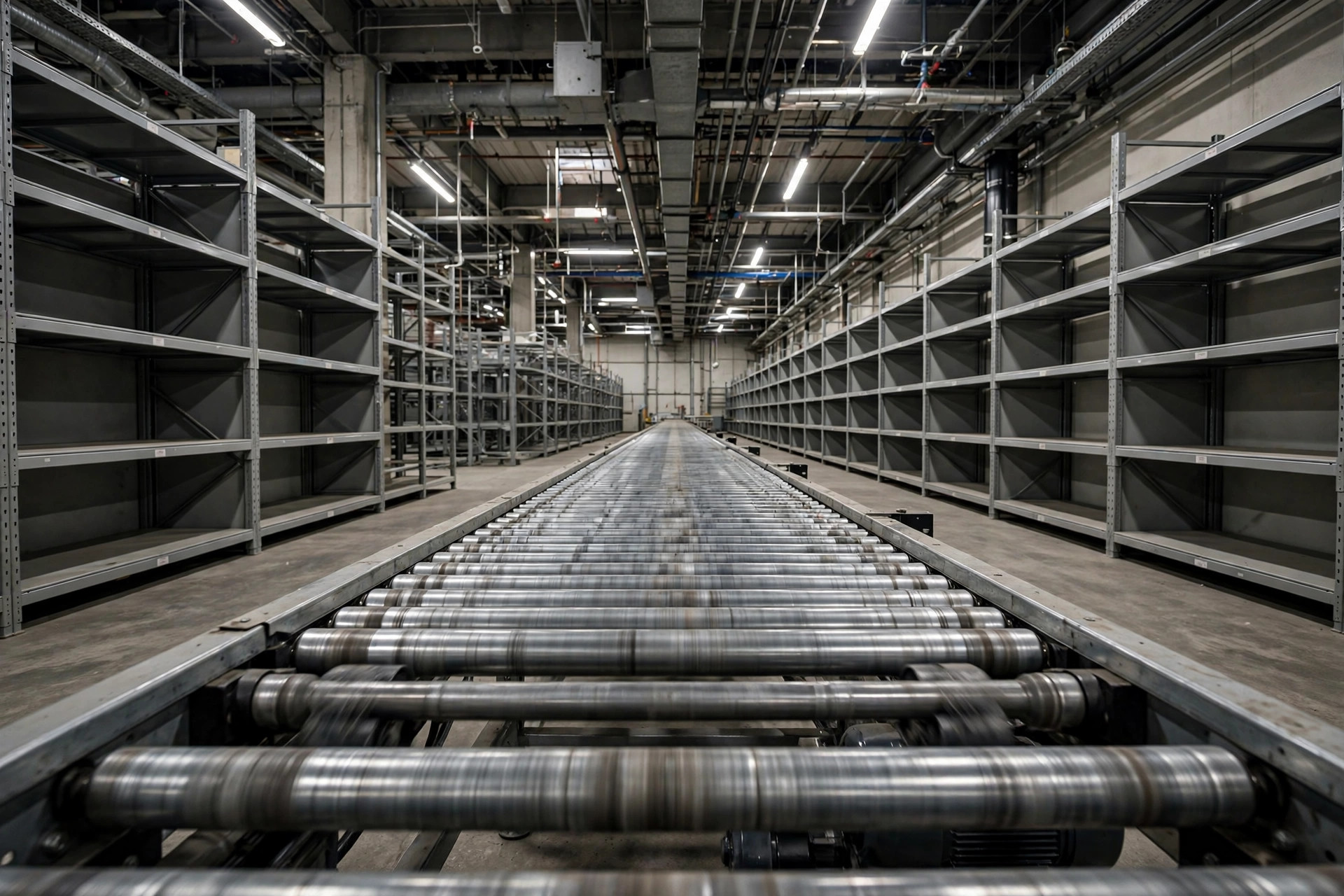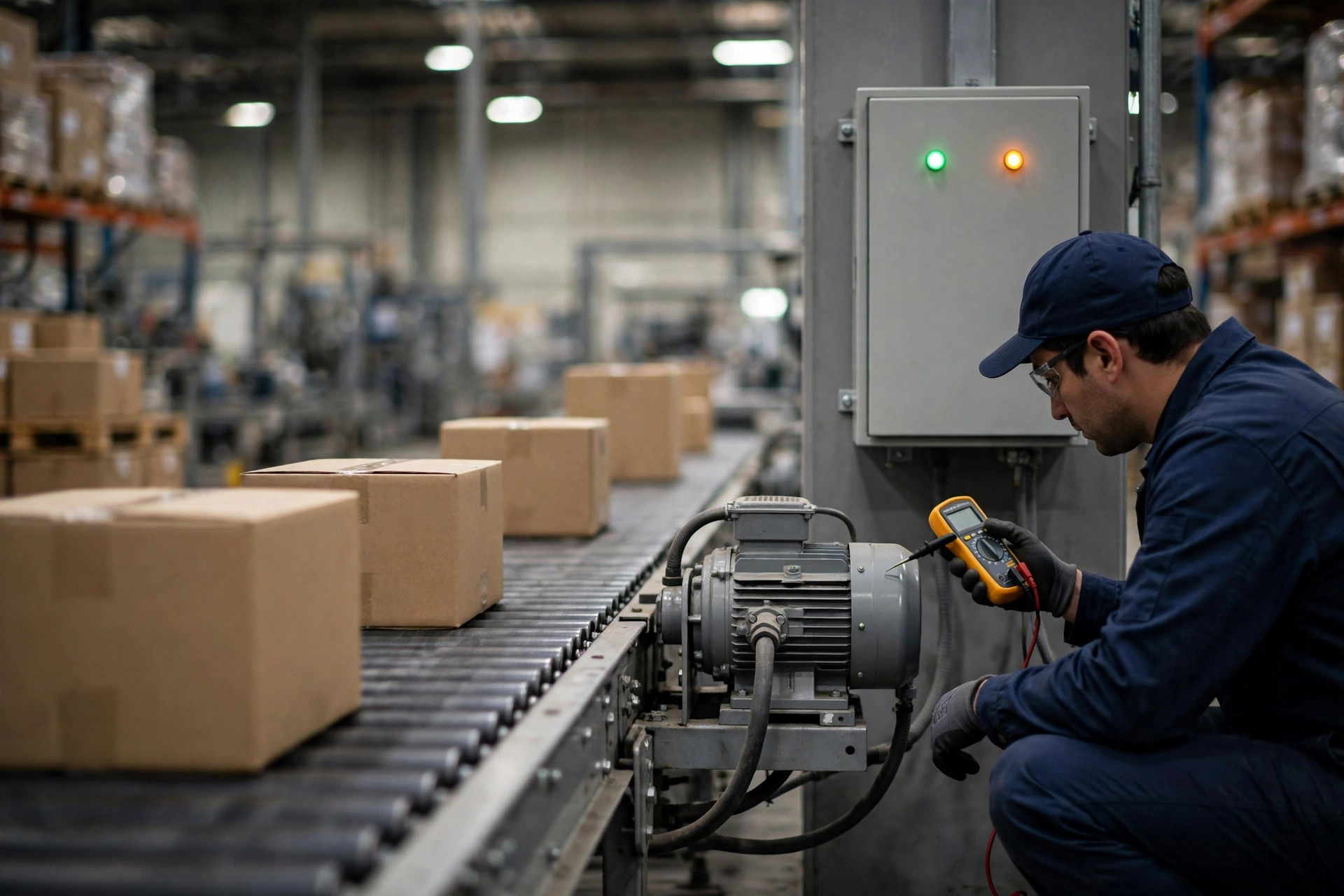
Here's my verdict up front: putting VFDs on conveyors genuinely saves electricity — but whether it's worth it comes down to three numbers: how many hours the line runs a day, how much of that is idle time waiting for product, and how old the motors are. Hit all three, and we can talk. Miss even one, and you'd better think twice.
Here's the thing — VFDs are old friends of mine. Over the past decade, I've walked past maybe eighty or a hundred VFD-driven conveyor lines in warehouses I've worked with. I've seen plenty that paid for themselves. I've seen even more that were money down the drain.
The most wasteful VFD retrofit I've ever seen
Fall 2023, I was consulting for a 3PL warehouse in Fontana — 120,000 square feet, more than 40 conveyor lines. The owner had just spent close to $100,000 putting a VFD on every single motor in the building.
It started at a trade show. A vendor pitched him "30% energy savings with VFDs," and he came home and ordered the full conversion.
Six months later he called me, and he did not look happy. I walked all 40-plus lines with his electrician. Three problems.
First, a dozen short sortation spurs that genuinely run four to five hours a day — they sit waiting for waves, waiting for upstream, and only turn when product shows up. A 7.5 kW drive costs nearly $2,000 installed, and each one was saving under a hundred bucks a year in electricity. At that rate the payback period outlives the drive itself.
Second, several old lines still ran motors from a decade-plus ago, with insulation never meant to take a VFD's high-frequency output pulses — and nobody had fitted output reactors. Within two years, three motors burned out. Each replacement, parts plus labor, ran close to $2,000. Every dollar of electricity saved went right back out the door, plus interest.
Third, no line reactors on the input side, so harmonics bled back into the plant power and started tripping the photoeye sensors next door with phantom signals. The line kept stopping for no reason. It took two weeks to trace it to harmonics.
Two sides to this story: nothing wrong with the VFD itself. Everything wrong with the "convert every line" approach.
The uncomfortable truth about VFD savings on conveyors
Here's the counterintuitive bit the sales reps won't volunteer: a conveyor is a constant-torque load. Drop the speed 10%, and power drops roughly 10% — it's linear. That "30–50% savings" figure in the brochure is fan-and-pump math, the cube law for variable-torque loads. Apply it to a conveyor and you should cut it in half before believing it.
So where do the real savings come from? Three places.
Speed on demand. An e-commerce outbound line spends huge chunks of its day spinning empty between waves. Drop to 60% speed when there's no product, ramp back to full when cartons arrive, and the idle hours stop costing you full power. On lines with the right duty cycle, 15–25% measured savings is realistic.
Soft starting. A motor started direct-on-line pulls five to seven times its rated current for that first instant — a hammer blow to the electrical system and the mechanics. A VFD erases it, and contactors and belt splices live longer for it.
Less mechanical abuse. Frequent hard starts and stops are the number-one killer of belt splices and the reason bearings die young. A line that ramps instead of jerks just lasts longer — and that maintenance bill, added up, is no smaller than the electricity bill.
So don't expect one drive to cut your power bill in half. Fifteen to twenty-five percent is the honest ceiling.
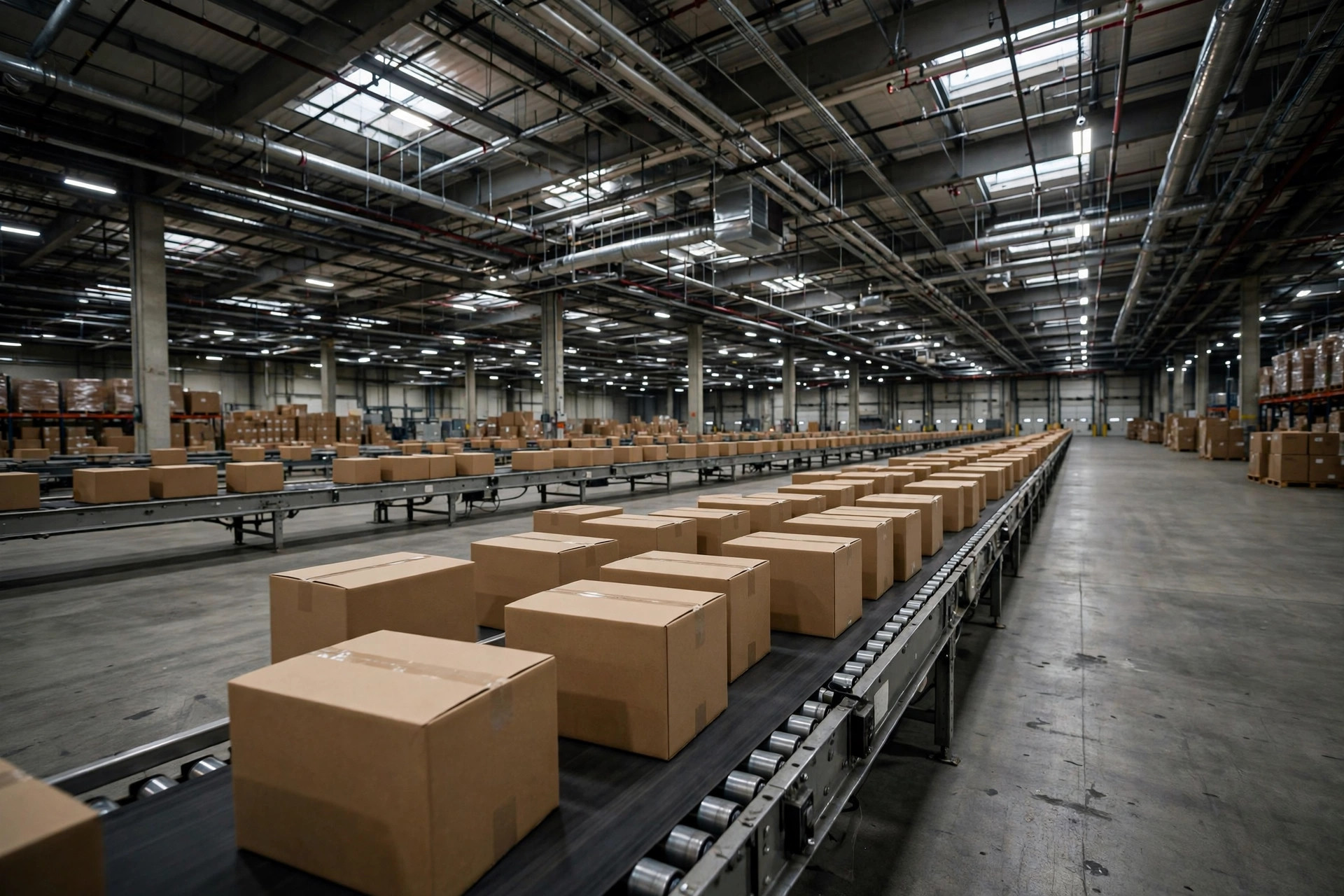
VFD retrofit payback: what one line actually saves in a year
In 2024 I watched a clean calculation play out at an e-commerce DC in Moreno Valley. Their main outbound line: 15 kW motor, 20 hours a day, near 24 hours in peak season. They added a VFD and tied it to the PLC — photoeyes see no product for five minutes, the line drops to 60%; product arrives, back to full speed within three seconds.
After the first full year, the meter told the story: 22% less electricity on that line. At roughly $0.18 per kWh — about where California industrial rates have sat these past couple of years; check your own bill — that's a little over $4,000 a year. The drive plus the PLC integration cost a bit over $5,000. Sixteen-month payback, pure profit after that.
That math generalizes into a formula you can run with your own numbers. Take a common 7.5 kW conveyor line:
| Item | Math | Amount |
|---|---|---|
| Annual consumption | 7.5 kW × 20 hrs × 300 days | 45,000 kWh |
| Annual savings | 20% reduction | 9,000 kWh |
| Dollar savings | 9,000 × $0.18/kWh | ~$1,620/yr |
| Retrofit cost | drive ~$1,200 + install ~$600 + output reactor ~$200 | ~$2,000 |
| Payback | $2,000 ÷ $1,620 | ~15 months |
But note the premise: twenty hours a day. Run that same line eight hours a day and the annual savings drop under $650 — payback stretches past three years, and most drives carry a two-to-three-year warranty. That's the kind of math that works on paper and isn't worth doing.
Three gates before you spend a dollar
Gate one: runtime. Lines running under twelve hours a day go to the back of the queue. Energy retrofits trade time for money — without the hours, there's no trade.
Gate two: real idle time. VFD savings hide in the hours a line spends "running but doing nothing." A line that's genuinely fully loaded all day has almost no room to slow down — the drive buys you soft starting and motor protection, and a plain soft starter does that for half the price.
Gate three: motor age. Motors past ten years old probably can't take high-frequency pulses without an output reactor or sine-wave filter — price that into the project. Or bite the bullet and go inverter-duty: costs more, sleeps better for the next decade.
And don't stare only at the power bill — there's a hidden ledger. That five-to-seven-times inrush current the soft start erases? It was beating up your contactors, belt splices, gearboxes, and bearings. Two hours of unplanned downtime on a main line costs more in missed units and overtime than several VFDs. Anyone who's ever fixed a line at 2 a.m. knows this math by heart.
So don't ask me whether VFDs are good. They're excellent — but they only reward lines that run long and wait often. For those short spurs napping half the day, the savings won't cover the drive's lunch money. Go clock your lines' actual runtime tonight, and we'll talk in the morning.
By Lao Mi, Supply Chain Veteran (20 yrs)