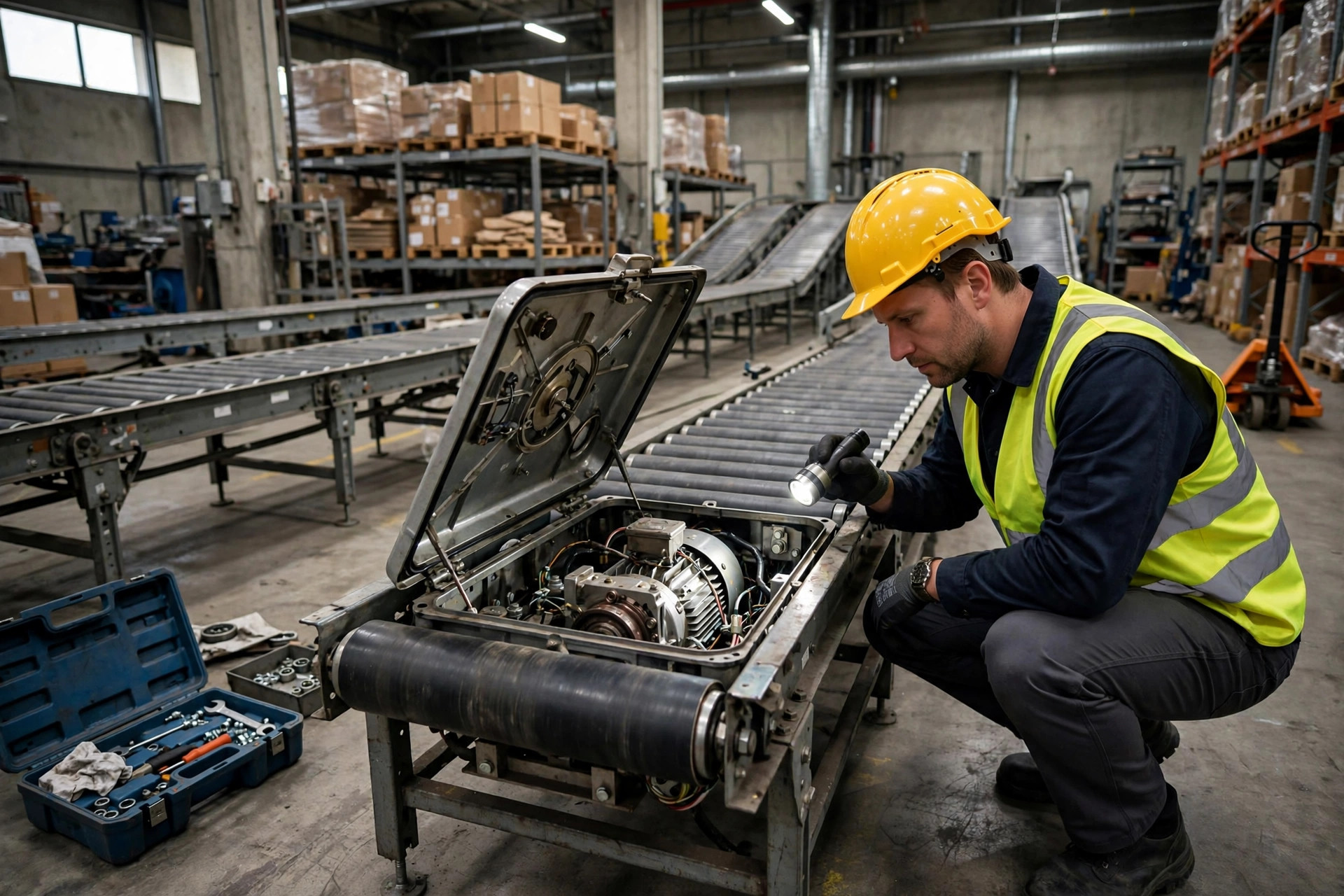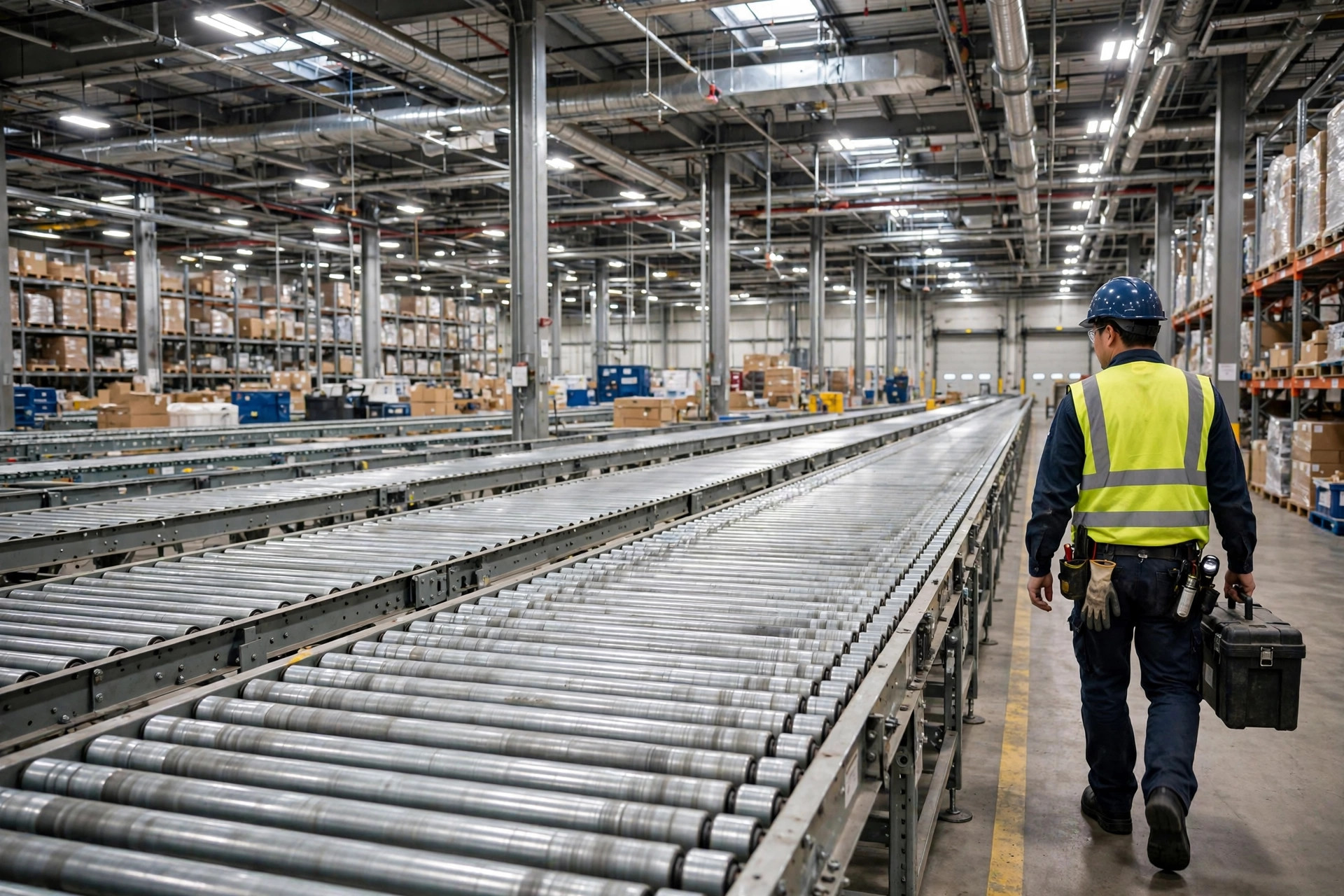
Let me tell you something. After fifteen years behind the wheel, the thing I dread most is not traffic. It is arriving at a warehouse and watching the dock sit dead. Last Black Friday eve, I was queued up at an e-commerce warehouse in the Inland Empire when their sortation line went down. Not a big failure — a photoelectric sensor got clipped by a carton, the line thought there was a jam, and the whole system locked itself. The maintenance tech jogged to the parts room and came back empty-handed. Nobody had stocked that model. Waiting on the factory part from Los Angeles took six hours. That night, 15,000 orders never shipped. I sat in my cab for six hours and thought it through: with conveyors, it is always a small part that breaks and the entire line that stops.
I have talked to maintenance leads at a dozen warehouses since, and the pattern is always the same. The parts you need on-site are the ones that are cheap to break and expensive to wait for. So here is the list, broken down plain: eight spare parts every conveyor line should have on the shelf. Miss one, and the day it matters, you are down for half a shift.
The Eight: Never Let the Parts Room Run Dry
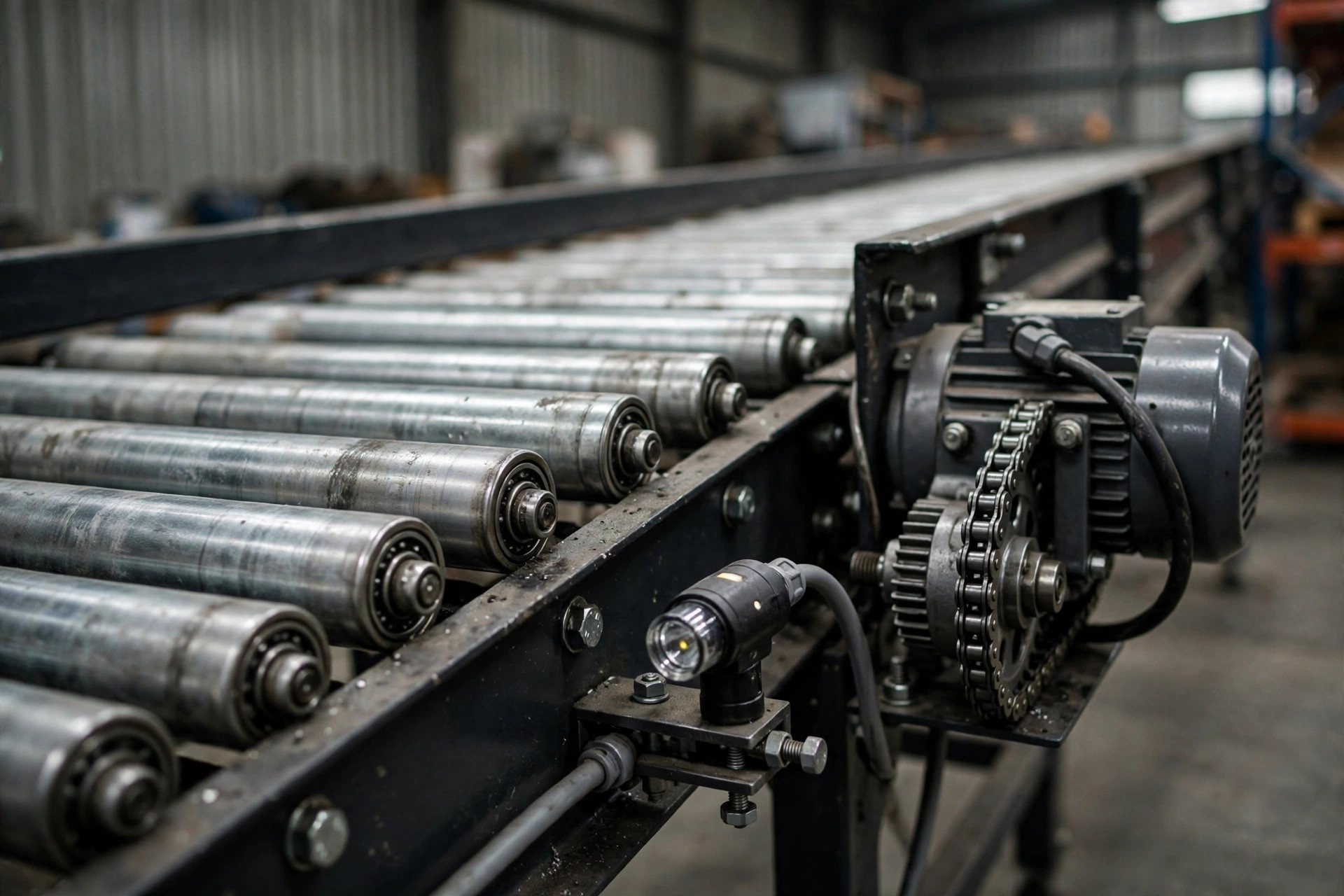
1. Rollers. The heart of a roller conveyor, and the part that dies most often. A noisy bearing means a seized roller; at best it is loud, at worst it chews a groove into the belt. Rollers are cheap, but they come in many sizes — diameter, length, axle style. Stock the wrong spec and you might as well have stocked nothing. Keep five to ten of each spec your line actually uses.
2. Drive motors. A burned-out motor kills the whole section. Motors look tough until peak season, when they run nonstop and the cooling cannot keep up — then they go. A full spare motor is expensive, so at minimum stock the most common power rating on your line. If most of your sections run 1.5 kW, keep one 1.5 kW on the shelf.
3. Variable frequency drives (VFDs). The motor's brain. When a drive faults out, eight times out of ten it is the drive quitting before the motor. The VFD brand and model must match what is on the floor — different brands set up differently, and commissioning a substitute brand at 2 a.m. will make you cry.
4. Photoelectric sensors. The star of my opening story. A sortation line sees packages through these; each one costs tens to maybe a hundred dollars, and they are the number-one line stopper. Knocked out of alignment, caked with dust, cable snagged by a forklift — they die in every way imaginable. Keep three to five of each model. It costs almost nothing and buys real peace of mind.
5. Belt lacing plus the tools. Torn belts and failed splices are the classic belt-conveyor killer. The lacing itself is cheap, but you also need the lacing tool and a section of spare belt. Lacing without the tool is like having bullets without a gun.
6. Chains and sprockets. A stretched chain starts skipping teeth, and the whole section slips. Stock chain by the meter, and one or two sprockets of each common tooth count. Chain stretch is gradual — an old hand hears it coming. But only if there is a new chain in the parts room.
7. Bearings. Rollers, drums, take-up units — bearings are everywhere. Models vary wildly, so stock a box each of the three to five most-used sizes on your line. Bearings rust in storage, so the parts room needs to stay dry. A lot of warehouses miss that.
8. E-stop switches and brakes. Safety parts. Nobody thinks about them until one fails and the line refuses to start — an open safety circuit and the PLC locks everything out. E-stops cost nothing, but they are a one-vote veto. Keep a few extra. It never hurts.
The Old Master's Parts Cabinet: Three Shelves, Every One "Too Expensive to Wait For"
I know a maintenance veteran, Old Zhang, twenty years on the tools. His parts cabinet left an impression on me — just three shelves, not big. He told me: "Top shelf is what breaks tonight. Middle shelf is what breaks this week. Bottom shelf is what I can afford to wait for."
Top shelf: photoelectric sensors, belt lacing, e-stop switches, common bearings — small parts, high failure rate, directly tied to line stops. Middle shelf: rollers, chains, VFDs — mid-value, fail less often, but must be replaced the day they do. Bottom shelf: motors, gearboxes — expensive, rarely fail, but when they do you cannot wait. Even one unit on the shelf counts.
I asked him why he did not just fill the cabinet to the brim. He said something I still remember: "You are not stocking parts. You are stocking time. A shelf of stuff you will not touch for three years is money locked in a box, growing mold. And one hour of downtime burns enough to buy the whole cabinet."
That is the counter-intuitive truth: more spares is not better — right spares is better. Plenty of warehouses have crammed parts rooms. Then you do an inventory and half of it is obsolete parts for decommissioned equipment, the other half is wrong models someone ordered. When the line stops, the thing you actually need is nowhere to be found. "Complete" is an illusion; "correct" is the skill. And correctness comes down to two numbers: how short this part's mean time between failures is, and how long its lead time is. Multiply the two, sort the list, and the stocking list writes itself.
Running the Numbers: The Money in the Cabinet Versus the Money Down the Drain
Take a mid-size sortation line for scale (your mileage will vary):
| Item | Order of magnitude |
|---|---|
| Full stock of the eight critical spares, quantities as above | $20,000–$40,000, one-time |
| Annual carrying cost (10%, including storage and handling) | $2,000–$4,000 per year |
| One hour down (8,000 parcels/hour backing up at peak, overtime catch-up plus mis-ship claims) | $5,000–$10,000 range |
| Half a shift down (4 hours, including customer penalties and lost orders) | $20,000–$50,000 |
See it? Three grand a year to carry the stock; one bad night can burn a year's worth of cabinet value. Those six hours on Black Friday eve cost that warehouse enough to fill the cabinet three times over.
But the reverse is also true — do not stock blindly. Old Zhang has a rule: inventory the parts room every quarter, and anything untouched for 12 months gets downgraded. Return what you can, sell the rest secondhand. Spares have a shelf life like inventory. One model change and the old spares are scrap metal.
Three Practical Suggestions for Warehouse Teams
First, before building the list, spend half a day writing down every model number on the line. A lot of warehouses stock the wrong parts because the parts clerk copied model numbers from three years ago, and the equipment has been upgraded since.
Second, line up two suppliers for critical spares. Factory parts are reliable but slow; a local distributor costs more but delivers same-day. In my Black Friday story, if that warehouse had a local distributor's number, six hours could have been two.
Third, tie the spares list to your downtime log. Every stop: what broke, how long you waited, whether the part was in stock. After three months, what to add and what to cut is obvious. A spares list is not a one-time project — it is a living document that ages with your equipment.
There is an old saying that fits here: better to let the parts cabinet gather dust than to let the conveyor wait on parts. Spares money is small money buying time — and in peak season, time is the one thing money cannot buy.
By Shifu Zhao, Trucking Veteran (15 yrs)