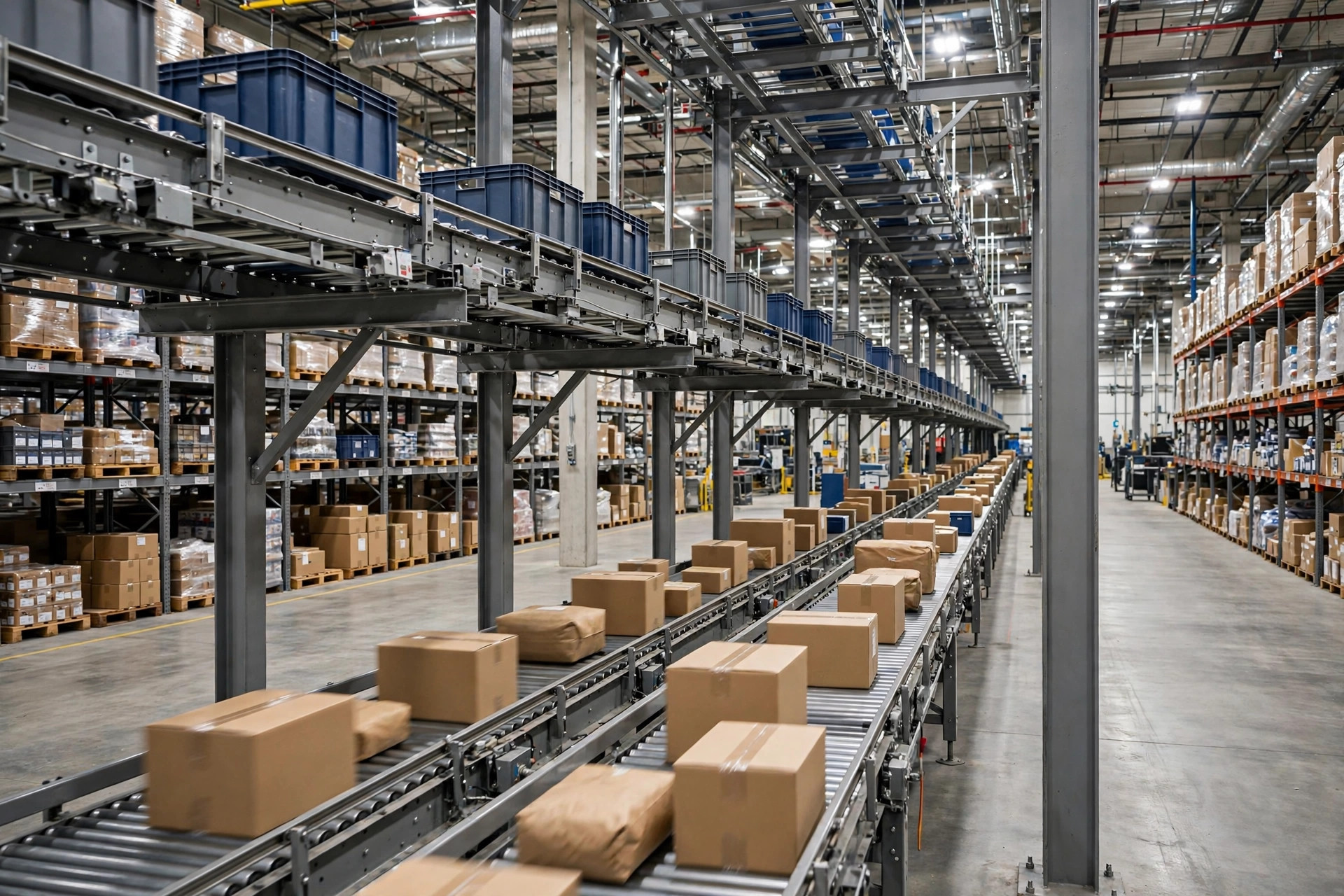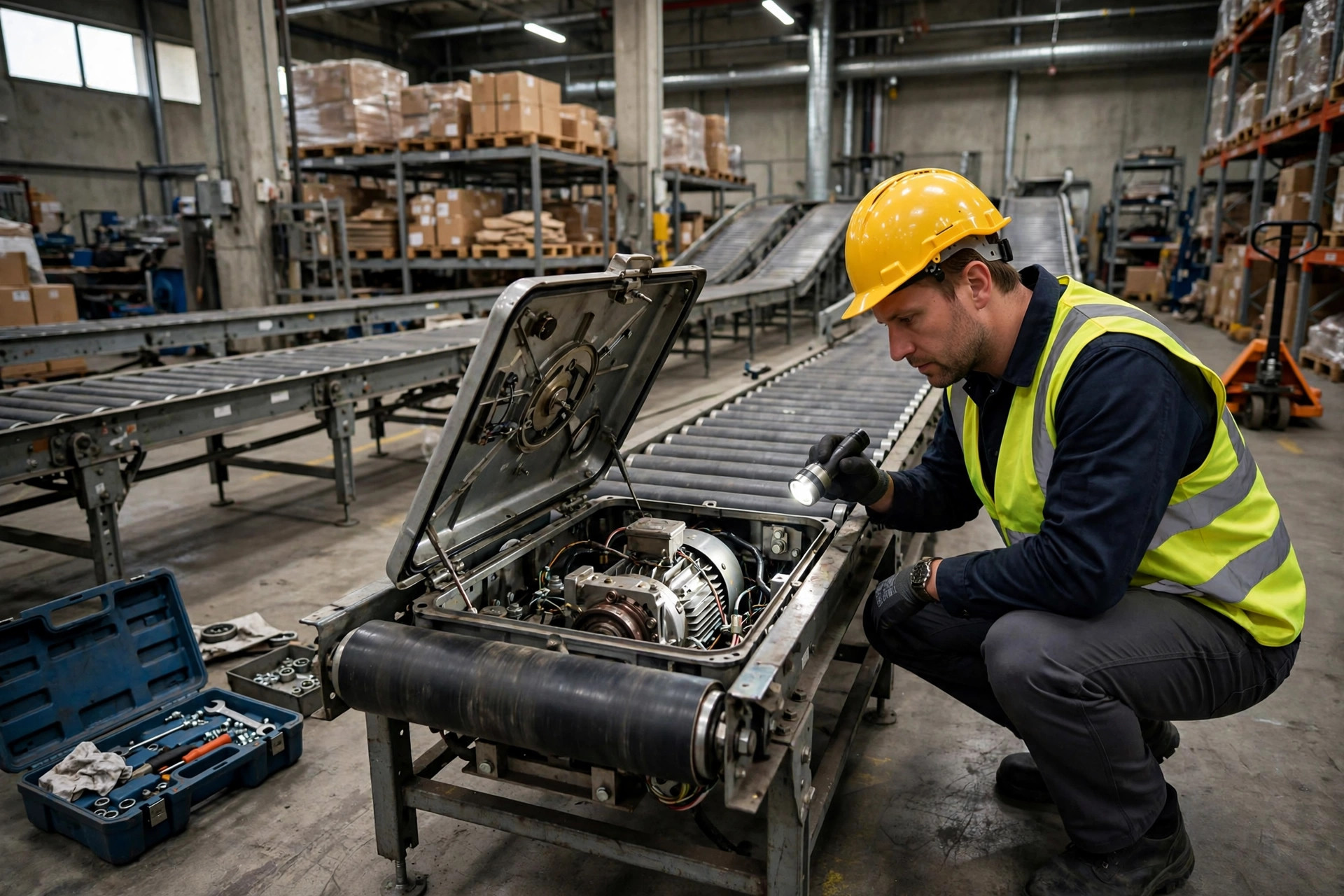
Summer 2023, Commerce, California. The owner of an e-commerce fulfillment center walked me out to the floor. His sortation conveyor had run for eight years. The rollers were grooved with wear, and the motors started groaning every afternoon. His requirement was one sentence: replace the line, but the building does not stop. Not for one day.
I have done this job several times. Let me get the principle straight first: why can you not just shut the whole line down and swap it? Because downtime burns money by the hour. A sortation line doing 30,000 parcels a day, stopped for eight hours, leaves a backlog that takes two to three night shifts to clear - plus the chain reaction of SLA penalties and customer complaints. Think of it like replacing rail track on a high-speed line: you cannot suspend service, so you work the overnight maintenance window, one section at a time.
Section-by-section replacement comes down to four moves: cut, bypass, window, rollback. One at a time.
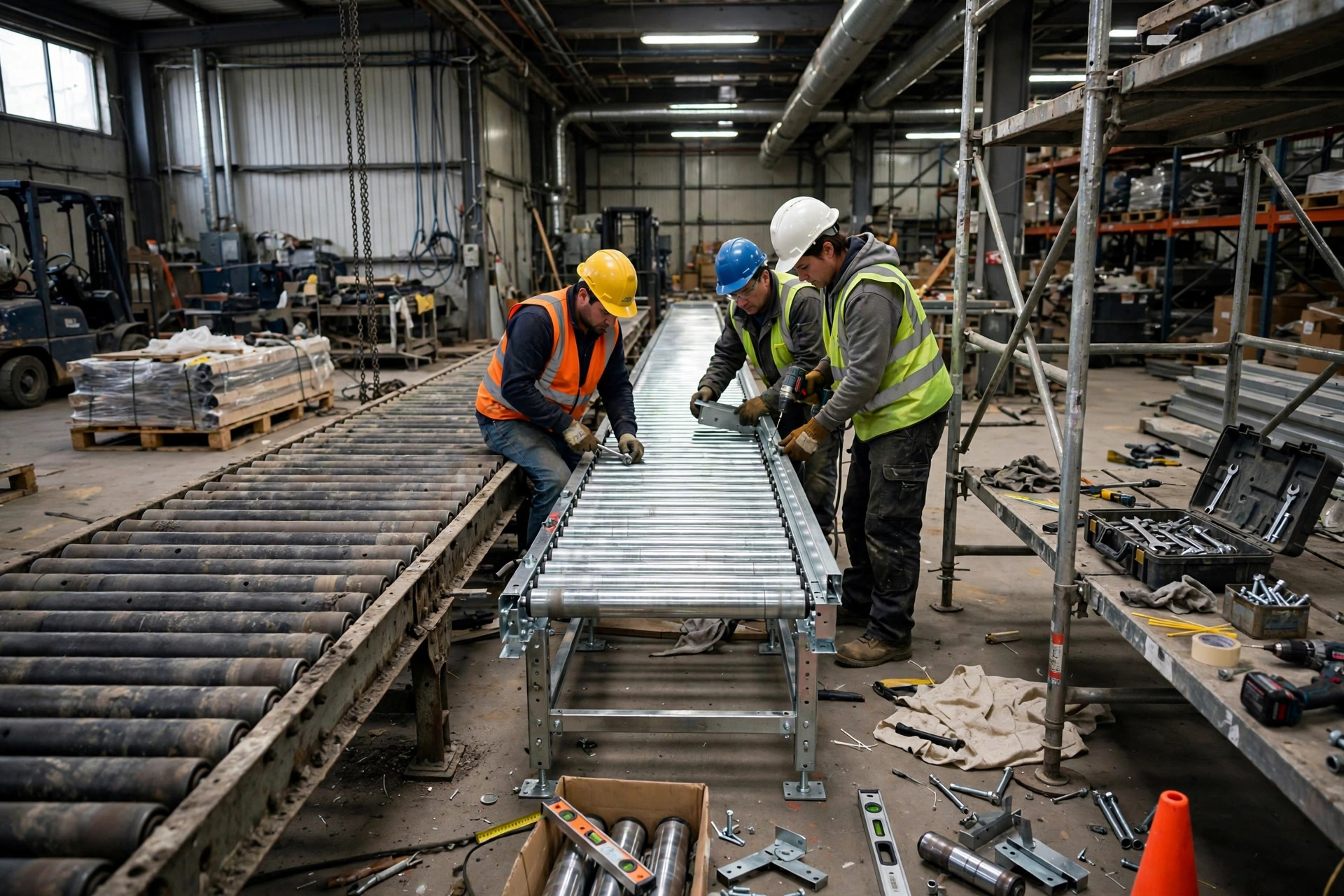
Cutting. Do not slice by equal length - cut by function. Straight runs, curves, inclines, merge and divert sections: functional boundaries are natural cut points. Keep each section 15 to 30 meters. Shorter than that, you multiply interfaces and commissioning time doubles. Longer, and one section's work overruns the changeover window. In that Commerce project the old line ran 1.2 meters per second and the new one 2.0 - a 67% speed-up. That means motor power, roller pitch, and control takt all get re-matched, so cut points must land on control-zone boundaries. Mix old and new across a zone boundary and the takt never lines up; the whole line slows down.
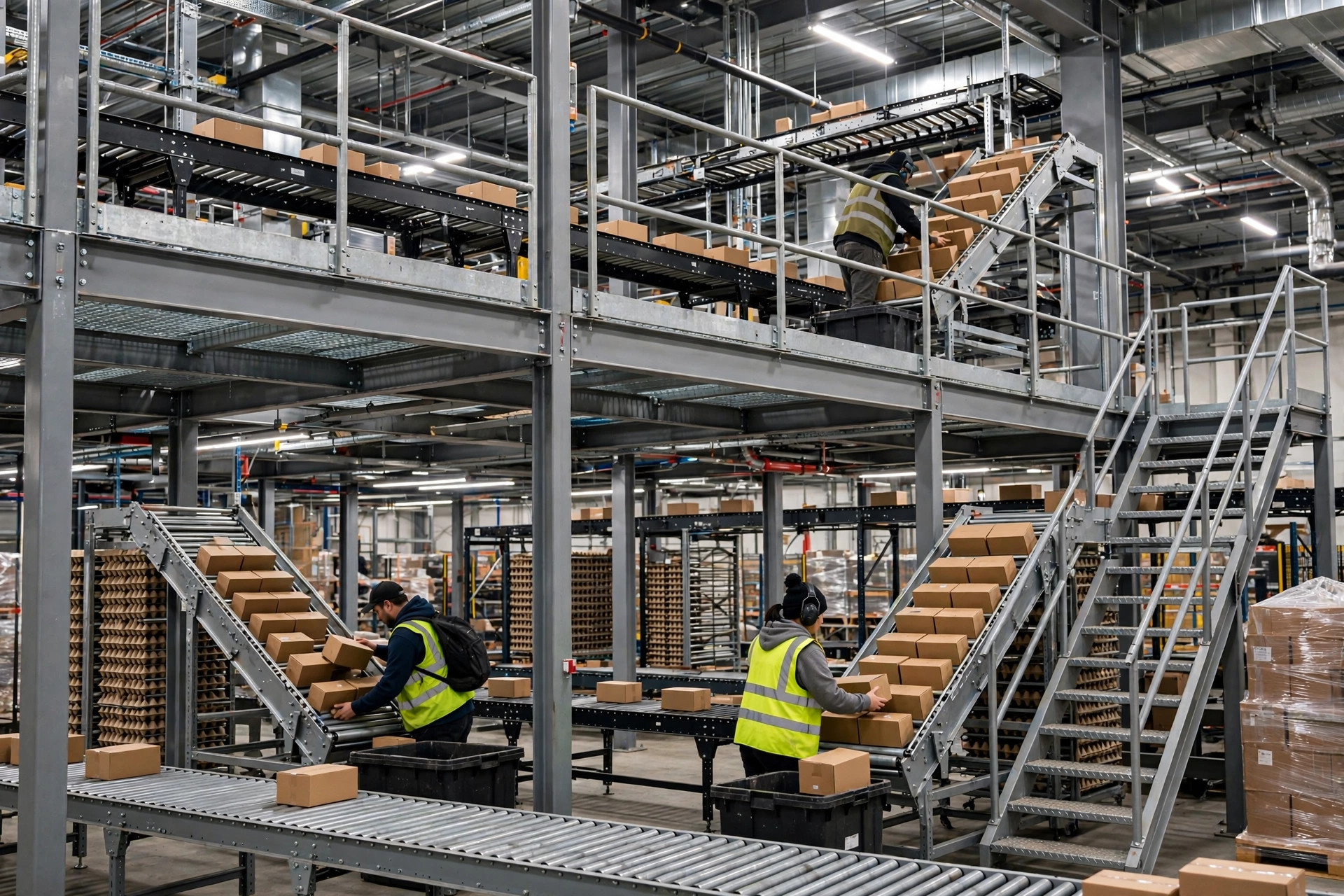
Bypasses. You cut a section out - where do the parcels go? Three options. Mobile telescopic belt conveyors to bridge the gap: good for straight runs, and renting beats buying. Manual transfer: good for short curves, two roller tables and two people handing parcels across. Reduced-speed reroute: good when a parallel branch exists, shifting flow onto the spare leg. The choice comes down to two numbers: the section's hourly throughput, and the bypass option's hourly capacity. If bypass capacity is under 80% of section flow, do not use it. A jammed bypass costs you more than a planned stop.

The window goes in the business trough. For e-commerce fulfillment that is usually Saturday 22:00 to Sunday 10:00 - a 12-hour window. Do the time math honestly: 3 to 4 hours for demolition and installation of one section, 2 hours for wiring and standalone commissioning, 2 hours for integration and loaded trial runs, 2 hours of buffer. One section per window, never more. Can you use weeknight shifts instead? You can, but a night shift gives you eight hours, and after production wind-down and morning startup you have under six effective hours. One section does not fit. Too risky.
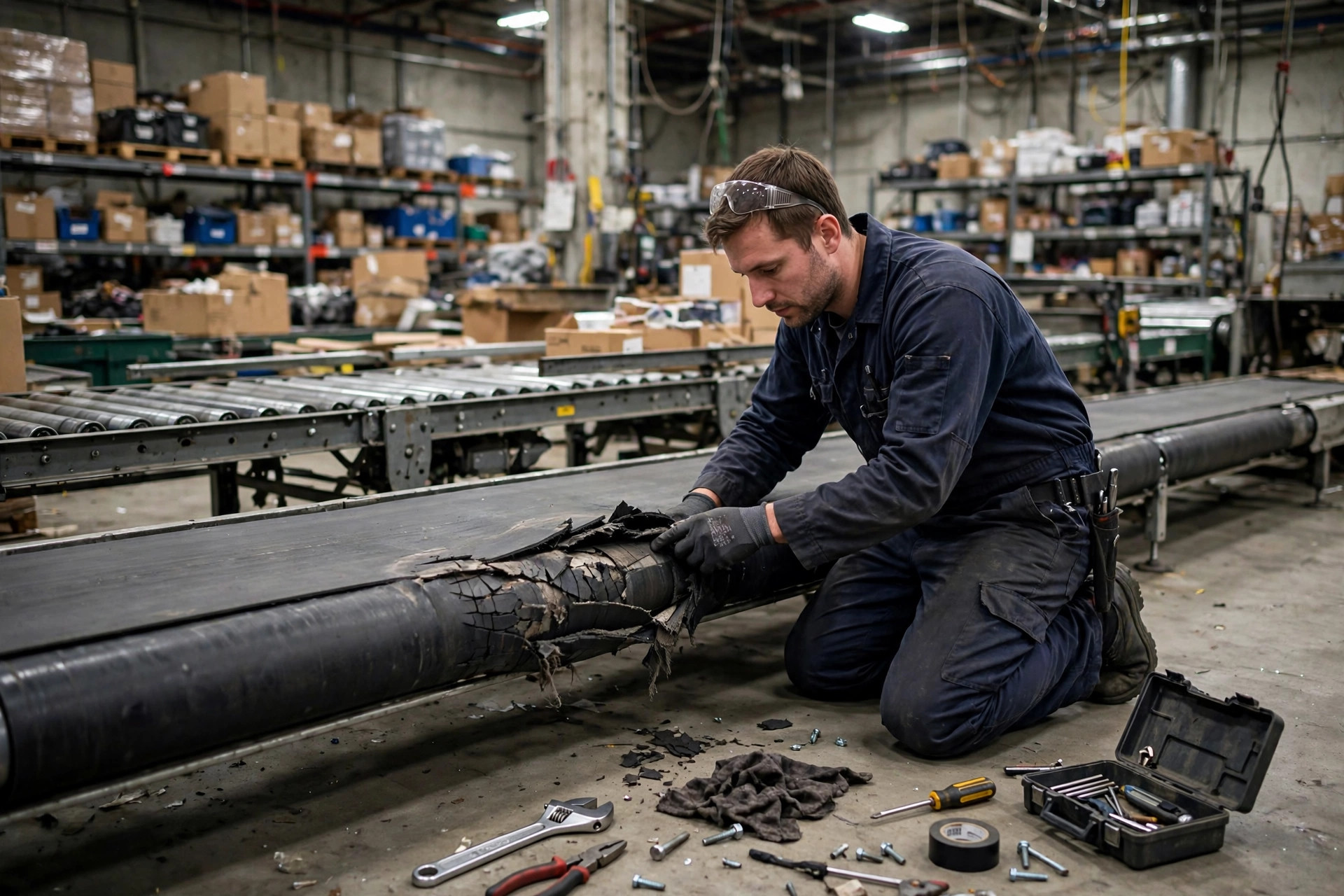
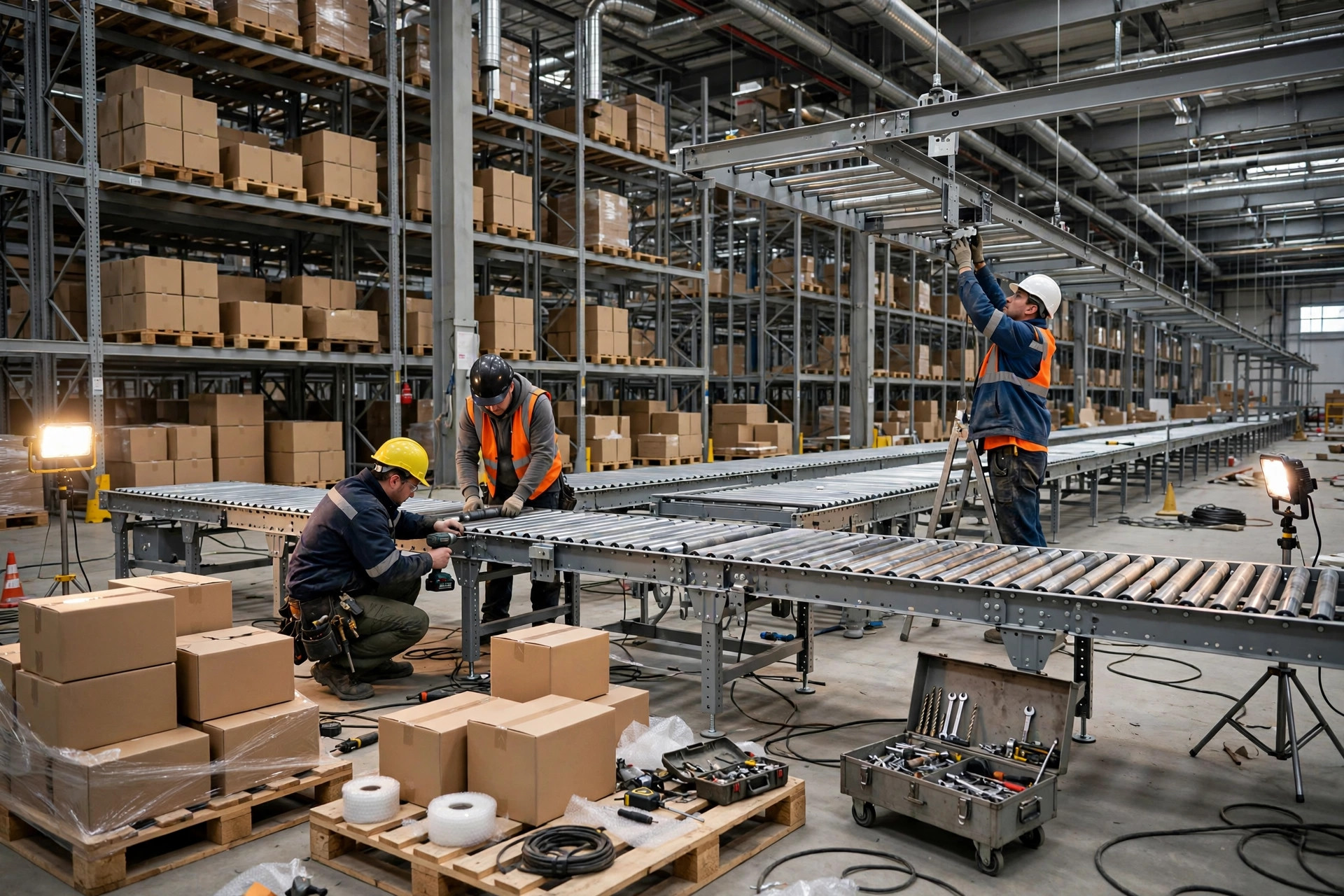
Site organization is the heavyweight round. On the Commerce job we staffed it like this: one overall commander who only makes decisions and touches nothing; a four-person mechanical crew for teardown and install; two electricians for wiring and PLC points; two commissioning engineers for standalone and integration tests; one WMS liaison for flow-cutover configuration. Fifteen-minute standup before every section: which section tonight, the done-criteria for each step, and who calls the abort. Abort authority sits with the commander alone. No committee debates at 2 a.m.
The rollback plan is the floor, and it gets written before anyone touches a wrench. If the new section cannot hold 99.5% uptime within two hours of integration testing, we roll back immediately. Removed old sections sit staged nearby for 48 hours, untouched - a rollback reinstalls one within an hour. The trigger conditions go into the work plan, printed on the site whiteboard, visible to everyone. A changeover with no rollback plan is gambling. What counts as passing integration? Four hard gates, all mandatory: four continuous hours under load at 99.5% uptime or better; sort accuracy at 99.8% or better, with every mis-sort logged as an incident; actual takt at 95% of design or better; and no abnormal vibration spectra on motors and rollers - a veteran with a vibration meter can tell in one sweep whether a bearing seated right. All four green before the commander signs. Not one meter of old section gets scrapped before that signature.
In 2025, a 3PL in Dallas, Texas taught me the other half of this lesson. The equipment was flawless - the new section lit up first try, integration data clean. But on changeover night, the WMS flow-cutover config was missing one routing rule. Thirty percent of parcels flooded the old bypass. It jammed solid in twenty minutes, and the whole line sat dead for three hours. At the post-mortem I said it plainly: those three hours had nothing to do with the equipment. Pure organization failure. Here is the counterintuitive call: the biggest risk in a conveyor retrofit was never the equipment. It is the organization on changeover night. Equipment has specs. Organizations do not - and when the organization falls apart, no equipment saves you.
Which brings me to a pet peeve I have seen more than once. The "safe" proposal: spend $200,000 building a complete temporary line to route around the work, use it for three months, tear it down. Sounds prudent. Run the numbers and it is all holes: the temporary line itself needs two weeks of commissioning, it eats floor space and disrupts normal work, and teardown costs money again. The incremental cost of section-by-section work - bypass rentals, night-shift premiums, commissioning days - totals under a third of the temporary-line option. Spend money on the cutting edge, not on peace of mind.
So, is the money worth it? Watch this one number:
Incremental cost of no-shutdown retrofit / cost of one hour of downtime
On the Commerce job, the incremental cost (bypass rentals plus night premiums) came to $46,000. Their measured direct-plus-indirect loss per downtime hour was $18,000. Ratio: 2.6. Avoid three hours of downtime and the whole approach pays for itself. Six sections replaced, zero downtime. Run it for your own building: ratio under 5, do section-by-section without hesitation. Over 10, file for a real shutdown window and stop improvising.
By Da Liu, Automation Engineer