A conveyor noise complaint landed on my desk last fall. I walked into a 3PL warehouse outside Columbus, Ohio, to inspect the line, and something felt wrong before I even reached the sortation area. The roller line hummed loud enough that operators had to shout into each other's ears. The warehouse manager told me the tenant next door had already complained twice, and the property manager was next. A conveyor noise complaint sounds like a small problem until it turns into a forced shutdown plus a fine. Then it is two problems.
Here is the first thing to get straight: noise is not one problem called "the line is too loud." It is several components each making their own sound. Think of it as a band playing out of tune — rollers, chain, motor, and pallets hitting the diverter, each with its own part. The first step in fixing noise is not buying acoustic panels. It is figuring out who is playing loudest.
Where Conveyor Noise Actually Comes From
Before measuring, set the bar. OSHA's standard 29 CFR 1910.95 is explicit: the permissible exposure limit is 90 dBA as an 8-hour time-weighted average, and above that number engineering controls are required. The action level is 85 dBA — once exposure reaches it, a hearing conservation program kicks in, including monitoring, audiometric testing, and training. And there is a rule people forget: every 5 dBA increase halves the allowed exposure time. At 95 dBA a worker gets 4 hours; at 100 dBA, 2 hours. Those three numbers are the hard yardstick. Acceptance testing is judged against them.
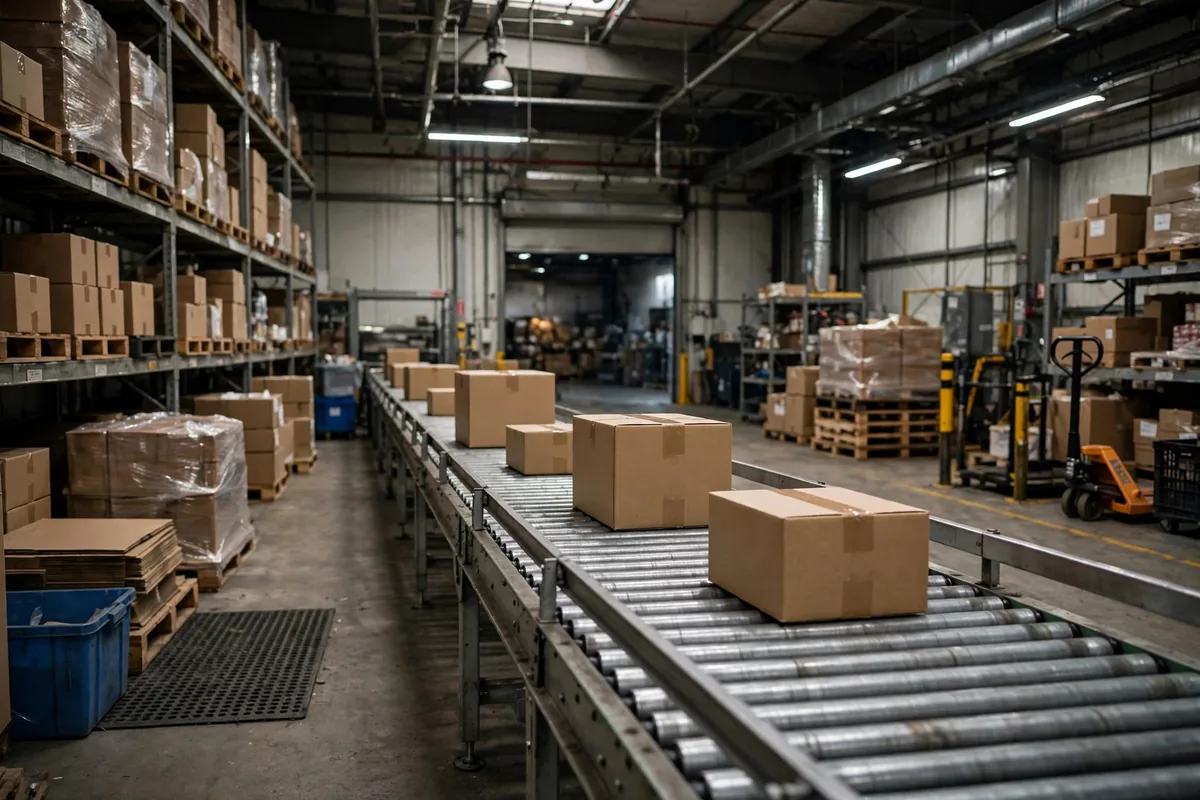
How do I lay out measurement points? One point every stretch along the line, one at operator ear height, and extra points next to the motor and drive station. And measure under full load. An empty line tells you nothing — boxes bouncing on rollers sound completely different from an empty belt. In the summer of 2023 I measured a 60-plus-meter roller line in an Indiana e-commerce warehouse: 78 dBA empty, 92 dBA loaded. Over the limit. The causes turned out to be three separate things: a batch of roller bearings running dry, chain tension set too tight on two curves, and pallets slamming into the diverter gate. Three sources, three fixes. Treat them as one problem and you spend money on the wrong thing.
Fixing a Conveyor Noise Complaint: Spend in This Order
The cheapest noise reduction is bearings and lubrication. The most expensive is an acoustic enclosure. If you can avoid the enclosure, avoid it. Here is the order I use.
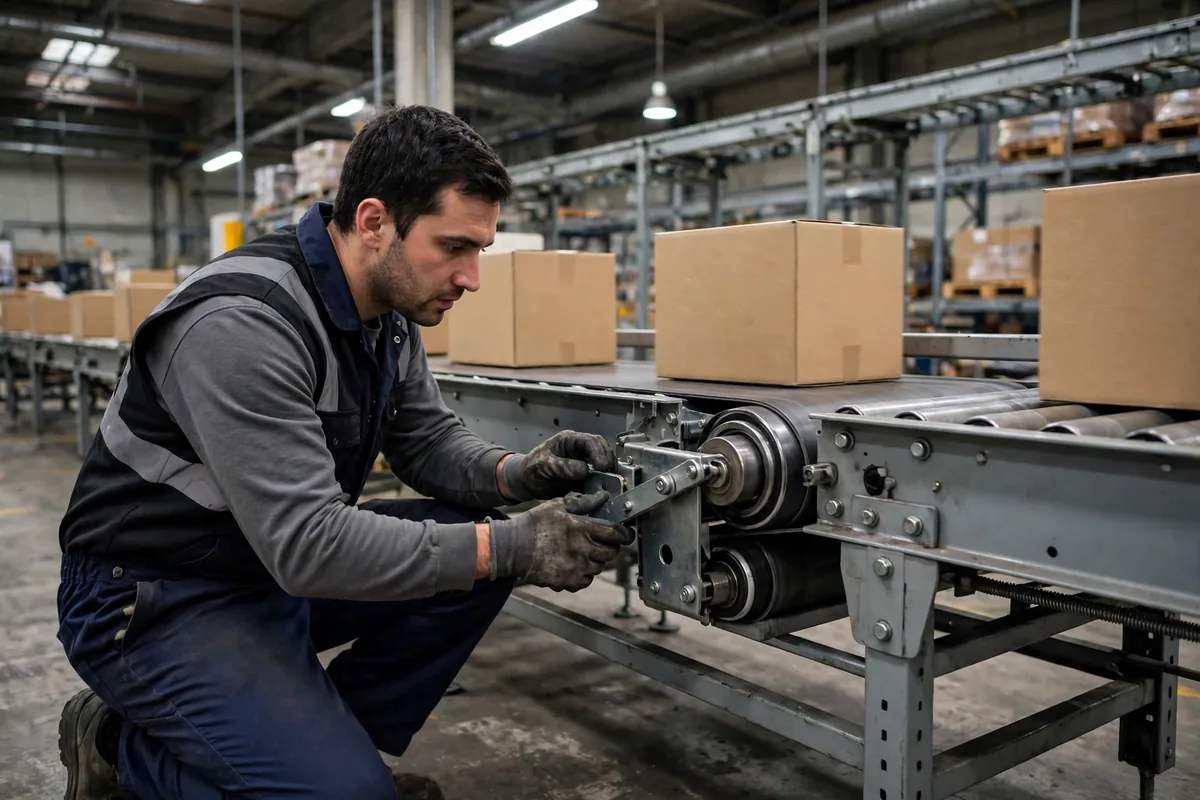
First, rollers and bearings. Swap out the noisy bearings for low-noise ones and write a lubrication interval into the maintenance schedule. That step alone often drops 5 to 8 dBA. At the Columbus site we replaced about 40 rattling rollers and the hum dropped by half on the spot. A few hundred dollars.
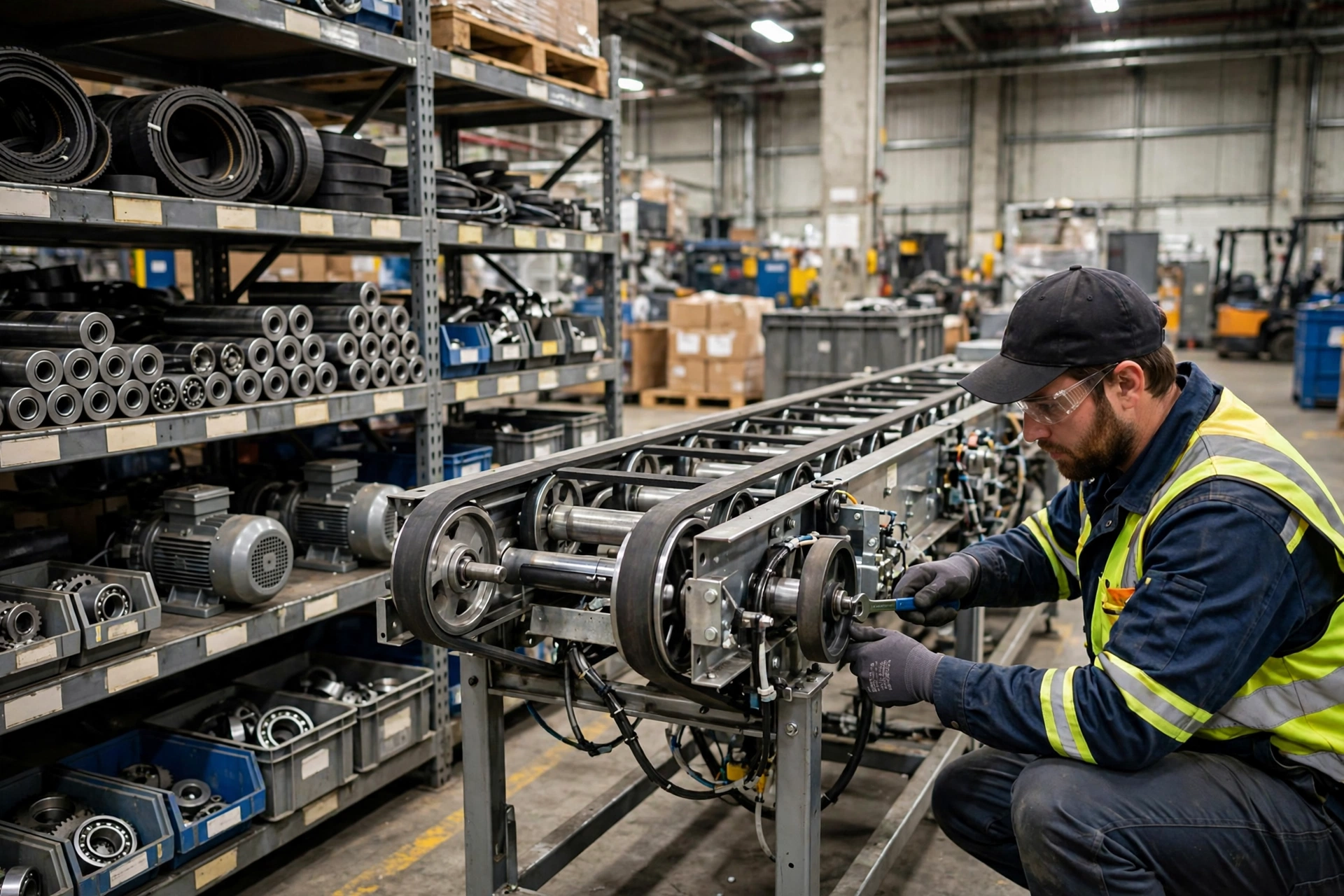
Second, the drive and the tension. A chain pulled too tight whines; too loose and it skips teeth. Both are loud. Set tension to the manufacturer's range and check the motor mount's vibration pads — they flatten with age, and once they do, motor vibration goes straight into the steel frame and the whole line becomes a speaker cabinet. Pads need replacing roughly every three years, and nobody remembers. The Indiana line was a textbook case: the drive station's pads had been flattened for three years, and a fresh set dropped the reading near the drive by 6 dBA. Treat vibration pads as consumables, not permanent parts — they belong on the maintenance schedule by name.
One source people miss: the pallets themselves. Plastic pallets warp with age, and a warped pallet rides the rollers unevenly, clattering the whole way. The Columbus site cleared out a batch of warped pallets and the line got quieter again. Pallets look cheap, but they run on your line all day, and a bad pallet contributes as much noise as a bad bearing. Check them during the same walkaround.
What about the workers while the fix is under way? Hand out ear muffs and plugs first — that is interim protection, not the fix. OSHA's order is the same: engineering controls first, hearing protection as the backstop. Don't mistake handing out ear protection for having fixed the problem. It quiets the complaint for a while, but the overexposure is still real, and an inspector will still count it.
Third, impact noise. Pallets hitting the diverter gate make the sharpest, most irritating sound in the building. Stick a buffer strip on the gate or ease the gate angle so pallets slide through instead of slamming into it. This costs almost nothing and operators notice the difference on day one.
Only then, if the readings are still over the limit after the first three steps, consider enclosures and ceiling absorption panels. An enclosure makes maintenance harder and forces you to redo the motor cooling calculation. It is the expensive fix with the most side effects.
Here is the counterintuitive part: most people think replacing the line with a "quiet conveyor" is the thorough solution. It is usually the opposite. The problems on an old line are mostly maintenance problems. Replacing the line turns a fix that costs a few thousand dollars into a purchase worth hundreds of thousands. Fix the old line properly first, and only talk about replacement when it cannot be fixed. Get the order backwards and the money is wasted.
The Acceptance Test After a Conveyor Noise Fix
Do not accept the job by ear. Under the OSHA framework, re-measure under full load after the fix. The operator position's 8-hour time-weighted average needs to come in under 85 dBA. Between 85 and 90 dBA you are under the limit, but the hearing conservation program stays and the ear protection stays on. Keep the acceptance record: measurement points, loaded or unloaded, every reading, and the instrument used. When an inspector shows up, that file is what keeps you calm.
One more step people skip: measure again a month later. Bearings are quietest the day they are installed. A month of running is the true number. The Columbus line measured 82 dBA right after the fix and 84 dBA on the one-month recheck. It held, and the neighbor never complained again. Noise bounces back. The recheck catches it.
Whether the money was worth it comes down to one number: did the operator position's 8-hour average get under 85 dBA? If yes, the money was well spent. If not, everything before it was tuition.
By Da Liu, Automation Engineer