Our little warehouse can't afford to burn money like that.
But AI carton counting at warehouse receiving? Yeah, we tried it anyway — for six months, on a budget that would make a systems integrator laugh. Spoiler: it works, but only if you play it the small-warehouse way.
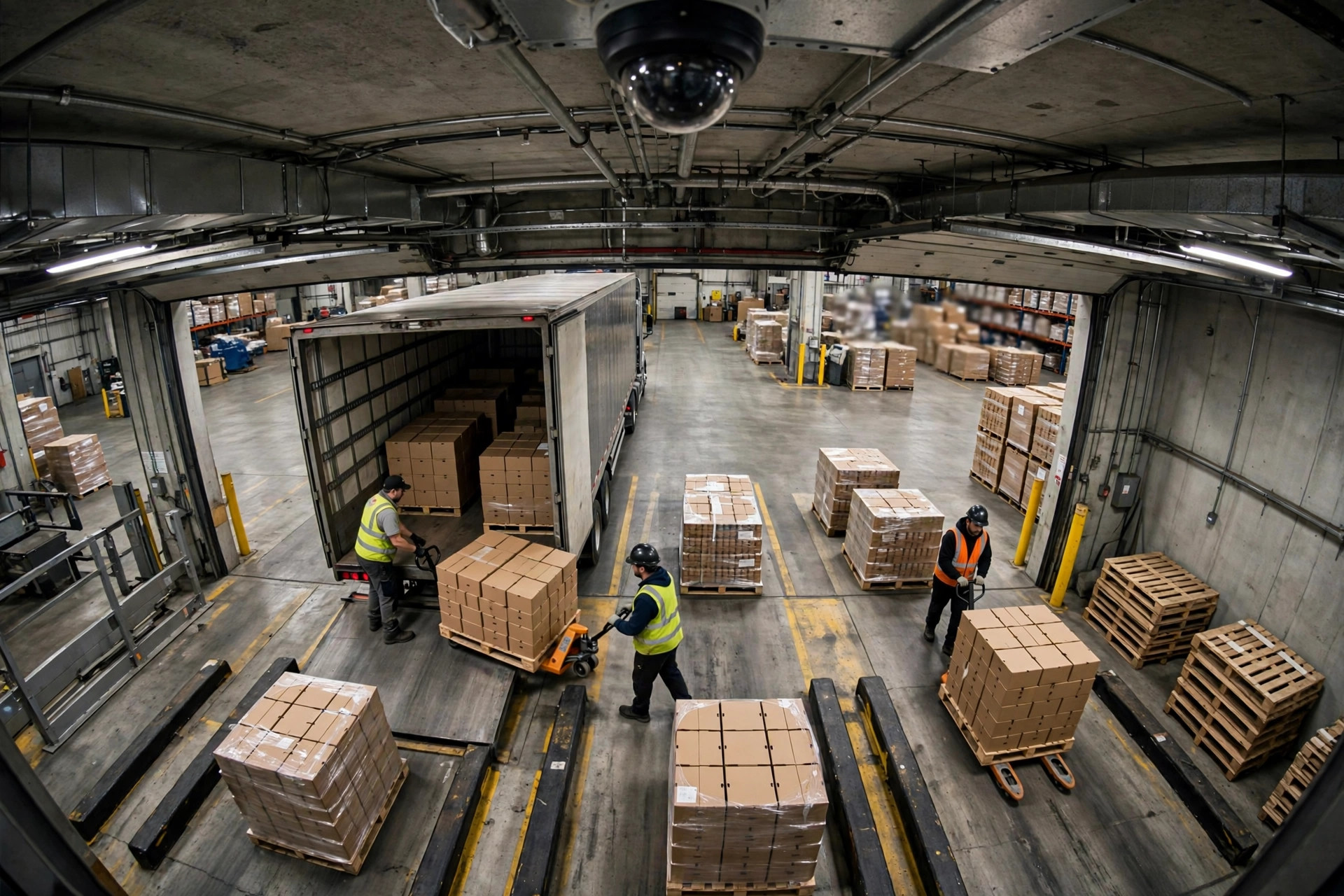
Last October, peak season at its worst, we had 11 trucks a day rolling into our 32,000-square-foot warehouse outside Ontario, California. Our receiving guy Lao Chen spent his evenings squatting on the dock counting cartons by hand. One night he finished at 11 p.m., eyes shot, and we were still 17 cartons short the next morning. The supplier swore they shipped 320. We counted 303. Three days of arguing, and we split the difference — nobody ever knew who was right.
That's when I started looking into AI carton counting for warehouse receiving: point a camera at the dock, roll a pallet in, and the system counts every carton and matches the total against the ASN. Sounds like a big-company toy, right? Here's the honest report from a 3,000-square-meter operation that can't afford toys.
How AI carton counting actually works at receiving
The idea is simple: a camera takes a picture, a vision model draws a box around every carton, and the system counts the boxes.
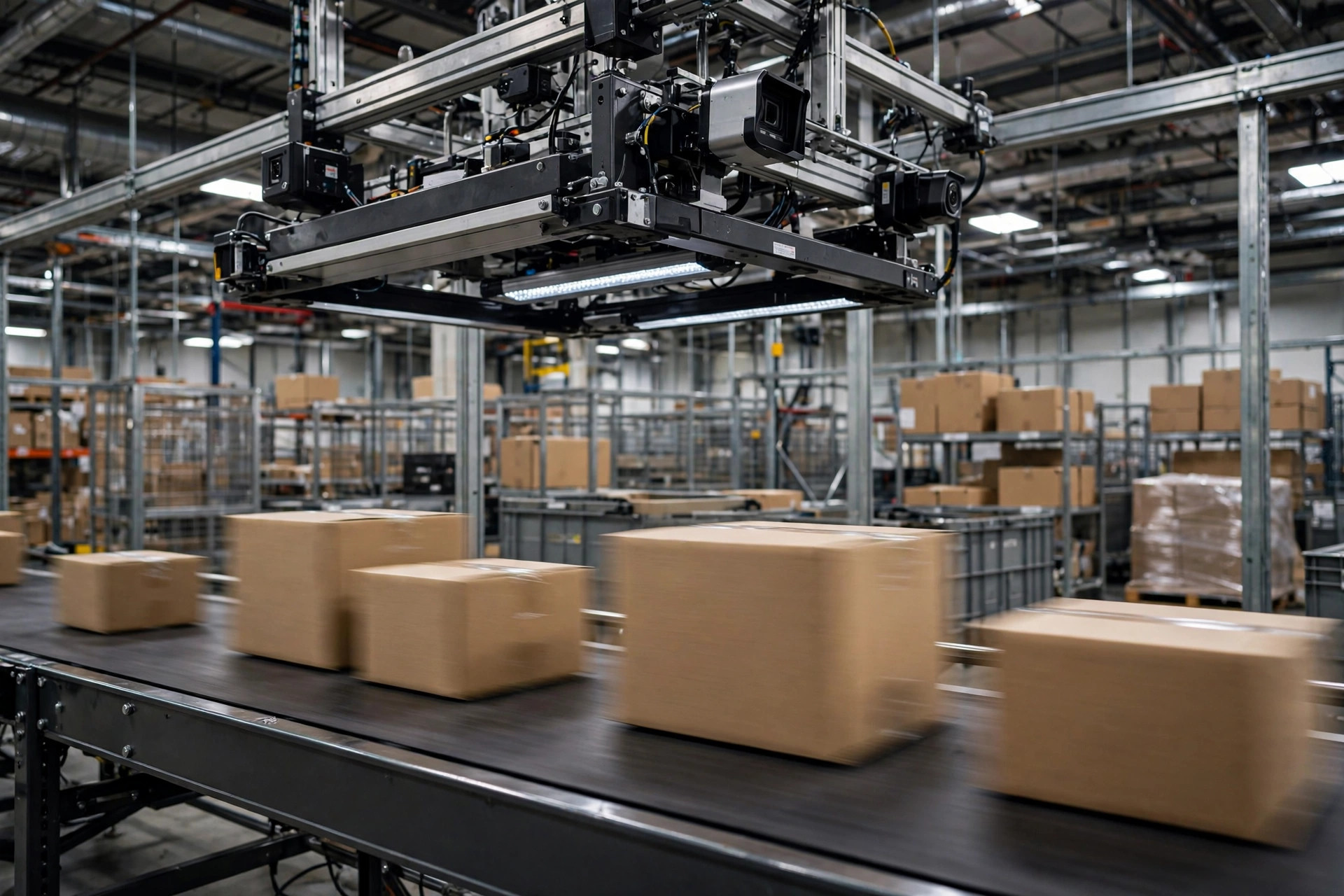
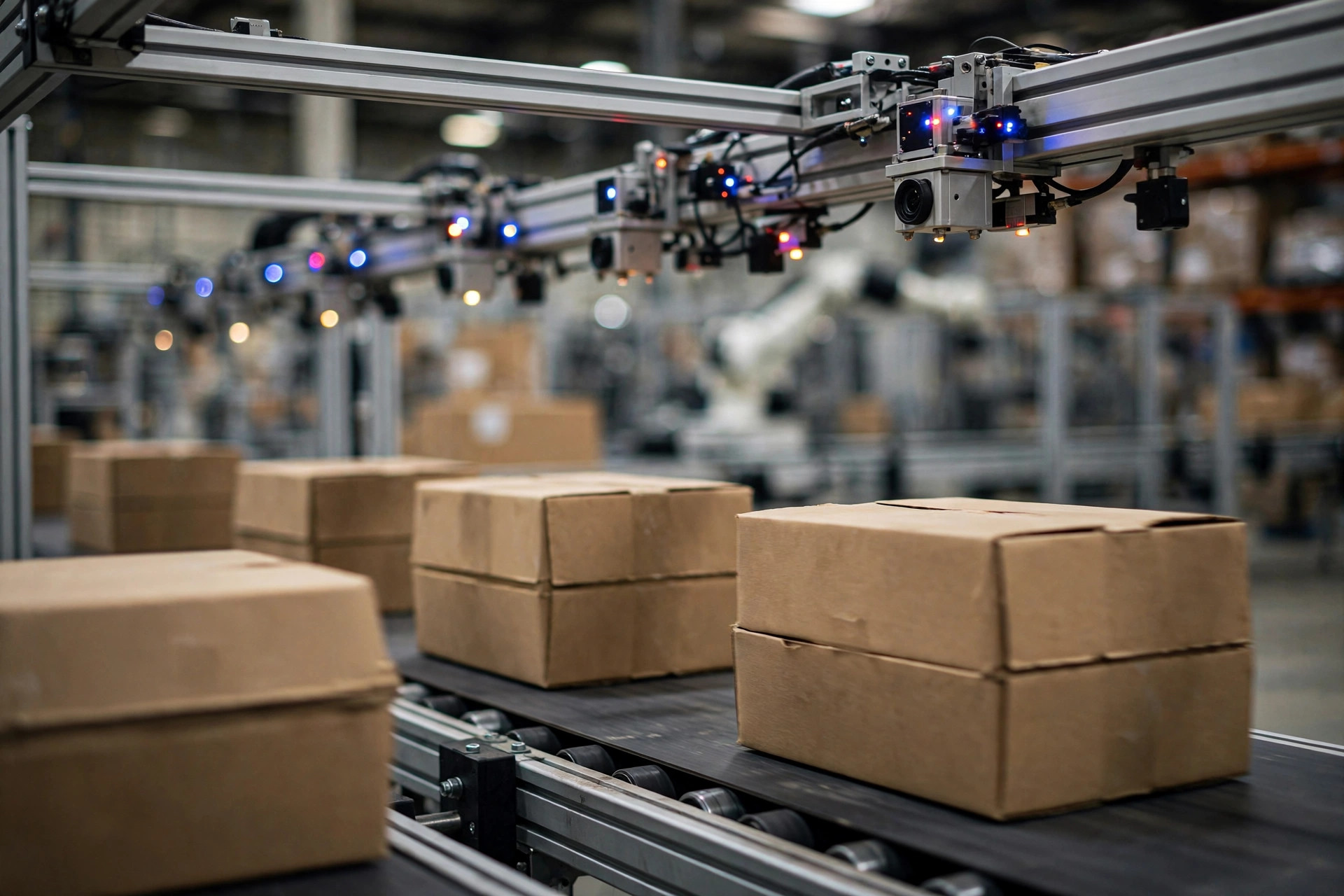
In practice there are two setups. Overhead: one or two high-res cameras mounted on the receiving-area ceiling. The forklift driver rolls a pallet into marked floor lines, pauses, the camera snaps the full pallet, and the AI figures out the number of layers and cartons per layer. Gantry: cartons ride a conveyor under a camera frame and get counted one by one — great for floor-loaded or broken-down freight.
Then the count gets matched automatically against the ASN or PO. Match? Green light. Mismatch? Flagged red for a human to re-check that pallet. Note the words: re-check, not auto-release. Any vendor telling you the AI count alone should release freight into inventory is selling you a gamble, not a system.
We went overhead — two cameras watching two dock doors. Why? Because we don't even own a conveyor, so the gantry option was dead on arrival for us. That's the first honest thing I'll tell fellow small-warehouse owners: start from your dock, not from the vendor's demo video.
Three ways AI carton counting blows up on a real dock
Every vendor brochure says 99%+ accuracy. Translation: standard pallets, uniform carton sizes, neatly stacked, good lighting. Hit all four conditions and yes, it's scary accurate — our cleanest shipment came back 119 out of 120.
But small warehouses don't receive pretty freight. Three scenarios broke ours, every time:
Mixed pallets. One pallet stuffed with three or four SKUs in different carton sizes is the AI's kryptonite. The model estimates "layers × cartons per layer," and mixed stacking scrambles the math. We had a tail-end shipment of 40 cartons; the AI counted 33. Every small carton wedged into a gap went invisible.
Damaged and deformed cartons. A crushed corner, a lifted tape seam, a caved-in face — the model either splits one carton into two or drops it entirely. Peak-season carton quality is garbage anyway, so this one we can't dodge.
Occlusion and glare. Thick stretch wrap catches the light, or the pallet's back edge sits outside the camera's view, and the AI starts guessing at the edges. Our fix was embarrassingly low-tech: we asked the forklift driver to pause three extra seconds inside the floor markings so the camera grabs two frames. Edge misses dropped dramatically.
So my take on accuracy: stop asking "is AI carton counting accurate?" and start asking "what does your freight look like?" The more standardized the freight, the better it counts. The wilder the freight, the wilder the misses. Small-warehouse freight is usually wild — budget for that.
Doing the math: can a small warehouse afford this?
First the labor math. The U.S. Bureau of Labor Statistics puts the median hourly wage for warehouse material movers at roughly $19. Pure counting used to eat about 2 hours of our receiving clerk's day in peak season — 22 working days a month, 44 hours, times $19, roughly $830 a month. Important caveat: AI counting doesn't eliminate the receiving clerk. It frees the two hours he spent counting so he can spend them re-checking exceptions instead. Same person, better use of his time.
Now the investment side. Rough 2025 market ranges — quotes vary wildly by vendor, so treat these as ballpark and check current vendor pricing:
| Setup | Upfront | Annual cost | Fits who | | Turnkey gantry from a big vendor | $30,000+ | $5,000–10,000/yr | Large DCs, 50+ trucks/day | | Integrator-built overhead system | $10,000–20,000 | $3,000–6,000/yr | Mid-size warehouses | | Scrappy version: two industrial cameras + monthly vision software | $2,000–5,000 | $1,000–3,000/yr | Us |
We took the third path — under $5,000 all in. Against that $830-a-month labor number, payback landed inside one peak season. But here's the small-warehouse catch: in the slow season we're down to 3 trucks a day, counting barely takes any time, and the AI sits idle while the subscription keeps billing. That's the awkward truth about AI in a small warehouse — the hardware doesn't care about your seasonality. My verdict: under 5 trucks a day on average, don't bother — run the scrappy playbook in the next section instead. Over 8 a day, with peaks above 12, it's worth a real calculation.
And here's the counterintuitive part: the biggest payoff wasn't labor savings at all. It was claims. Disputing a shortage with a supplier used to be a shouting match. Now we send timestamped dock photos plus the AI count log, and the argument ends in one email. This March we recovered a 46-carton shortage worth over $2,000 on the strength of that evidence — one claim paid for the whole year's subscription. Counting saves pennies. An evidence trail saves real money.
The scrappy three-step rollout
Step one costs nothing: start with a phone. Have receiving snap one full-pallet photo per delivery, count by hand, and file the photos by date. This does triple duty — claim evidence, leverage in supplier disputes, and three months of it becomes training data if you ever go AI.
Step two costs little: two fixed cameras plus monthly-billed vision software. Two rules: monthly billing only, never an annual lock-in — you want the option to walk away. And phase one is "count and reconcile" only, never "auto-release." An AI count always passes through human eyes.
Step three connects the paperwork: pipe the AI count against the ASN/PO automatically, push red flags for mismatches, and have humans re-check only the flagged pallets. That cut our per-truck receiving time by roughly 40% — roughly, because peak and off-peak differ and I never ran a proper time study, so don't quote that number to your boss.
One last honest thought. The big-company dream of fully automated, lights-out receiving? A warehouse like ours may never get there. But that doesn't mean AI has nothing to do with us. Cut the priciest 20% of the feature list, keep the scrappy 80%, and it still solves the problem. 99% accuracy sounds sexy, but re-engineering your whole dock and buying standardized pallets to chase that last 1%? That's the real money-burner. Good enough, actually useful, and cheap — those are the only three criteria a small warehouse needs. Anything more is a tax on wishful thinking.
Small warehouses have their own way of surviving.
By Xiao Ma, Small Warehouse Owner