In early 2024, an airline's AI customer service chatbot gave a passenger incorrect guidance on bereavement fares. The passenger relied on it, filed a claim, and the tribunal ruled against the airline — on a simple principle: you deployed the bot, so its answers count as your company's commitments. The case circulated widely in the support industry because it was the first time the question of "who pays when AI customer service gets it wrong" was settled at a legal level.
According to Gartner's 2022 forecast, by 2027 roughly one in four organizations will use chatbots as their primary customer service channel. Meanwhile, ecommerce support teams have publicly shared a strikingly similar ticket structure: "where is my order" (WISMO) inquiries — order-status checks — typically account for 40% to 60% of all support tickets. They are highly repetitive, their answers are highly standardized, and they depend heavily on backend data. IBM's customer-service AI whitepaper estimates that conversational AI can reduce support costs by up to around 30%. These figures come from different methodologies and cannot simply be added together, but they point to the same conclusion: post-purchase support is where AI customer service ROI is easiest to calculate — and one of the most grounded AI use cases in ecommerce.
Why AI Customer Service Starts with Post-Purchase Support
Three reasons, each building on the last. First, ticket concentration: a handful of question types consume most of the workload, so automation coverage delivers the largest leverage per dollar invested. Second, answers have a single source of truth: shipment status, return policies, and inventory levels live in systems — this is not open-ended chit-chat, so the model does not need to invent anything, only to look things up. That fundamentally keeps hallucination risk manageable. Third, the boundaries are definable: what the bot may answer on its own and what must escalate to a human can be written as explicit rules. It is this third point — the most underestimated part of the whole implementation — that separates "we installed a bot" from "we actually cut costs."
WISMO Implementation: The Technical Path and Escalation Boundaries
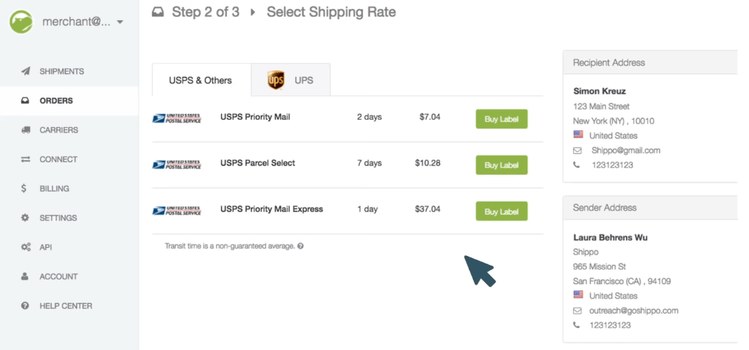
When AI customer service handles "where is my package," it is essentially a three-stage pipeline: first, intent recognition — is this an order-status query, and can we extract the order number or phone number; second, tool calls — hitting the order system's status API, the carrier's tracking API, and the warehouse system's outbound-status feed in sequence; third, composing the reply from an approved response template.
The crux is step two: the bot does not rely on memorized knowledge; it relies on calling interfaces. That means implementation difficulty depends less on how smart the model is and more on whether your order, logistics, and warehouse systems expose clean APIs under a unified order number. I have seen projects fail not on the model, but on a much duller question: what should the bot say when the carrier tracking API returns "no data yet"? That is a conversation-design problem, not an AI problem. The completeness of the data chain sets the ceiling for AI customer service: outbound information lives in the WMS, tracking data sits with the carrier, order status sits in the OMS — if the three do not reconcile, the bot can only hedge, and hedging is precisely the kind of answer that damages trust most in a post-purchase context.

The core design decision is to divide support questions into three zones:
Green zone (safe to auto-resolve): shipment tracking, restating return policies, shipping-rate rules, sizing and specification questions — answers are unique, backed by data sources, and quotable from policy originals.
Yellow zone (bot drafts, human confirms): refund-amount confirmation, damage claims, address changes — the bot can pre-fill information and route through an approval flow, but a person confirms the final action.
Red zone (mandatory human handoff): escalated complaints, suspected fraud, anything legal, emotionally charged customers — straight to a human; the bot is not allowed to "soothe."
Escalation triggers must be hard-coded: confidence below threshold, the same question asked twice, the customer explicitly typing "human agent," or amounts above a set line. Here is the counterintuitive judgment: the most valuable part of an AI customer service project is often not how many questions the bot answered correctly, but how accurately it identified the questions it could not answer — and how smoothly it handed them off. A project with 90% auto-resolution but a miserable escalation experience will see satisfaction drop below pre-bot levels, because a customer who circled through the bot three times before reaching a person arrives twice as angry.
Running the Numbers: Labor Cost Before and After AI Customer Service
A worked example with stated assumptions (adjust the parameters to your own ticket mix): take a mid-sized ecommerce operation handling 300 support tickets a day, with WISMO and policy questions at 50%, and a per-ticket human handling cost of roughly $2–$4 under common industry accounting (fully loaded agent cost), with a team of eight agents.
Before launch: about 9,000 tickets a month, cost = agent salaries + management + training and attrition. After launch: green-zone tickets (about 50%) auto-resolve at 60%–80% per vendor-disclosed case data — taking the 70% midpoint, roughly 3,150 tickets a month no longer consume human time; yellow-zone workflows gain about 30% efficiency.
On the cost side: a SaaS subscription or build-it-yourself investment (model calls + knowledge-base construction + integration work), with first-year setup plus annual fees. On payback: the saved hours translate to roughly two to three fewer agent hires, putting most projects at a 6–12 month payback — calculated conservatively. One caution: vendors' definitions of "auto-resolution" vary wildly, so ask before signing: does it mean "the bot gave an answer," or "the customer did not follow up within 48 hours"? The ROI gap between those two definitions can be a factor of two. A South China 3C-accessories exporter I interviewed is a case in point: during the 2024 peak season, daily tickets jumped from 400 to 1,500 with no new hires, carried by WISMO auto-replies plus night-shift human backup; the post-season review found 7% of "auto-resolved" tickets got a follow-up within 48 hours — which led them to change the auto-resolution definition from "the bot answered" to "no follow-up within 48 hours," cutting the measured ROI by nearly 40%.
Hallucination Risk, Guardrails, and Trend Outlook
Back to the airline case. AI customer service hallucination risk comes in two flavors: inventing policy (saying the return window is 60 days when it is 30) and inventing facts (saying "delivered" when the truth is "shipped"). The guardrail kit has four pieces: first, the knowledge base cites only versioned policy originals, and answers link to the policy; second, any answer involving money, timelines, or liability goes through a "citation plus human confirmation" double check; third, every automated reply keeps an audit log with regular spot checks; fourth, a red-line topic list — subjects the bot may never touch, escalated to humans on sight.
Technically, retrieval-augmented generation (RAG) sharply reduces policy invention, but it cannot protect against stale sources. So the knowledge base needs a named owner and an update SLA: when policy changes, the knowledge base follows the same day. Many teams treat the knowledge base as a one-time project — that is the single largest source of hallucination risk, because an outdated correct answer is harder to catch than a fabricated wrong one.
Looking past 2026, AI customer service is evolving from "FAQ bots" into "agents that can call tools": checking orders, changing addresses, initiating refunds — the bot executes directly inside the systems instead of handing the customer a link to do it themselves. Read against Gartner's timeline (about a quarter of organizations chatbot-first by 2027), the key variable is not model capability but whether companies dare to hand execution permissions to the bot — which brings us back to the boundary question: the green zone can be empowered, the yellow zone must keep a human in the loop.
My judgment: over the next two years, the dividing line will not be "whose model is smarter" but "whose escalation boundaries and guardrails are more solid." Model capability is commoditizing fast and will not differentiate anyone; what differentiates is the team that did the unglamorous work on ticket structure, data interfaces, and handoff workflows.
The math on AI customer service is clear and the path is legible; the genuinely hard problem is organizational: will the support team let go of repetitive work, and will the business sign off on the bot's answers? When an answer goes wrong, do you blame the model — or the person who approved the launch? Every company has to answer that one for itself.
By Dr. Chen, Supply Chain Researcher