Amazon changed its rules again. Platform rules change every day, but one thing never changes: ship through the wrong port and nobody will refund the money you lose. Which port for Colombian coffee, Buenaventura or Cartagena? I have been asked that question several times lately. Today I am laying out the numbers and letting the data do the talking.
Here are the hard numbers. Data from the Colombian Coffee Growers Federation shows that Colombian coffee exports reached 1.17 million bags (60 kilograms per bag) in August 2025, up 13.3% year on year, the highest August figure since 2017. Cumulative exports from January to August 2025 reached 8.73 million bags, up 12.1% year on year. For the 2024/25 coffee year, cumulative exports through August reached 12.27 million bags. Exports are growing, volumes are growing, and if you pick the wrong port, your costs grow with them.
Now look at the port shares. In August 2025, Buenaventura handled 64.9%, Cartagena 26.5%, and Santa Marta 8.0%. Nearly two-thirds of the cargo moved through Buenaventura. That is no accident. It is the combined result of growing regions, road networks, and sailing schedules. With the numbers on the table, port selection is not a gut-feel decision.
Why Buenaventura Takes the Biggest Share of Colombian Coffee Exports
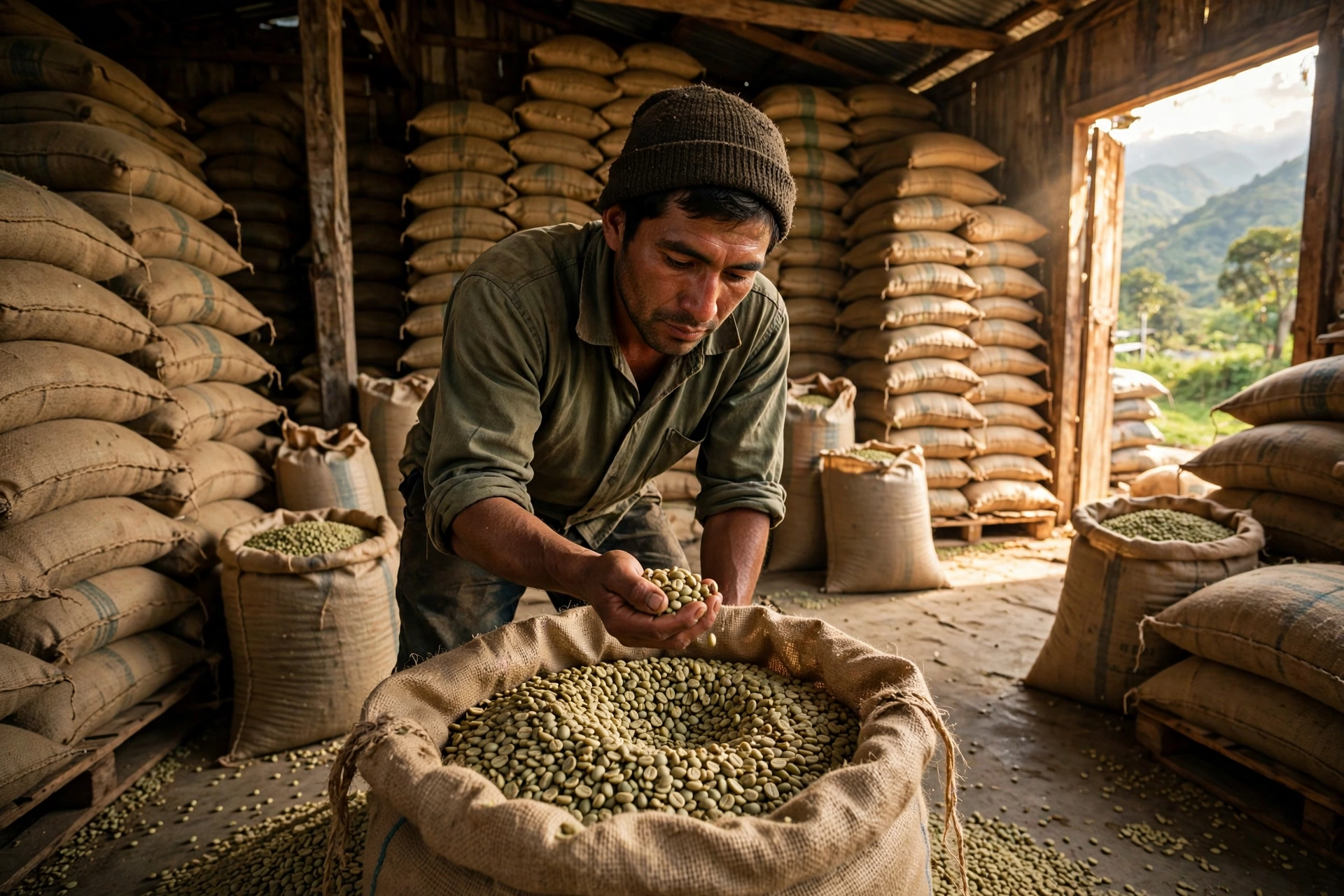
Let me tell you how I approach this. Five years as a cross-border seller has taught me one habit: when choosing a logistics route, look at where the goods come from first. Colombia's main coffee-growing regions sit in the central and western mountains, closer to Buenaventura on the Pacific side, with shorter overland hauls and fewer mountain passes. Cartagena sits on the Caribbean side, and cargo from the growing regions has to cross the whole country to get there: longer distance, more time, more things that can go wrong.
Buenaventura's 64.9% share rests on solid cost logic. A shorter overland leg means lower trucking cost, less damage, and less time in transit. For coffee, which fears moisture, crushing, and delays, one fewer transfer is one fewer risk. What sellers fear most is not a slightly higher freight bill. It is cargo arriving at the destination port damp or torn, with a claims dispute dragging on for a month.
Here is a scenario to make it concrete (illustrative scenario). Suppose a batch of coffee leaves a growing-region warehouse for Buenaventura: overland transport plus loading takes about five days. Routing the same batch through Cartagena adds two to three days of overland transport, plus one extra transfer. For us sellers, every extra day of stock preparation ties up cash for one more day. In peak season, when stock is already tight, a few extra days of tied-up inventory puts real pressure on cash flow. Every seller knows that math.
Cartagena is not without advantages. Its sailing network is denser, with more direct options to Europe and the US East Coast. If you sell into European markets, a direct sailing from Cartagena may save you a transshipment leg. That is the first practical rule of port selection: do not just look at a port's reputation. Look at where your cargo is ultimately going.
Buenaventura vs Cartagena for Colombian Coffee, a Decision Framework You Can Use
Here is the decision framework, ready to score against. The table below compares the two ports on the four dimensions sellers care about most (qualitative comparison; figures should be checked against the latest official data).
| Dimension | Buenaventura | Cartagena | How a seller should choose |
|---|---|---|---|
| Overland distance from growing regions | Shorter, fewer mountain passes | Longer, must cross the interior | Growing region in the west favors Buenaventura |
| August 2025 export share | 64.9% | 26.5% | Mainstream choice, more mature sailings and services |
| Destination-market sailings | Mainly Pacific routes | Caribbean routes, more Europe and US options | Europe and US East Coast favor Cartagena |
| Operational risk | Fewer transfers, lower damage | More transfers, more links in the chain | Moisture-sensitive cargo favors fewer transfers |
Here is the counterintuitive part. Many people assume the biggest port must be the cheapest. Not true. A big share means mainstream, but mainstream is not the same as cheapest for you. If your buyers are in Europe, a direct sailing from Cartagena may save more in ocean time and transshipment fees than the extra overland cost. Port selection is not about following the crowd. It is about total cost: overland plus ocean plus time cost plus damage risk. The lowest total is the right answer.
Now the pitfalls. First, lock in space early in peak season. August 2025 exports of 1.17 million bags set the highest August level since 2017, and when volumes rise, port slots and vessel space tighten together. Wait until the cargo reaches the port before booking space and you will be too late. Booking two to three weeks ahead is basic discipline for a seller.
Second, do not put all your cargo through one port. Buenaventura's 64.9% share is a fact, but over-concentration carries risk. If the port congests or weather hits, all your cargo sits there. Sellers who can manage it should run the main volume through Buenaventura and keep a small share through Cartagena as a backup. Two routes mean sleeping better in peak season.
Third, watch the shipping rhythm out of the growing regions. Cumulative exports of 8.73 million bags from January to August 2025, up 12.1% year on year, mean tighter coordination is needed between growing-region warehouses and ports. Confirm dispatch timing with suppliers. Do not let cargo wait in a growing-region warehouse, and do not let it pile up at the port waiting for a vessel. Coffee is an agricultural product. Time is quality.
One last suggestion for fellow sellers. Before choosing a port, ask yourself three questions. Which growing region does my cargo come from? Which market are my buyers in? What does my cargo fear most? Match the three answers and the port picks itself. Buenaventura fits most cases. Cartagena fits specific markets. Other people's answers cannot be copied. Working out your own numbers is what counts.
This approach works. I have tested it myself. In port selection, data gives you confidence and hands-on practice gives you feel. With both, peak-season stock preparation stops being a panic.
By Ah K, E-commerce Seller (5 yrs)