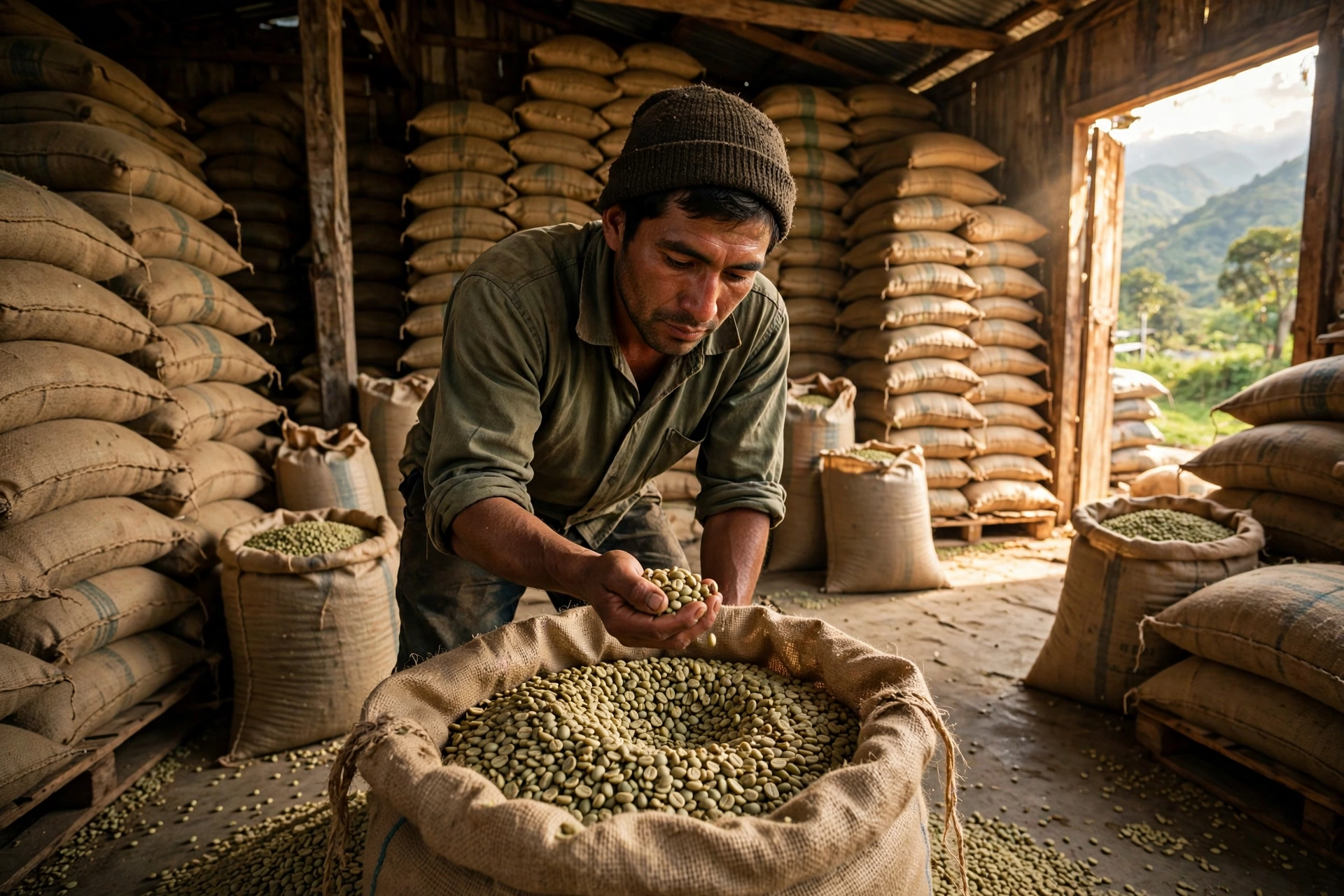
Let me say it straight: most people buying Guatemala coffee obsess over region and cupping score, then treat the warehouse as an afterthought. That is backwards. A friend of mine who imports green beans brought in three containers of Huehuetenango in 2024. When the doors opened at the US warehouse, half a container smelled musty. The cupping score dropped a full tier. That one container cost him an entire season of profit. With green beans, if you cannot do the warehouse math, all the work before it is wasted.
This is not a tasting-notes piece. It is a money piece. Guatemala produced about 3.5 million 60-kilo bags of coffee in 2024, ranking 11th in the world, roughly 2% of global output, and about 90% to 95% of it is exported. The eight growing regions, Huehuetenango, Antigua, Acatenango, Atitlan, Coban, Fraijanes, Nuevo Oriente, and San Marcos, all sell altitude and micro-lots. But between the farm and your roaster, the beans pass through three warehouses: origin, port, and destination. If any one of them lets the beans get damp or pick up a stray smell, the cupping score does not matter.
Guatemala Coffee Loses Half Its Value at the Farm Warehouse
Green beans breathe. They absorb moisture and give it off as the air around them changes, so the warehouse humidity decides the bean moisture. The accepted safe band is 10% to 12.5% bean moisture, 15 to 25 degrees Celsius in the room, and 50% to 60% relative humidity. Step outside that band and mold and fermented flavors start lining up. Royal Coffee puts the temperature range at 50 to 75 degrees Fahrenheit, but the rule underneath is the same: stable beats cold. Big swings hurt more than a warm room.
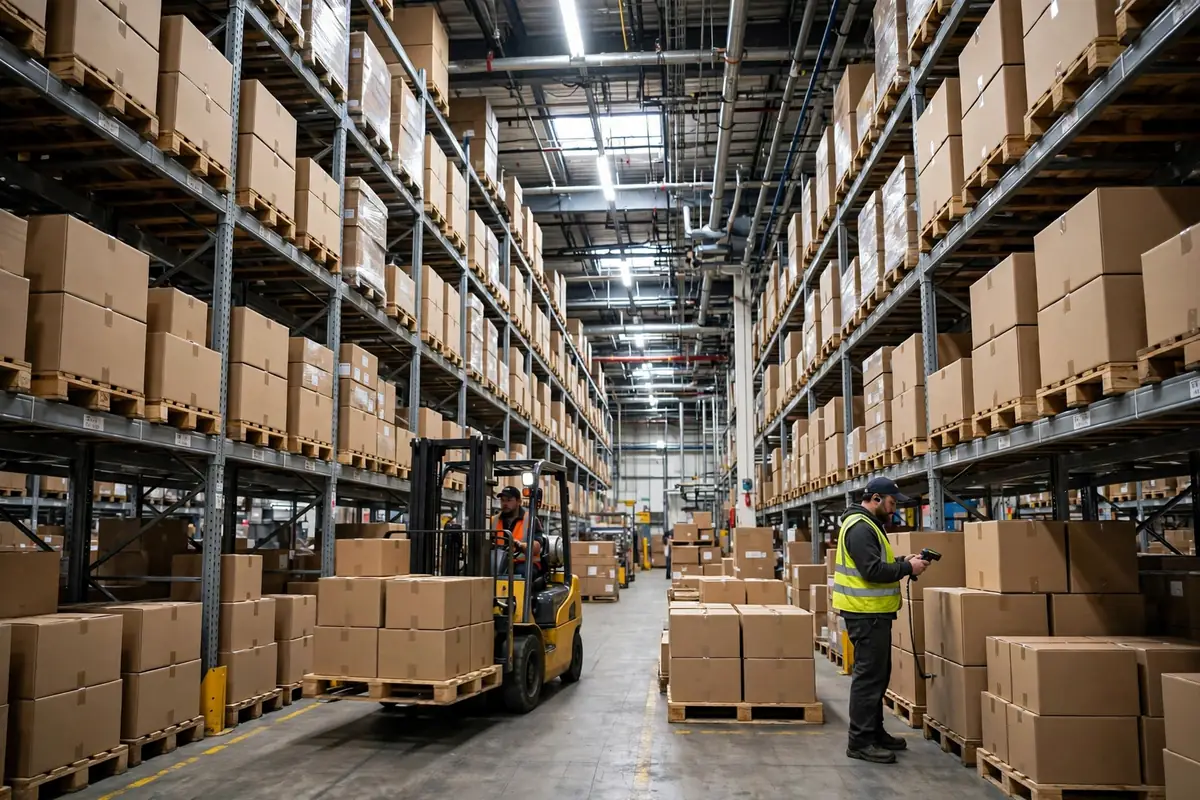
Stacking has hard rules too. The Green Coffee Association recommends bags on pallets, at least 4 inches off the floor, 24 inches from any wall, with space between stacks for airflow, and no stack higher than 100 bags or 5 pallets. It reads like a textbook until you price it. The bottom layer sitting straight on concrete absorbs moisture fastest. I have seen a container opened to find the bottom 20 bags over-moisture and downgraded to commercial grade.
My friend's shipment died at the origin warehouse. Illustrative example: a 300-bag lot, no moisture control, rainy-season humidity above 80%. Three weeks later the sample moisture had climbed from 11% to 13.5%, and 60 bags smelled musty. At 60 kilos a bag and a 2-dollar-per-kilo gap between specialty and commercial grade, those 60 bags meant 7,200 dollars gone, before the weeks wasted arguing over the claim. Whatever you save skipping moisture control at the farm warehouse, the cupping report charges back with interest.
Here is the counterintuitive part: high-altitude warehouses are riskier, not safer. Huehuetenango has big day-night temperature swings. Hot days, cold nights, condensation on the bag surface. People assume mountain air is dry and skip moisture control. It is the opposite. In a warehouse with big swings, ventilation and a temperature-humidity logger come before the dehumidifier.
Jute, Liner, or Bulk: Which Bill Is Cheaper?
Three packaging options, ranked by moisture protection and cost. The numbers below are an illustrative example, based on a 20-foot container of about 300 bags at 60 kilos each:
| Option | Cost per container | Moisture protection | Best for | | Bare jute bags | About $300 | Poor, follows warehouse humidity | Short hops, fast-turning commercial lots | | Jute with hermetic liner | About $900 | Good, locks in moisture, blocks stray odors | Specialty lots, long ocean freight | | Bulk liner in the container | About $1,200 | Best, whole container sealed | Large single-origin orders |
Do the math this way: the liner costs about $600 extra per container. Spread over 18 tonnes, that is $0.03 per kilo. But one downgraded lot costs about $2 per kilo. The $600 buys protection worth 60 times its price. I run this calculation for every client. A liner is not a cost. It is insurance.
Liners have their own trap, though. A sealed bag hates sharp temperature swings. A container baking in the sun by day and cooling fast at night builds condensation inside the liner, which means the moisture is sealed in with the beans. Using a liner means watching warehouse temperature swings more closely, not walking away. There is also a trade-off: beans kept sealed age more slowly, and some roasters feel they need a few extra days to rest after the bag is opened. Compared with a musty lot, that is a small price.
Guatemala Coffee at Sea: What the Container Fears Most
Look at the export picture first. In the 2024/25 coffee year, Guatemala exported about 3.726 million quintals worth about $1.285 billion, according to Anacafe. In 2024, coffee exports were worth about $967 million, with the top three markets being the United States at $388 million, Canada at $103 million, and Japan at $91 million. The United States is the number-one buyer, so the Central America to US ocean lane is the main route for most sellers.
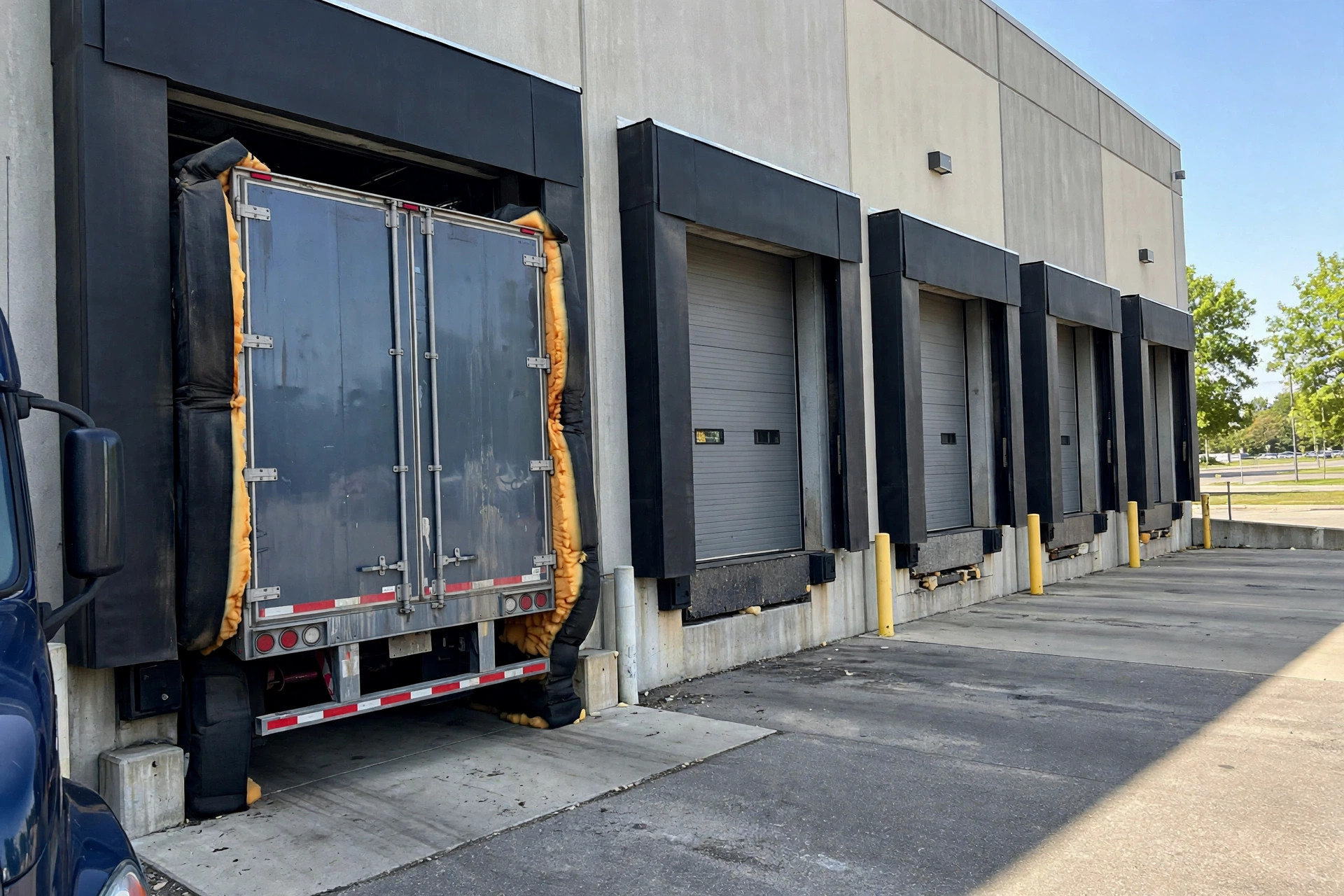
The biggest enemy inside the container is container rain. The roof heats past 40 degrees Celsius in the sun by day, cools at night, and condensation drips straight onto the top layer of bags. The fix is three things: inspect the container before loading, load enough desiccant for the cargo volume, and get the box moving within 48 hours instead of baking on the dock. Do not skimp on desiccant. Illustrative example: 8 to 10 kilos of desiccant for one container costs about $40, under $0.15 per bag, roughly 100 times cheaper than one moldy bag.
Then there is taint. Green beans absorb odors fast. If the same warehouse stored spices, rubber, or chemicals, the beans pick it all up. The Codex code of practice is blunt: non-food materials must not be stored with coffee. Before I accept a warehouse, I ask three questions: any co-storage record, what was the last cargo in here, and any lingering smell. If they cannot answer, I switch warehouses. Do not gamble on it.
Arrival inspection is the last line of defense. My checklist:
- Smell first when the doors open. Musty, fermented, or chemical notes mean the whole container gets sampled.
- Spot-check moisture. Anything outside 10% to 12.5% and I do not sign.
- Match bag marks and lot numbers against the contract and the Anacafe origin paperwork.
- Look at pallets and stacking. Water stains or torn bags on the bottom layer tell the story.
- Keep a sealed sample, at least 500 grams per lot, labeled with container number and date.
- Get the cupping report within 48 hours. Wait a week and nobody can agree who is responsible.
- Isolate problem bags on their own. Never mix them back into the lot.
- File every photo and lab sheet the same day. A claim runs on paperwork.
I have run this routine for five years, and nearly every painful lesson I learned sits on that list. Guatemala grows great beans. The hard part is getting them to your door in the same condition they left the farm. Do not save money on moisture control, do not skip the liner, do not let the 48-hour inspection slide. This one I tested myself, and it works.
By Ah K, E-commerce Seller (5 yrs)