Cold storage cold-work protection is not really about the cold. It is about people pushing through when they should stop.
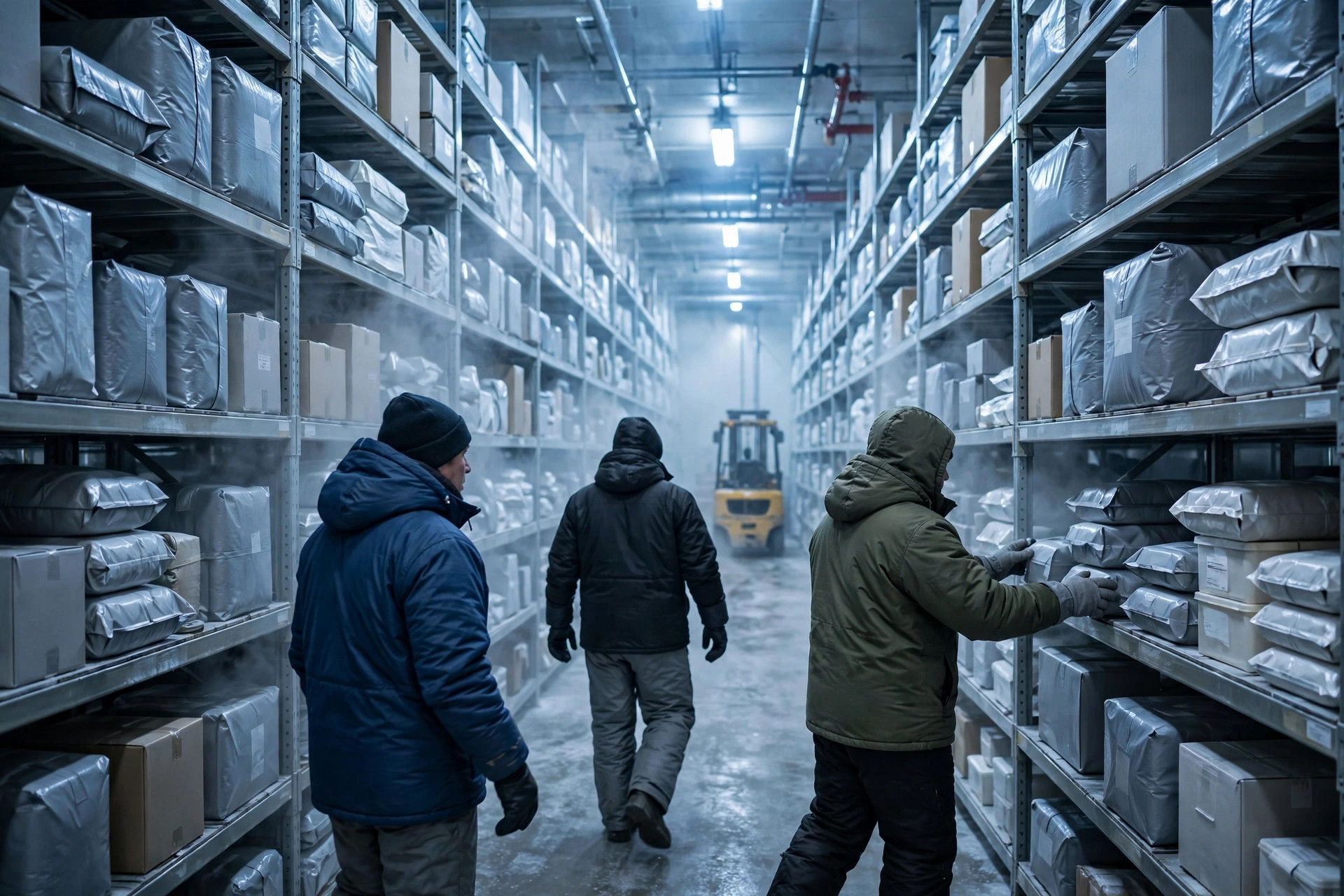
It was 4:30 in the morning. I stood by the freezer door with a clipboard, checking in the night-shift crew going in to replenish. One young guy had his hat pulled up wrong, ears sticking out. I yanked it back down. He laughed and said it was fine, he would warm up once he started moving. I told him not to laugh. In a freezer, "you warm up once you move" is the most dangerous sentence there is.
Let me be straight with you. I used to run an ambient-temperature warehouse, and I thought a freezer was just an ambient warehouse with one more jacket. I was wrong. In an ambient warehouse, tired people can slow down and recover. In a freezer, once someone is cold-injured, recovery comes too late. This article is not about equipment. It is about people. Cold storage cold-work protection comes down to one rule: never let anyone tough it out inside a freezer.
Cold Storage Cold-Work Protection Starts With Recognizing How People Get Into Trouble
Trouble in a freezer rarely arrives all at once. It creeps in. First, the hands stop cooperating: thick gloves, a scanner that will not read, a carton that slips. People blame the gloves. Most of the time, the hands are simply going numb. Then people slow down. Fewer words. Stiffer walk. Then comes shivering that will not stop, or the opposite, no more shivering at all, just a flat, drained look. Either one means get them out now.
Two winters ago, during peak season, we had a close call. Lao Zhang, in his early fifties, a veteran, always solid. Night shift was short-handed, so he volunteered for an extra rotation. He walked out pale, hands shaking so badly he could not twist open his water bottle. Ten minutes of rest brought him back, and he said it was just tiredness. I told him tired and cold-injured are two different things. Tired gets better with rest. Cold injury gets worse if you ignore it. From that day on, our warehouse has had a hard rule: if you feel off, you walk out. No permission needed. Nobody calls it slacking.
The other case was a new hire. First day in the freezer. Thin layers. Hat not covering his ears. He did not want anyone calling him soft, so he said nothing. The shift lead spotted his ears gone bright red on a walk-through and pulled him straight out. The kid argued he could handle it. The lead had one answer: it is not your call, it is your ears' call. After that, no new hire goes into the freezer alone in week one.
Layering: The First Line of Cold Storage Cold-Work Protection
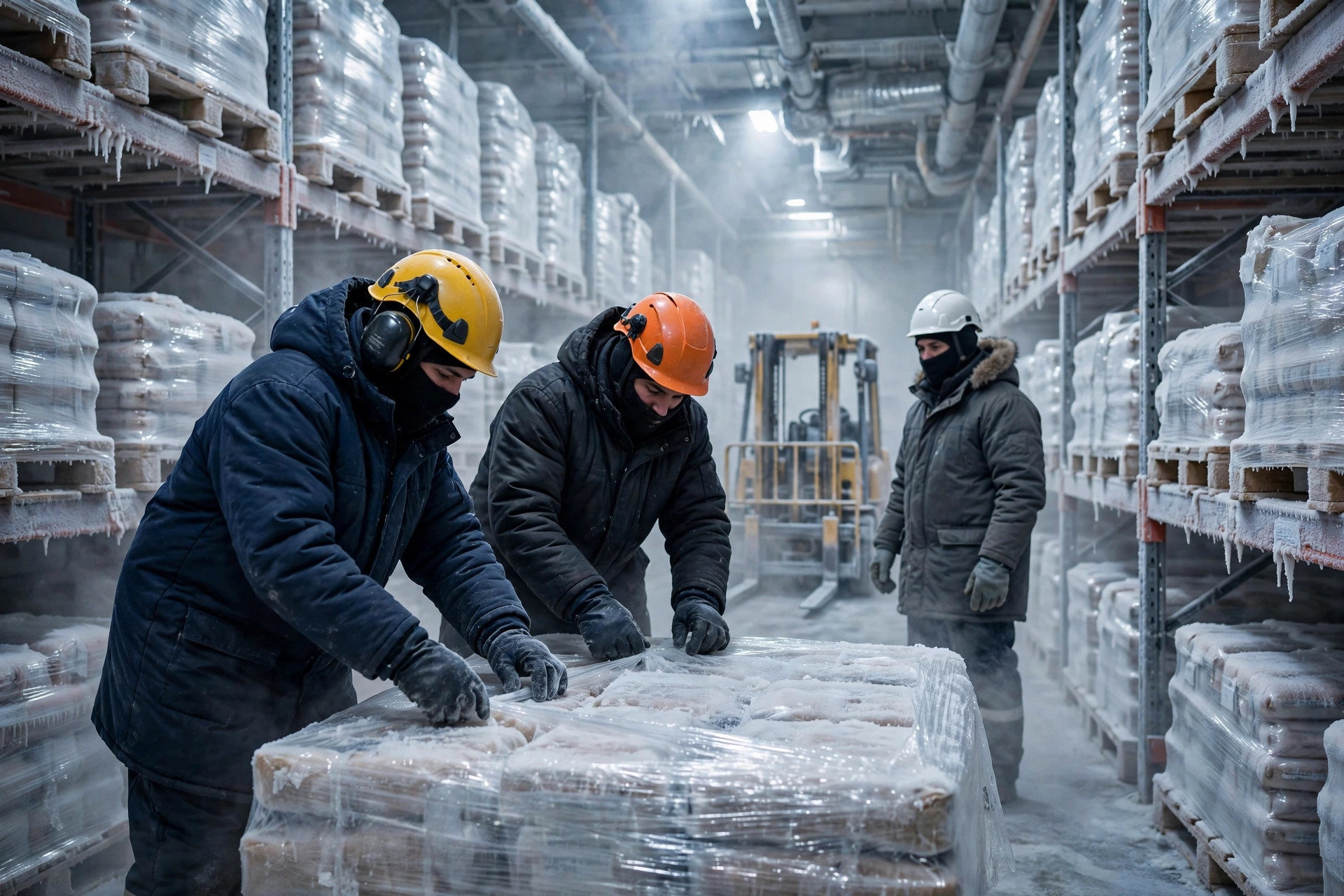
Clothing looks simple. It is full of traps. Our warehouse runs three layers. The base layer wicks sweat. No pure cotton: cotton soaks up sweat, clings to the skin, and the moment you step into a draft, the chill hits twice as hard. The middle layer insulates. Fleece does the job. The outer layer blocks wind and moisture. A freezer has condensation, and once clothing gets wet, the insulation is gone. Hat, gloves, thick socks, and insulated slip-resistant boots are all non-negotiable. Ears, fingers, and toes go first.
Here is how we manage cold gear:
| Gear | How we manage it | When it gets replaced |
|---|---|---|
| Insulated jacket and pants | One numbered set per person, hung to dry after shift | Torn, or insulation flattened |
| Insulated hat and face cover | Checked daily; covering the ears is the baseline | Loose, or no longer covering the ears |
| Insulated gloves | Two pairs on hand, one for work, one spare | Wet means swap immediately, never work in wet gloves |
| Insulated boots and thick socks | Non-slip soles, extra socks stocked | Socks wet means change at once, soles worn smooth means replace |
Rotation Shifts and Warm-Up Breaks: The Core of Cold Storage Cold-Work Protection
Cold storage cold-work protection lives or dies on scheduling. The best gear does not change the fact that nobody should stay inside a freezer indefinitely. Our fixed routine is rotation plus warm-up breaks. One person works in the freezer for a stretch, comes out to warm up, then goes back in. How long in, how long out, there is no universal number. It depends on your freezer temperature, how heavy the work is, and how people are doing. Colder means shorter stints.
| Shift | Time in freezer | Warm-up break | Notes |
|---|---|---|---|
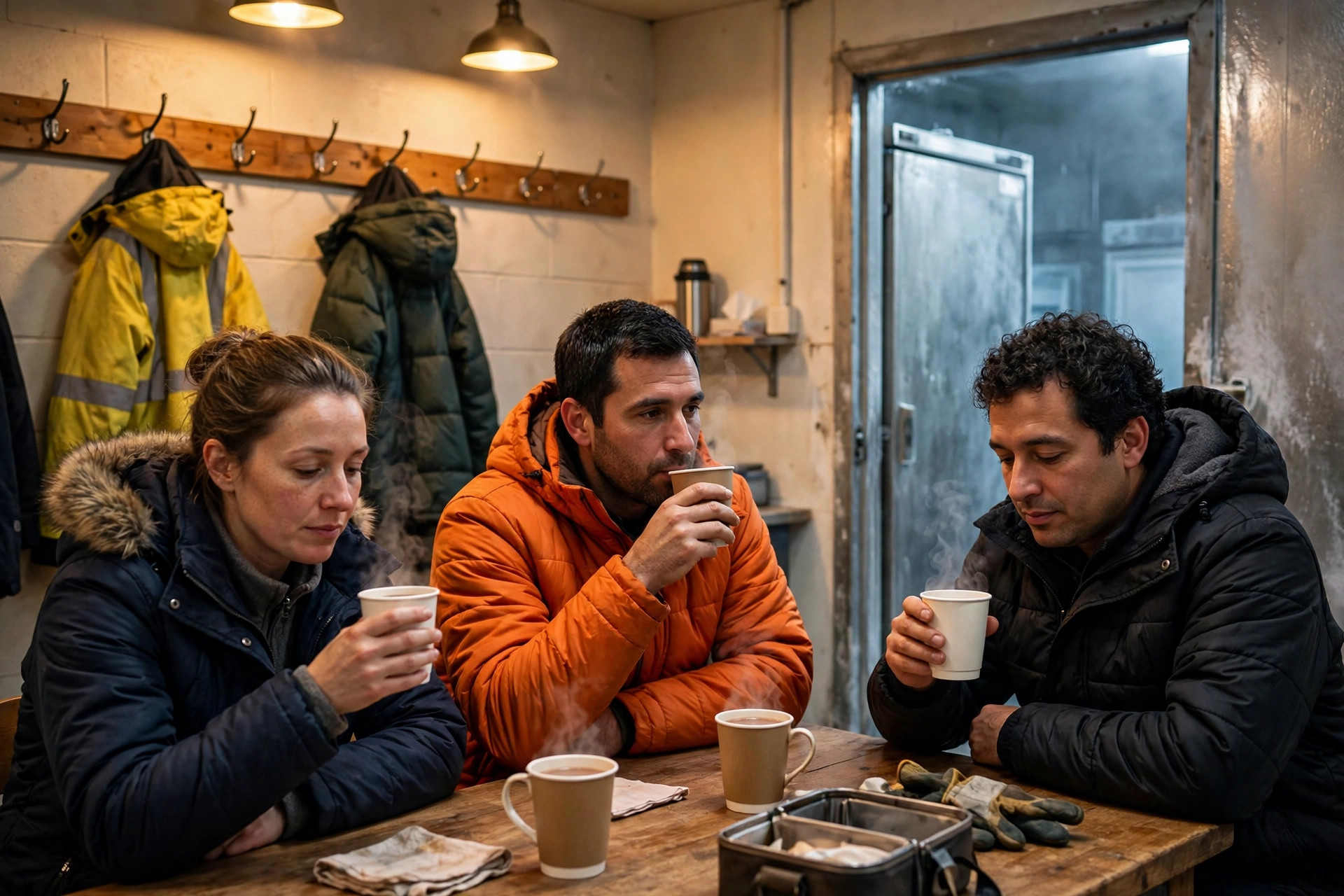
| Morning, first rotation | Work a stretch, come out when hands and feet start feeling cold | Warm room, hot water, move hands and feet | Never tough it out to hit a clock |
| Morning, second rotation | Swap crews, fresh people go in | First crew does not go back until fully warmed through | Two crews alternate, no back-to-back stints |
| Night shift | Shorter stints than day shift | Warm room lights on, water hot | People get drowsy at night, watch them more closely |
| Peak-season overtime | Add people, not hours per person | Warm-up time never gets cut | Short-handed means run two shifts, not one person doing two |
Now the trade-off. Rotation looks like extra labor. But one person going down with a cold injury costs sick days, medical visits, cover shifts, and undone work. A real injury costs far more in claims and downtime than one extra person on rotation ever will. A little slower, a lot steadier, and that is genuinely faster.
New-Hire Acclimation and the Buddy Check
New hires are the group you have to watch hardest in a freezer. They have two problems. One, they do not know what "something is wrong" feels like. Numb hands feel like tiredness. Shivering feels normal. Two, they are embarrassed to speak up. They do not want veterans laughing at them or the lead thinking they cannot hack it. So they push through, and pushing through is how people get hurt.
Our rule: no new hire goes into the freezer alone in week one. Veterans pair up with new people, two-person teams, in and out together. The veteran's job is not just teaching the work. It is watching the new person's condition. Face going pale, hands shaking, going quiet, bring them out at once. Week-one assignments are lighter too. Go slow for a few days of acclimation, and the next few months run smooth.
The buddy check is not only for new hires. Veterans pair up too. Before going in, check each other's gear: hat on right, gloves dry. Coming out, ask one question: hands and feet still working, any sweat. That quick look and one question beats any poster on the wall.
One more thing: water. People in a freezer do not feel thirsty, and plenty go a whole morning without drinking. But breathing and sweating still drain moisture, and dehydration sneaks up quietly. Our warm room always has hot water, and the lead asks at every roll call: did you drink water.
When Something Goes Wrong: Emergency Response
The best prevention still needs a plan for the day something goes wrong. If someone gets frostbite, ears or fingers turning white or blistering, do not rub the area, and do not use hot water on it. Get them somewhere warm, get wet clothing off, cover the area gently with a clean cloth, and get them medical care fast. If someone shows signs of hypothermia, confusion, slurred speech, stumbling walk, do not let them walk out alone. Two people help them out and call emergency services right away.
We post those steps on the warm-room wall, and the lead walks the crew through them every month. In a real emergency, the brain goes blank, and only practiced moves come out. In the United States, OSHA has published guidance on cold stress, and requirements can differ by state and industry. For specific limits, check the latest official guidance on the official website.
A Reminder for Fellow Operators
Cold storage cold-work protection has no single trick. Gear, scheduling, warm-up breaks, buddy checks, emergency response, if any piece is short, something will go wrong. My biggest takeaway from running a freezer is this: people are the most valuable asset, and the easiest to overlook. Broken equipment can be fixed. A wrong shipment can be corrected. A person hurt by the cold cannot be undone. Brothers, think one layer deeper when you build the schedule, take one more look before the shift, and keep one more kettle of hot water in the warm room. Small things, but on the day it matters, they are the big things.
By Chen Feng, Warehouse Operations Manager