Here's my verdict up front: in chile lithium export warehouse logistics, moisture is the first line item and freight is the second. Put plainly, lithium salts don't mind being dropped or squeezed. They mind water. Lithium carbonate and lithium hydroxide are both hygroscopic, which means they pull moisture straight out of the air. One torn bag, one loose seal, one damp warehouse, and battery-grade purity is gone. The cargo gets downgraded, the customer files a claim, and the re-testing and haggling cost many times what the packaging saved.
There are two sides to this. Chile is the world's second-largest lithium producer, turning out 311,000 tonnes in 2025, with carbonate making up most of what leaves the country. At that volume, a small slip in the warehouse turns into real money fast. Brine from the Salar de Atacama travels 262 kilometres by road to the chemical plants at Antofagasta, where it is refined, bagged, and sent to the port. The chain is long, and the moisture bill has to be counted in three separate segments.
In Chile Lithium Export Warehouse Logistics, the Big Bag Is the First Line of Defence
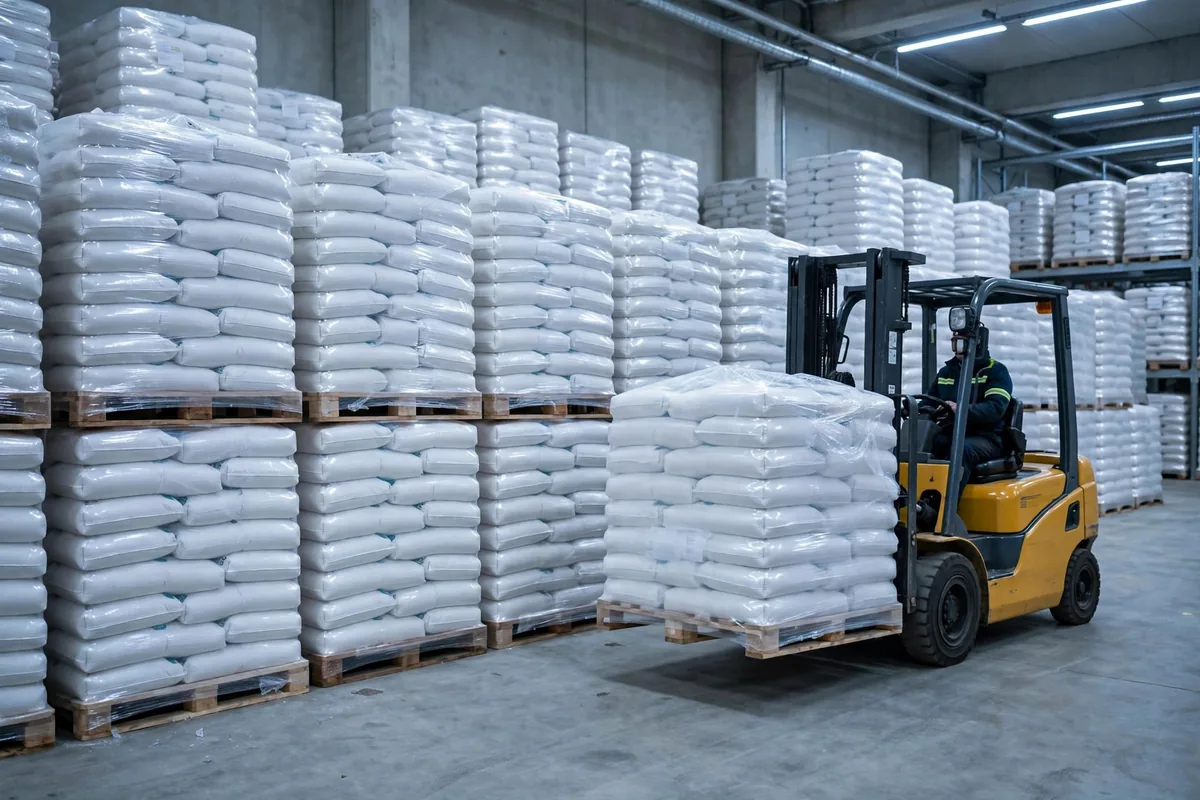
I've seen too many people treat a bulk bag as an ordinary sack. It isn't. For a moisture-hungry fine powder, the bag is part of the product specification. A plain woven bag lets water vapour straight through the fabric and the stitch holes. When day and night temperatures swing, condensation forms inside the bag and the powder cakes. Lithium hydroxide is the fussier of the two: once it absorbs moisture it changes, the lab report comes back over the moisture limit, and battery grade becomes industrial grade on the spot.
A few years ago, a container of lithium carbonate left Antofagasta and spent three weeks at sea. When the customer in Asia opened it, the bags nearest the container doors had caked shut at the mouth and wouldn't pour. The whole container was sampled, moisture was over the limit, and the buyer took it at a downgraded price. The shipper traced the problem back, and it wasn't the vessel or the warehouse. It was the filling day: the inner liner had been tied shut with a strap instead of heat-sealed. A tied mouth looks tight, but the gap is always there, and three weeks of temperature swings at sea let damp air creep in, a little at a time. One container's worth of damage, caused by a sealing step worth pennies.
So my rule is fixed: battery-grade lithium going overseas gets an aluminium-foil composite liner with a heat-sealed mouth, no shortcuts. Check the liner material, because foil laminate blocks moisture far better than a plain polyethylene liner, which is only a pass grade. After sealing, pull-test the seal strength. Don't discover the sealer temperature was wrong after the container is loaded. Static is easy to forget, too: filling fine powder builds static charge, so pick conductive or dissipative bags to suit the warehouse, and don't improvise with ordinary bags. Some lithium precursors ship as Class 9 dangerous goods, which means the packaging needs UN certification, so have the paperwork ready before booking, not after the carrier refuses the load.
Three Break Points Between the Salar and the Port
Once the bag is right, the warehouse can still undo the work. The La Negra chemical complex sits 27 kilometres southeast of Antofagasta and produces more than 85,000 tonnes a year of battery-grade lithium carbonate. The plant looks close to the port, but the coastal air is damp and the temperature swings are wide. A warehouse without humidity records is storing blind.
My routine for this kind of warehouse is four rules. First, finished lithium salt goes indoors only. Outdoor storage is out of the question, tarp or no tarp, because condensation forms under a tarp just the same. Second, put temperature and humidity loggers in the warehouse, record readings twice a day, and switch on dehumidification the moment humidity climbs. Don't guess. Third, keep the bags on pallets, off the floor and off the walls, with air gaps between stacks, because the row against the wall always goes damp first. Fourth, run first-in-first-out strictly by batch, with batch numbers, lab certificates, and loading records matched one to one, so a problem can be traced back to the exact day and batch it was filled.
One more thing most people skip: keep two retained samples, one that travels with the cargo and one sealed and stored at the warehouse. If the customer re-tests at destination and reports excess moisture, your retained sample and its lab certificate are the only way to tell whether the problem left the factory that way or picked up moisture in transit. Without that sample, you start the claim negotiation already losing. A sealed jar and a lab sheet cost almost nothing, and they can save a whole container's worth of arguing.
Run the numbers as an illustrative example and the spending decision makes itself. Chile's central bank data put the average lithium price at about $18,850 per tonne over the first ten months of 2026. A 20-foot container holding 20 tonnes is worth roughly $377,000 at that price. Upgrading the packaging from plain bags to foil liner with full heat sealing adds only a few hundred dollars per container, under two-tenths of one percent of the cargo value. The other way around, one container downgraded for moisture loses money in the tens of thousands. That calculation doesn't need a second pass.
| Option | What it is | Moisture protection | Cost | Best for |
|---|---|---|---|---|
| Plain bulk bag | Woven bag, no liner | Poor, vapour passes through fabric and needle holes | Cheapest | Industrial grade, short haul |
| PE-lined bulk bag | Liner bag, tied mouth | Fair, the tied mouth is the weak point | Moderate | General export |
| Foil liner, fully heat-sealed | Aluminium-foil composite liner, heat-sealed mouth | Best | Most expensive | Battery-grade export |
The sailing schedule is the third break point. Book early and treat the port cut-off as fixed, because every change of vessel, port, or container type after that costs money. My practice is to plan loading backwards from the sailing date, with stuffing and sealing finished the day before cut-off. Before sealing, check the container floor is dry and the door gaskets aren't worn. Temperature swings at sea cause condensation on the container roof, and a drip lands on one bag's worth of cargo, so desiccant inside the container is standard kit, not an extra.
Chile Lithium Export Warehouse Logistics at the Port: Where the Money Leaks
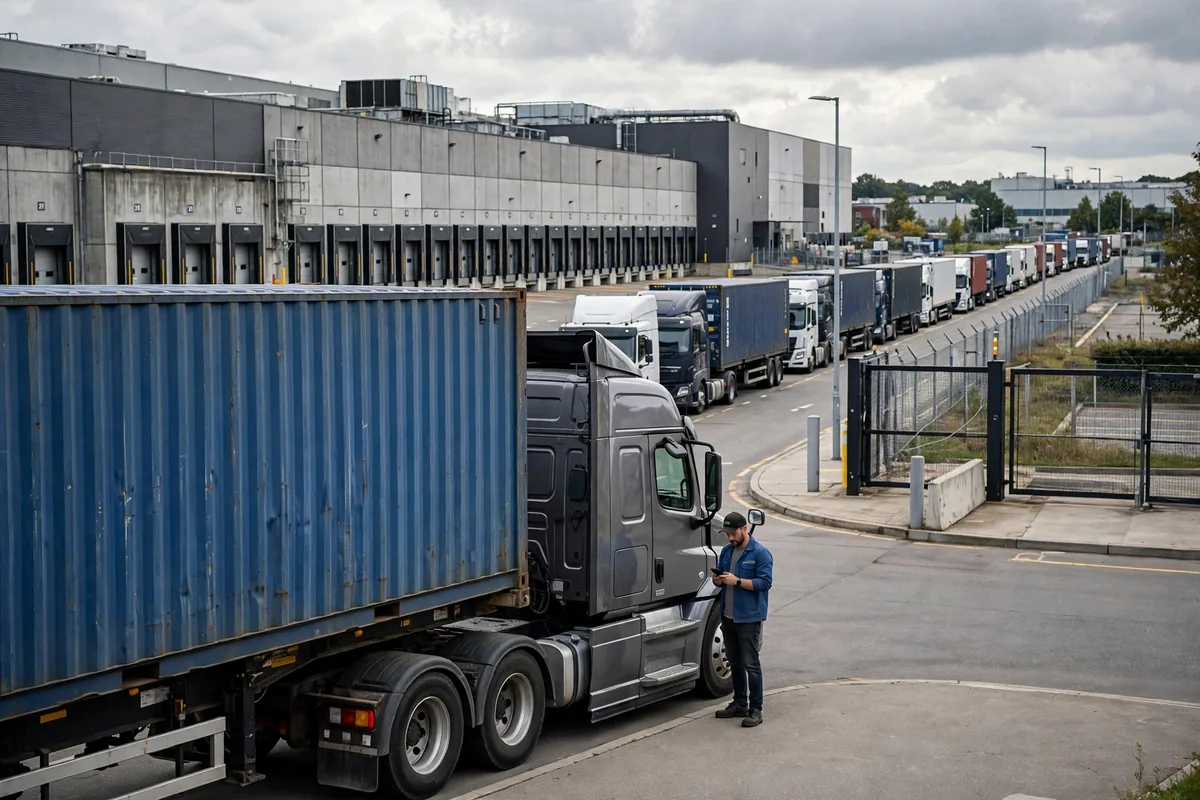
Port storage is the leg most people underestimate. The cargo reaches the port, the ship hasn't arrived, and the container waits in the yard for days. Antofagasta is the main export port for Chile's mining north, and its yards turn over fast, but even fast yards have waiting time. Those days, the box sits outdoors, and the day-night temperature swing plus the coastal fog find their way in through door seals and vents.
Here is the counterintuitive part: the Atacama is one of the driest places on Earth, yet in chile lithium export warehouse logistics the biggest enemy is water. Not the water in the salt flat, but the fog off the sea and the condensation inside the container. A dry production region does not mean a dry supply chain. The salt flat can bake as hard as it likes; the cargo can still go damp at the port. Plenty of people cost a shipment only as far as the factory gate, and act as if everything is fine once the goods leave. In practice, the 262 kilometres after the factory gate, plus the days at the port, are exactly where cargo damage concentrates.
So my approach at the port is this: use indoor port warehousing where you can get it, and where you can't, shrink the yard time by lining up the sailing and the stuffing so the box doesn't spend a night more than necessary in the yard. Door orientation, stack height, and desiccant quantity all go on the stuffing checklist, and the person who seals the container signs it. When something goes wrong, that checklist is the paper trail. And one more thing: don't treat port storage as a free warehouse. Yard rent by the day is small money. The real cost is an extra day outdoors, an extra point of moisture risk, and a saving on rent that never covers one caked bag.
Chile lithium export warehouse logistics comes down to one sentence: spend the moisture money up front, and you save the claims and downgrades later. Next time someone tells you the packaging can be cut, ask them one question: how much is this container worth, and does the money saved on bags cover a single downgrade?
By Lao Mi, Supply Chain Veteran (20 yrs)