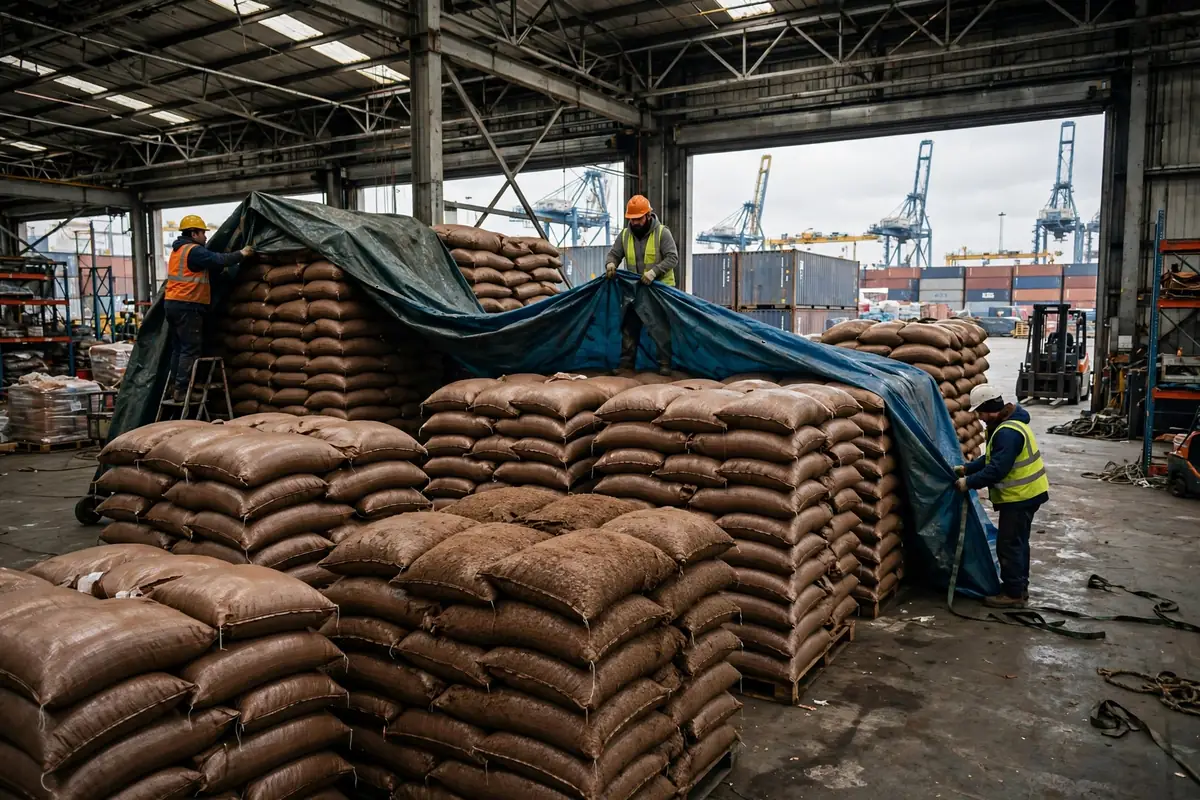
Let me tell you, after all these years on the road, Chile copper concentrate export warehouse storage is not really about the long drive. The hard part starts after the truck arrives at the port yard and nobody is watching the pile. The run from the mining country in northern Chile down to Antofagasta takes most of a day through the Atacama Desert, and when the wind picks up, the tarp over the trailer bellies out like a sail. Copper concentrate is a dark grey powder, fine as flour. The wind lifts it off the load, coats the cab, and leaves a grey line along the roadside. One night I was running with a convoy and the truck ahead of me had a loose tarp edge. Dust streamed out of the gap and filled my mirrors. I thought to myself, if this stuff sits in an open yard with no cover, how much blows away, and how much trouble does it make for everyone nearby.
A driver learns fast that concentrate is not like boxed cargo or bundled steel. It is loose powder. It hates wind, and it hates water. It looks fine at the mine, then rides a rough desert road to the port and sits for a few days. If the yard does not manage it well, it comes out changed. A light case is a dusty surface and some lost material. A bad case is a pile caked solid inside, so the loader cannot get it out and the ship waits. The mine watches output. The port yard is where the bill lands, in lost cargo, extra loader days, and a missed sailing.
Chile copper concentrate export warehouse storage: dust comes first
Two dry seasons ago I unloaded at a yard outside Antofagasta and saw what happens when dust is left to itself. It was midday and the wind was strong. Three piles of concentrate sat in the open, covered only halfway, and the wind drove straight into the uncovered side. Grey dust rolled low across the ground, and men a dozen metres away were squinting. The yard crew ran a water hose over the area. The ground went wet, but the pile surface dried out in under half a day and the dust came back. An old hand who ran the yard told me that on a windy day a badly kept pile brings complaints from the neighbours first, and then the inspectors, and then the whole yard has to stop and fix the problem.
That day taught me dust is not a sweeping job. It has to be decided on the day the cargo arrives. Keep piles low and wide instead of tall and narrow, so the wind has less face to hit. Cover the pile fully and weigh the edges down, because one open edge lets wind in underneath. Leave room for a water truck and a sweeper, and do not let trucks drive along the foot of a pile. Load slowly, one bucket at a time, and you raise half the dust. On a very windy day, wait it out if you can. The hours you save by rushing are not worth the dust bill that follows.
Chile copper concentrate export warehouse storage: moisture is the second wall
Plenty of people think a desert needs no moisture plan. Let me tell you, that is only half true. The Atacama is dry, but the air near the port is damp, and on a cold night moisture settles on the pile surface. Worse is the odd short rain. It does not fall hard or long, but once concentrate gets wet, the top layer crusts, and the weight above presses it tighter the longer it sits. Just before the rainy season this year I was waiting to load near the port. A short rain had fallen overnight. By morning the open pile had a hard skin on top. The loader dug in and found hard slabs on the surface with loose powder underneath, and the discharge ran uneven. The crew spent two extra days breaking up the crust. All that time the ship sat off the port waiting, the cargo owner was anxious, and the warehouse was anxious too. Nobody had expected one night of rain to hold up a whole shipload.
Here is the part that surprises most people: the danger is not a wet surface. A wet surface can dry. The danger is caking plus compaction underneath. Once the inside sets, sun on the surface does not reach it, and the taller the pile, the harder the lower layers press together. Covering the pile tighter is not a cure either. Seal it up with no airflow and the damp inside has nowhere to go, so it cakes anyway after a few days in the damp. Dust control and moisture control pull in opposite directions. A tight cover keeps dust in and moisture in too. An open pile breathes well and loses dust. A yard has to live in the middle, and manage it day by day.
My way of doing it is simple. Check the moisture when cargo comes in, and never stack damp cargo with dry cargo. Raise the pile off the ground on a pad, so ground damp cannot climb into the load. Shape the cover with a slope so rain runs off instead of pooling on top. Before the rainy season, walk the roof and drains, fix leaks, and replace torn covers before the rain finds them. Leave a walkway around each pile and have someone walk it daily, feel the cover, lift a corner, and look inside. A daily walk beats any gauge.
From mine to port, run the numbers yourself
Cargo owners often ask me which yard to pick. Let me tell you, do not look at rent alone. Ask how many days the cargo will sit, what season it is, and how much cargo there is. Here are the three storage choices I see most often, the way they play out on the ground:
| Storage choice | Dust | Moisture | What takes the most work | Best for |
|---|---|---|---|---|
| Open yard with covers | Depends on the cover and the edges, needs frequent checks in wind | Depends on raised pads and sloped covers, needs someone on watch in rain | Covers, watering, sweeping, every single day | Cargo that leaves in three to five days, small lots, a ship already close |
| Simple shed | Roof and walls cut dust a long way | Roof keeps rain off, the floor still needs damp protection | Ventilation openings must stay open, a sealed shed cakes just the same | Cargo sitting one to two weeks, around the rainy season, medium lots |
| Enclosed warehouse | Dust stays inside, few complaints from neighbours | Roof and walls keep rain out, damp inside still needs watching | Entry queues, fixed stacking rules, no improvising | Cargo sitting a long time, large lots, strict loss limits |
Use that table as a way to think, not as an order to copy. A short stay under covers is genuinely cheap, and the saving is real. A long stay in the open through the rainy season is false economy. The money saved on rent comes back as caked cargo and waiting ships. One more rule: line up the storage with the sailing date. If the cargo arrives and the ship is still days away, do not stack it like a three-day stay. Stack it like a ten-day stay. The stacking follows the ship, not the rent.
For cargo owners and warehouse crews, I keep the advice short. At the mine, tie the tarp down properly and do not leave the dust bill for the port to pay. At the yard, separate cargo by batch and by wet or dry, and never pile different batches into one heap where a problem cannot be traced. Leave room for loaders and water trucks, and loosen and inspect the pile the day before loading, not after the ship has berthed. Before the rainy season, check the roof, drains, covers, and pads, and replace what is worn. When the sailing date moves, change the stacking plan with it, and keep the message moving between owner and warehouse. One day without news is one more day of risk in the yard.
After all these years on the road, I hold to one saying: the work you skip on the road, the warehouse makes you pay back double. Copper concentrate from mine to port faces desert wind on the way and damp sea air at the end. You cannot dodge either one. Cover it well, raise the pile, watch the sailing date, and have the cargo ready when the ship arrives. That is when the bill finally adds up right.
By Shifu Zhao, Trucking Veteran (15 yrs)