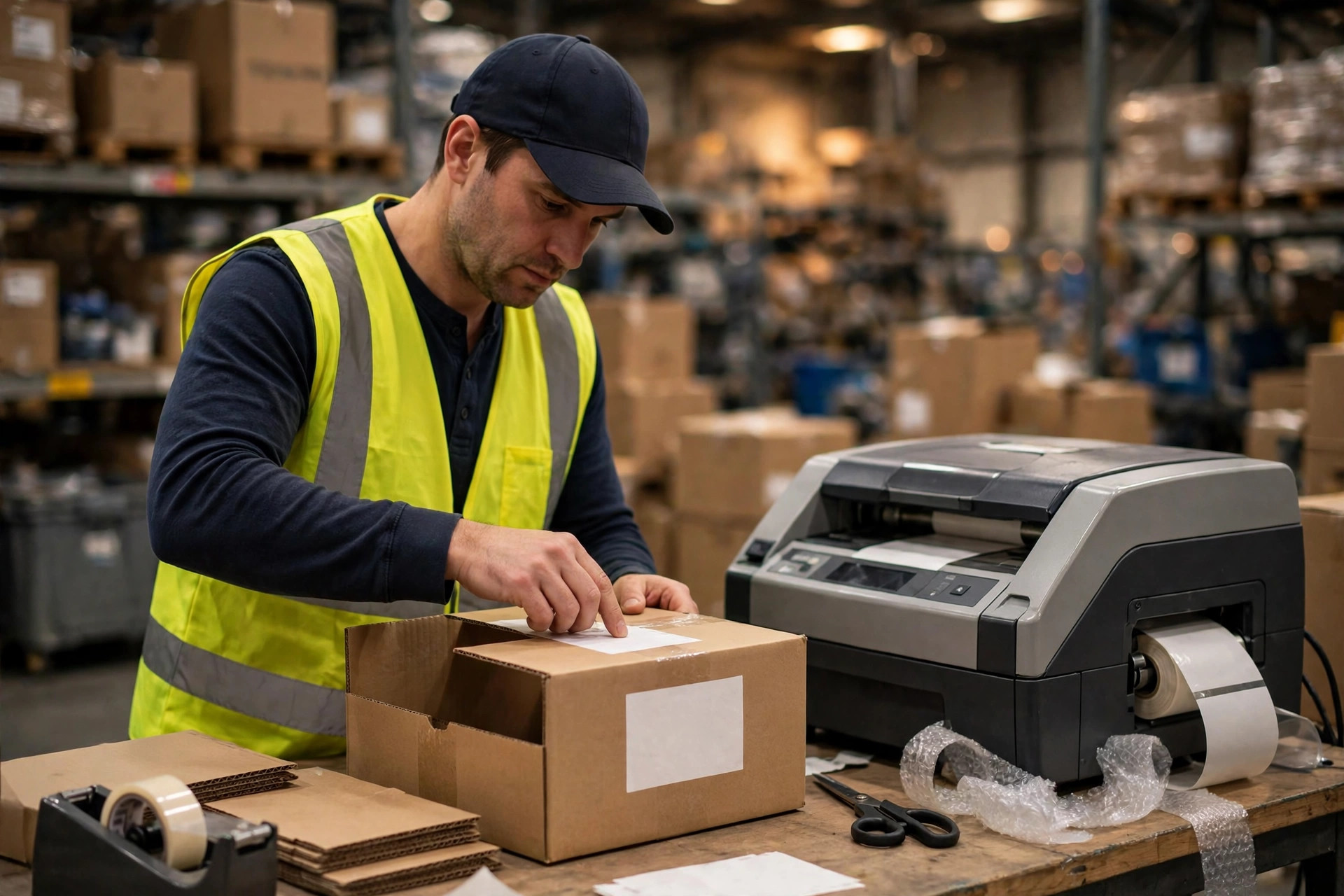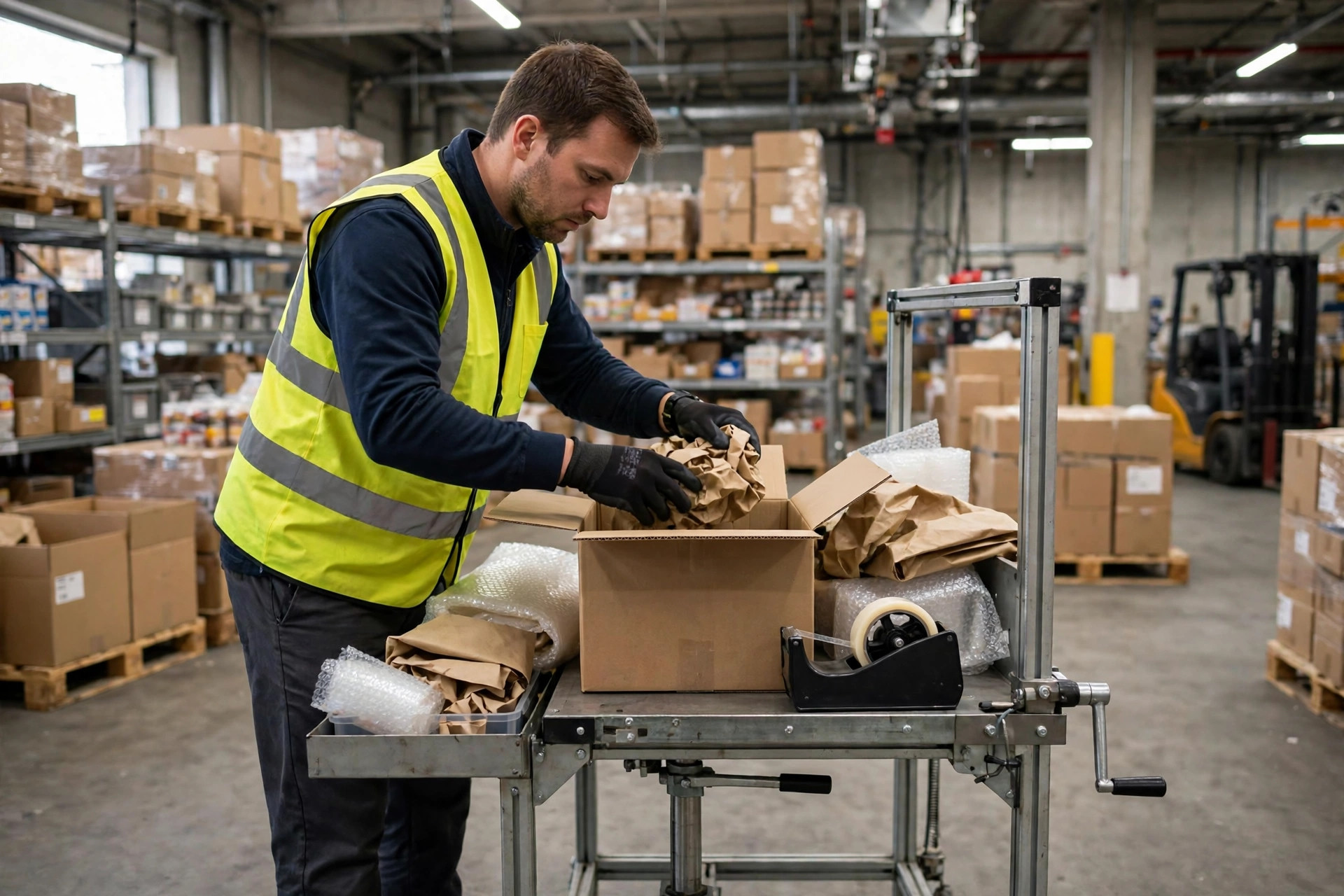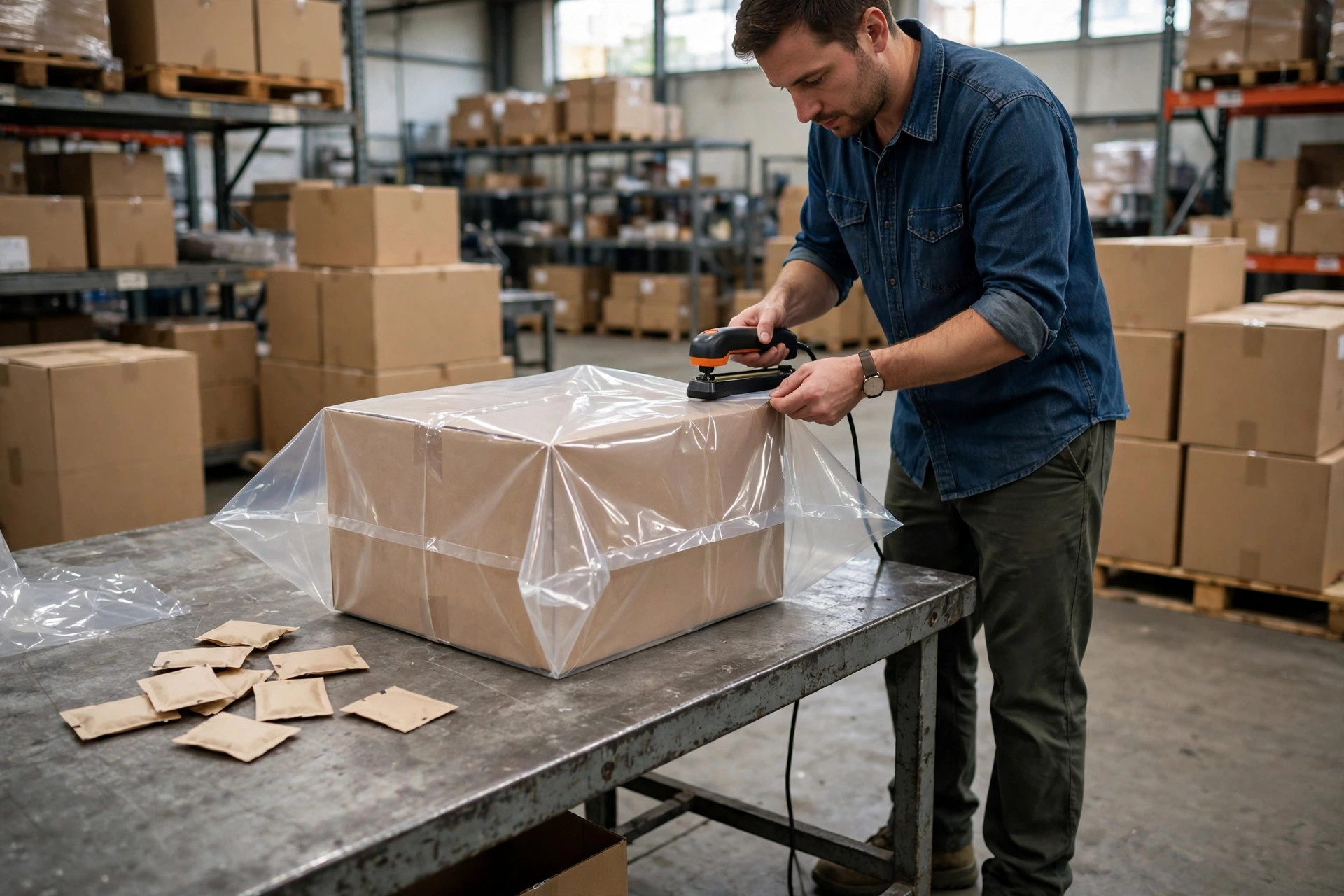
Last August, a Ningbo warehouse crew broke open moisture protection packaging they had just sealed and redid the whole pallet. The desiccant was generous, two big packets per carton, but the bag mouths had just been taped shut, with gaps wide enough to slide a finger through. The owner asked me whether he had bought too little desiccant. I told him not to add a single packet more until the bags were heat-sealed properly. That shipment went by ocean, and at the destination port every humidity card came out unchanged. Not one carton came back damaged. The problem was never the amount of desiccant. It was whether the whole chain was closed.
Think of it this way: moisture protection packaging is a lid problem, not a sponge problem. The enemy is not liquid water. It is vapor in the air sealed inside the bag, moisture carried in by the carton and the product, and condensation when temperature swings push vapor onto the bag's inner wall. Desiccant handles the first part, the small amount of vapor trapped at sealing time. The barrier bag keeps outside humidity from walking in over weeks at sea. The humidity card supplies proof: it tells you whether the first two did their jobs. If any link breaks, the others cannot compensate, no matter how much money you throw at them.
That is why I judge a setup in a fixed order. First, does the bag's barrier level fit the scenario? Second, is the seal continuous, even, and free of wrinkles and trapped debris? Third, is the desiccant sized to the air volume inside the bag and the storage duration, rather than grabbed by feel? Warehouses waste money here because they fix only the link they can see.
Moisture Protection Packaging Starts With the Principle, Not the Product
Here is the dividing line I use when someone asks what to buy. Short, controlled, and quick is one world; long, uncontrolled, and slow is another. A domestic transfer arriving in a few days does not need the same setup as a container crossing an ocean and sitting through a rainy season. Using the heavy setup for the short trip wastes money and labor. Using the light setup for the long trip wastes the shipment.
The practical rule is simple. Match the bag and the seal to the worst conditions the shipment will actually meet, and size the desiccant to the bag volume and the longest realistic storage time, with a small margin. That margin is not an invitation to double the quantity. If outside humidity streams in through a bad seal, the desiccant saturates sooner or later, and all you have bought is a delay, not protection. Get the bag and the seal right first, and the desiccant quantity usually comes back down to normal. That is the counter-intuitive part most buyers resist: spending more on the bag and the seal often means spending less on desiccant overall, and getting better results at the same time.
One more detail that costs nothing: let the goods dry before bagging. Product that comes straight off an open dock in the rain carries surface moisture with it, and sealing it inside the bag does the enemy's job for it.
Desiccant and Barrier Bags: Pick by Scenario, Not by Catalog
The table below is the shortcut I hand to warehouse leads. It is not a specification sheet; exact grades and quantities should follow the manufacturer's spec.
| Scenario | Barrier bag | Desiccant approach | Humidity card |
|---|---|---|---|
| Local or short transfer, delivered within days | Standard barrier bag | Standard quantity for the bag volume | Optional, spot-check a few cartons |
| Domestic long haul or one to two months in storage | Heavier barrier bag | Sized to bag volume, with a small margin | One card per carton, checked on arrival |
| Ocean freight or cross-season storage, uncontrolled conditions | High-barrier bag, heat-sealed without exception | Sized to the longest storage time, one tier up for sensitive goods | One card per carton, read the card before opening the goods |
| Sensitive goods: bare metal, precision parts, anything that rusts or molds easily | High-barrier bag plus inner protection | One tier up from the standard quantity | One card per carton, any changed card isolates the whole carton for re-inspection |
Read the table left to right and the logic holds. As risk goes up, the bag and the seal get upgraded first, the card becomes mandatory, and only then does the desiccant quantity move up a tier. Reversing that order is the most common way to spend money and still get damage claims.
Before committing to a bulk purchase, test the bag itself. Seal a sample bag with some air inside, leave it overnight, and see whether it has gone soft or is leaking at the seam. Re-test whenever the supplier changes batches, and adjust the heat-sealer settings with the bag change.
The Pitfalls That Eat Your Budget
The first pitfall is the seal. A heat sealer at the wrong temperature or pressure produces seals that look closed and peel open with a light pull. A seal with dust, paper scraps, or a fold trapped in it leaves a channel too small to notice and large enough to matter. My fix is deliberately low-tech: at the start of every shift, seal an empty bag, squeeze it, and dunk it in water to check for bubbles. Only after that test passes does the shift start sealing real goods.
The second pitfall is card placement. A card tucked next to the desiccant measures the air around the desiccant, not the carton as a whole. A card buried at the bottom of the carton never gets seen at all. Put the card where the person opening the carton sees it first, at a small distance from the desiccant, and change the opening procedure to match: read the card first, then open the goods.
The third pitfall is reuse and mixing. Desiccant that has already been opened and exposed has spent part of its capacity, and putting it back into service saves pennies to risk shipments. Different desiccant types should not be mixed in one bag either; mixing does not add their strengths together, it just makes the result impossible to interpret. Keep desiccant stored by batch, sealed, away from general packaging, and on a first-in-first-out basis.
A second case shows why process beats material. A hardware warehouse in Dongguan spent two months adding more and more desiccant after customers reported rust spots on a small share of cartons. Doubling the quantity did not move the complaint rate. When we walked the packing line, the cause was plain: a new operator had turned the sealer pressure down, and two or three bags out of every ten were effectively unsealed. Once the settings were restored and the empty-bag test became a shift-start routine, rework fell away. The material was never the problem.
One more gap I see often is inspection after storage, not just at packing time. A warehouse will check seals carefully on the day goods are packed, then ignore those cartons through an entire rainy season. Before the wet season starts, pull the oldest stored cartons, open a few, read the cards, check the seals, and look for softened cartons. That sample tells you two things: whether some seals were bad from the start, and whether the storage location itself is the problem. Cartons stored hard against a wall or flat on the floor pick up moisture faster than cartons with airflow around them. If the location is the problem, move the stock and leave ventilation gaps.
So here is the routine I leave behind. Test the sealer every shift and log it. Isolate any carton whose card has changed instead of shelving it. Rotate desiccant by batch and keep opened stock resealed. Pull the oldest cartons for a check before the wet season. None of this needs new equipment.
Whether the money was worth it comes down to one number: moisture-related returns and rework per ten thousand units shipped. Track it monthly on the shift whiteboard. If it trends down for three months running, your moisture protection packaging is a closed loop. If it jumps around, some link is running on luck. When it jumps, go back to that month's seal-test log and inspection records before you blame the desiccant. The answer is usually sitting in those two sheets, not in the purchase price of the packets.
By Da Liu, Automation Engineer