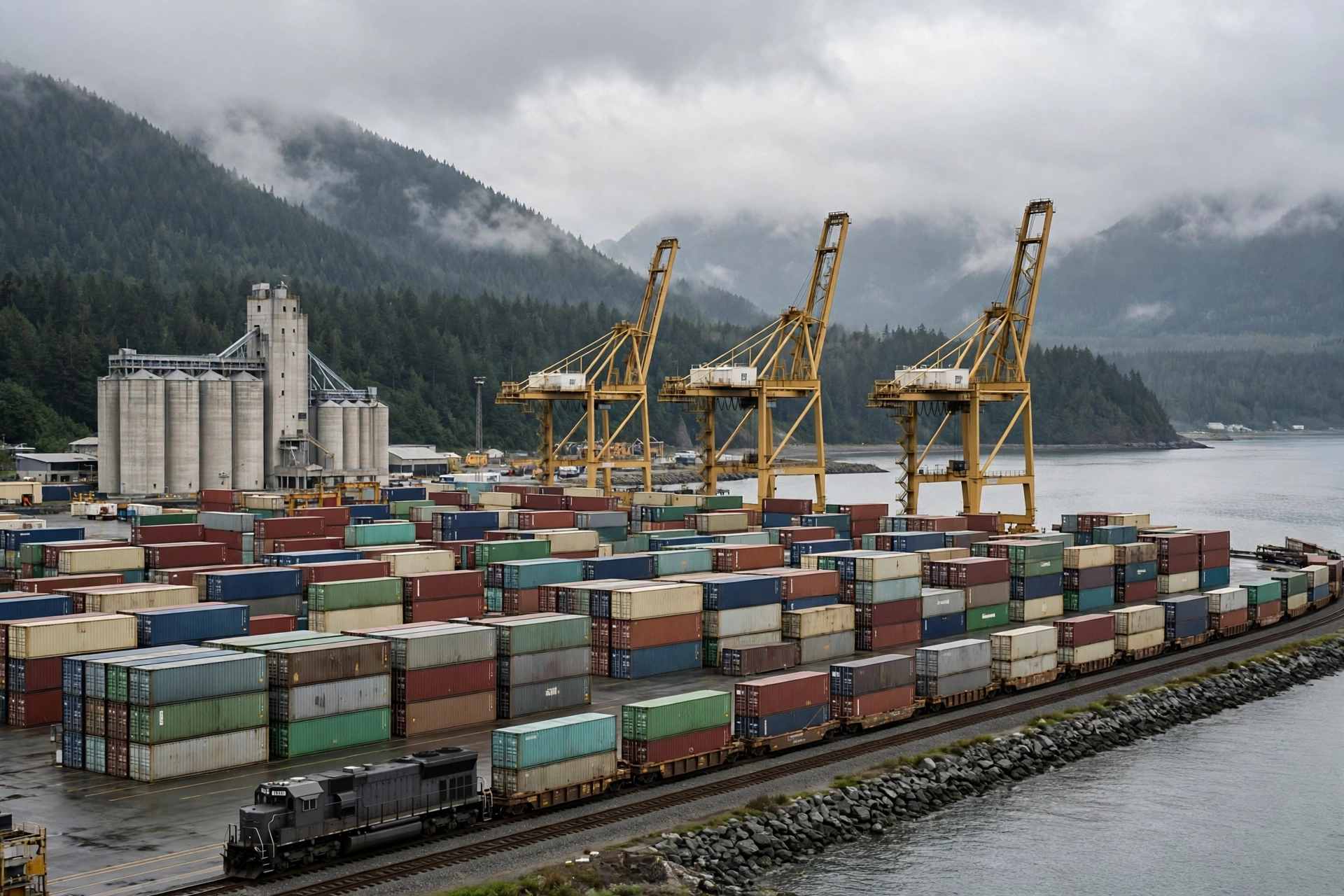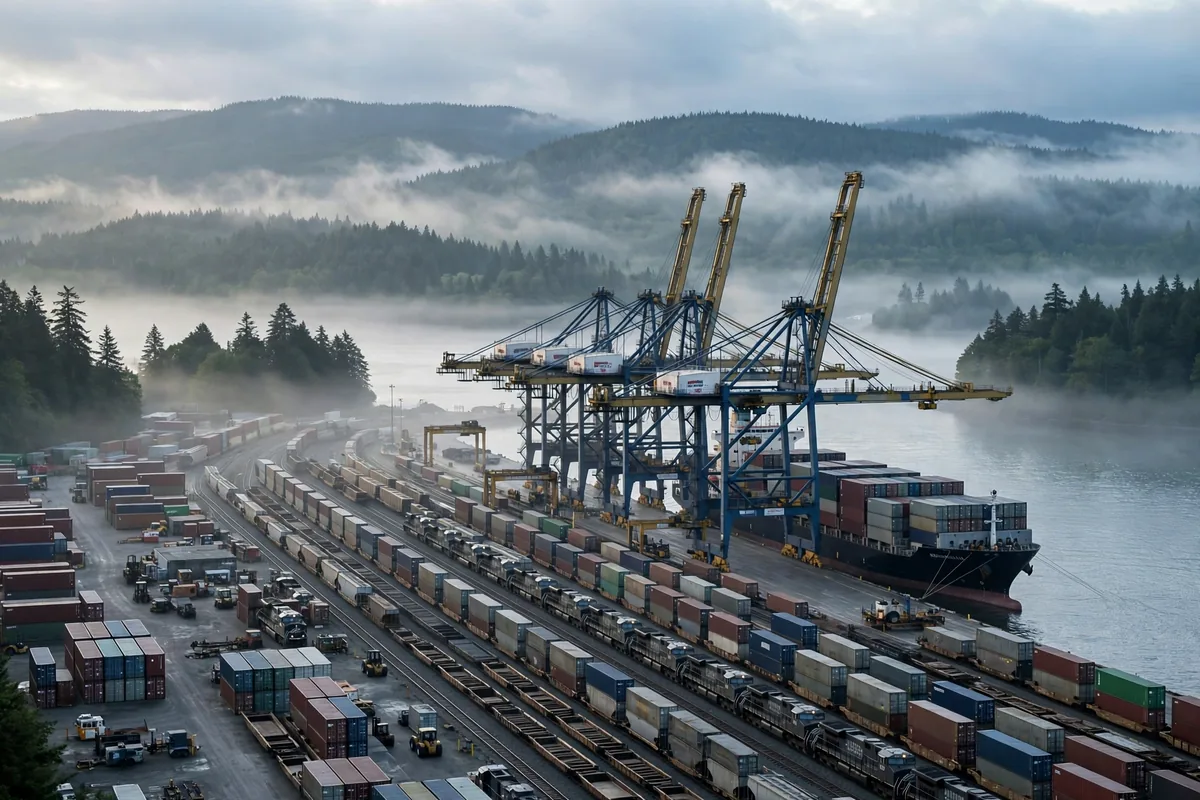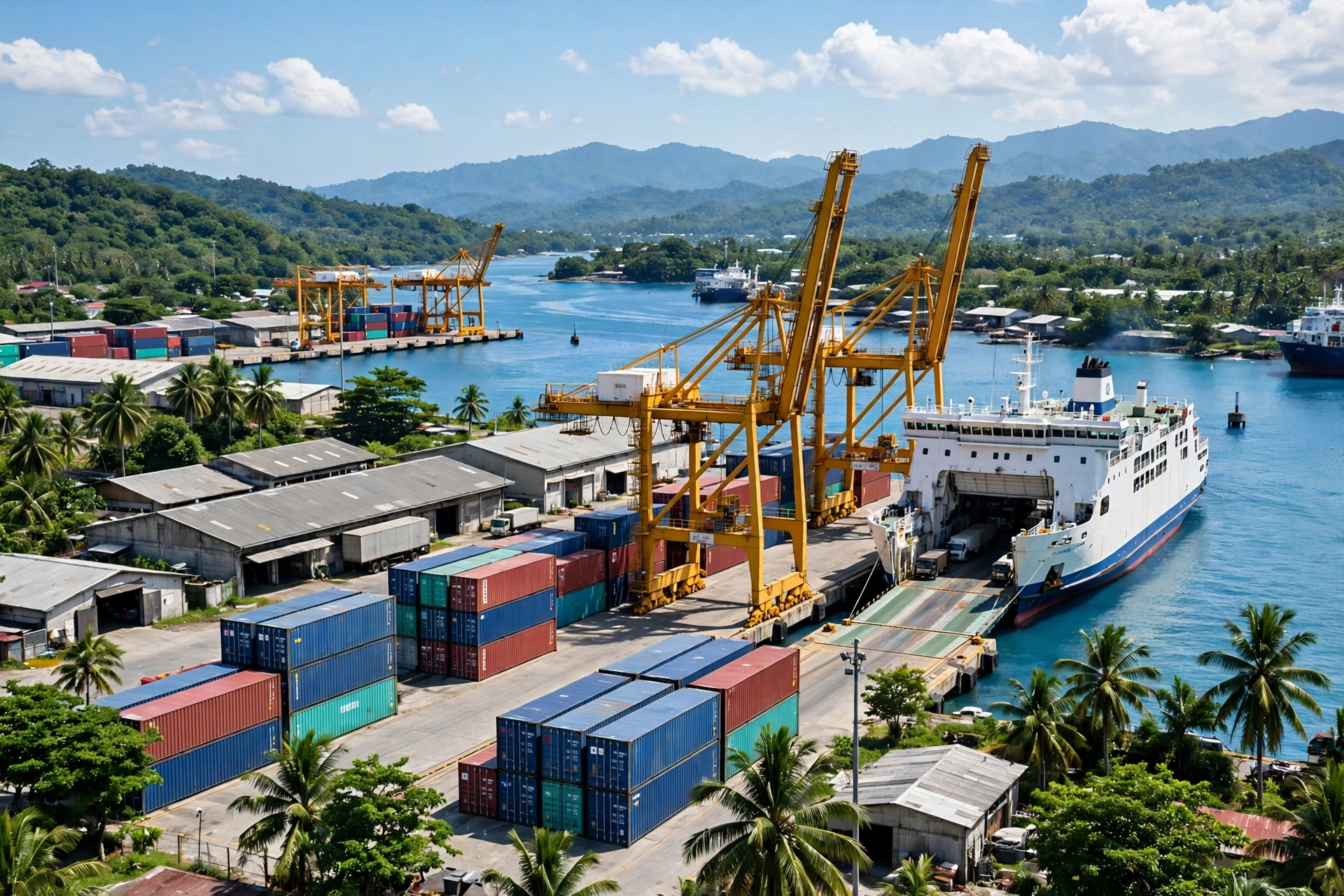
Cebu Philippines port warehouse logistics starts with a blind spot: the moment anyone says "Philippines port," everybody thinks Manila. Cebu gets treated like a side character. But look at the numbers: Cebu's ports moved 75.873 million tons of cargo in 2025, up 5.5 percent year on year, and handled 993,756 TEU of containers. That is not a side character. The people calling it one have never read Cebu's books.
Five years in, the biggest lesson is this: do not only stare at the biggest port. The biggest port has the highest fees, the longest queues, and the most rules. The mid-sized port that looks boring is often where the distribution money is.
Cebu Port: Domestic First, Foreign Boxes Second
Get the structure right first, or every calculation after it is wrong.
Domestic cargo made up 81.2 percent of Cebu's cargo volume. In plain words, this port's main business is not receiving big foreign ships. It is moving goods between Philippine islands, with ro-ro vessels carrying trucks and containers back and forth all day. Foreign boxes came to 502,992 TEU, only about half of total container volume. Most people hear "port" and think foreign trade, customs clearance, and giant vessels. Cebu Philippines port warehouse logistics is not that story.
That decides how the warehouse should work: a warehouse next to Cebu Port lives or dies on distribution, not customs clearance. Goods come in from outer islands, get unloaded, sorted, and loaded onto a ro-ro vessel to the next island. Or the other way around: goods arrive from Manila or overseas, get broken into small batches in Cebu, and go out to customers across the central islands. The warehouse earns its keep on splitting and consolidating, not on storing.
Here is the counterintuitive part: Cebu looks like a "small port," but its warehousing business is steadier than a lot of big foreign-trade ports. Foreign trade follows the global economy. Inter-island distribution follows what Filipinos need to eat and use every day. As long as people live on those islands, rice, daily goods, and building materials have to keep moving. It is not a sexy business. It pays in all weather.
A scenario (illustrative): a daily-goods seller brings stock in from Manila and rents a small warehouse near the port (assumed figures). His play is simple. Big batches come into the Cebu warehouse, get split into small lots for Bohol, Dumaguete, and Leyte, and go out on ro-ro vessels. Nothing sits in the warehouse. What matters is distribution speed. Goods stay in the warehouse for two days on average (assumed figure), and the faster they turn, the steadier the profit. He once told me: this warehouse is not a warehouse, it is a bus station for cargo.
Three Terminals, Three Jobs: Pier 1, Pier 4, and the International Port
Cebu Port is not one terminal. It is several terminals put together, each doing its own job. Mix them up and you will drive a lot of pointless miles.
Pier 1 handled 356,594 TEU in 2025, the biggest of the three. Cebu International Port handled 316,820 TEU. Pier 4 handled 263,088 TEU. The three together come to 936,502 TEU, with the rest spread across smaller terminals. Remember the split: Pier 1 carries the volume, the international port handles foreign trade, and Pier 4 fills in.
Here is what I do. The first time I scouted Cebu, I did not talk about warehouse rent first. I drove the access routes of all three terminals first. Which terminal jams up, which one suits ro-ro vessels, which one sits closest to the warehouse — one drive tells you everything. People who pick a warehouse from a map will get burned on their first order nine times out of ten.
One more thing most people miss: the Cebu Port Authority is independent from the Philippine Ports Authority, so Cebu runs its own rules, fees, and procedures. Do not force Manila's playbook onto Cebu. Ask what this port's own rules are before you move in.
Cebu Port Exports: Export Boxes Are Growing Faster Than Import Boxes
Let the data talk. In 2025, Cebu's foreign boxes totaled 502,992 TEU. Export boxes were 262,881 TEU, up 4.2 percent year on year. Import boxes were 240,111 TEU. Exports run ahead of imports by more than twenty thousand boxes, and exports are growing while imports stay relatively flat.
What does that mean? More goods made locally are heading out, so demand is growing for consolidation, stuffing, and export warehousing. People used to build import-clearance warehouses: wait for the ship, clear customs, pick up the goods. Now there is a second job: export consolidation warehouses that help small shippers combine their goods into full containers.
Look at the cargo mix. In 2024, the biggest import was coal at 3.899 million tons. The biggest export was transport equipment at 400,463 tons. Energy and raw materials come in, equipment goes out. In warehouse terms, that is two different jobs: the import side needs yards and transfer for bulk cargo, the export side needs consolidation, palletizing, and bracing for equipment. Do not use the same warehouse for both. Equipment hates bumps. Coal hates dust. Mix them and you lose money.
A scenario from the export side (illustrative scenario): a shipper exporting transport equipment moves a few containers every month (assumed figures). His warehouse sits a twenty-minute drive from the terminal (assumed figure), where rent runs about half the price (assumed figure). Goods come into the warehouse first for palletizing, bracing, and photos, then go to the terminal on the vessel schedule. He worked out that the rent he saves pays for an extra quality inspector (assumed figure). Export cargo fears damage claims most, and an inspector costs less than a claim.
The Cost Table: Where a Distribution Warehouse Makes Its Money
Talk is cheap. Run the numbers. This table is my own method, and every figure is an assumed figure — swap in your real quotes.
| Cost item | Distribution warehouse (assumed figures) | Stockpiling warehouse (assumed figures) |
|---|---|---|
| Rent | Small space, fast turnover, rent is a small share | Big space, long storage, rent is a big share |
| Labor | Sorting and palletizing crew, busy in daytime | Forklift and stocktaking crew, busy at month end |
| Loss | Fast turnover, little damage | Stored long, damage and expiry risk |
| Cash flow | Fast in, fast out, little cash tied up | Stock sits in the warehouse, cash tied up |
| Risk | A messed-up vessel schedule wrecks the plan | One slow product jams the whole warehouse |
Read the table sideways. A distribution warehouse earns money on turnover. A stockpiling warehouse earns money on hoarding. With domestic cargo above eighty percent of volume, Cebu's structure favors the distribution play. Stockpiling is not wrong, but ask one question first: does anyone on these islands need what I am hoarding every single day? If not, do not hoard it.
Pitfalls. Three of them, all ones I have stepped in or watched others step in.
First, do not rent a warehouse just because the terminal throughput looks big. Total containers passed 993,000 TEU, but domestic cargo is the big share, and whether your goods ride ro-ro vessels and which terminal they use decides where the warehouse should sit. Fix the route first, then pick the warehouse.
Second, do not treat the new port as tomorrow's rescue. The New Cebu International Container Port is under construction, about eight kilometers from the Cebu base port at Consolacion, Tayud. That looks close on a map, but nobody can say today when it opens or how the work will be split after it does. Plan on the terminals that exist now. Treat the new port as a future bonus, not as today's foundation.
Third, do not use 2024 numbers to make 2025 decisions. In 2024, Cebu's ports moved 71.9 million tons of cargo and 993,270 TEU of containers. In 2025, cargo grew 5.5 percent while containers barely moved, up 0.05 percent. Cargo is growing, boxes are standing still, which means the cargo mix is shifting: bulk cargo is rising and box cargo is flat. People who only watch box volume will think Cebu is not growing. People who watch cargo volume know where the money is flowing.
Cebu suits sellers who are willing to run around, do the math, and deal with fiddly work. The port is not big, it runs its own rulebook, and the distribution work is detailed and fragmented. But that fragmentation is exactly why the big players stay away and small players get to eat. That is Cebu Philippines port warehouse logistics in one sentence: rent near the terminal, never let goods sit still, put the vessel schedule on the wall, and run the plan on the vessel schedule.
This one I have tested myself — it works.
By Ah K, E-commerce Seller (5 yrs)