Here's my verdict up front: the lab test itself for ordinary machinery runs about $1,300–$2,000. But the real, all-in cost of getting CE certification for warehouse automation equipment shipped to Europe? Budget $15,000–$30,000. The testing fee was never the expensive part. The expensive parts are rework, lab scheduling, and your EU Authorised Representative. Two sides to this story, as always.
The Quotes That Lie
Fall 2023. A stacker-crane maker in Shenzhen was shipping its first batch to Poland. The lab quote said $1,500 for CE testing. The boss thought it was cheap and signed on the spot. The unit failed radiated emissions on the first EMC run — the motor drives were too noisy. Filters, rewiring, shielding: the components alone cost over $6,000, two weeks of an engineer on site added another $8,000 in labor and travel, retest fees on top. Total rework: north of $20,000. Then the lab queue cost them six more weeks, they missed the sailing to Gdansk, and the Polish customer deducted penalties per the contract. The certification ended up costing half the price of a new machine. What stung most, the boss later told me, wasn't the money — it was the six weeks of an idle production line and a European distributor calling every day.
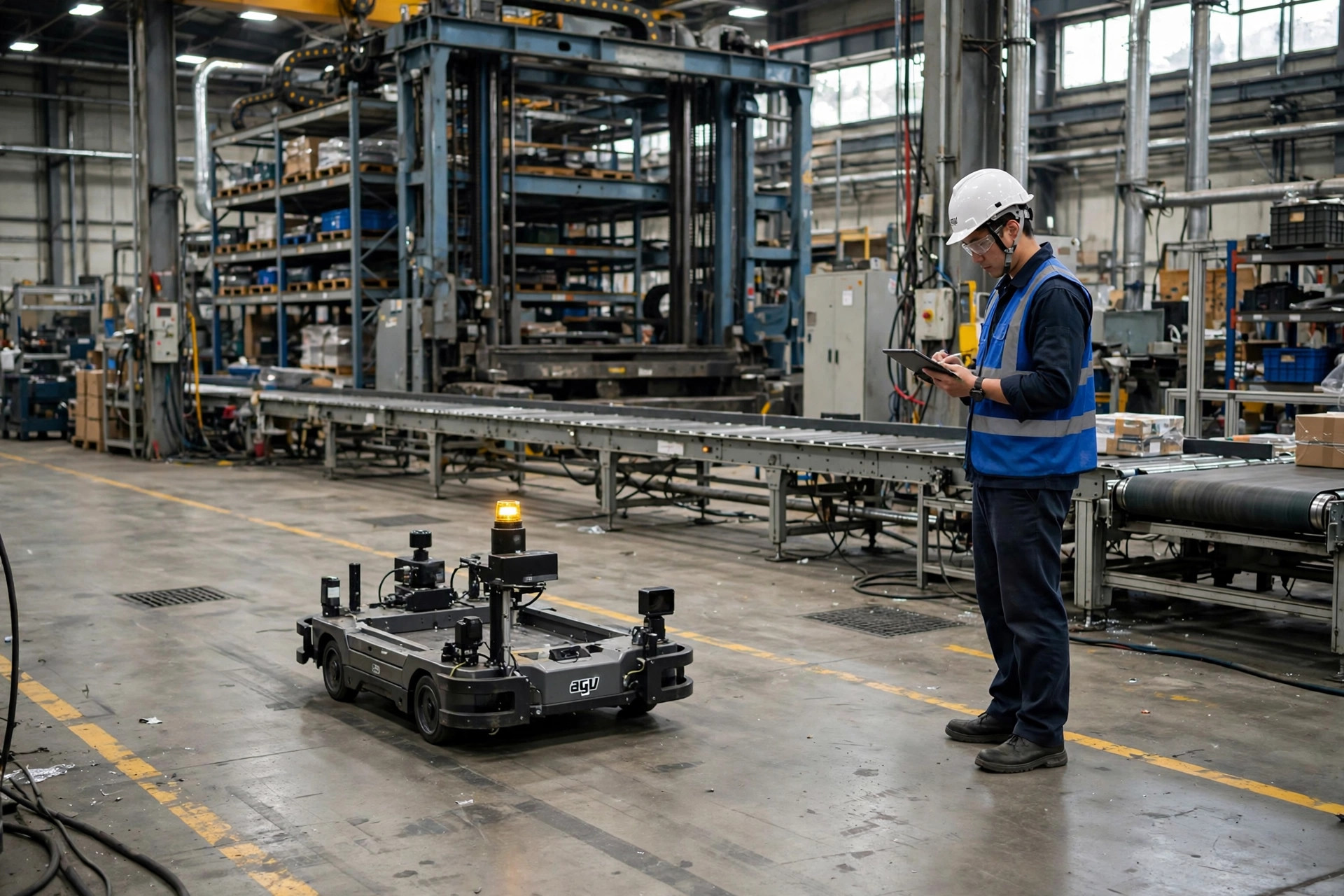
Spring 2024. An AGV builder in Hangzhou, wireless-enabled, so the RED radio directive applied. Test quote: $12,000. Technical file outsourced: $8,000. EU Authorised Representative: €1,500 a year. All in, about $25,000. Expensive? Not really — because they spent $2,000 on pre-compliance testing first, caught the antenna layout problem early, and passed on the first formal run. No retest fees, no two lost months. Same $25,000. One company bought a smooth launch; the other bought a lesson.
CE Certification Cost, Line by Line
CE isn't one certificate — it's a stack of directives, and you pay for each layer:
- Machinery Directive (MD): the foundation, applies to everything. Ordinary machinery can be self-declared, no Notified Body needed.
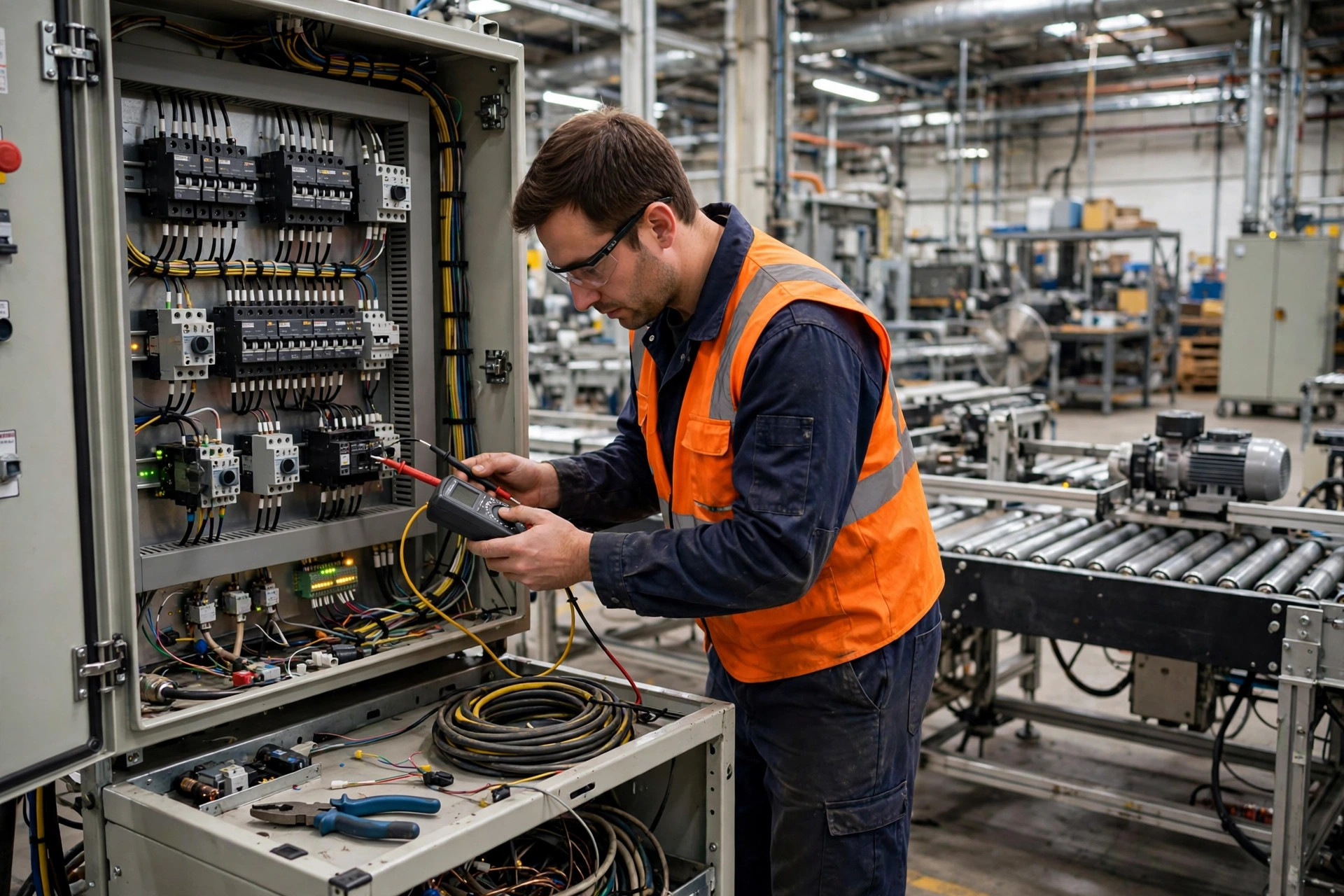
- EMC: nearly unavoidable for anything with motors or drives — stacker cranes, conveyors, sorters, all of them.
- LVD (Low Voltage): electrical safety, kicks in as voltage ratings climb.
- RED (Radio Equipment): any AGV or AMR with Wi-Fi, Bluetooth, or cellular goes through this one — and it's the priciest.
- RoHS: hazardous-substance screening of materials, required across the board.
The full cost breakdown (based on publicly quoted lab rates — quotes vary widely between labs, so treat these as ranges and confirm current pricing):
| Item | Indicative range | Notes |
|---|---|---|
| Ordinary machinery MD testing | $1,300–$2,000 | Self-declaration possible, no Notified Body |
| Hazardous machinery (Notified Body) | $3,600–$4,500+ | Annex IV listed machinery |
| EMC testing | $2,000–$6,000 | Where motor-driven equipment fails most |
| RED wireless testing | $9,000–$20,000+ | Mandatory for wireless AGVs/AMRs |
| LVD testing | $1,500–$5,000 | Varies with voltage class and complexity |
| RoHS screening | $500–$1,500 | Materials testing, relatively cheap |
| Technical file preparation | $5,000–$50,000 range | DIY saves money but takes months; outsourced is fast but costly |
| EU Authorised Representative | ~€1,000–€3,000/year | Mandatory if you have no EU-based entity |
| Rework + retesting | Thousands to tens of thousands | The biggest variable in the whole budget |
| Time cost | Lab lead times of 4–12 weeks | Longer in peak season; vessels don't wait |
See it now? The tests themselves might total under $10,000. But the technical file, the Authorised Representative, and one round of rework push you to $20,000–$30,000 without breaking a sweat. The certification fee is the small money; rework plus time plus the Authorised Representative is the big money. That's the trade-off nobody puts on the quote.
Here's a decision framework, because there are really only three routes and the right one depends on your bench strength:
| Route | Cost range | Timeline | Risk | Fits |
|---|---|---|---|---|
| Full self-declaration | Under $10,000 | 2–3 months | You carry all risk; a failed market-surveillance check means the whole batch comes back | Established makers with a dedicated regulatory engineer |
| Outsourced testing, self-written file | $15,000–$25,000 | 3–4 months | Medium; file quality is on you | Most mid-size equipment builders |
| Turnkey outsourcing | $30,000–$50,000 | ~2 months | Low, but expensive — and you learn nothing | First order on a tight vessel schedule, money no object |
I've watched too many small manufacturers pick route one because it "saves money." Let's be blunt: self-declaration saves you a few thousand in Notified Body fees and gambles the entire shipment. EU market surveillance is sampling-based — get sampled and fail, and it's return shipment plus a public notification, tens of times the certification cost. For a first export order, my advice is always route two: pay for the testing and the lab slot, write the file properly yourself, and keep the competence in-house.
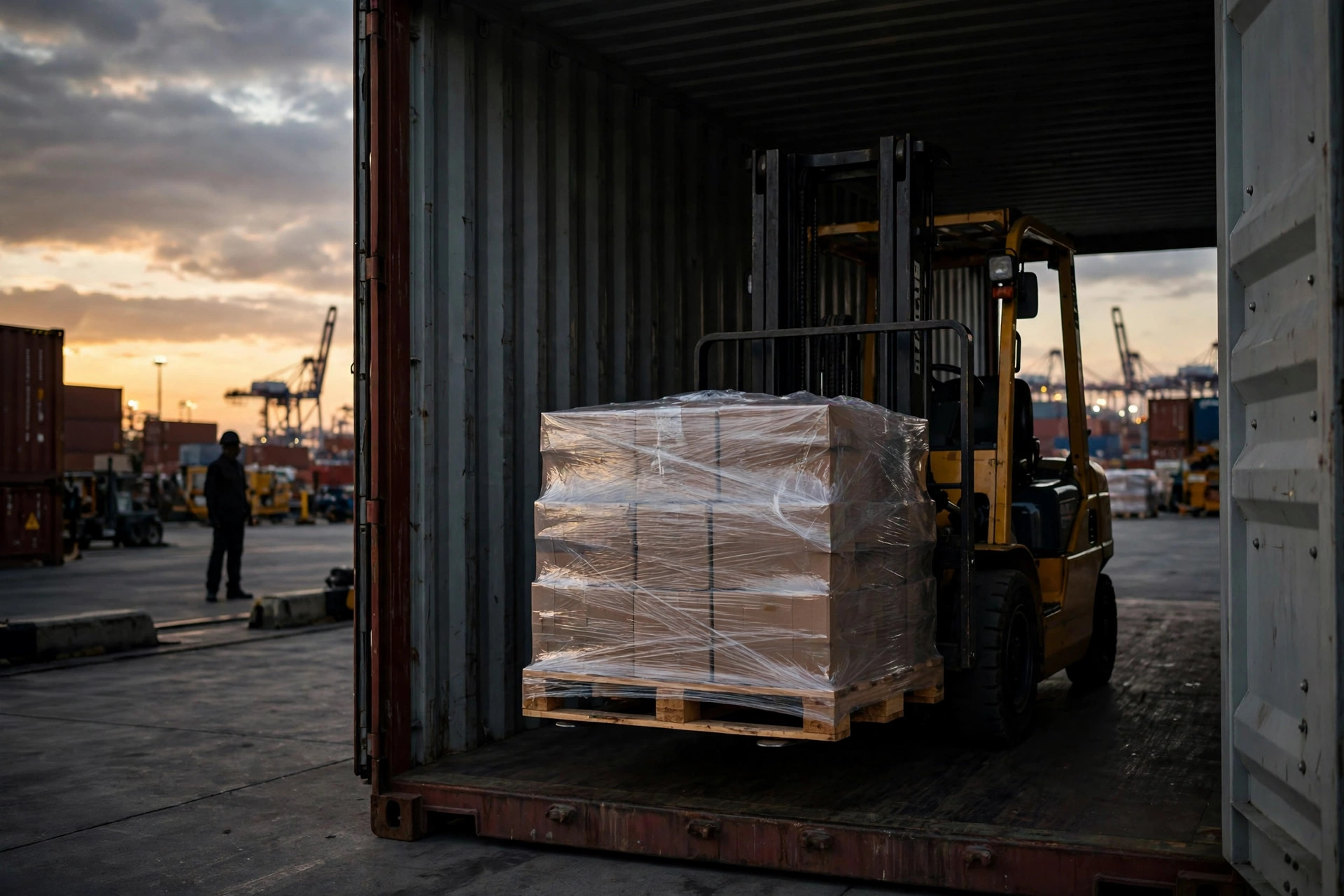
One more cost nobody itemizes: lab seasonality. September through December is shipping peak season — 8 to 12 weeks in the queue is normal. March through May is quiet; four weeks gets you a slot. Smart manufacturers certify in spring and ship in fall. Do it the other way around and you're paying to stand in line. Before signing any test contract, ask "when's the earliest bench slot?" — that question is worth more than haggling $500 off the quote.
Spending Less on Your CE Certification the Right Way
There are three legitimate ways to cut the cost, and no gray-area shortcuts exist:
First, design for CE from day one. Too many builders finish the product and then remember certification. Retrofitting compliance into a finished design costs 3–5x what forward-designed compliance costs. EMC is the classic case: a PCB layout choice that costs $1 at design time can cost $10,000 after the design is frozen.
Second, spend a little on pre-compliance instead of cutting test fees. $1,000–$2,000 of pre-testing catches 80% of problems early. One failed formal run means retest fees plus a two-month queue. Cutting the test budget is the most expensive way to save money.
Third, don't outsource the risk assessment blindly. Someone else can write the file, but the risk-assessment inputs have to come from you — only you know how operators will misuse the equipment in the field. Market surveillance pulls the file and the risk assessment first. When something goes wrong, that document is either your shield or your indictment, depending on how honestly it was written. Two hard rules to remember: keep the technical file for 10 years after the last unit ships — customs and surveillance authorities can request it anytime; and every unit must ship with a signed EU Declaration of Conformity listing every directive and standard applied, signed by someone authorized to bind the company, not just a stamped form.
Two traps people miss: the Authorised Representative is mandatory — since the 2021 EU market surveillance regulation, any manufacturer without an EU-based economic operator must appoint one. Don't listen to brokers who say "you can skip it for now." And pick on competence, not price: a pure mailbox shell can't answer a surveillance inquiry; one that can actually produce documents and reply in French or German is worth the extra few hundred euros a year. Also, the UK needs UKCA separately — a CE mark won't clear UK customs. Budget roughly £1,500–£4,000 per unit for UK expert support, and don't leave it out of the quote.
One counterintuitive finding: 90% of CE failures come from EMC and the risk-assessment file, not from the mechanical structure. Everyone obsesses over "is my machine sturdy enough" while the lab is checking "is your machine too noisy, electromagnetically" and "is your file complete." Wrong focus, wasted money. A lab engineer once told me the honest truth: seven out of ten units that come in fail on documentation first, not on the machine.
So stop asking "how much does CE certification cost." Start by asking: how far is my product from passing on the first try? That number never appears on any lab quote.
By Lao Mi, Supply Chain Veteran (20 yrs)