Let me start with a complaint. I am an e-commerce seller, five years in, and I never planned to become an expert on CE certification machinery directive Europe warehouse equipment rules. Then in 2025 I shipped a small conveyor line to Hamburg, and before the customer would accept delivery, their warehouse manager asked one question: where is the Declaration of Conformity?
Here is what happened. The shipment was not big: a few conveyors and a small sorting cart system, worth tens of thousands of euros. The factory told me, with confidence, that they export to Europe all the time and CE was no problem. I believed them. Then the customer's acceptance checklist arrived: risk assessment report, operating instructions in German, the performance level of the emergency stop circuit, and the exact location of the CE marking. The so-called CE certificate the factory sent was a thin sheet from an organisation I had never heard of, and the model number on it did not even match my goods. That shipment taught me the most expensive lesson in this whole topic: the CE marking is not a certificate. It is a promise you sign yourself.
What the Machinery Directive Actually Regulates for CE Certification
First, the logic. Machinery Directive 2006/42/EC regulates the safety of machinery, not how well it works. It requires a machine to meet a set of Essential Health and Safety Requirements, to go through a documented risk assessment, to have a technical file and user instructions, and finally for the manufacturer to sign a Declaration of Conformity (DoC) and affix the CE marking. The order cannot be reversed: compliant machine first, declaration second, marking last.
People get the relationship between the DoC and the CE marking backwards all the time. The DoC is a document: who the manufacturer is, what the product is, which directives and harmonised standards it complies with, and who signed it. The CE marking is the mark stuck on the machine, meaning this machine complies with the relevant EU legislation and can circulate in the European market. A CE marking without a DoC behind it is just a sticker. Customs spot checks, customer acceptance and market surveillance all look past the sticker to the technical file underneath.
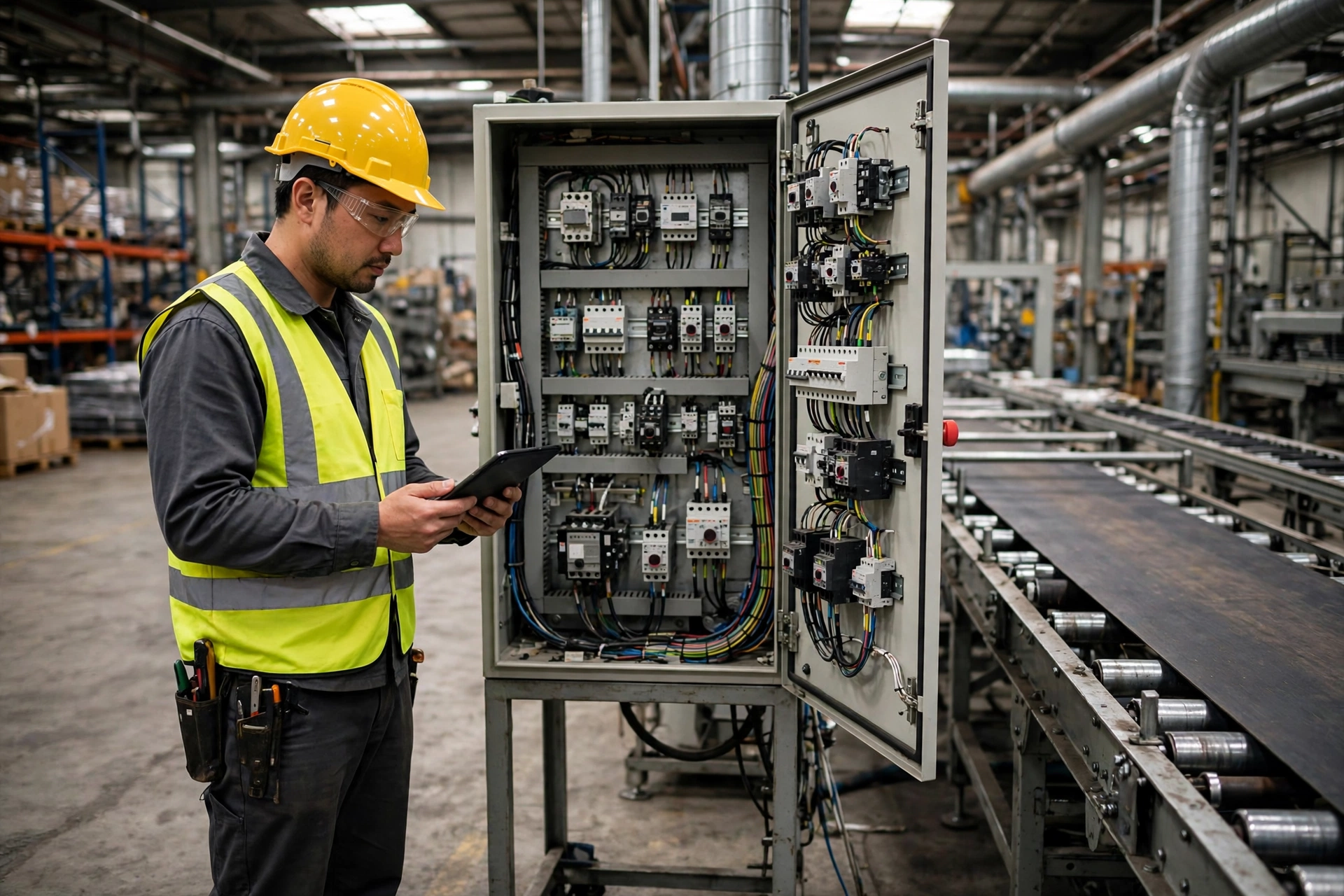
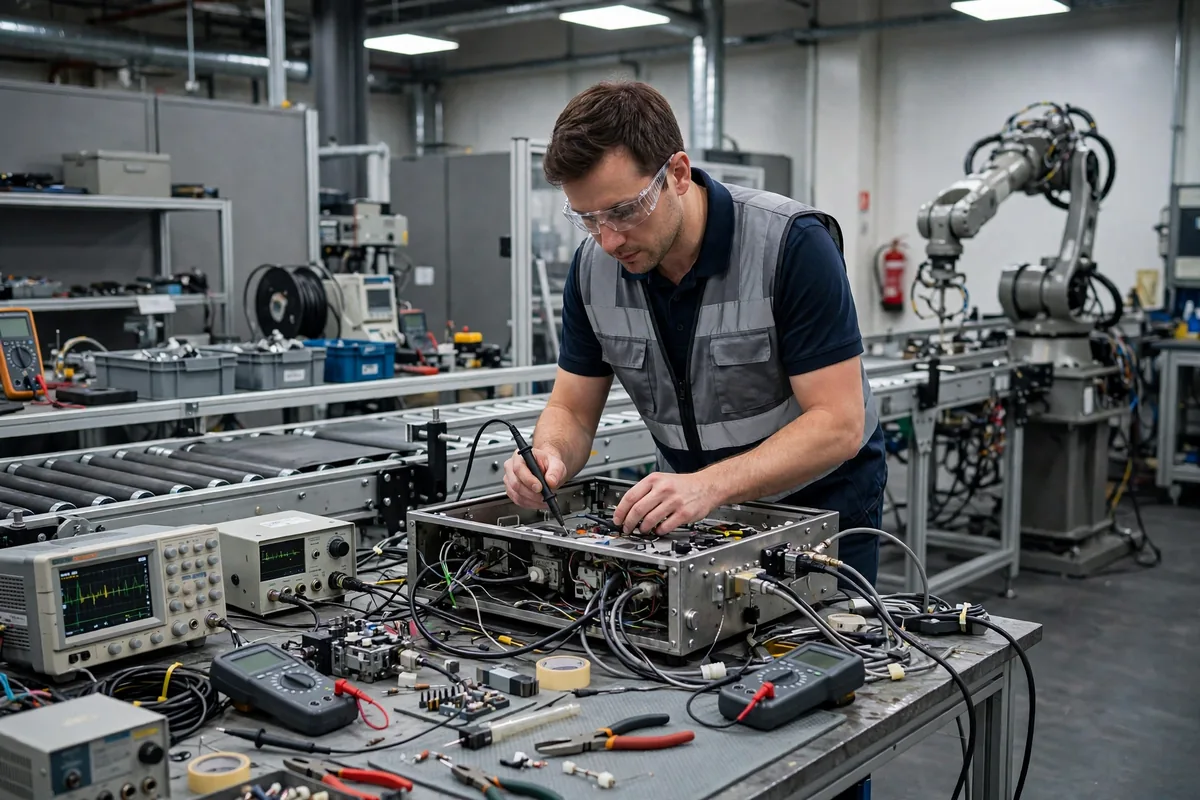
So what goes in the technical file? At minimum: the risk assessment records, design drawings and calculations, the list of harmonised standards applied, test reports, electrical safety verification, and the instructions. Risk assessment is normally done using the method in EN ISO 12100, safety-related control systems are rated to EN ISO 13849-1, and the electrical equipment follows EN 60204-1. The instructions must be written in the language of the destination country. A German customer needs a German version; an English manual will not pass acceptance. The technical file must be kept for at least 10 years from the date the last machine was manufactured, and market surveillance authorities can demand it at any time.
When Do You Actually Need a Notified Body?
This is the point where intermediaries make their money, and it is also the easiest place to waste yours. The honest answer is that most warehouse equipment never needs a Notified Body. Article 12 of the Directive gives three routes, and everything depends on whether your machine is on the Annex IV high-risk list.
Annex IV has 23 categories, including woodworking machinery, presses for cold metal, certain lifting equipment, injection moulding machines and safety logic units. If your machine is not on the list, you use the internal checks procedure: assess it yourself, build the technical file, sign the DoC and affix the CE marking. No third party is involved at any stage. If your machine is on the list but was manufactured fully in accordance with harmonised standards covering all the relevant safety requirements, self-assessment is still permitted, and a Notified Body is an option, not an obligation. Only one situation forces you to involve one: the machine is on the list and was not built fully to those standards, or the standards do not cover every relevant requirement, or no applicable standard exists. Then you need EC type-examination or full quality assurance, and both routes require a Notified Body.
I have watched sellers get this wrong in both directions. A friend who sells electric stackers paid tens of thousands of euros for type-examination because an agent told him exporting to Europe required a Notified Body. His product was not even on the Annex IV list, so self-declaration would have been enough. He lost the money and two months, and his peak-season stock plan fell apart. Another seller went the other way: his conveyor line included a safety component from Annex IV, but he self-declared it as an ordinary machine. The customer's quality department sent it back, and adding the Notified Body procedure cost him six more weeks.
Check This CE Table Before You Spend Anything
Do not call an agency first. Use this decision table to work out which route you are on. Fees and timelines are ranges only; confirm the latest quotation with the certification body before budgeting.
| Your situation | Notified Body? | Indicative fee range | Indicative timeline |
|---|---|---|---|
| Not on the Annex IV list | No, self-declare | Technical file and testing from a few thousand euros | About 2–6 weeks |
| On the list, fully built to harmonised standards | Not mandatory, optional | Same as self-declaration; voluntary type-examination adds several thousand to tens of thousands of euros | About 4–8 weeks |
| On the list, not fully to standards or no applicable standard | Yes, EC type-examination or full quality assurance | Usually tens of thousands of euros and up | About 2–4 months |
| Selling components or partly completed machinery | Declaration of incorporation, no CE marking | Depends on file completeness | About 2–4 weeks |
There is also a timeline that belongs on every stock planner's calendar. The new Machinery Regulation (EU) 2023/1230 applies in full from 20 January 2027, when it repeals Directive 2006/42/EC. The Regulation was adopted on 14 June 2023 and entered into force on 19 July 2023, with the Notified Body provisions already applying since 20 January 2024. Machinery placed on the market under the Directive before 20 January 2027 stays lawful and can continue to be made available. Anything placed on the market after that date must comply with the Regulation. The high-risk list is reorganised into Annex I, split into Part A and Part B, and the six categories in Part A always require a Notified Body, whatever standards you built to. That means some products that can be self-assessed today will need a different route in 2027. My approach is simple: prepare the technical file for any new product against the new Regulation now, so I am not rebuilding it in January 2027. If any detail is unclear, the latest wording on the EU's official site is the authority.
Where No CE Actually Gets You Stuck
Here is the counterintuitive part. Most sellers assume the customs officer is the one who stops a machine without CE. Customs is only the first gate, and it is not always the strictest. Three places actually hurt. First, customer acceptance: large 3PLs and brand warehouses put the DoC on the acceptance checklist, and without it they refuse the goods while the shipment sits at the port burning money. Second, insurance and liability: after a workplace accident, the insurer and the regulator ask for the risk assessment and the technical file first, and if you cannot produce them, the liability sits with you. Third, market surveillance: authorities in EU member states can inspect machines already on sale, and non-compliant machines can be recalled, withdrawn and fined.
Four warnings, all paid for with my own money. First, check the list before you call an agency; confirm whether the product is on Annex IV, then decide about a Notified Body. Second, the model number, standard references and signatory on the DoC must match the actual shipment exactly, character for character. Third, the instructions must be in the destination country's language; do not send an English manual to a German customer and hope. Fourth, beware of agents selling a guaranteed CE certificate: for most warehouse equipment, real compliance is the risk assessment and the technical file, and a certificate from an unknown body will not save you when something goes wrong. It is just paper.
In the end, CE certification is not a toll booth Europe built to charge sellers. It is a system that asks you to prove your machine will not hurt anyone. Understand the rules and the cost is controllable. Skip them and every euro you spend could be wasted. This approach worked for me: check the list first, build the file second, sign last. Get the order right and the CE hurdle is nowhere near as frightening as it looks.
By Ah K, E-commerce Seller (5 yrs)