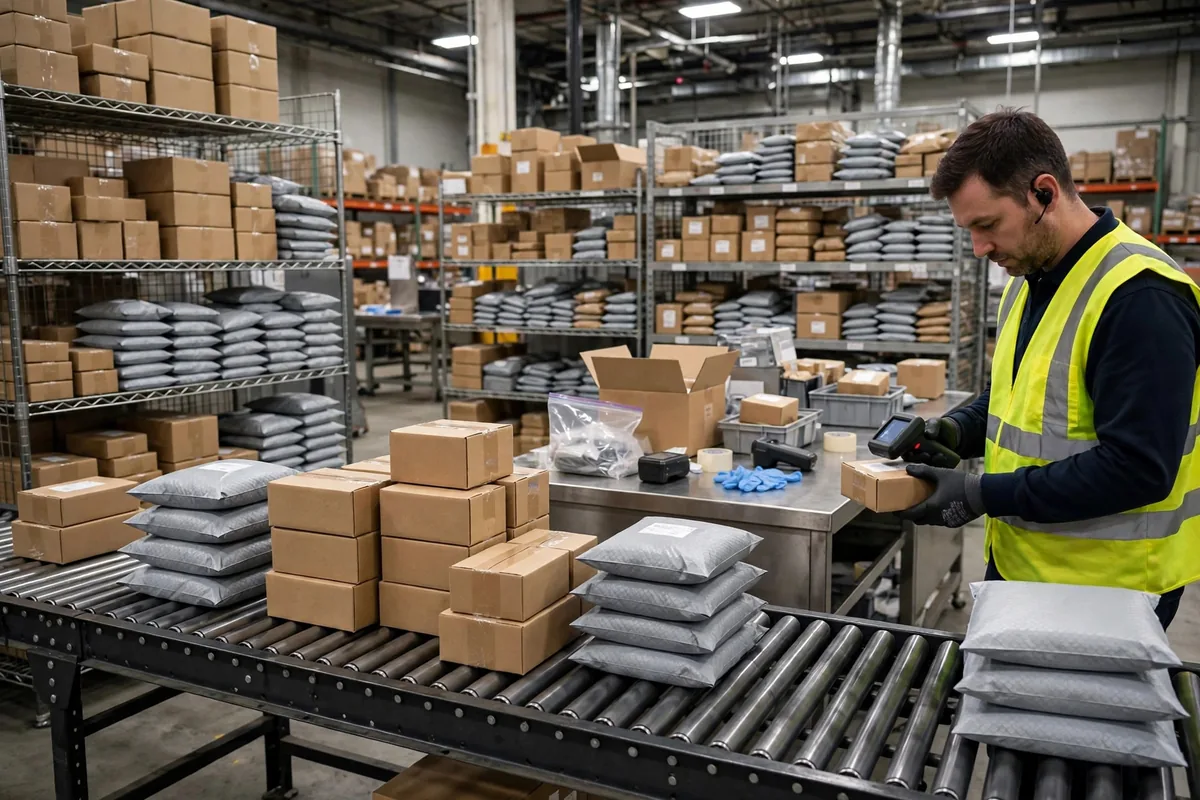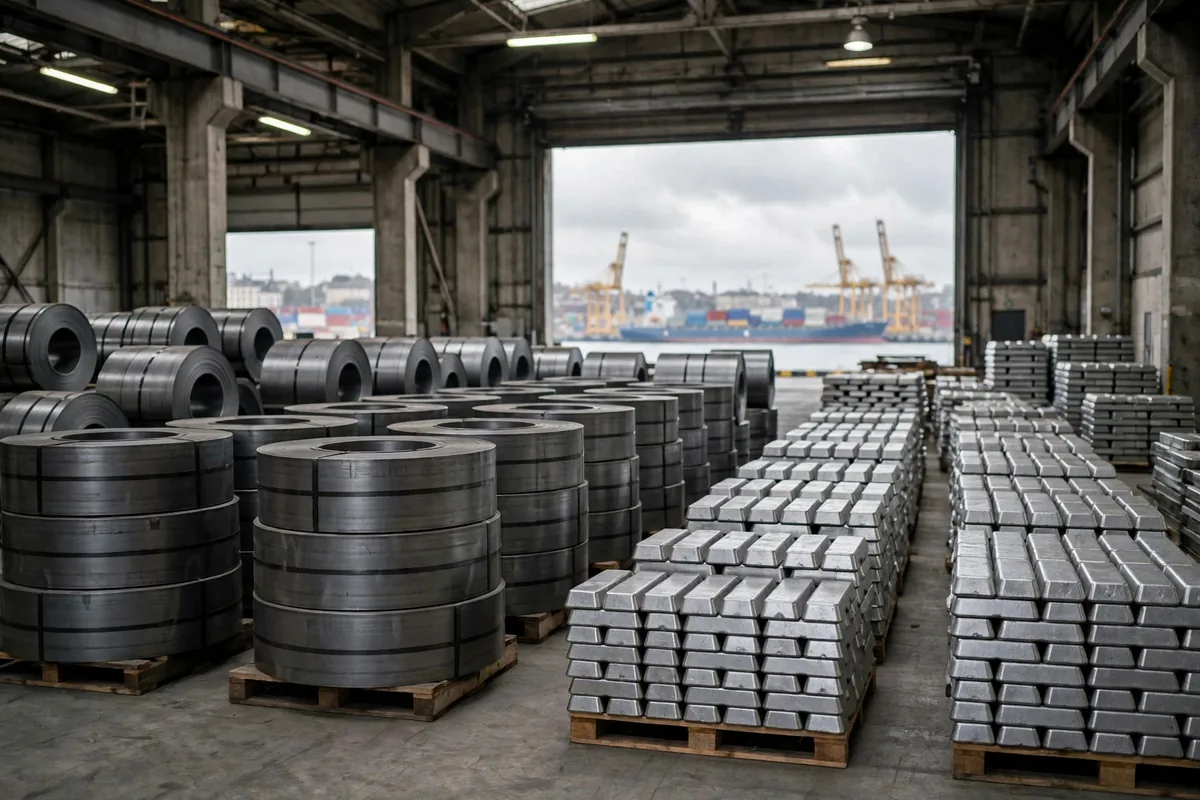
CBAM has finally gone from "they say it is coming" to "you actually have to pay." Our little 3,000-square-metre warehouse did not start by studying the policy. We started by doing the maths: will our clients' goods cost more? Who eats the extra cost? And can our thin warehousing margins survive another layer of carbon cost on top?
Here is the honest truth up front. CBAM, the EU Carbon Border Adjustment Mechanism, rests on Regulation (EU) 2023/956. The transitional period ran from October 2023 to December 2025, and those two years were reporting only, no payment, basically two years of practice filling in forms. From 1 January 2026 the definitive regime kicked in, and importers started carrying real financial obligations. This is not the wolf crying. The wolf is already in the village.
What Does CBAM Actually Cover? Check Your Goods First
The carbon border tax covers six categories of goods: cement, iron and steel, aluminium, fertilisers, hydrogen and electricity. That is the whole list, at least for now. An expansion to iron and steel and aluminium finished products is planned from 1 January 2028, but that is tomorrow's problem. Today, get these six straight.
We are a small warehouse and we cannot afford to burn money on this, so my method is deliberately rough and ready: take the client list and check it item by item. Last year a hardware importer client had a batch of aluminium profiles mixed into a shipment, and my first question was whether that aluminium fell under the carbon border tax. He waved it off at first. "Small quantity," he said. Small quantity? The 2025/2083 simplification act changed the exemption threshold to 50 tonnes of cumulative net mass per importer per year. Below 50 tonnes you are exempt from authorisation, declaration and certificate surrender — except hydrogen and electricity, which do not get this threshold. The point is that the 50 tonnes is counted across the whole year per importer, not per shipment. Three shipments of 20 tonnes each add up to 60, and you are over the line. That is exactly where small importers trip: every single shipment looks fine, and the yearly total is not.
So the first thing to count is not money, it is tonnage. I now keep a small ledger for every client importing into the EU: product category, net weight per shipment, running total. Three numbers, and whether you are over 50 tonnes is obvious at a glance. The ledger costs nothing — a spreadsheet does it — but it saves a pile of trouble later.
The CBAM Carbon Price Maths: What 2026 Really Costs
This is the calculation everyone wants, so here it is. In the third quarter of 2026, a CBAM certificate cost 82.32 euros per tonne of CO2 equivalent. Certificates are priced quarterly in 2026, linked to the average EU ETS auction price, and switch to weekly pricing from 2027.
But 2026 has a crucial cushion: certificates only need to cover 2.5% of embedded emissions, with free allowances covering the rest. Let me show you with a worked example (hypothetical scenario): suppose a shipment's embedded emissions are 100 tonnes of CO2 equivalent. At 82.32 euros, full coverage would be 8,232 euros. In 2026 you only buy certificates for 2.5% of that, which is 205.80 euros. The number goes from frightening to manageable in one step — with the caveat that this is a hypothetical; real embedded emissions must be calculated using the official method, and the latest position on the European Commission's website governs.
Do not celebrate too early, though. From 2027, by the end of each quarter you must hold certificates covering 50% of cumulative emissions for the period. The cushion gets twenty times thinner overnight. Same hypothetical: 100 tonnes, 82.32 euros, 50% works out to 4,116 euros. The same shipment costs a little over 200 euros in 2026 and more than 4,000 in 2027. That is the value of the time window. Here is the counterintuitive part: the harshest thing about this tax is not the rate, it is the timetable. 2026 is the practice year, cheap and forgiving. The real bill starts in 2027.
Two more dates to pin on the wall: certificates go on sale through a single central platform from 1 February 2027, and the first annual declaration and certificate surrender deadline is 30 September 2027, covering 2026 imports. Do not wait until September 2027 to remember. The data that declaration needs has to be collected now.
The Small Warehouse Way: Three Things You Can Do Today
The big-company playbook does not work for us. They have compliance teams and carbon accounting systems. We have three people. We cannot play that game. But a small warehouse has its own way of surviving, and these three things can start today:
First, sort the goods into buckets. Split EU imports into three buckets: the six taxed categories, the iron and steel and aluminium finished products facing the planned expansion, and everything else. Watch the first bucket closely, prepare the second, ignore the third. Sorting needs no software. One table does it.
Second, warn your clients early. Tell them now: certificate costs are low in 2026, but from 2027 they will need to hold 50%, so quotations must leave room for carbon costs. Do not wait until the goods arrive to talk about extra charges. Nobody looks good then. My approach is to put a separate line on the quotation: "Carbon border cost (settled at the actual certificate price; latest position on the European Commission's website governs)." Say the awkward thing up front and the business actually gets easier.
Third, start collecting the data. The mechanism runs on emissions data, and that data comes from suppliers. Plenty of small importers have never even asked their suppliers for emissions figures, and they will discover they have nothing to declare when the deadline arrives. Ask now. Note down the suppliers who cannot provide it, and when you switch suppliers next round, pick the ones who can. Collecting data is a casual chore when done early and a nightmare when done late.
| When | What happens | What a small warehouse should do |
|---|---|---|
| All of 2026 | Definitive regime; only 2.5% of embedded emissions to cover | Build the ledger, sort the buckets, ask suppliers for data |
| 1 February 2027 | Certificates on sale via the single central platform | Confirm clients' certificate arrangements; do not buy on their behalf |
| 30 September 2027 | First annual declaration and surrender deadline | Reconcile 2026 import data well in advance |
| 1 January 2028 (planned) | Expansion to iron and steel and aluminium finished products | Bring the second bucket into the ledger early |
One last honest word: with this tax, the earlier you do the maths, the cheaper it is. That 2.5% window in 2026 is practice time left open for small players. Do not wait until the 50% bill lands on the table in 2027 and realise you never even built the ledger. First thing tomorrow: pull the list of your EU import clients and count who is closest to that 50-tonne line.
By Xiao Ma, Small Warehouse Owner