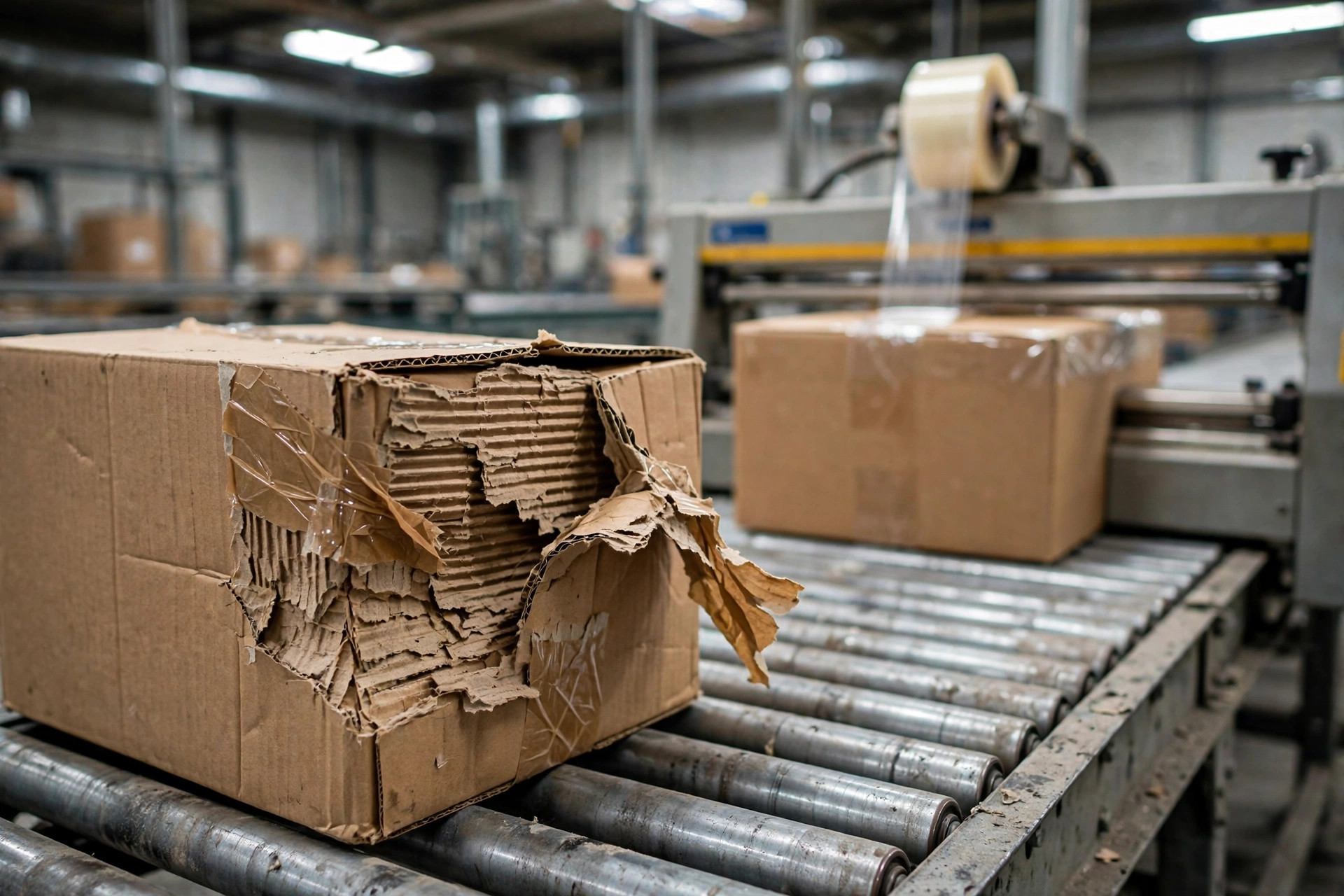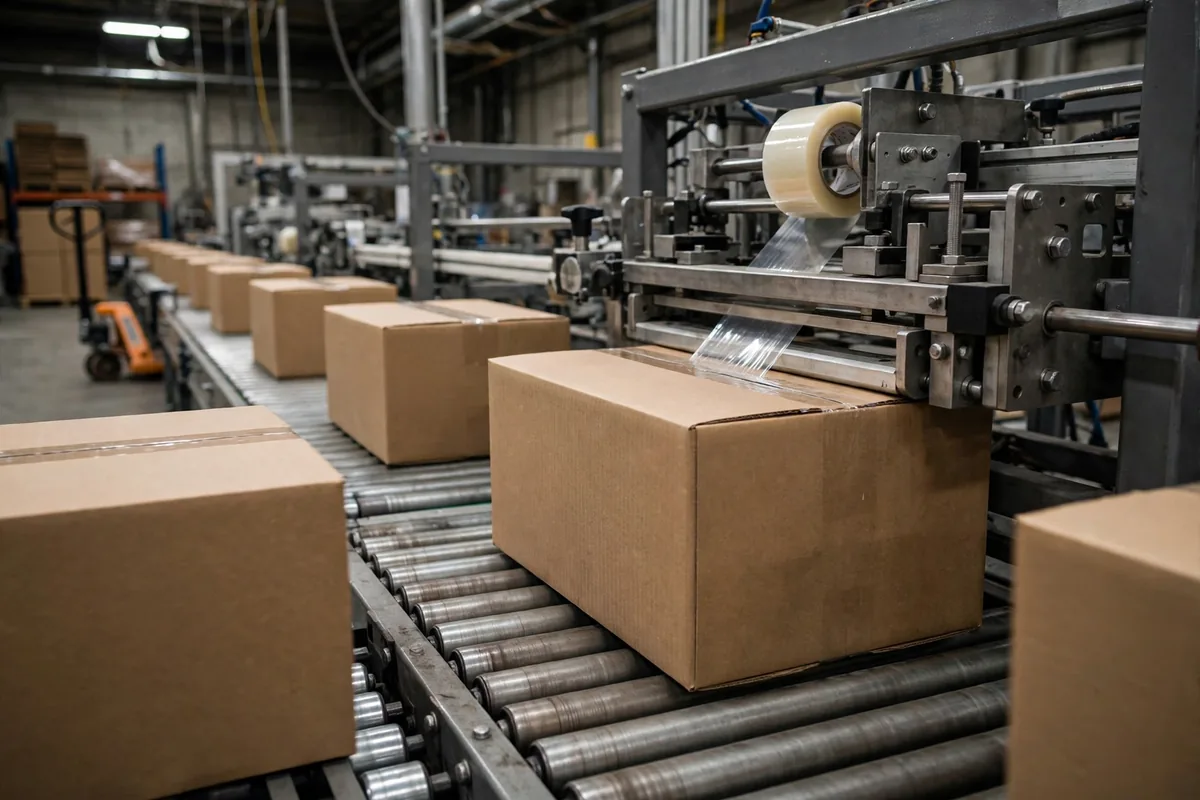
Last November I walked into a distribution center in eastern China shipping around 8,000 orders a day. The warehouse manager met me at the door with a verdict already made: the case sealer was finished, the carton damage rate would not come down, and they needed a new machine. I stood by the sealing line for half an hour and counted: seven or eight out of every ten damaged cartons had caved-in sides with the tape still intact. That is not a sealing problem. The box gave up first. I told him to hold off on buying a machine until we had done the math.
Before You Fight the Carton Damage Rate, Check How You Count It
Warehouses argue about damage rates for months and never notice they are counting different things. One site divides customer complaints by orders shipped. Another divides cartons pulled out damaged inside the warehouse by total cartons shipped. A third counts only transit damage. Those three numbers can sit several times apart, and arguing across them gets nobody anywhere.
Think of it like taking a temperature: armpit, mouth, and forehead give different readings, and you cannot compare them directly. Damage rate works the same way — pin down the definition before you argue about the level. What I usually ask is a two-week log in three buckets: cartons pulled out damaged inside the building, cartons damaged in transit, and cartons that came back as complaints. A single total hides the problem. Split it up and the blame sorts itself out.
I have seen a site where the complaint-based rate looked tiny, and management felt fine for months. Recounted on an outbound basis, the number came out several times higher — most damaged cartons were being caught inside the warehouse and repacked, so complaints never rose while labor and consumables quietly burned money. A wrong definition can run a con on you for a whole quarter.
Severity matters too. A dented corner with the contents untouched is a different animal from a split carton with damaged goods inside. The first usually points at stacking and handling habits. Only the second is worth spending money on boxes or machines for. Lump them together and every fix is a guess.
A Weak Box and a Bad Case Sealer Fail in Different Places
Box-side causes come down to four things: board grade, flute type, moisture, and stacking. Drop a board grade and crush strength drops with it. Pick the wrong flute for a heavy product and the walls fold. Damp board in the rainy season goes soft as noodles. Stack one layer too many and the bottom cartons never stood a chance. The signature is always the same: the damage sits on the body of the box while the tape stays fine and the seal never opened.
Machine-side causes are a different set: tape tension, pressure-roller force, belt condition, and size changeover. Crank the tension too high and the tape cuts a groove across the top flaps until the seal splits. Uneven pressure leaves one side bonded and the other lifting. A worn belt slips, the carton walks sideways, and the seal lands off-center. After a size change, a slow auto-adjust squeezes small cartons and lets big ones rattle through loose. It is like blaming your shoes for a blister without checking how you walk — new shoes fix nothing if the gait is the problem.
In the summer of 2024, a household-goods warehouse switched to a lower board grade to save a little on every carton. By month-end, claims, rework labor, and extra tape had eaten the savings and then some. The opposite mistake exists too: another site swapped to narrower tape so each roll would seal more cartons, and watched seals pop open in transit instead. The tape savings did not cover a single round of reshipping.
A case sealer can carry an impressive MTBF on its spec sheet and still chew through cartons if the tension is wrong. Those numbers come from a lab. Your board, your humidity, and your changeover frequency are not on that sheet. On the floor there is only one rule: look at where the damage sits.
| What the damage looks like | Points at the box | Points at the machine | Five-minute check on the floor |
|---|---|---|---|
| Side walls caved in, tape intact | Board grade too low, or board gone damp | Unlikely | Press an empty carton by hand — if the side gives easily, the box is weak |
| Bottom cartons crushed, top ones fine | Stacked too high, or crush strength too low | Unlikely | Count the actual stack height against the rating printed on the box |
| Tape lifting on one side of the seal | Unlikely | Uneven pressure, or poor tape | Run a finger along the seal — a weak side is obvious to the touch |
| Seal off-center, top flaps torn | Unlikely | Belt slipping, or changeover not keeping up | Seal ten cartons and see if the seal drifts to the same side every time |
| Groove cut across the top, seal splitting later | Board too thin to take the pull | Tape tension set too high | Drop the tension one notch, run an hour, and see if the groove is gone |
That table is the whole diagnostic routine, and the order matters: look at the box body first, then the seal, and only then touch the machine settings. Plenty of warehouses start by tuning the machine, spend half a day on it, and then discover the board had gone damp in storage.
New Boxes, a Tune-Up, or Corner Protectors: Where the Money Goes First
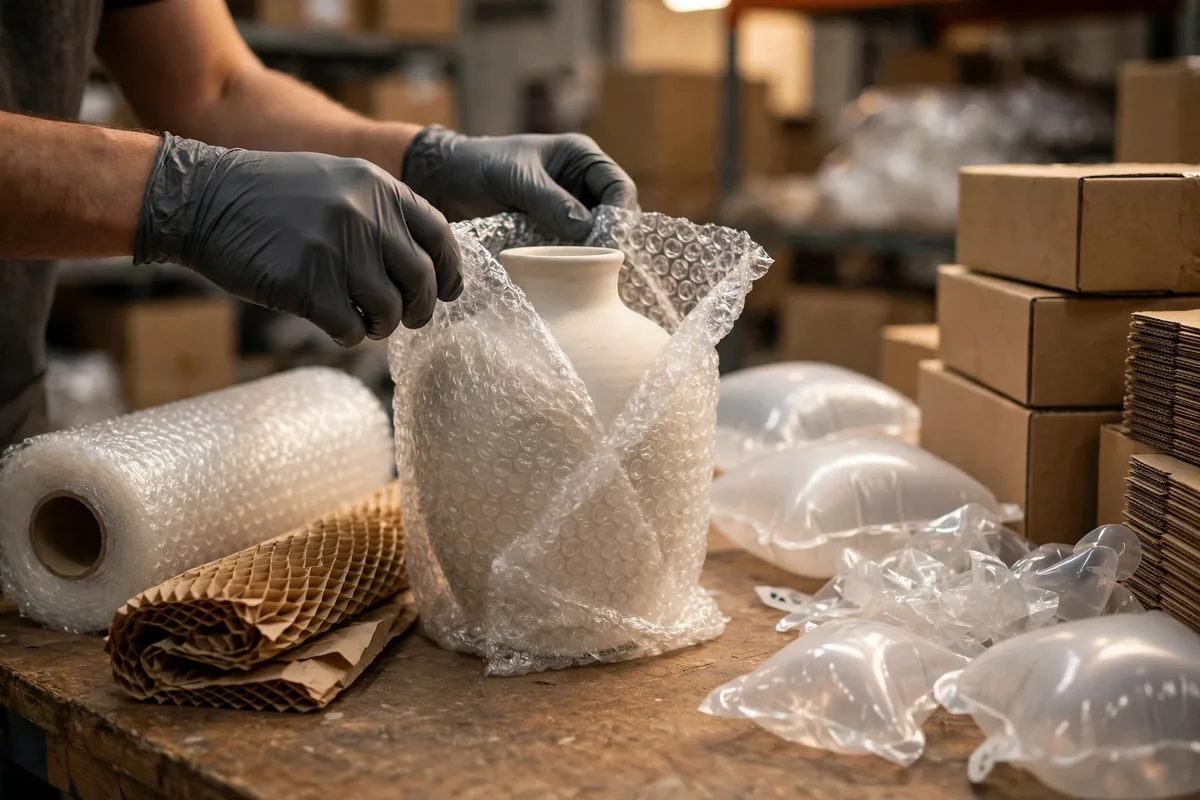
The three fixes cost money in completely different ways. Tuning the machine is nearly free: tension, pressure, belts, and a first-piece check after every size change, all done in one afternoon. Upgrading the box costs a little on every order, and daily volume multiplies that into a serious monthly number. Corner protectors only pay off on heavy or high-value goods — putting them on everything is burning cash.
Here is the counterintuitive part: running the case sealer faster can push damage up, not down. As line speed rises, belt slip and off-center seals get more likely, and the minutes saved on cycle time go straight into reshipping. One warehouse I worked with dropped the line speed a notch — hourly output dipped a little, but damage fell by roughly a third over the following weeks, and the monthly total came out better. Speed is what visitors notice. Total cost is what you actually pay.
Thicker board is not automatically better either. A board that is too thick and stiff can spring the top flaps back open, so the tape never bonds properly and the seal pops on the first bump in transit. Pick the board by product weight and stack height — the one that is just enough, not the thickest on the shelf. This is where pseudo-demand creeps in: someone pushes for a fully automatic sealing line when the board was quietly downgraded months ago. Put the old board back and the problem is gone.
| Option | How the money goes out | How fast it shows | When it fits |
|---|---|---|---|
| Tune the machine: tension, pressure, belts | Almost nothing, mostly labor and a short stop | Visible the same day | Seals lifting, seals off-center, grooves — machine-shaped damage |
| Upgrade the box: higher grade or different flute | A little more on every order, and volume multiplies it | As soon as the next batch of boxes arrives | Caved sides, crushed bottom cartons — box-shaped damage |
| Add corner protectors: heavy and high-value goods only | Charged per piece, manageable at low volume | Immediate | Complaints cluster on a few high-value items while everything else is fine |
Whether the money is well spent comes down to one number: what damage costs you per 10,000 cartons shipped — claims, reshipping, and repack labor added together — set against what the upgrade costs. If a tune-up moves that number, tune first. If not, then talk about better boxes.
Something you can do tomorrow morning: pull the damaged cartons from the last two days, sort them with the table above, and count how many point at the box and how many point at the machine. Get that count before you buy a new machine or order a pricier box.
By Da Liu, Automation Engineer