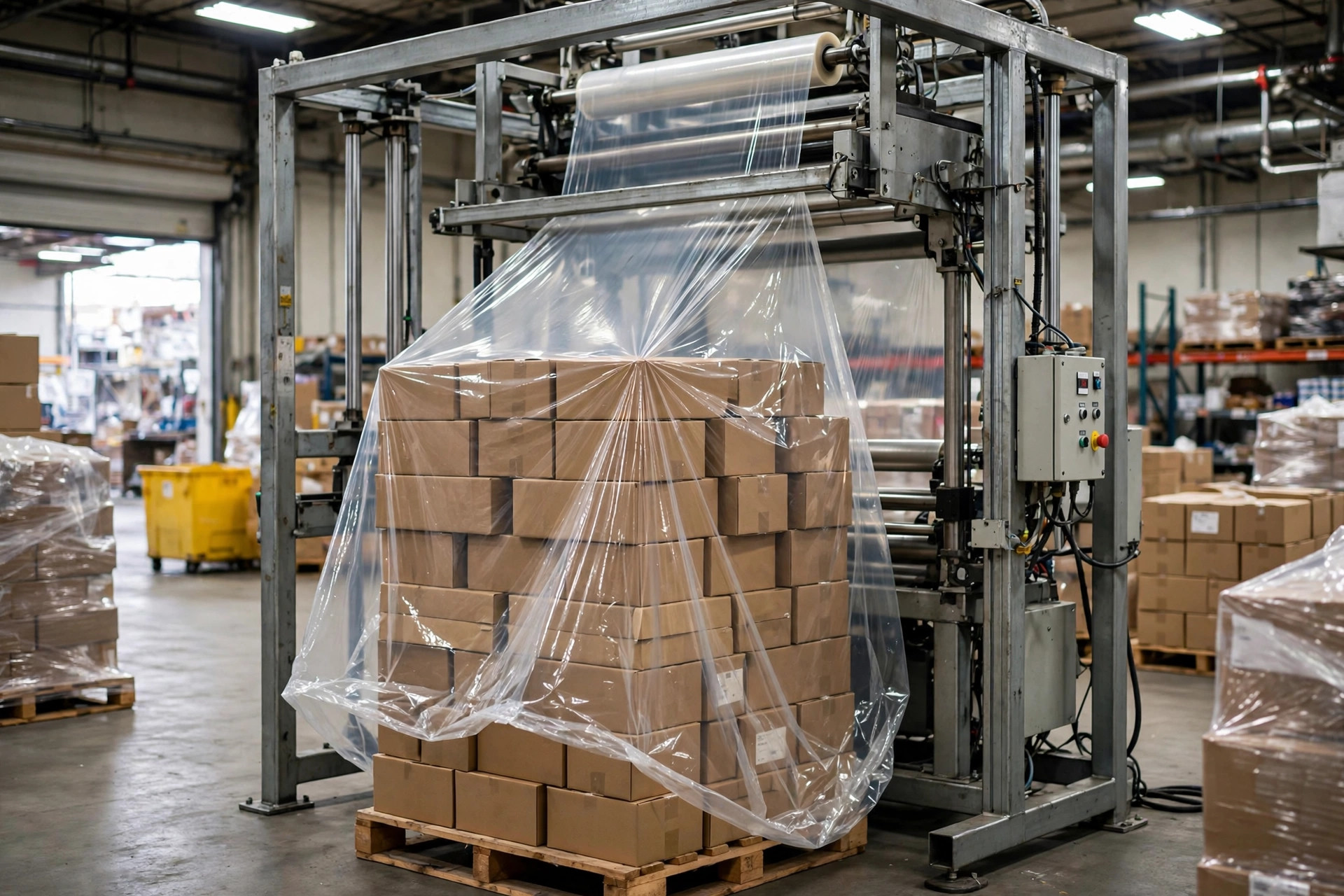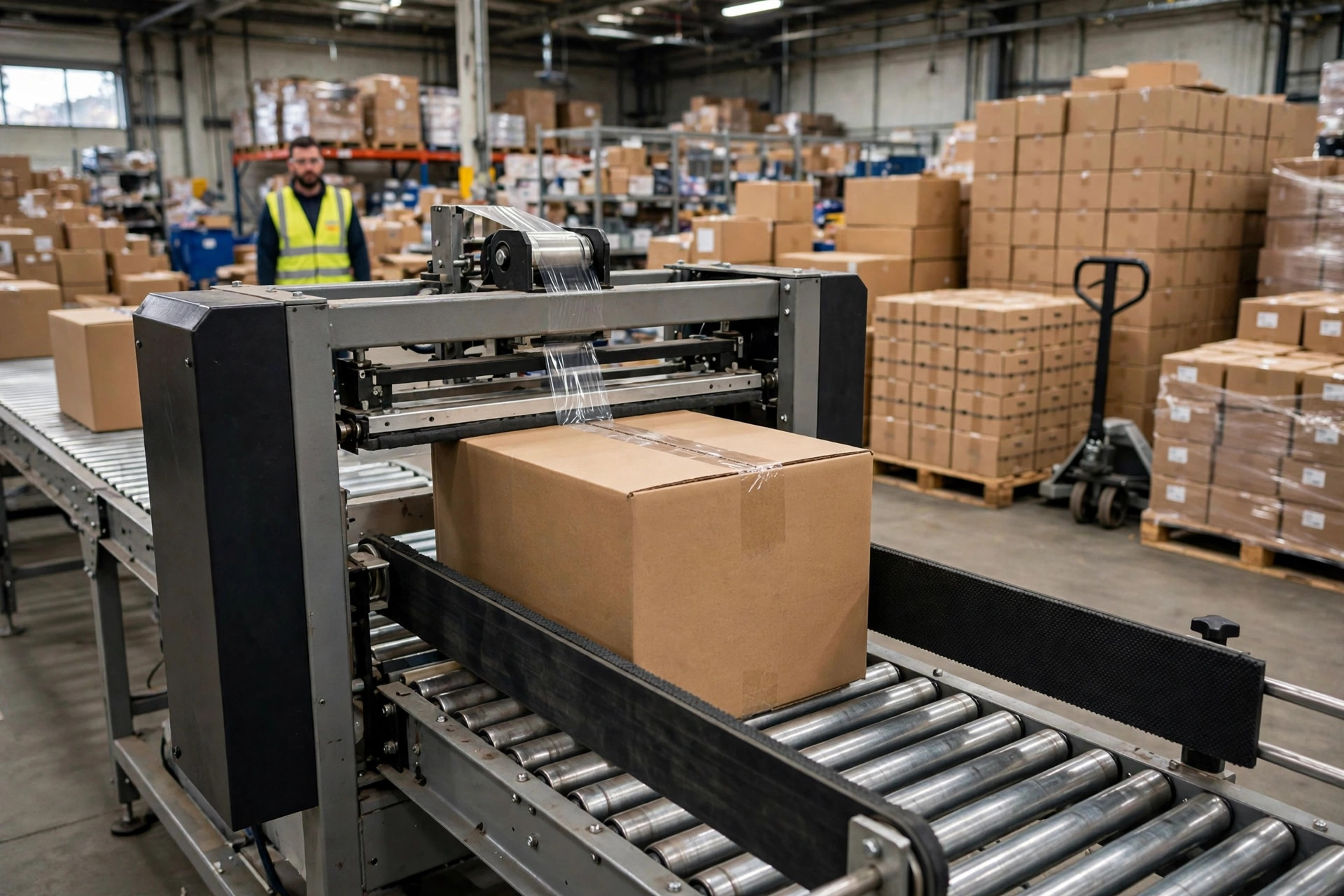
We have a client — a nutritional supplements e-commerce brand, one of our 3PL accounts — that put in a new pack line in September 2023, right before peak. They bought an "automatic flap-folding" case sealer. The salesman told them: "Just set the box down, the machine handles the rest."
First week of peak, the sealer jammed 3 to 4 times a day. Every jam stopped the line for ten-plus minutes. The pack lead was losing his mind. The client's boss called me: "Susan, the equipment you recommended — why does it keep going on strike?"
I spent a morning on their floor. The problem was those two words: "automatic flap-folding." What they bought was a semi-automatic sealer with a three-flap folder attachment — the machine folds the front flap and the two side flaps; the trailing flap still needs the operator. Peak season meant all temps. Trailing flaps went in half-folded, day after day. The salesman didn't lie. The client didn't mishear. They just understood "automatic" differently.
This category is full of traps disguised as "I thought…" Let me lay it all out — the inside version vendors won't tell you.
What "Automatic Flap-Folding" Actually Folds
Here's the thing nobody puts in the brochure: "automatic flap-folding" comes in three tiers, and the price gap — and the labor savings — are enormous.
Tier 1: Manual folding. The cheapest semi-auto sealers. All four flaps folded by hand; the machine just runs the tape. Fine for low volume and few SKUs, or anywhere labor is cheap.
Tier 2: Three-flap folder. The machine folds the front flap and both side flaps automatically; the operator folds the trailing flap and pushes the case in. 3M's three-flap folder attachment works exactly this way — it's an add-on upgrade for semi-auto sealers like their 200a, 7000a and 8000a lines. Best for lines with dedicated packers and stable box sizes: half the labor, a modest price bump.
Tier 3: Fully automatic folding. The machine folds all four flaps. The operator just places the box. Most expensive — and every box-size changeover means adjusting a stack of settings, with the longest downtime. Best for lines where the box never changes and volume is massive.
Our supplements client bought Tier 2 thinking it was Tier 3. Temps in peak, no training on that trailing flap — jams every day. We eventually assigned one dedicated packer to own the folding station, and jams dropped from 3–4 a day to once or twice a week. Tier 2 hardware with Tier 3 expectations — what did they think would happen?
Which tier? Look at three things: how many SKUs, how much box sizes vary, how expensive pack labor is. Lots of SKUs with sizes changing daily? A fully automatic folder's changeover time will make you cry. Tier 2's flexibility wins. Think through that trade-off before you buy — not after the invoice.
I-Seal vs. H-Seal: Pick Wrong, Rework Daily
Folding is one thing; the tape pattern is another — and it can hurt just as much.
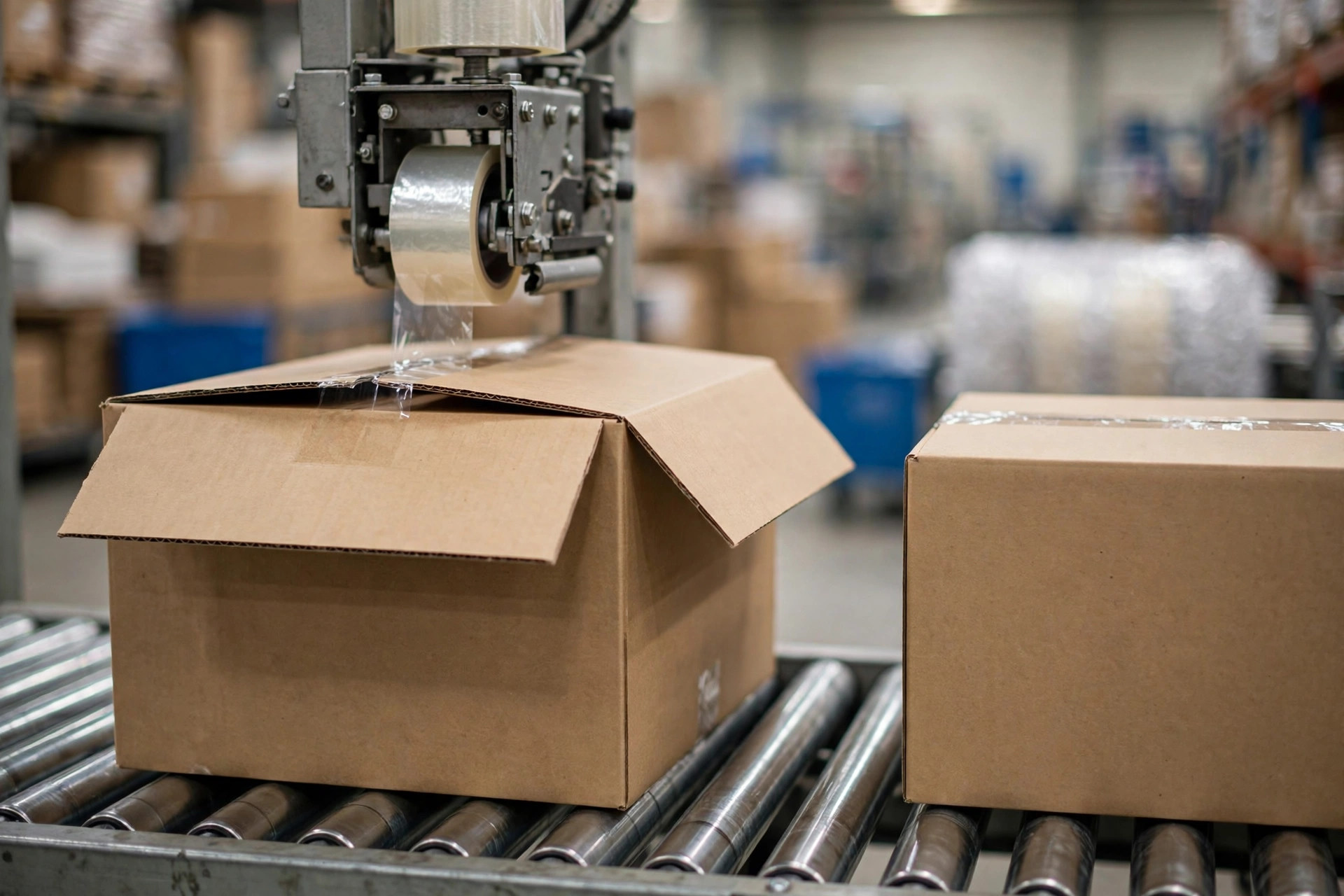
I-seal: a single strip of tape down the center seam, top and bottom. Sips tape, runs fast, fine for light goods and small boxes.
H-seal: center strip plus a strip along each edge — shaped like an H. Uses noticeably more tape, but the box is far tougher.
Another client of ours — rice, flour, cooking oil, heavy 3PL freight — ran I-seal across the board to save tape. Result? Boxes bursting in transit. Claims, compensation, rework and re-taping. In one month, the "savings" didn't cover a fraction of the mess. Switched to H-seal: burst-box claims went to zero.
I ran their numbers: H-seal uses substantially more tape than I-seal, but one burst box's claim plus rework buys months of tape. For heavy goods, exports, or high-stacked cartons, I-seal is a gamble — win a little tape money, lose big on the one that bursts. Flip side: H-sealing featherweight small parcels is burning tape as money. No need.
Running the Numbers: Three Tiers, Two Tape Patterns
Equipment first. On the open market, semi-auto sealers with folding attachments list roughly in the low single thousands of dollars per unit; fully automatic folding setups run from several thousand into five figures (open-market ranges for reference only — check current manufacturer pricing). Stare at that gap, then ask: how much is the labor you'd save actually worth per year?
Then tape. I-seal versus H-seal:
| I-seal | H-seal | |
|---|---|---|
| Tape use | Baseline | Noticeably higher (two extra edge strips) |
| Line speed | Faster | Slightly slower |
| Best for | Light goods, small boxes, short haul | Heavy goods, export, high stacking |
| Burst risk | High (on heavy boxes) | Low |
After our grocery client switched to H-seal, tape spend rose by under a thousand dollars a month — while burst-related claims and rework, previously several thousand a month, went to zero. A fifth-grader could do this math.
One cost everyone forgets: downtime. A fully automatic folder's size changeover — adjustments plus test runs — starts at half an hour. Tier 2, a skilled operator does it in minutes. For a warehouse changing sizes three or four times a day, the automatic folder gives back all its labor savings in changeover time. Never judge a machine by its price tag alone. Downtime is money — and it's the line item vendors never put in the quote.
The Counterintuitive Part: Half the Jams Are the Box's Fault
Counterintuitive take: when a case sealer jams daily, half the time you can't blame the machine. Blame the box.
Crooked score lines — flaps won't fold square, and no machine on earth fixes that. Corrugated gone soft from humidity — it collapses going through, and no engineer can save it. Cheap boxes with wild size variation, a different dimension every batch — you can dial the machine in perfectly and it won't matter.
So always test with your own boxes. The demo room runs perfect boxes — straight, stiff, beautiful. Everything looks silky. Bring your warehouse's worst box instead: the one with the worst scores, the one that sat in humidity for two weeks, the one with the drift-iest dimensions. If it runs clean, the machine passes. Put that requirement in the contract — it's not unreasonable.
We had a client switch to a cheaper box supplier, saved 8% on cartons — and jam rates doubled while pack-line throughput dropped 15%. Every penny saved on boxes got paid back in labor and downtime, with interest. Classic "save small, spend big."
Next Time You're Negotiating, Ask These Three Questions
Years of 3PL sales, and I've watched buyers step on every rake in equipment selection. Next time you're talking to a case sealer vendor, get these three answered and you'll dodge 80% of the traps:
One: exactly how many flaps does this "automatic folding" fold — and who folds the rest? Make the rep say it plainly and put it in the quote. "Automatic" is a slippery word. Nail it down to the flap.
Two: can we test-run it with my own boxes? Your worst ones. If the vendor says yes without blinking, they trust their machine. If they hedge — you have your answer.
Three: how many adjustment points and how many minutes of downtime per size changeover? Make them demo a changeover on the spot, with a stopwatch. For high-SKU warehouses, this question matters more than the price.
A case sealer is the most forgettable machine on the pack line — and the easiest place for "small money" to turn into a big headache. Get it right and you'll never think about it. Get it wrong and it'll remind you daily. Don't cheap out in the wrong place — these three questions are worth more than a few hundred dollars off the quote.
By Susan, 3PL Sales Director