Here is the verdict up front: if you do business with Colombia, you cannot avoid the port of Cartagena — but do not mistake it for a magic answer. Cartagena colombia port warehouse logistics is a two-sided story. It is Colombia's largest container port, handling over 4 million TEU in 2025, a record year. Yet roughly 70% of those boxes are transshipment cargo that never enters Colombian customs territory. Put simply, Cartagena is first a Caribbean transshipment hub, and only second a gateway for Colombia itself. If your cargo moves through it, your warehousing has to be planned like a transshipment play, not like a normal destination port.
I have seen too many people make the same mistake: they look at the big throughput number and assume berths are easy to get, boxes move fast, and warehouse rent is cheap. In the peak season of 2023, a Colombian specialty coffee trader had dozens of tons of graded beans bagged and ready, waiting on a vessel. The booking was confirmed, but the terminal yard was choked with transshipment boxes, and the gate-in window for export loads kept slipping. The coffee sat in the warehouse for nine extra days. The beans were fine. The money was not — bonded warehouse rent is charged by the day, the buyer deducted a late-delivery penalty, and a fat margin turned thin. A big port does not mean your box gets priority.
Cartagena Port Warehouse Logistics: Two Terminals Behind 4 Million TEU
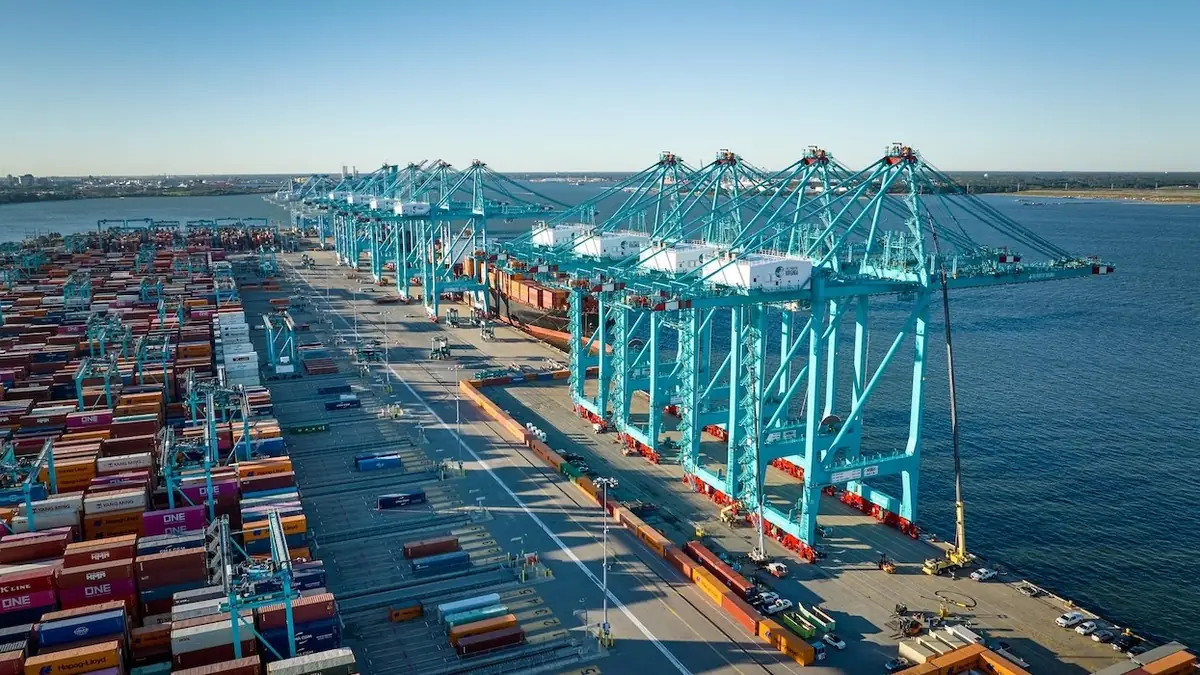
Cartagena's container business runs through two terminals operated by the same port group: the older terminal in the Manga district and the newer Contecar terminal. Together they offer around 5 million TEU of annual handling capacity, and in 2025 they moved just over 4 million TEU, according to Colombia's transport regulator. Of that, transshipment accounted for about 2.82 million TEU, exports around 541,000 TEU, and imports around 521,000 TEU.
Draft is the port's real advantage. Contecar offers up to 16.5 metres of water and the older terminal 15.5 metres, enough for vessels of around 18,000 TEU. In the Caribbean, that is what makes a transshipment hub: shipping lines bring the big ships in, then split the cargo onto feeder services. The World Bank and S&P Global Container Port Performance Index ranked Cartagena third in the world and first in the Americas for 2024. That reputation is earned.
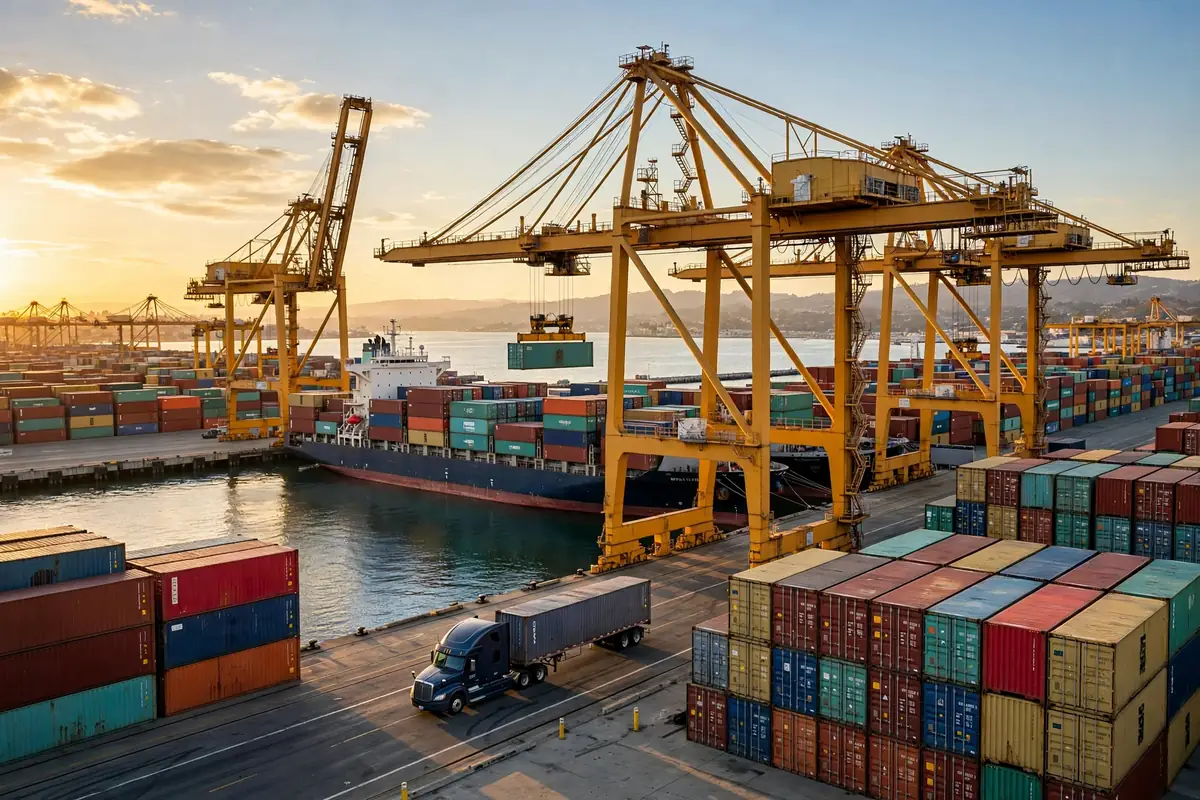
But a transshipment port has a flip side, and it is the part of Cartagena port warehouse logistics that newcomers most often miss: local cargo competes with transshipment boxes for the same yard space, gate slots, and trucks. Priority always goes to the boxes tied to a tight vessel schedule. Your export load's gate-in window and pickup sequence follow the lines' transshipment rhythm. And if your warehouse sits far from the terminals, an extra half hour per truck run turns two trips a day into one during peak season. That changes the math fast.
How Coffee Travels Through Cartagena Port Warehouse Logistics
Coffee is the cargo that best explains Cartagena. Colombia exported 12.33 million 60-kg bags of coffee in 2024. About 3.54 million bags — 28.7% — left through Cartagena, second only to Buenaventura on the Pacific coast at 63.6%. The United States took nearly 40% of Colombia's coffee exports. Cartagena's coffee mostly comes from the Caribbean coast and northern growing regions, trucked to warehouses near the port for processing.
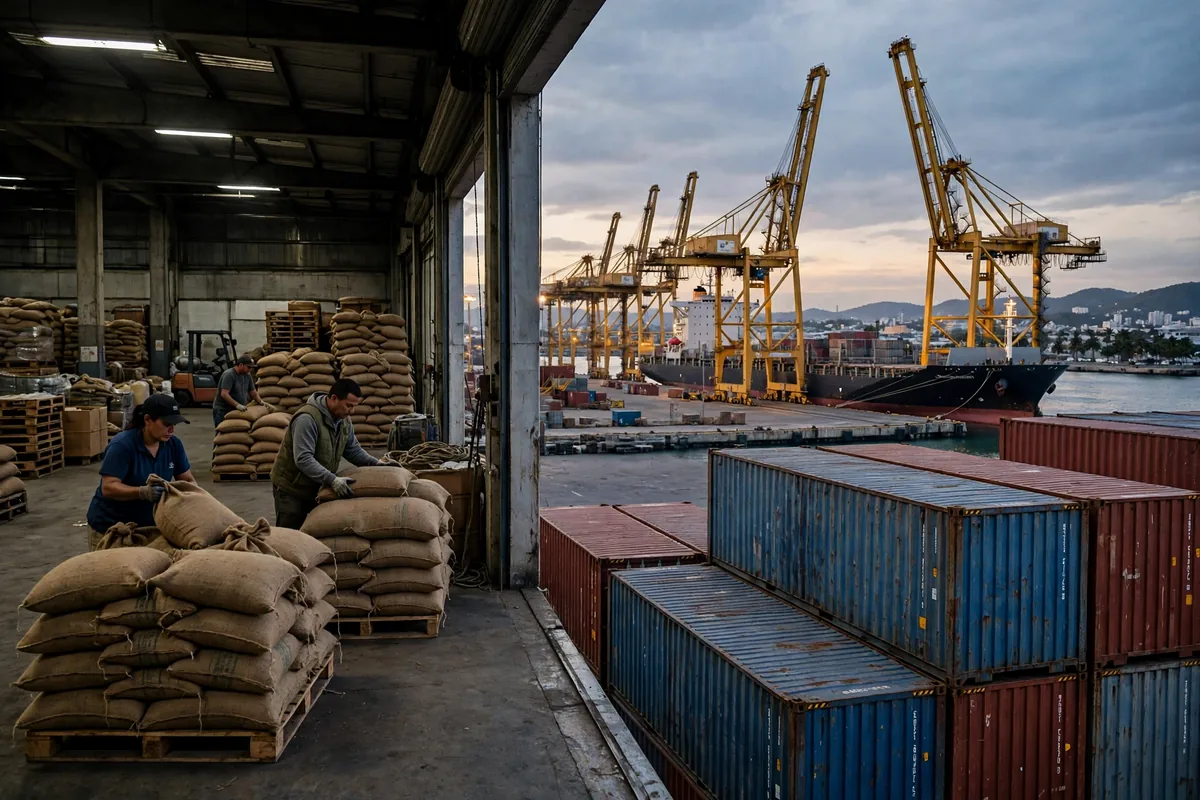
Illustrative scenario: a lot of specialty coffee arrives at a warehouse near Cartagena. The flow runs roughly like this. Green beans are graded first, sorted by moisture content and defect rate, with each grade stacked separately. The warehouse has to control humidity — Caribbean coastal air is damp, and sacks stacked straight on the floor will wick moisture into the bottom layer, so pallets and raised storage are basic practice. Before loading, the order is consolidated: one container may hold two or three grades, and the marks and lot numbers have to match exactly, because one wrong container can stall customs clearance at destination.
Moisture control matters more in a Cartagena warehouse than in an inland one. Containers bake in the terminal sun, then move into cooler zones, and condensation inside the box is a real risk. Exporters commonly add desiccants, seal bag mouths, and use moisture-barrier liners — a few dozen dollars per container, cheap insurance against a full container of damaged beans. One detail people forget: coffee absorbs odours. If the warehouse also stores fertilizer or spices, strict separation is essential. Tainted coffee arriving at the buyer means a rejected lot.
Consolidation is another cost line. Small specialty lots rarely fill a container, so several exporters share one box. The trouble is not the loading; it is the division of responsibility — whose cargo arrived first, whose sits at the bottom, and who pays if something is damaged. My advice: put the cost-sharing rules in writing before the first box is loaded, photograph the loading, and settle disputes from the photos and signed receipts, not from verbal promises.
Three Things Your Warehouse Can Do When the Port Congests
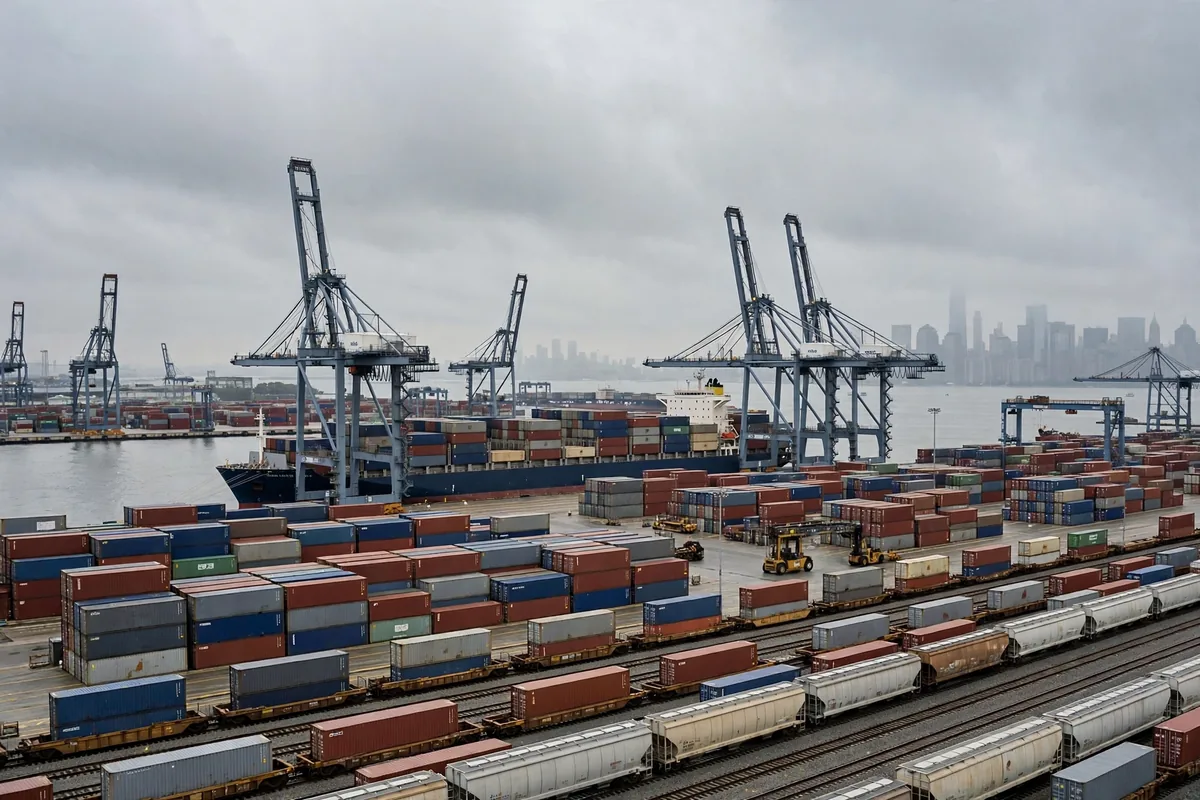
The port group expects throughput to reach around 4.7 million TEU in 2026, closing in on the roughly 5 million TEU capacity ceiling. The tighter capacity gets, the sharper peak-season swings become. A congestion snapshot in late October 2026 showed about a one-day vessel delay at Cartagena, against five days at Buenaventura and three at Barranquilla. Cartagena is holding up for now, but that is no guarantee for peak season.
When congestion hits, there are exactly three things a warehouse can do. First, bring cargo in early. Do not wait for the vessel schedule to be confirmed before moving goods from the interior. Get them into a bonded or regular warehouse near the port 7 to 10 days ahead, so they can move the moment a gate-in window opens. A few extra days of rent is cheaper than a missed sailing. Second, keep a backup. Have both a bonded warehouse and a regular warehouse lined up, and never put all your cargo on one facility and one gate route. When one warehouse fills up, the other takes over. Third, watch the free storage period. Terminals typically give export loads only a few days of free time; demurrage on one box looks small, but across dozens of boxes it becomes serious money. Time your gate-in against the free period.
The table below is a hypothetical example for a coffee trader exporting about 40 containers a month. The figures illustrate the structure and do not represent any port's or warehouse's actual rates:
| Item | Early gate-in, split warehousing | Last-minute approach |
|---|---|---|
| Extra warehouse rent near port | Hypothetical: about $3,000/month extra | Hypothetical: none |
| Missed sailings and rebooking | Hypothetical: near zero | Hypothetical: about 2 boxes/month |
| Demurrage and storage overruns | Hypothetical: about $500/month | Hypothetical: about $4,000/month |
| Buyer late-delivery penalty risk | Hypothetical: low | Hypothetical: high |
Here is the counterintuitive part: Cartagena ranking third in the world for port efficiency is exactly what lulls newcomers into trouble. Port efficiency measures how fast ships turn around in the port — not how fast your cargo turns around in the warehouse. Fast ships and a slow warehouse leave a gap in the middle, and that gap is paid for by your own warehousing. The bigger the port's reputation, the tighter you need to hold the warehouse and trucking links yourself.
If you want one piece of advice on Cartagena port warehouse logistics, it is this: do not just stare at the port's throughput numbers — that is the shipping lines' report card. Yours is written in the warehouse: when the cargo arrives, how it is graded, whose container it shares, and which sailing it catches. Get those four things right, and Cartagena becomes your port.
By Lao Mi, Supply Chain Veteran (20 yrs)