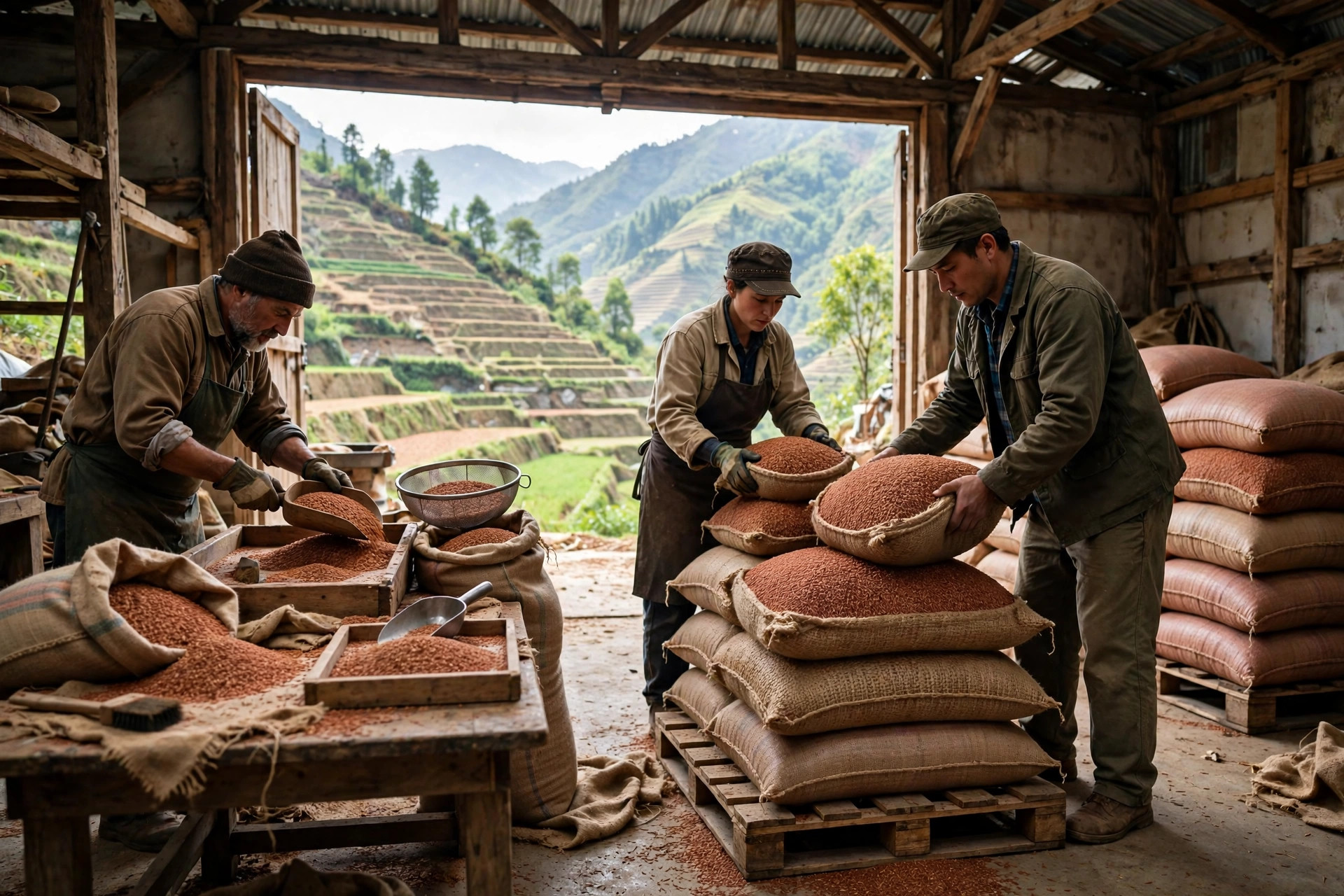
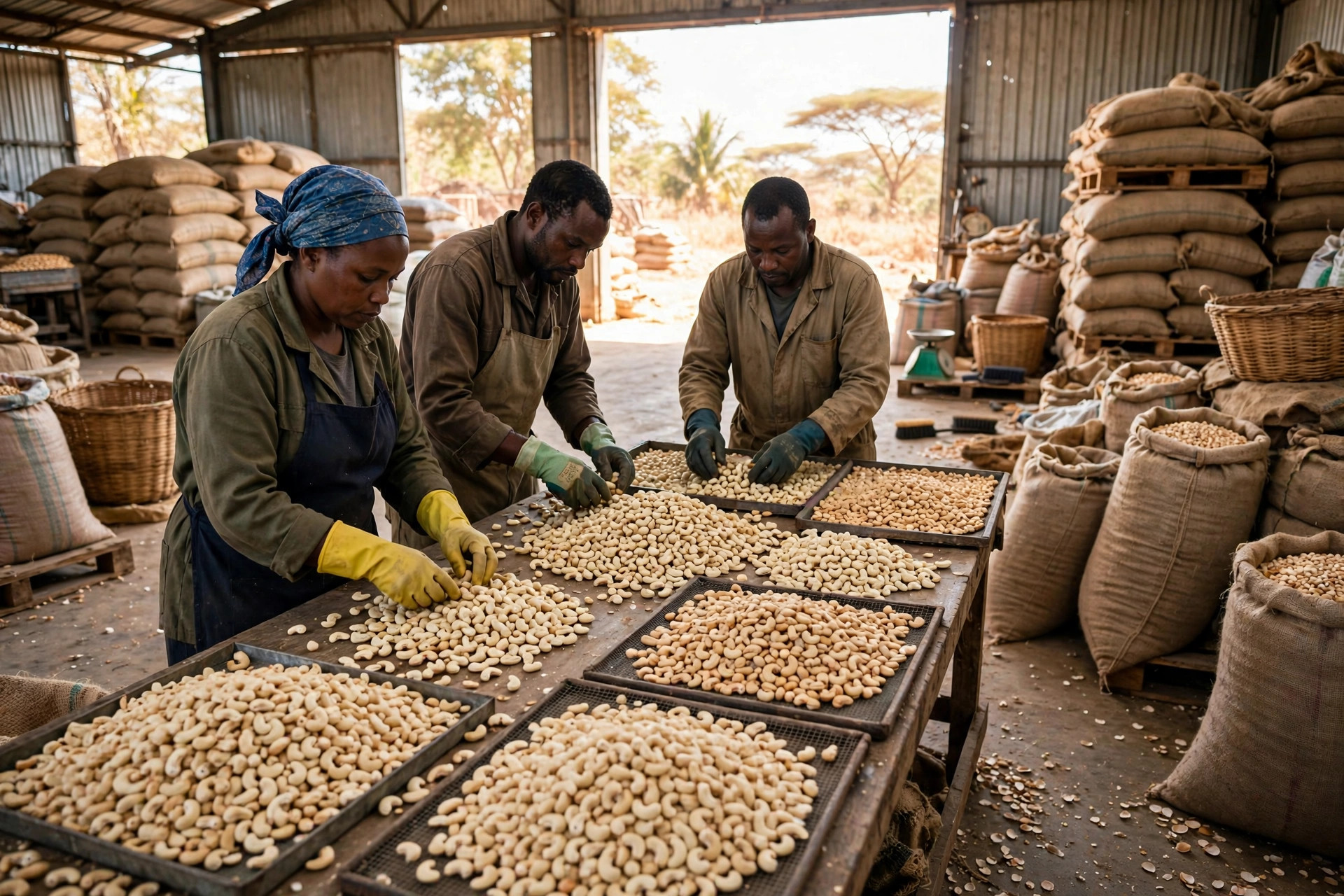
Here is the verdict up front: in cambodia kampot pepper export warehouse storage, the money is not lost on rent. It is lost in three places — grading before the goods enter the warehouse, moisture control inside it, and re-inspection before they leave. Get any one of them wrong and the loss lands at the buyer's inspection table, where every saving made earlier gets handed straight back. I have seen this failure three times, and the script barely changes: the pepper leaves the farm in good shape, and the warehouse turns it into a lower-grade product.
Pepper is unforgiving in storage. It hates damp air, it picks up smells from whatever shares the room, and it punishes mixed grades without mercy. Kampot's rainy season arrives fast, and a batch that was dried properly can start taking moisture back within days in an ordinary shed. Damp pepper does not only gain weight. Its aroma dulls and its colour shifts. Worse, once large and small peppercorns, or black and red pepper, share the same bag, the whole lot is priced at the lowest grade in it. No buyer will re-sort your shipment for you.
Case One: One Mixed Lot, One Grade Lost
A cooperative in Kampot once took in pepper from two growers and stored it in the same bay. The bags were marked with the date only — no grade, no harvest batch, no grower. Before shipping, workers restacked the bags by feel, decided they looked close enough, and loaded them. At destination, the buyer's spot check found uneven berry size and red mixed with black in the same lot, and repriced the whole shipment at the lower grade. Back home, the review was blunt: the farm was not the problem. The warehouse was.
That failure became a hard rule in every project I run since: grade first, stack second. Grade, batch and grower origin must appear together on the bag label and in the location record. If any one of them is missing, the bag does not enter the graded stacks. It sounds fussy, and it belongs at the top of the go-live night checklist precisely because it sounds fussy.
Case Two: One Rainy Week Undid a Good Drying Job
The second story comes from a transit warehouse near Phnom Penh. Pepper arrived from Kampot in excellent condition, well dried and well packed. But one row of pallets sat flat against the wall, with no clearance and no air gap. When the wall sweated in the rain, the bottom bags took the damp first. From the outside nothing looked wrong. Opened, the pepper had caked. That row went back for re-drying, the sailing was missed, and the rework labour and extra drying space became a second bill on top of the first.
I stopped judging a warehouse by whether it has a roof after that job. I check three things instead: the floor, the walls and the airflow. Pallets must stand clear of floor and wall, air must have a path through the stacks, and the wall-side and door-side positions get checked daily in the rainy season. A check that is not written into the roster does not happen. Write it into the roster.
Cambodia Kampot Pepper Export Warehouse Storage, Step by Step
This is the working version I hand to fellow implementation consultants. Every step names an action and an owner, not an aspiration.
Step one, receiving inspection. Count the bags, match bag labels against the delivery paperwork, and confirm grade, batch and origin are all present. A bag with an unclear label goes to a separate holding stack. It never joins an accepted stack on the strength of a guess.
Step two, grade-separated stacking. Stack by grade and batch, keep an aisle between grades, and never merge stacks to save space. Give every stack a location code, record it, and pick by code at dispatch. Memory is not a warehouse system.
Step three, moisture setup. Pallets clear of floor and wall, bags never touching floor or wall directly, an extra moisture barrier in the rainy season, and a door rule with sense in it: shut against rain, open for ventilation in dry weather. A warehouse sealed all day grows damp; one left open all day invites rain. Neither is a policy.
Step four, daily patrol. Check three spots every day: the wall-side stacks, the door-side stacks and the bottom bags. A bag that feels soft, shows caking or carries an off smell gets isolated at once and handled separately. A suspect bag never goes back into good stock to keep the numbers tidy.
Step five, pre-shipment re-inspection. Sample across stack locations before loading, not from the most convenient stack only. A stack that fails stays behind for separate handling. The lot does not ship as a whole on the strength of one good sample.
Step six, close the record. After dispatch, record batch, stack codes, inspection results and buyer feedback in the same log. When the same grower or the same bay causes trouble again, the log points straight at it. No fresh round of guessing.
Cambodia Kampot Pepper Export Warehouse Storage Costs: Where the Bill Really Comes From
| Where the money goes | Where it runs out of control | The control that holds it |
|---|---|---|
| Grading and labelling | Rushing receiving, mixed grades in | No label detail, no entry to graded stacks |
| Drying and rework | Rain-season moisture gain, re-drying | Pallet clearance, daily patrol |
| Storage and handling | Uncoded stacks, restacking to find goods | Location codes in the log, pick by code |
| Re-inspection and downgrade risk | Sampling only the easy stack | Sample across stacks, hold failures separately |
Rent is the smallest line that matters here. Rework, downgrading and a missed sailing are what eat the margin. When you price warehouse storage, count how often those three can happen first, then look at rent. Reverse the order and you will underprice the risk every time.
The Counterintuitive Call: Drier Is Not Always Better
Most people assume the drier the pepper, the safer the storage. That is only half true. Over-drying makes berries brittle, breakage rises during handling and sieving, and part of the aroma goes with it. The warehouse goal is not the lowest moisture imaginable. It is holding the pepper steadily in the condition the buyer accepted, then defending that condition with moisture control and patrols.
That is a real trade-off, and it should be settled before receiving, not discovered at inspection. Chase extreme dryness and you trade aroma and whole berries for a number on paper. Accept a sensible drying point and you take on a higher duty of care in the warehouse. I take the second deal: dry properly, stop chasing extremes, and do the warehouse work properly. Pepper stored that way travels better.
One more risk gets missed too often: never store pepper in the same bay as strong-smelling goods. Pepper absorbs odours, and odour damage has no rework. The berries can look perfect and still fail the moment the buyer smells them. That loss is a straight downgrade, with no second chance.
Go-Live Night Checklist: The Failures I Check Before Loading
Run this list before any container is loaded, and do not rush past an unchecked item.
Do the bag labels carry grade, batch and origin together? Do stack codes match the log? Are pallets clear of floor and wall? Is the rainy-season patrol written into the roster? Did re-inspection cover more than one stack? Are suspect bags isolated rather than mixed back into good stock?
One last caution, and I mean it as a working rule rather than a disclaimer: import, origin and inspection requirements change, and they differ by destination. Confirm certification, documentation and inspection requirements against the latest official sources before each shipment, rather than carrying last shipment's paperwork forward by habit. An origin reputation takes years to build. One warehouse failure can cost more than one shipment.
By Lin Xiao, WMS Implementation Consultant