Conclusion first: for Bhutan red rice, the warehouse decides the export margin. Get bhutan red rice export warehouse storage right — moisture, pests, and grading, in that order — and the rest of the chain has something worth selling. Get it wrong, and no buyer conversation, packaging upgrade, or price negotiation can rescue grain that has already gone musty, picked up insects, or been mixed across grades. The fix is not expensive equipment. It is a short list of actions, done every day, with records someone actually reads.
Bhutan's red rice comes from high terraced fields worked by smallholders, a few acres per family. Sacks arrive one household at a time, gather at a cooperative, and only later become one export lot. The weakest points are the handoffs: every re-bagging, every change of shed, every wait for a truck is another chance for moisture and contamination to get in. Too many projects spend their energy haggling over price and then treat the warehouse as an afterthought — four walls and a closed door. Red rice punishes that attitude faster than white rice. Its bran layer carries more colour and oil, so it turns stale and off-smelling sooner in warm, stuffy air.
Why red rice fails in storage: it is stuffiness, not rain
Last harvest season, a cooperative in the Paro valley took in 120 sacks of red rice. The sacks felt dry. They were stacked in a concrete room on a single layer of old boards, tight against the wall. On the third night it rained. No rain fell directly on the sacks, but damp crept up the wall and softened the bottoms of the 12 lowest sacks. Workers flipped those sacks to the top to air out and assumed the problem was solved. At pre-shipment inspection, that lower lot smelled musty and looked uneven in colour. It had to be sold at a lower grade, and nearly the whole season's margin for that cooperative went with it.
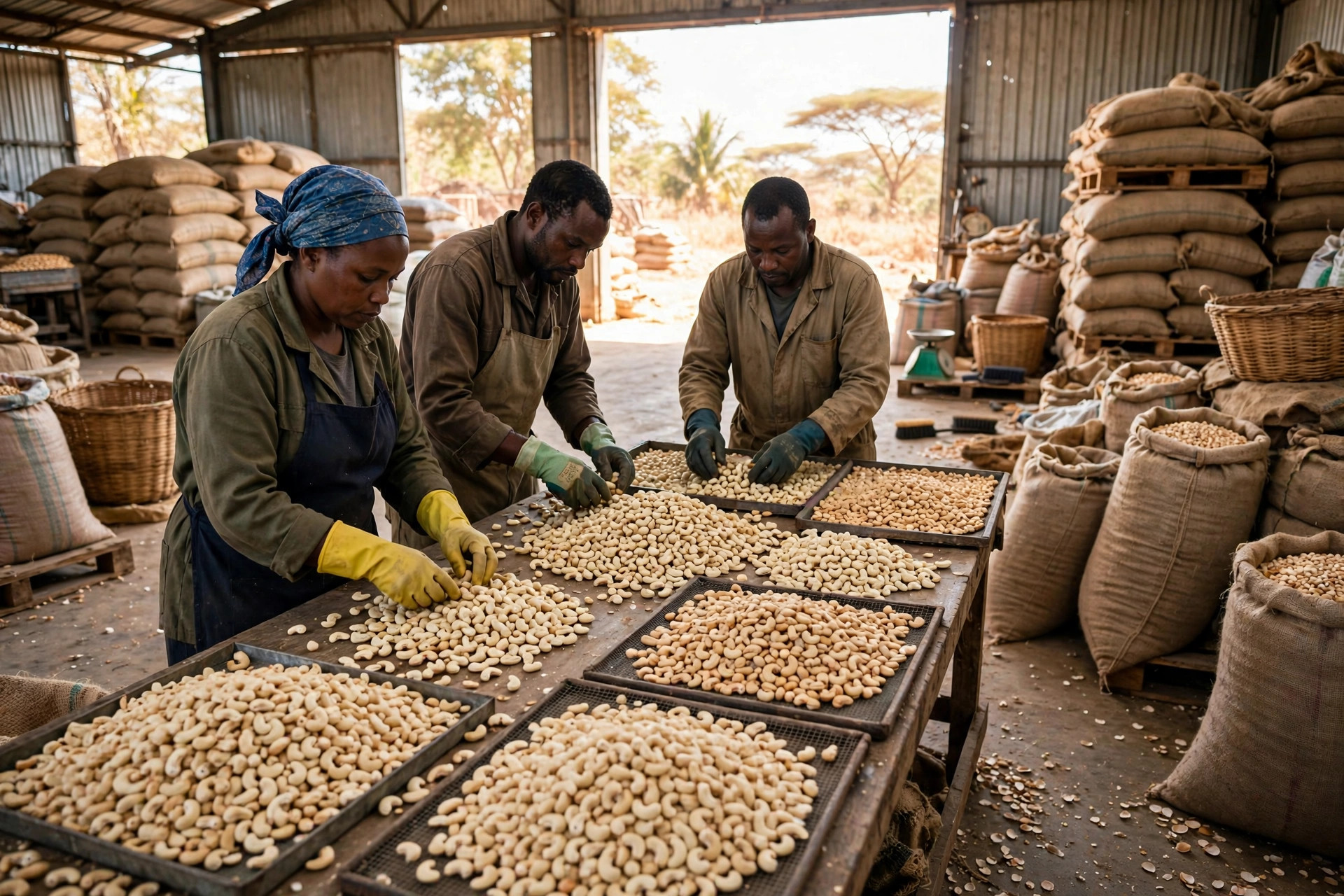
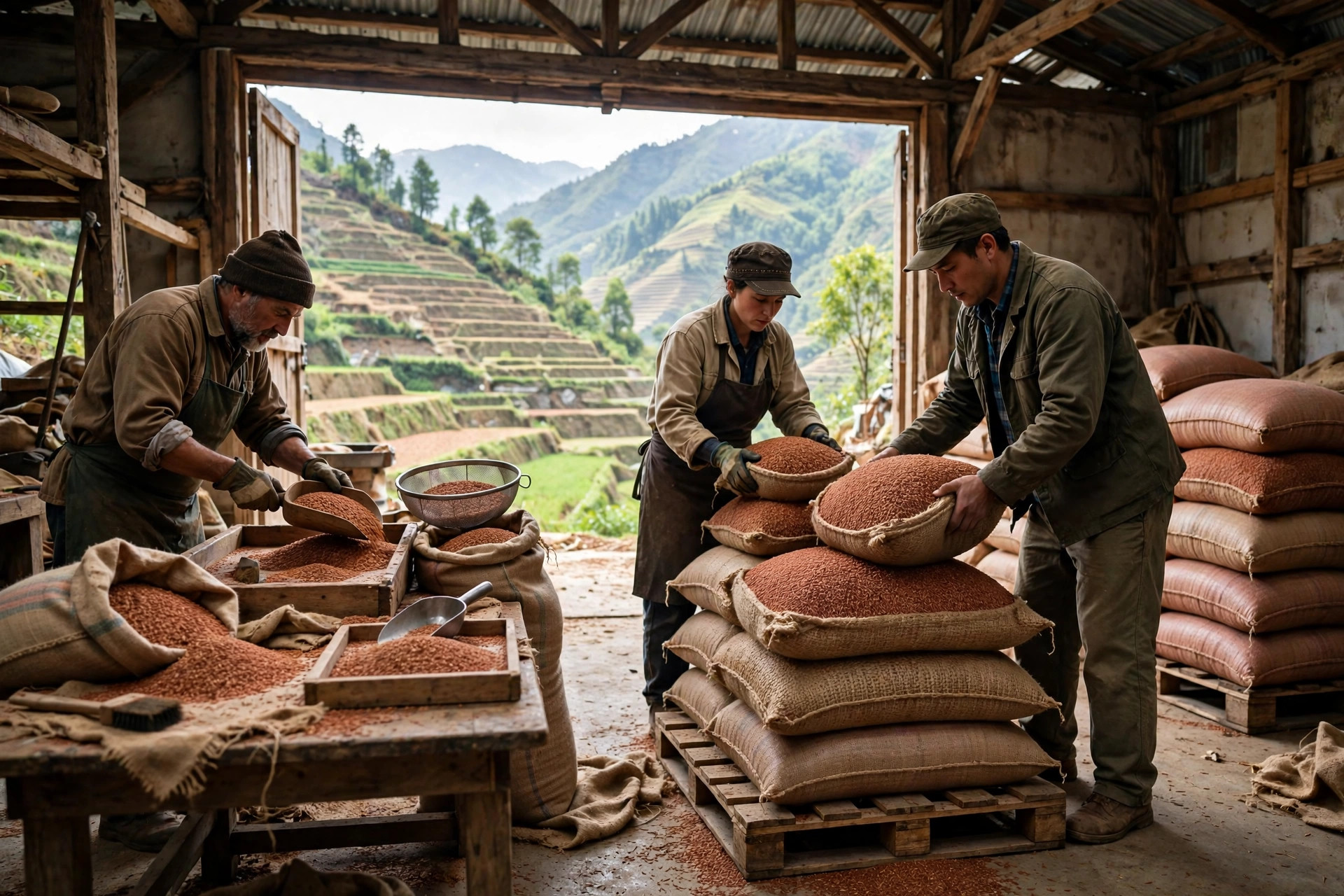
The same season, another collection point did the opposite. Every sack was screened, weighed, and labelled with the grower's code on the day it arrived. Pallets were kept off the floor and away from walls, with air gaps between stacks. Someone recorded temperature and humidity twice a day, and once more on rainy days. Not one sack was downgraded for damp. The lesson is plain: moisture control is not about buying a fancy dryer. It is about pallets, air gaps, ventilation, and a notebook that gets used.
Pests follow the same logic. Infestation rarely starts inside a clean warehouse. It walks in with field dust, reused sacks, and old pallets carrying last season's broken grain. Skip the intake check — torn seams, damp patches, leftover grain in a reused bag — and new rice goes straight into a pantry someone else already stocked. By the time you see live insects in a sack, you are paying twice: once for treatment, and again in lost buyer trust.
Bhutan red rice export warehouse storage: a seven-step checklist you can run tomorrow
Use this as the standard routine for a small export lot; do not cut steps.
- Inspect the sack first. Reject torn, damp, or dirty sacks on the spot and re-bag them. Never stack a damaged sack "for now" — "for now" is how a bad sack becomes a bad stack.
- Screen, weigh, and label. Remove broken grain and impurities, weigh each sack, and tag it with the grower code and date. A sack with no code does not enter the warehouse. Without a code, one problem sack drags the whole lot down with it.
- Keep a sealed sample. Take one sample per lot, seal it, mark the lot and date, and store it separately. When a buyer asks a hard question, that sample is your evidence.
- Stack on pallets, with air. Keep stacks off the floor and off the walls, leave ventilation gaps, and never mix growers or grades in one stack to save space.
- Record twice a day. Morning and afternoon temperature and humidity, plus an extra reading on rainy days. A wall chart works fine, if a named person reads it.
- Inspect weekly. Pull a few sacks from the edges, bottoms, and centre of each stack. Check for caking, off smells, and insect signs. Isolate anything suspect at once instead of waiting for the whole stack to show it.
- Re-inspect the night before shipment. Re-check feel, smell, colour, and sack condition, and pull any failing sack out of the shipment lot. That is why bhutan red rice export warehouse storage rewards discipline at the end of the chain as much as at intake: the last check is the cheapest place to catch a mistake.
Which shed to use depends on volume and on how much control you can actually maintain:
| Storage option | Fits | Moisture control | Pest control | Grading ability | Hidden cost |
|---|---|---|---|---|---|
| Farmhouse room | A few to a dozen sacks | Weak, weather-dependent | Weak, depends on cleaning | Almost none | Highest downgrade losses from damp and mixing |
| Village collection shed | Dozens to around a hundred sacks | Moderate, if pallets and airflow are in place | Moderate, intake checks decide it | Can separate by grower and grade | Needs a named keeper for records and patrols |
| Export warehouse | Larger consolidated lots | Strong, with ventilation and damp-proofing | Strong, with intake inspection and routine checks | Strongest, grade-specific dispatch | Highest rent and management cost, lowest downgrade losses |
Do not pick the cheapest rent column. Pick the row where downgrade losses plus management cost are lowest. For a small lot, a well-run collection shed with a strict checklist often beats a big rented warehouse run loosely.
The failure I have seen three times: grading left until the night before shipment
The most common failure is not a lack of gear. It is late grading. One exporter I worked with collected rice from three valleys — different colours, different broken-grain shares, different cleanliness — and stacked it all as one grade to save time at intake. On the night before shipment, the buyer asked for graded samples. The team sorted all night, still could not fill a full container with top-grade rice, and sold the rest down a grade. The overtime bill was the small part. The lost grade premium was the real cost.
Here is the counter-intuitive judgment: grading earlier saves money, even though it feels like extra work. People assume it is more flexible to store everything mixed and sort at sale time. It is the opposite. Sorting later means re-bagging, re-screening, re-weighing, and re-labelling, and every extra pass creates more broken grain. Spend half a day grading properly at intake, and dispatch becomes a simple matter of picking the right stacks.
The second repeat failure is reused sacks. An old sack looks sound, but its seams can hide last season's grain dust and insect eggs. My rule is blunt: export lots go in new sacks, every time; old sacks stay for household grain.
The third is the waiting game. Mountain roads, a border crossing, and onward movement through India to a seaport make the journey hard to control, which is exactly why the shipment must not leave with a loose end. My night-before-go-live checklist has six items, and a truck does not roll if one is missing: re-inspection record, sealed sample, lot list, sack count, grade, and seal condition. In bhutan red rice export warehouse storage, a truck leaving on time with a doubtful lot is worse than a truck leaving a day late with a clean one. For destination import paperwork and plant-health rules, check the latest official policy rather than trusting a forwarded checklist; requirements change, and a stale form can hold a good lot at the border.
One more piece of paper earns its keep: a one-page lot sheet travelling with the goods, listing grower codes, sack count, grade, intake date, inspection result, and shipment date, with a copy kept at the warehouse. When a buyer questions any sack, the sheet answers it. Without it, all that careful inspection leaves no trail, and a dispute comes down to one person's word against another's.
Good bhutan red rice export warehouse storage turns scattered smallholder sacks into a lot a buyer can trust. Moisture, pests, and grading — settled in the warehouse, in that order, before anyone talks about the port.
By Lin Xiao, WMS Implementation Consultant