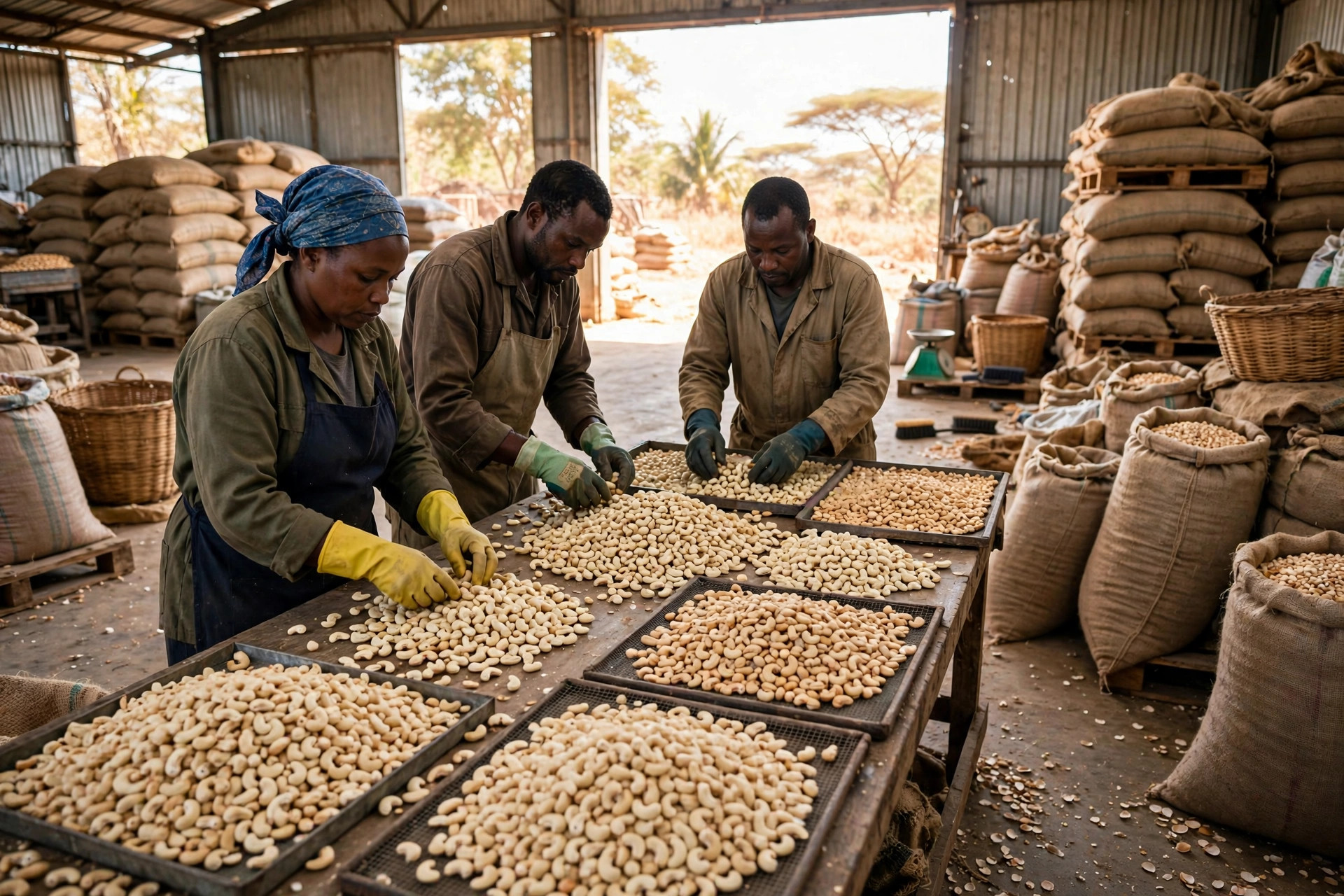
It was half past three in the morning when the rain hit Nampula. My phone buzzed, the night-shift lead shouted over the radio, and I was already running for the drying yard in my jacket. Two batches of cashew kernels were still spread out from the daytime, and if we were slow with the tarps, the whole night's work was gone. That is mozambique cashew export warehouse storage. It is not decided on a price sheet. It is decided by rain, damp air, and people.
Most of our loads come down from the northern growing areas. Trucks arrive after long, rough roads, and no two loads arrive in the same condition. Some sacks look dry on the outside and smell stuffy the moment you open them. Some look plain and grade out beautifully. In our first couple of seasons we learned this the hard way. We signed loads in on sack count and weight, and only found the problem at the pre-shipment check in Maputo, when the grade came back lower than expected. Rework ate our labor, our time, and our tempers. Since then, nobody signs anything in a hurry.
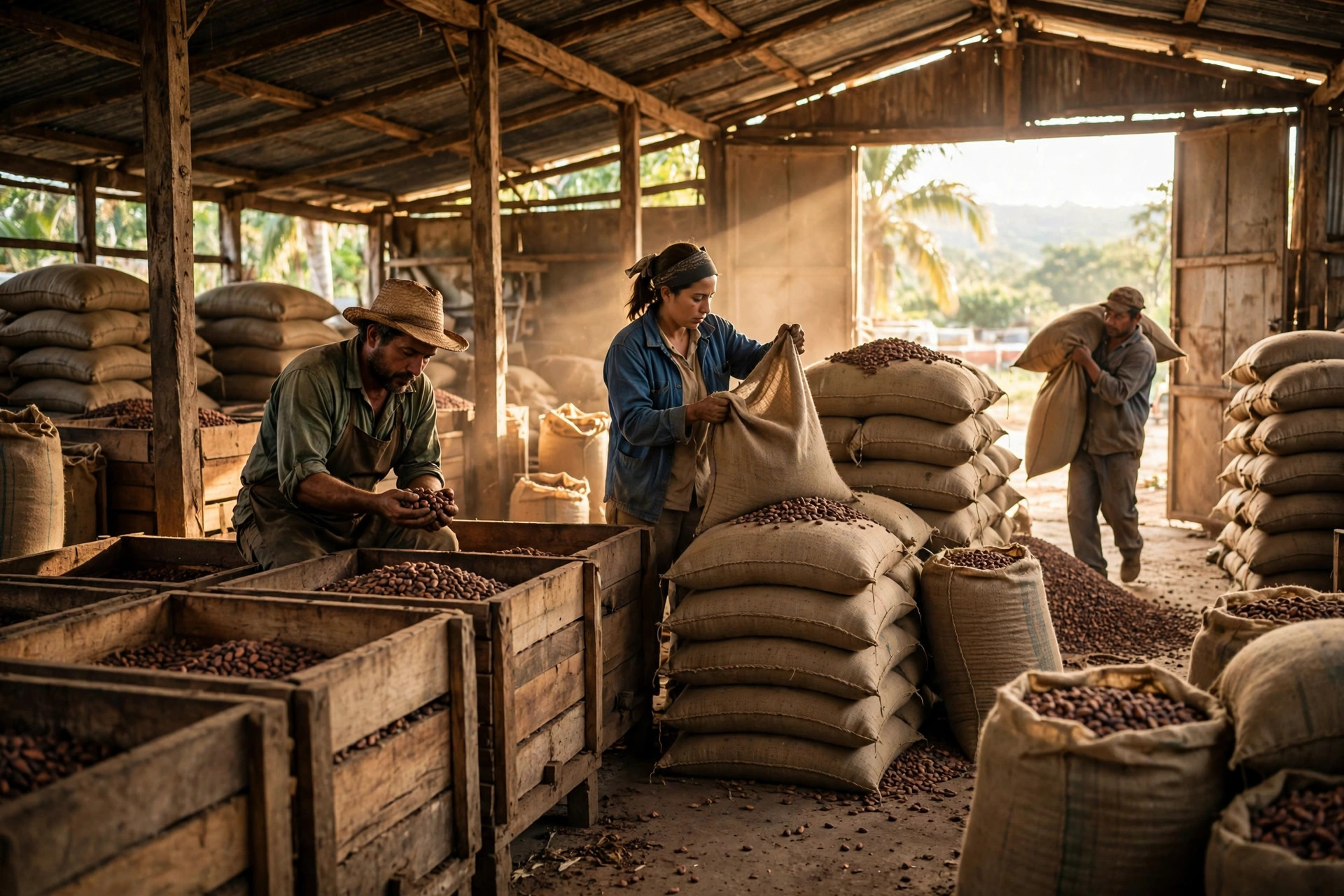
Drying is the first account to settle. Cashews do not fear heat the way they fear being shut up damp. In the rainy season the air is heavy, and kernels that were dried at origin pick up moisture again after days under a truck tarp. So now we slow down at receiving. We open sample sacks. We smell them. We feel them. We look at them. Anything stuffy gets spread thin in the ventilated shed, fans on, turned often. The open yard is for clear mornings only, and we pull the kernels in before the afternoon sun turns harsh. Our veteran, Assura, put it best: drying kernels is not like drying laundry. Laundry just needs to be dry. Over-dry a kernel and it cracks and crumbles, and you pay for it at the grading table.
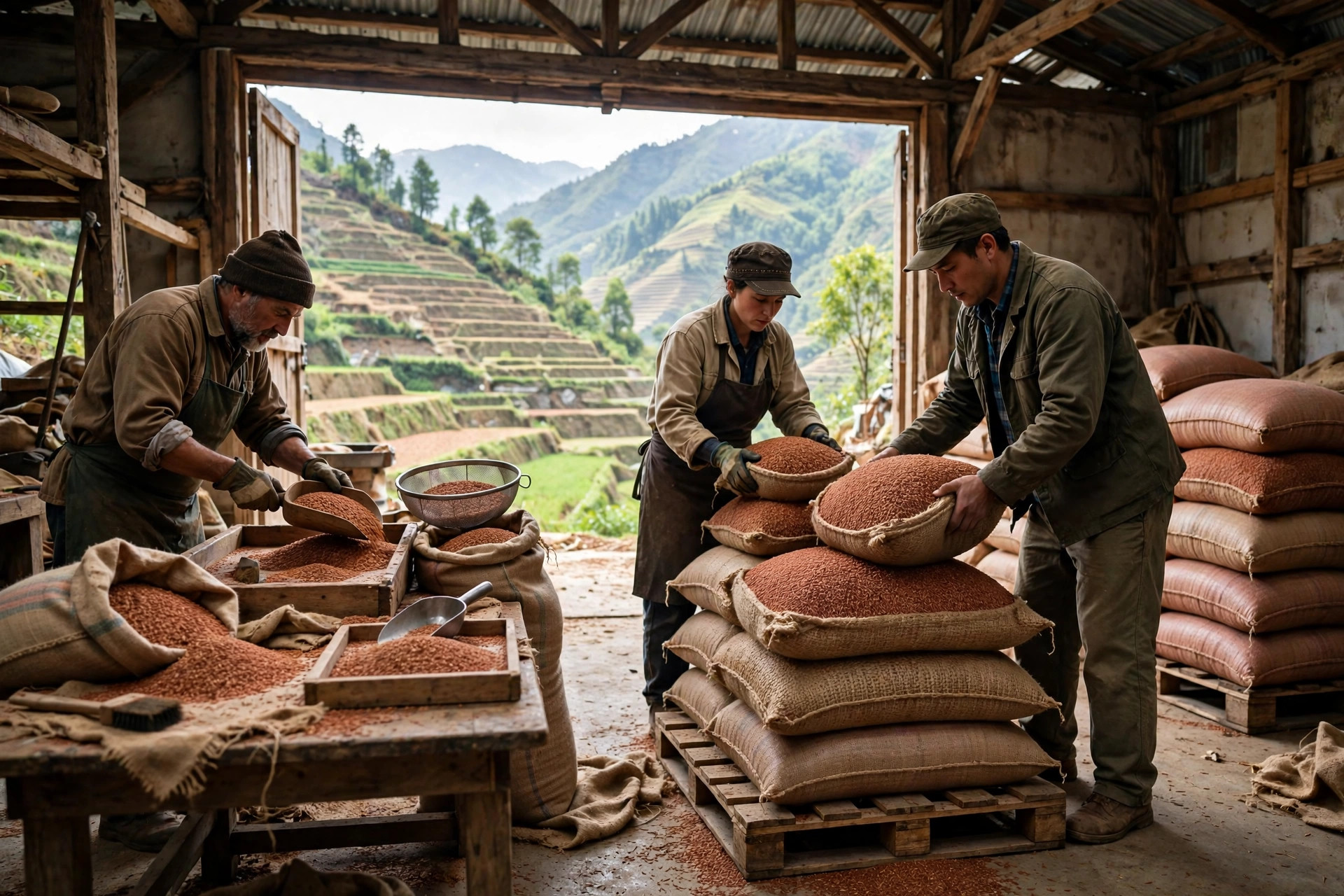
Grading is the second account, and the one most likely to start an argument. One peak-season load, the supplier insisted it was top grade. Maria, our grader, shook her head after half a morning at the table and called it a grade lower. They argued beside the grading table for nearly an hour, voices rising, until I walked over and did something simple. I asked Maria to lay out three piles: whole and full kernels, spotted ones, and the broken bits. One handful from each pile, side by side on the table. The supplier looked, laughed, and gave in. To be honest, grading arguments are never settled by talking louder. Samples settle them. Now every incoming load leaves three small retained samples, marked with the date, the truck number, and the grader's name, and sealed away. If anyone disputes a grade later, we open the sample. We do not reopen the argument.
Moisture protection is the third account, and the one that takes the most patience. In the rainy season the warehouse floor sweats and the corners go first. We learned that from a stack we pushed tight against the wall. Two weeks later we opened it and the wall-side sacks were damp, and the whole stack had to come down and be rechecked. The rule since then is fixed: every stack stands at least a person's width from the wall, everything sits on pallets, nothing touches the floor directly, and corners and roof are checked weekly in the rainy season. We do not wait for a leak to prove itself. Pallet stacking has its own rule too. No solid blocks. Leave air channels through the stack. The forklift crew grumbled at first. Two days working beside a veteran, and the new hands stopped grumbling.
Mozambique Cashew Export Warehouse Storage: Drying, Grading, and Moisture
There is no single trick that covers all three jobs. It depends on the load and the weather. This is the table our crew works from now. A new hand can look at a load, find its row, and mostly get it right.
| Load condition | What we do | Relative cost | Risk |
|---|---|---|---|
| Dry, no stuffy smell | Grade and rack it straight away | Low | Low |
| Slightly stuffy, surface damp | Spread in the ventilated shed, fans on, turn often | Medium | Medium |
| Clearly damp or rained on | Open, re-dry in batches, recheck, keep samples | High | High |
The table is fixed. People are not. When the rain will not stop for days and even the shed cannot dry a load properly, we slow down receiving rather than take in a load we cannot handle. A day of slow receiving costs us a tight roster. A damp load taken in on a busy day costs us sleep for weeks. Folks, that is the difference between counting small money and counting the real bill.
Peak season tests people more than it tests cargo. Trucks queue at the gate, the grading table backs up, and a new hand with a shaky wrist can misgrade a whole batch. Our rule in peak season is simple: the grading table never runs on newcomers alone at night. A veteran always sits beside them, correcting on the spot. The veterans train newcomers with a small basket first: the newcomer grades it, the veteran re-grades it, and the two piles side by side show the newcomer whether their hand was too loose or too tight. Three to five days of that, and speed follows accuracy. The roster goes on the wall where everyone can see it, night shifts and relief shifts marked clearly.
Before any container is sealed, we run our own final check. Smell it again. Open two more sacks and check the grade. Match the retained sample against the date and truck number. Match the paperwork against the cargo name. One wrong word on a document, one wrong mark, and the trouble waits for you at the port. As for export paperwork and inspection requirements, those change over time and differ by destination, so we follow the latest official policy and ask through official channels when we are unsure. Check the latest official policy before you ship. A warehouse can control the condition of its cargo. It cannot guess policy, and it should not try.
The Driver Fight That Wrote Our Cashew Loading Rule
Then there was the driver. One loading day he wanted to pack the container solid, every gap stuffed, to fit more in. I stopped him, and we argued at the container door for a good ten minutes. He thought I was making trouble. I thought he only cared about loading, not about the road. In the end we loaded our way: air gaps left in, sacks kept off the container walls, photographs taken before the doors closed. That load cleared its port check without trouble, and the next time he came, he did not argue. Here is the counter-intuitive part: a fuller container is not a better container. Pack it tight and you trap damp air and crush kernels on a long haul to Maputo. The last step of mozambique cashew export warehouse storage happens the moment the doors close, and if you get greedy there, everything you did right in drying, grading, and moisture protection is wasted.
Our routine is now written on the wall in four lines: check every load by smell and sight before signing; grade it, keep samples, let samples speak; keep stacks off walls, on pallets, with air channels; leave gaps when loading, photograph, then seal. A new hand does not start with a manual. They spend half a day beside a veteran at the grading table, watching two loads get sorted and sampled, and that teaches more than any booklet. On rainy nights, someone who can make decisions stays on site, so when the rain comes, the crew covers and moves cargo without waiting for a phone call. I take responsibility for that call. Morale is built in moments like that, when people are allowed to act first.
So here is my reminder to fellow warehouse folks: do not stare only at tonnage and container counts. Tonnage is for other people to admire. Dampness and broken kernels are the bill you pay yourself. Dry properly. Grade with evidence. Leave room for moisture to escape. And never pack a container just to make it look full. Get those four things right, and when the cargo reaches Maputo, you can sleep at night.
By Chen Feng, Warehouse Operations Manager