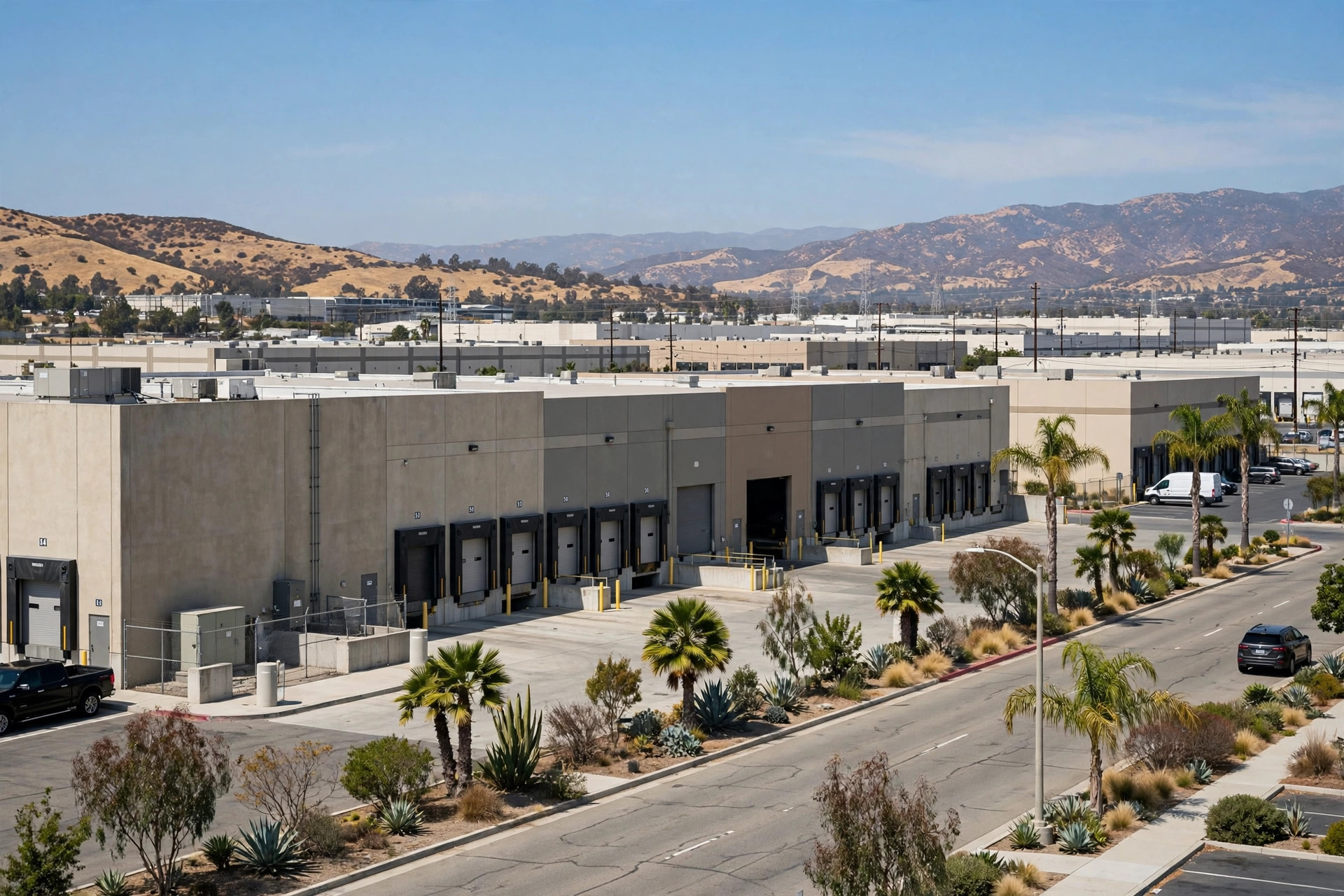
Let's start with the numbers — earthquake insurance numbers. You lease a 100,000-square-foot warehouse in San Bernardino County. Replacement cost: $20 million. Your broker quotes earthquake insurance at $50,000 a year with a 15% deductible. Translation: you pay $50,000 a year, and when the big one hits, the first $3 million comes out of your pocket — the insurer only covers what's above that. Fifty grand a year for a policy you can't touch until you've spent $3 million yourself. Is that money well spent? Don't go by gut. Run the numbers.
Earthquake Insurance Basics: Three Things Most People Get Wrong
First: your commercial property policy doesn't cover earthquakes. Standard commercial property insurance lists earthquake as an exclusion — everywhere in the US, not just California. If you want quake coverage, it's a separate policy.
Second: the California Earthquake Authority won't insure your warehouse. The CEA was created after the 1994 Northridge earthquake and covers residential property only — houses, condos, mobile homes. Commercial buildings need not apply. Warehouse quake coverage comes from the commercial market, where pricing is opaque and terms vary. Get three quotes, minimum.
Third: the deductible is a percentage, not a flat number. Commercial quake deductibles typically run 10% to 25% of the insured value. On $20 million of coverage at 15%, that's $3 million. Fender-benders never reach the claims line — this policy is for catastrophes, not annoyances.
Two Lessons That Actually Happened
On July 5, 2019, at 8:19 p.m., a magnitude 7.1 earthquake struck near Ridgecrest, California — the strongest in the state in 20 years, preceded a day earlier by a 6.4 foreshock. The California Seismic Safety Commission later estimated total damage from the sequence at roughly $4 billion.
A few days after the mainshock, a third-party logistics client of mine in San Bernardino called. His building was far enough from the epicenter to survive structurally, but a dozen-plus pallets shook off the top levels of his high-bay racking. Broken cartons, mixed lots, two and a half days shut down for inventory reconciliation and adjuster arguments. Direct losses plus downtime: north of $400,000. He carried no earthquake insurance. Every dollar came out of his own pocket. His words: "The building is the landlord's. The inventory is mine. And the two days we were down nearly cost me the customer."
Now go back further. The January 17, 1994 Northridge earthquake badly damaged roughly 400 tilt-up warehouses and industrial buildings. The killer detail: in most cases the walls didn't fall — the roof-to-wall connections failed first, and the roofs came down. California later mandated seismic retrofits for older tilt-up buildings. Decades on, plenty of 1970s- and 80s-vintage tilt-ups are still operating across Southern California with their original wall anchors. Take one of those to market and the quote jumps a tier. Insurers aren't running a charity.
Earthquake Insurance Cost: Three Tiers (Sample Estimates)
Disclaimer first: the numbers below are sample estimates to illustrate cost structure, not quotes. Commercial earthquake insurance has no standard pricing — get your own quotes. Assumptions: San Bernardino County, 100,000 sq ft tilt-up warehouse built in 2005, $20 million replacement cost.
| Tier | Covers | Limit | Deductible | Annual premium (sample) |
|---|---|---|---|---|
| A — Full | Building | $20M | 10% ($2M) | $40,000–$60,000 |
| B — Budget | Building | $20M | 15% ($3M) | $25,000–$40,000 |
| C — Tenant | Inventory + business interruption | $10M | 10% | $15,000–$25,000 |
Four variables drive your price: distance to a fault, building age and construction type (old tilt-ups cost the most), whether it's been seismically retrofitted, and the deductible. Per the table, moving the deductible from 10% to 15% cuts the premium by roughly a third — provided you can actually absorb the extra $1 million of retained risk.
Buy or Skip: The Expected-Loss Math
Here's the expected-value framing. You pay $50,000 a year. What you're buying isn't $20 million of protection — it's protection against losses above the $3 million deductible. Reframe the question: over the next 10 years, you'll pay $500,000 in premiums, betting that a quake causes you more than $3 million in damage at least once. Do you put that probability above 10%?
If yes, buy. If no, save the $50,000 and spend it on seismic retrofitting instead — rack bracing, anchor bolts, wall anchors. One capital outlay, and both your premium and your real exposure go down. There's no universal answer to this question, but it is an arithmetic question, not a feelings question. "California has a lot of earthquakes" is not a reason to buy insurance. A computed expected value is.
The Counterintuitive Bit: Bay Area Tenants May Get the Worst Deal
Bay Area warehouse rents run far above Inland Empire levels, and plenty of tenants grit their teeth and buy full building earthquake coverage at tens of thousands a year. That money is wasted.
The building is the landlord's asset, not yours. When the quake comes, the building payout goes into the landlord's pocket — your inventory and your downtime get nothing. What a tenant should buy is Tier C: inventory plus business interruption, covering your goods and your cash flow. The building is the landlord's problem — and with a multi-million-dollar annual lease, you have the leverage to write it into the lease: landlord must maintain full earthquake coverage, or the rent gets a haircut.
Flip it around: Inland Empire owner-operators who own their buildings are the ones for whom Tier A or B makes sense. Same policy, different buyer, completely different value.
Four Levers That Actually Cut the Cost
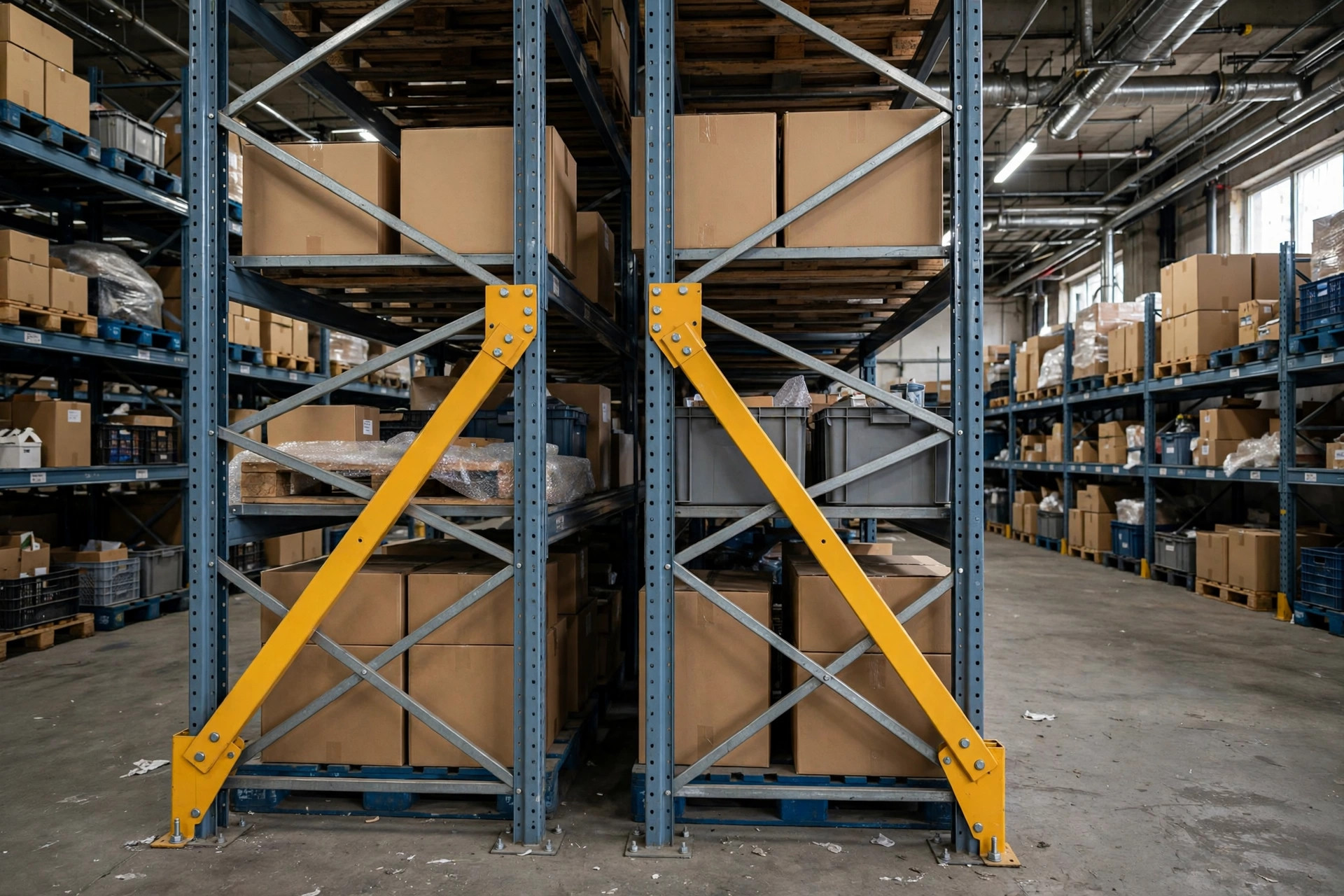
First, retrofit before you quote. Retrofitted buildings price lower. Racking cross-bracing, base-plate anchor bolts, wall anchors on old tilt-ups — the money both cuts the premium and cuts the real loss. Two birds.
Second, raise the deductible — but only within what you can absorb. An operator sitting on $5 million of cash choosing a 15% deductible is rational. One with $1 million in the bank choosing 15% is buying nothing: a $3 million retention you can't fund means you're dead anyway when it hits.
Third, buy separately, not bundled. Building, inventory, and business interruption evaluated on their own. Tenants shouldn't pay to insure the landlord's building; landlords shouldn't pay for the tenant's inventory. Each insures their own.
Fourth, revalue the limit every year. Insure to replacement cost, not purchase price. After a few years of construction inflation, a $20 million limit on a building that now costs $26 million to rebuild is a policy that's quietly hollow.
A Verdict You Can Calculate
One formula to take home. Pull your quote and find two numbers: annual premium P and deductible D (in dollars). Compute P×10÷D.
Above 15%: the policy is expensive — push the deductible up a tier, or spend on retrofitting first and re-quote. Below 8%: buy it; the price is fair relative to the risk you retain. Between 8% and 15%: it comes down to your risk tolerance.
Back to the opening numbers: $50,000 premium, $3 million deductible. 5×10÷300 = 16.7%. Above 15%. Verdict: the quote is rich. Negotiate a retrofit discount, or take the deductible to 20% and ask for a new number. Insurance isn't peace of mind you buy — it's a number you check. If the number doesn't work, the money is wasted.
By Lao Zhou, Logistics Cost Analyst