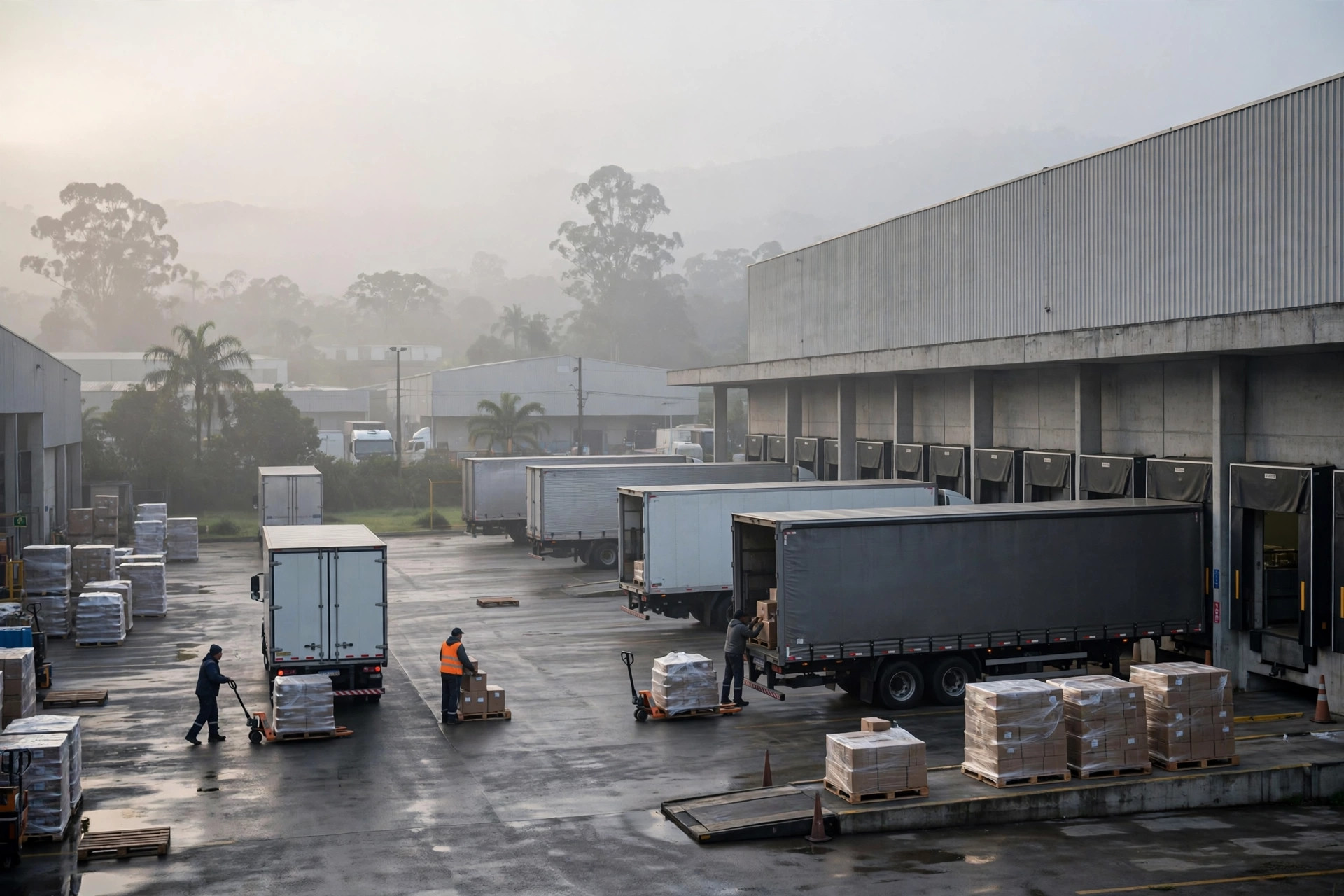
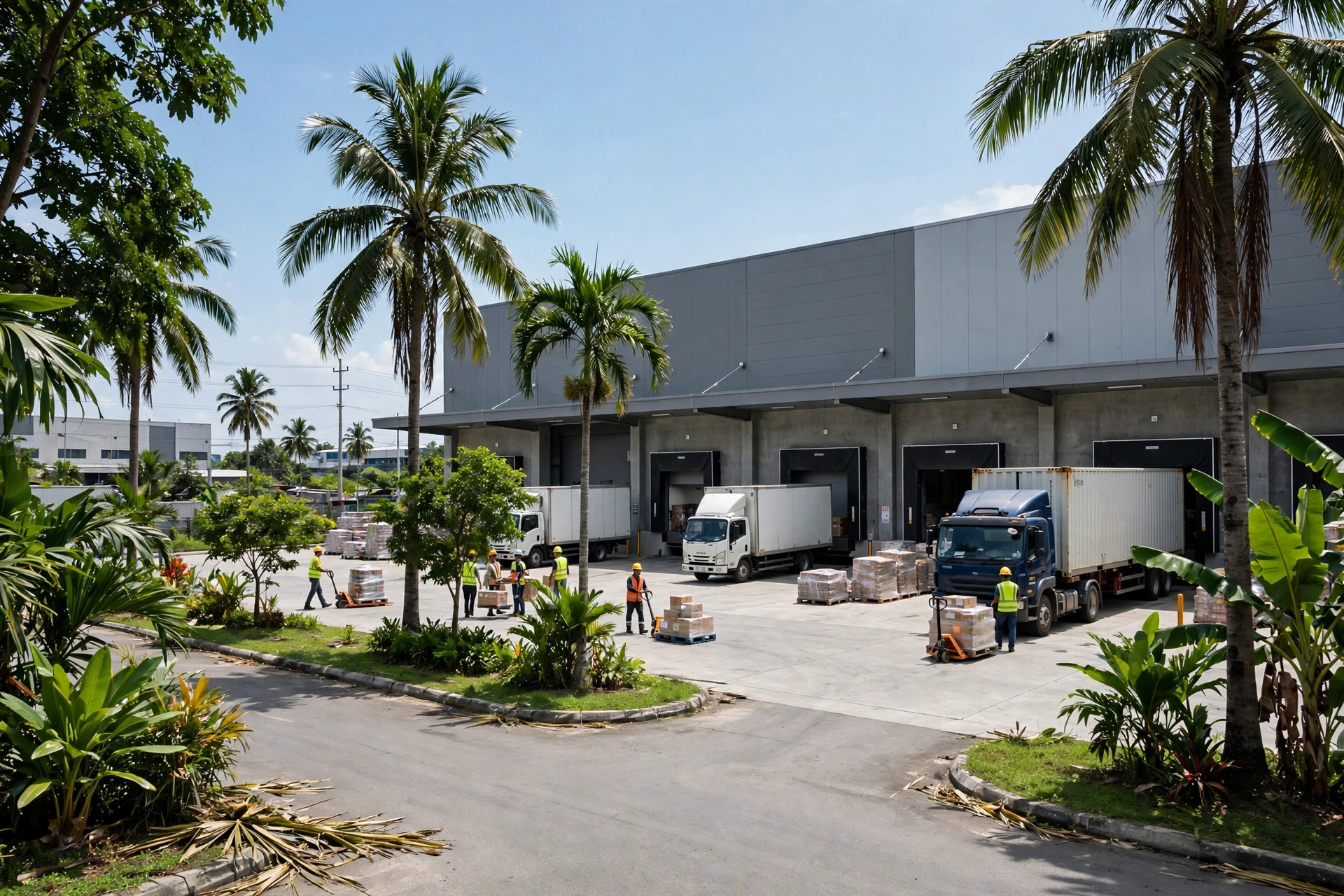
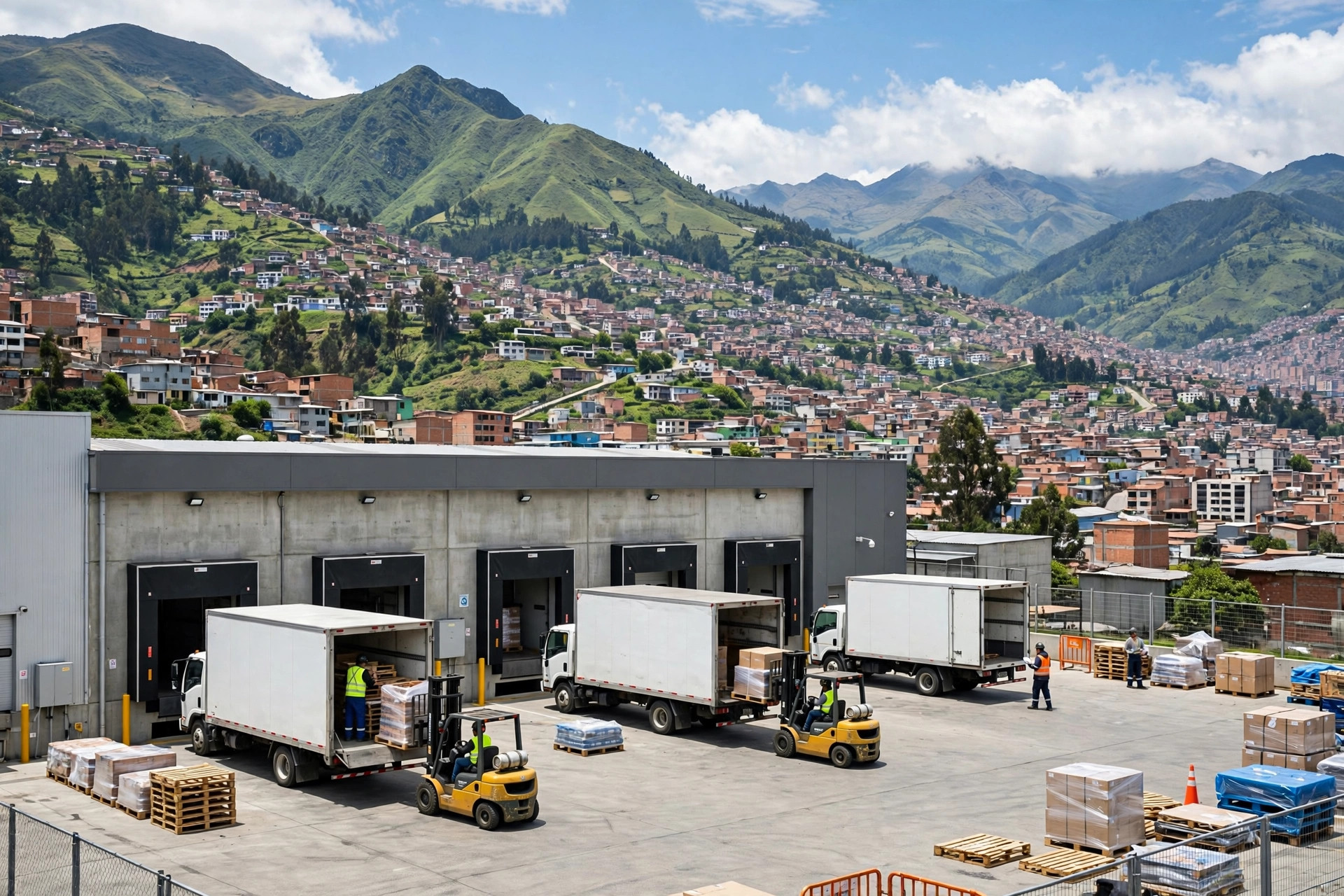
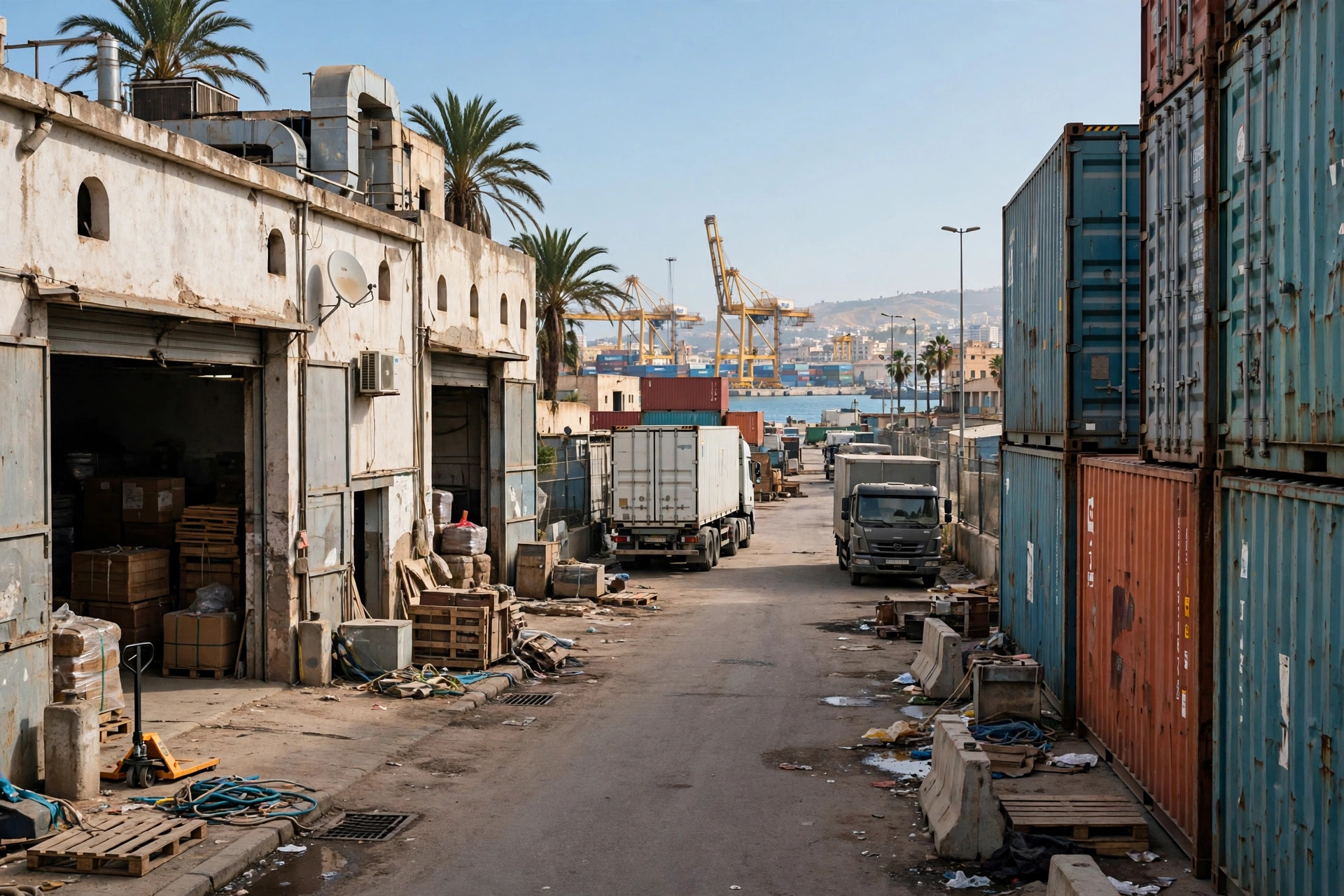
The first fact about Cairo warehouse market logistics is that there is no single Cairo market. Put a warehouse in 6th of October City and put another near the Suez corridor, and a shipper faces two different cost structures, two different fleet logics and two different customer radii. Worse, those logics interfere with each other: a corridor warehouse can save line-haul cost and then lose the saving in last-mile time, while a city-edge warehouse can sit close to orders and then lose service reliability in peak-hour traffic. The question, therefore, is not which location is cheapest. It is which leg of the journey your freight is really paying for.
Cairo Warehouse Market Logistics: Corridor, Industrial Belt or City Node
The supply picture, according to the public geography of the region, falls roughly into three directions. The first runs east toward the Suez corridor, close to the canal hinterland and port-related activity, and suits import distribution, bonded operations and re-export cargo. The second runs west and south-west into satellite industrial belts, notably 6th of October City, where factories and industrial parks concentrate and production-linked storage makes sense. The third sits around Greater Cairo itself, closest to consumption, and suits e-commerce replenishment and urban delivery.
I prefer to classify a location by the direction of the freight before looking at any leasing brochure. Import cargo starts with the port and clearance route. Locally produced cargo starts with the factory cluster. Urban orders start with delivery density and time-window constraints. Once the flow is fixed, the realistic choice usually narrows to one or two directions, and only then does price comparison mean anything. Starting from a supposedly best-value park and forcing the cargo to fit it is, in my observation, the most common source of rework in a Cairo network decision.
Two Worked Scenarios: The Same Cargo, Two Network Bills
Consider a first illustrative scenario, not a named company case. A home-appliance distributor brings in roughly two hundred container-equivalents a month through the Suez direction and serves more than two hundred retail points across Greater Cairo. With a single corridor warehouse, line-haul is consolidated and clearance coordination is simpler. But vehicles heading into the city each day must cover a longer intercity leg, and in peak hours the number of delivery points one vehicle can complete in a day falls noticeably. Add a city satellite warehouse for fast-moving replenishment and urgent orders, and daily delivery productivity recovers, but the operator now pays for a second management overhead and one extra cross-dock handling step.
A second scenario involves a fast-moving consumer goods distributor with about three thousand orders a day, concentrated in Cairo and its near suburbs. A main warehouse in a distant industrial belt keeps line-haul unit cost low, yet stretches the urban delivery window and makes next-day promises fragile during promotional peaks. A main warehouse closer to the city protects service and fulfilment reliability, but the cost level for space and labour is usually higher and expansion headroom is more limited. The two scenarios point in opposite directions, and that is the point: there is no universal optimum, only a fit between order density, service promise and network shape.
The comparison is clearer in a table than in a slogan about cheap rent or short distance.
| Dimension | Suez corridor warehouse | Satellite industrial warehouse | City distribution node |
|---|---|---|---|
| Best suited cargo | Import distribution, re-export | Production-linked, raw materials | Urban orders, high-frequency replenishment |
| Line-haul advantage | Close to port and canal hinterland | Close to factory clusters | Close to consumers |
| Main cost | Long urban delivery leg | Intercity round trips and time volatility | Higher space and labour cost level, limited expansion |
| Key risk | Last-mile time stretches | Capacity strain at promotional peaks | Peak-hour access constraints |
The table is not a selection tool by itself. It is a prompt to interrogate the order profile: what share of orders truly requires next-day delivery, and what share can accept two-day delivery? If next-day orders are only about one fifth of volume, there is no reason to pay city-node costs for the whole inventory. If next-day delivery is a brand promise, corridor line-haul savings should not be used to gamble on urban service levels.
The Counterintuitive Trade-Off in Cairo: Near the Port Is Not Near the Customer
A common error is to treat proximity to a port as proximity to low logistics cost, and Cairo makes that error tempting. Port proximity saves inbound line-haul and coordination cost. But when customers are in Greater Cairo, the larger cost often sits in distribution: vehicle utilisation, drop density, empty return legs and waiting time created by time restrictions. Those costs do not appear on a park quotation. They appear, month by month, in cost per delivered order after operations have been running for a quarter.
A second counterintuitive point concerns satellite industrial locations. Their value is not only a cost level. It is the distance to supporting activity: factories, packaging, repair and inspection services. If freight needs sorting, labelling, assembly or quality checks before outbound shipment, the maturity of that surrounding ecosystem may matter more than a city location. For pure distribution cargo that needs none of those services, placing stock in an industrial belt means paying a distance cost for coordination that will never be used.
My suggested decision sequence for Cairo warehouse market logistics has four steps. First, map order addresses and confirm the city share and peak pattern. Second, choose a main direction from corridor, industrial belt or city node, based on cargo type. Third, test the full chain cost per delivered order, line-haul plus distribution, rather than comparing rent alone. Fourth, protect peak flexibility in the contract: expansion, exit and time-window terms should be written down, and rents and charges should be confirmed against the latest official local information and itemised quotations from parks and logistics providers before signing.
Satellite Cities and the Two-Tier Trend: Judge Freight Already Moving, Not Plans Alone
New cities and satellite cities around Cairo are often presented on the same promotional map, but their freight maturity differs. Some already host substantial factories and industrial parks, with relatively complete fleets, maintenance and labour supply. Others are still climbing a construction curve, where warehouse supply may arrive ahead of demand. The latter can suit a patient, long-horizon entrant, but they are a poor fit for a distribution network that needs volume quickly.
I look for three signals that freight is already moving. The first is daily flow: steady inbound and outbound vehicles, not only visitors during a launch period. The second is available labour: pickers, forklift operators and maintenance staff who can be recruited and retained locally. The third is exception capacity: when a vehicle breaks down, a system fails or orders surge, is there backup transport and space to call on? If two of the three signals are missing, an attractive cost level deserves caution, because the cost of an operational interruption usually exceeds the rent saving.
Structurally, the market appears to be splitting rather than converging. Bulk and import distribution continues to concentrate toward corridors and industrial belts, while urban fulfilment moves closer to orders. For one company, that means a two-tier network: a corridor or industrial warehouse as the inventory centre and a city node as a fulfilment forward point. That structure is more complex to manage. It requires inventory visibility and replenishment rules first, otherwise the forward point easily becomes a second small warehouse that holds a little of everything and enough of nothing.
For smaller shippers, the practical sequence is light before heavy: use third-party or shared space to validate urban order density and service promises, then decide whether to lease a city node for the longer term. Corridor or industrial space can be taken on more flexible terms first and expanded once flow is stable. Reversing that sequence, locking a heavy position before validating the order structure, makes later correction expensive.
That leaves an open question rather than a conclusion. If urban delivery time management tightens over the next five years while corridor industrial support continues to mature, will the network chosen today evolve easily into a two-tier structure, or will it be locked into a single large warehouse? There is no standard answer, but it is a more useful question to answer before signing than asking which park is cheapest.
By Dr. Chen, Supply Chain Researcher