Here is the conclusion up front: in Brazil nut export warehouse storage, the money is made or lost in the weeks after harvest, not at the selling price. The moment a nut falls from the tree, the mould clock starts ticking. Sloppy storage anywhere along the chain, and a whole container can get stopped at a European port over aflatoxin. Put simply, this is a business where you control moisture first and talk price second.
There are two sides to this trade. On one side, volumes look small. On the other, unit prices are high. FAO data puts Brazil's 2024 Brazil nut production at about 34,909 tonnes, the largest in the world and more than 40 percent of global output. Customs data shows Brazil exported about 3,261 tonnes of shelled nuts worth roughly 26.3 million dollars in 2024, plus about 5,725 tonnes in shell worth roughly 13.28 million dollars. Small volumes mean a low tolerance for error. One bad container can wipe out half a season of profit.
The First Test of Brazil Nut Export Warehouse Storage Happens in the Forest
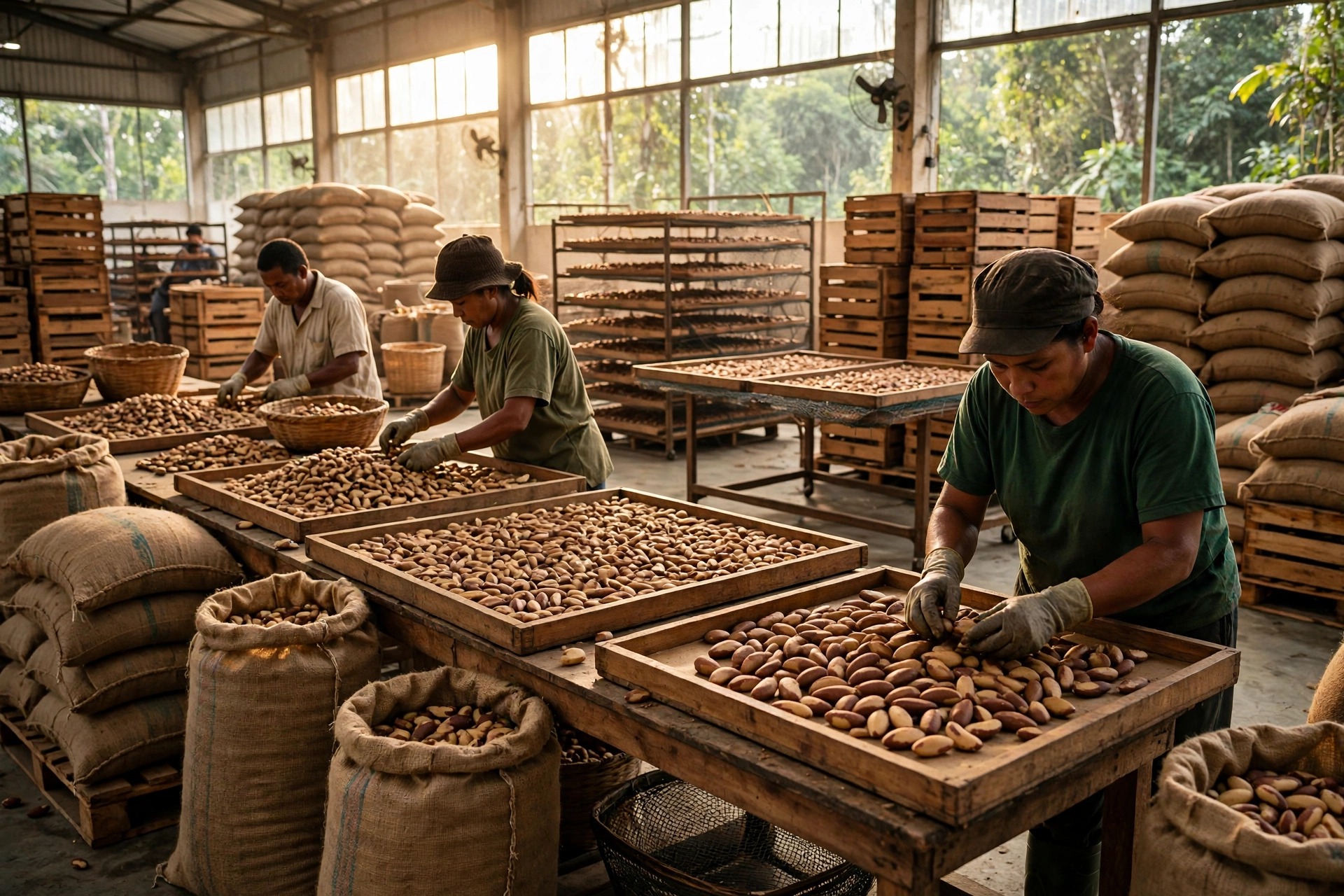
Brazil nuts come from wild trees, not plantations. Every year, during the rainy season from December to March, heavy pods fall from trees dozens of metres tall onto the forest floor. Collectors gather them, split them open, and take out the nuts. Before a pod falls it is sealed. After it lands it starts absorbing moisture, and the rainforest sits around 30 degrees Celsius with humidity often above 80 percent. That is exactly the climate mould loves.
I have seen too many exporters treat the processing plant gate as the start of storage. That is the mistake. A study catalogued by FAO found that aflatoxin formation in Brazil nuts accelerates fastest between 40 and 90 days after collection, precisely because the nuts have not yet reached the final drying stage at the plant. At 97 percent surrounding humidity the toxin formed fast; at 90 percent it formed more slowly; at 80 percent it appeared only sporadically. Every extra day the nuts sit damp in a forest camp or a river boat, the risk climbs.
A processor in Acre state runs the playbook worth copying. They put simple drying sheds at the forest collection points, spread the nuts out the same day they are gathered, never leave them in big piles overnight, lay pallets and tarps in the river boats, and test moisture before anything enters the warehouse. It looks crude. It works: their lots rarely fail aflatoxin testing. A competitor did the opposite, leaving nuts in open piles at a collection point for two weeks in the rainy season. One lot of kernels tested over the limit and had to be downgraded to the local market. The money lost would have built two drying sheds.
Moisture and Mould in Brazil Nut Export Warehouse Storage Are a Numbers Game
The worst habit in nut storage is trusting your hands. Feeling dry is not being dry. Mould does not care about feelings; it cares about moisture and humidity.
A few numbers are worth pinning on the wall. The UNECE standard for Brazil nut kernels caps kernel moisture at 4.5 percent. EU Regulation 2023/915 sets aflatoxin B1 at 5.0 micrograms per kilogram and total aflatoxin at 10.0 for nuts placed on the market, with 8.0 and 15.0 allowed for nuts that will be sorted or physically treated first. University of California Davis postharvest guidance puts Brazil nuts near 7 percent moisture in refrigerated storage, at 0 to 10 degrees Celsius and 55 to 70 percent relative humidity. Above a water activity of 0.85, mould and toxin levels rise sharply. These are not decoration. Buyers check shipments against them.
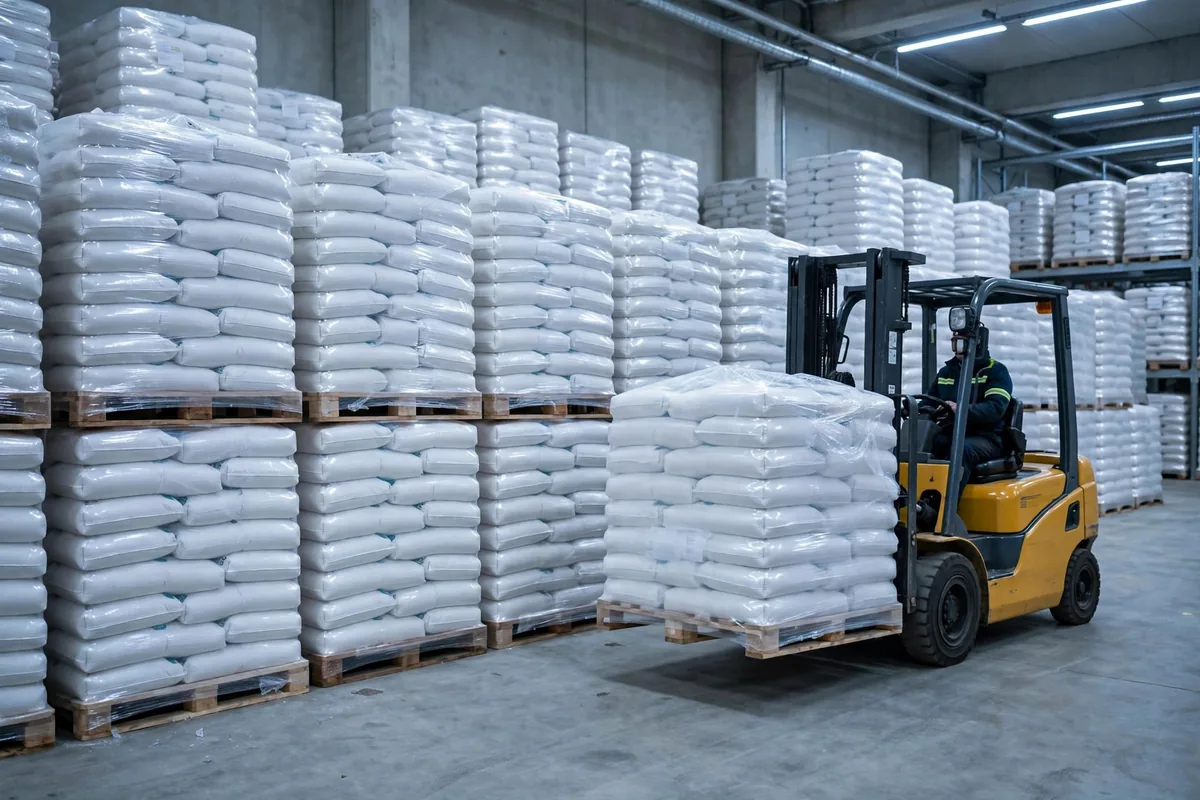
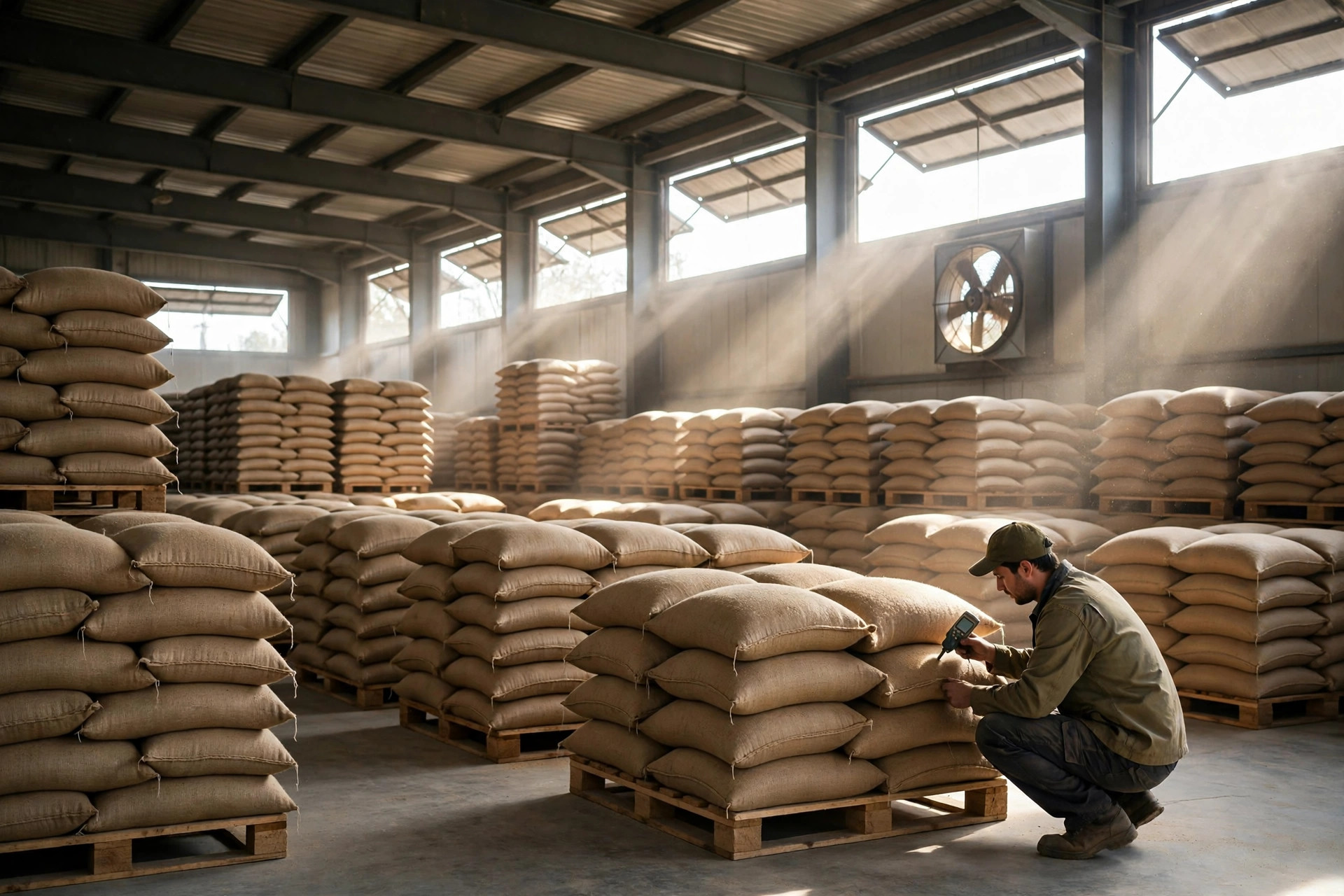
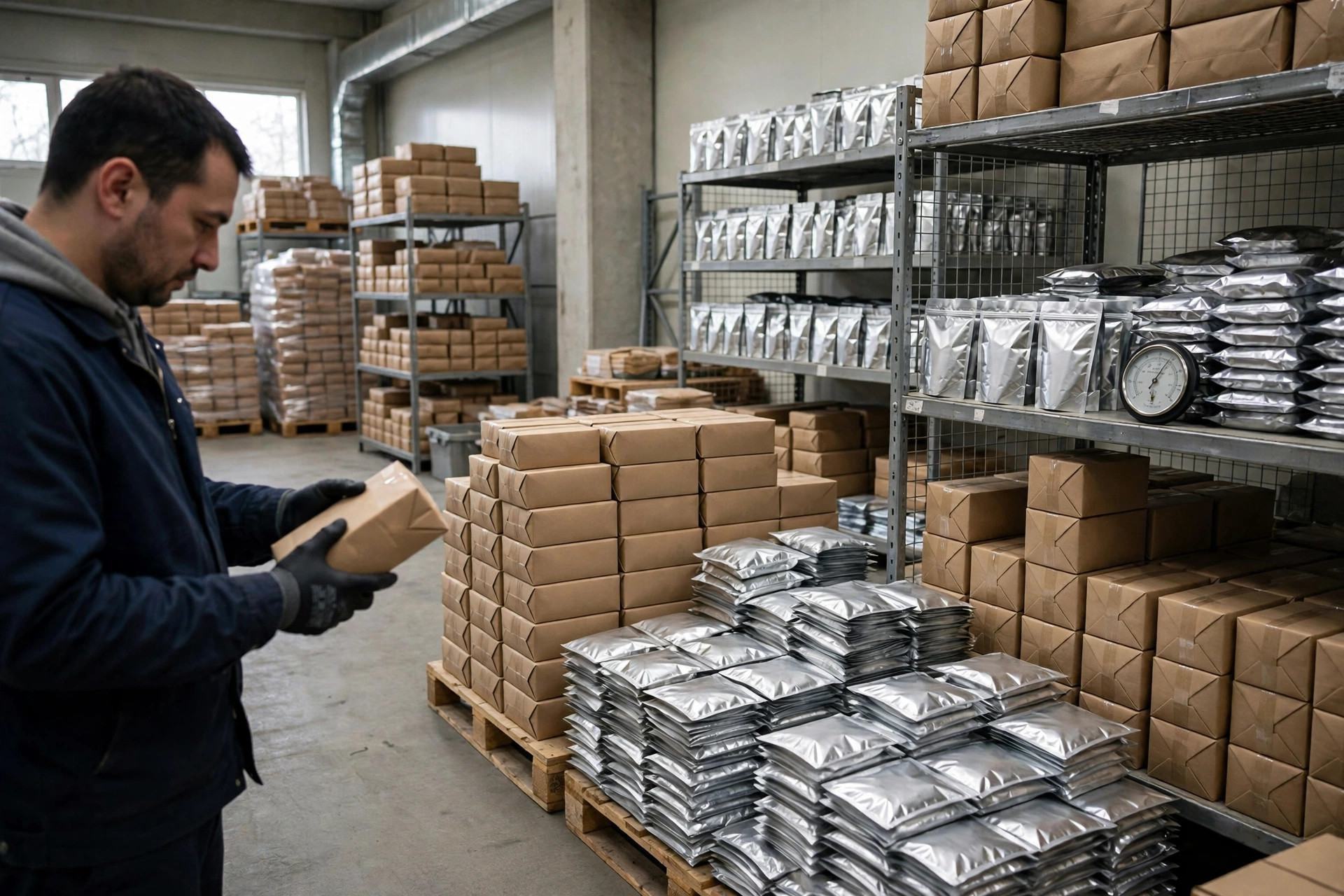
Grading and packing follow the same logic. In-shell and shelled nuts are two different lines. In-shell nuts keep longer but take up space and cost more to ship. Shelled kernels fetch a higher price, but once they pick up moisture, breakage and mould rates both climb. My call is this: for small, high-value lots of kernels, spend the extra money on moisture-proof bags with desiccant, packed into cartons with room for air to move. For bulk in-shell shipments, the priority is ventilation and off-the-floor stacking, with pallets raised, gaps between stacks and walls, and temperature and humidity loggers in the warehouse that someone actually reads and signs off every day.
| Stage | Key action | Number to watch |
|---|---|---|
| Forest collection point | Spread nuts out the same day, no open piles overnight | No pile left longer than 1 day |
| River and road transfer | Pallets off the floor, tarps on, ventilation | No rain, no sealed damp holds |
| Plant intake | Test moisture before warehousing, store by lot | Kernel moisture at or below 4.5% |
| Warehouse | Log temperature and humidity, off-floor stacking, first in first out | 0 to 10 C, 55 to 70% humidity |
| Before shipping | Test each lot for aflatoxin and moisture | B1 at or below 5.0 micrograms per kg |
Do the Math Before the Container Is Stuffed
Consolidation is where shipments most often go wrong. Brazil nut volumes are small, so many exporters share a container. The trouble starts when the nuts share space with other cargo. If the neighbouring goods carry moisture or strong odours, or are high-moisture farm products themselves, the nuts spend two or three weeks at sea soaking in someone else's humidity. Before loading a shared container, ask what else is going in. Never consolidate nuts with high-moisture cargo, add desiccant inside the container, check the container's humidity before loading, and inspect the door seals.
Here is a hypothetical example that makes the point. Take a 20-foot container holding 12 tonnes of shelled kernels worth about 80,000 dollars. Moisture-proof bags, desiccant, lab testing, and temperature and humidity logging cost a few hundred dollars per container. Now flip it: a container rejected or downgraded at destination over aflatoxin easily racks up more than 10,000 dollars in return freight, re-testing, and price cuts, and the cargo can lose half its value. A few hundred dollars against a 10,000-dollar loss is not a calculation you need to run twice.
Here is the counterintuitive part: Brazil grows the most Brazil nuts in the world, but it does not lead the shelled export trade. Customs data shows Bolivia exported about 27,459 tonnes of shelled nuts in 2024, close to 60 percent of the global shelled trade by value. Much of Brazil's crop leaves as in-shell nuts or raw material, while the processing margin and brand premium stay elsewhere. For anyone in warehousing, that is an opening: whoever builds a reliable moisture-control chain from the rainforest to the port can sell steadily into Europe's premium channels instead of selling raw material.
Put simply, Brazil nut export warehouse storage is not about how big the warehouse is. It is about whether someone is watching moisture and time at every step from the forest floor to the container. Drying sheds, humidity logs, and lab reports: get those three right and the nuts stay dry and whole. So here is the question for your own stock: what is the moisture content of the lot you hold right now? If you cannot answer that, nothing else matters.
By Lao Mi, Supply Chain Veteran (20 yrs)