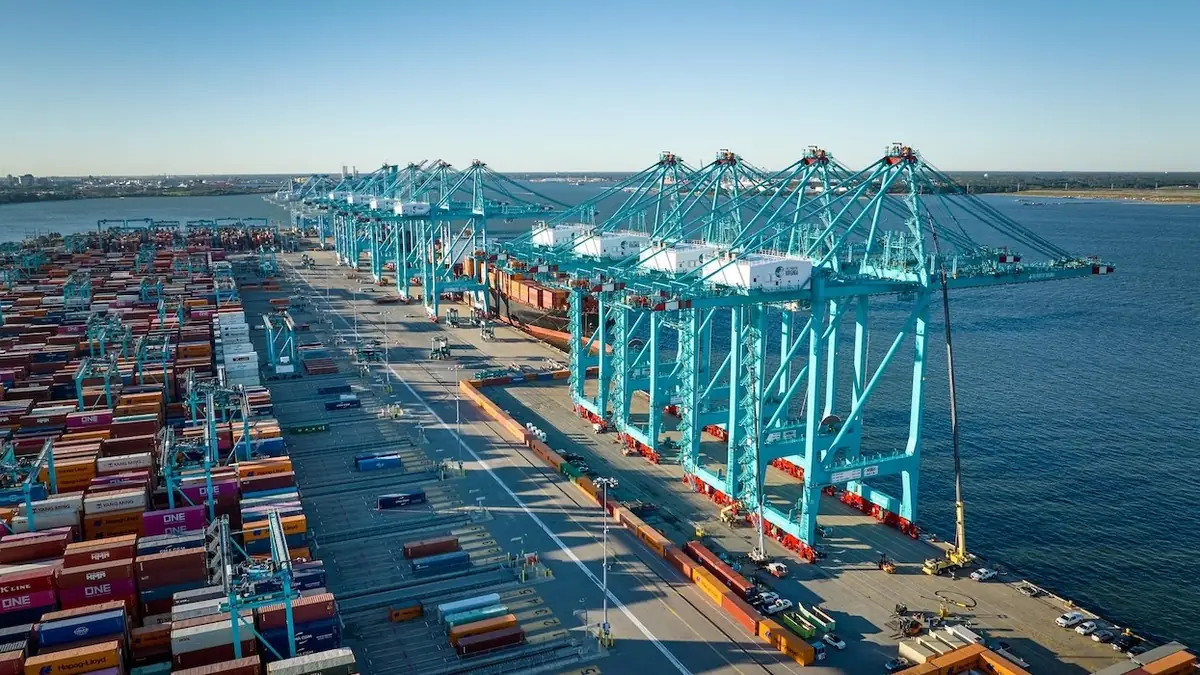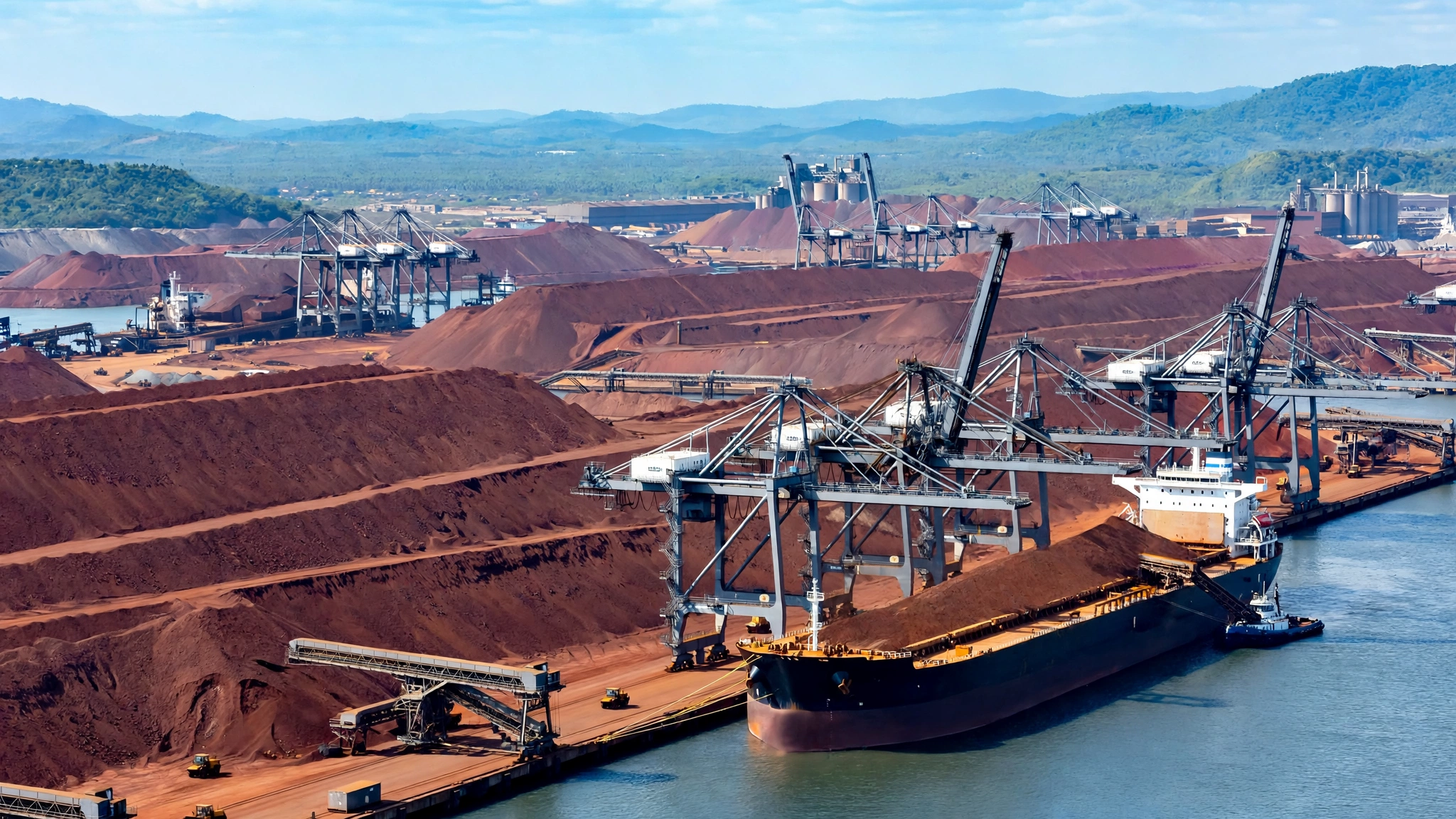
Let me tell you something. After years on the road hauling all kinds of freight, I have learned that Brazil iron ore export warehousing is a different animal altogether. A train rolls out of the Carajás mines, runs the EFC railway north, and unloads at the Ponta da Madeira port in São Luís. One pile at the yard looks like a small mountain, and one Valemax bulker can carry up to 400,000 tonnes.
Most people think the money in this trade sits in the mine and the ship, and the warehouse is just a place to pass through. I see it the other way around. The port is where cargo owners lose money most easily. Ore comes off the train, gets stockpiled, blended, and waits for its vessel. Any link in that chain that jams up costs real cash.
When the train arrives, the yard has to be ready
The ore from Carajás travels the EFC railway to São Luís, a line built for heavy haul. One train carries what hundreds of trucks would. The first job at the port is to unload into the stockyard. The port of São Luís handles around 15 million tonnes of iron ore a month. At that scale, a yard is not just an open space. It has to be divided by grade, by batch, and by vessel schedule.
I saw a cargo owner learn this the hard way. His ore arrived in two batches with different grades. On the yard map they were separate piles, but during operations the loader driver stacked the second batch right next to the first to save one rehandle, with only a dirt ridge between them. Then it rained. The surface washed together, the sample came back off-spec, and the vessel nearly refused to load. They spent two extra days screening and re-sampling, and the sailing slipped a day.
It is a classic bulk-yard mistake: two piles that look separated but are not. My rule of thumb is simple, and I keep three numbers in my head. Keep enough room between piles of different grades for a loader to turn around. Tag every pile with its batch, grade, and arrival date. And sample at fixed points, not just the top of the pile, but the middle and the bottom too. If you cannot do those three things, the size of your yard does not matter.
Blending the iron ore decides whether the contract gets honored
Once the ore is in the yard, there is one job you cannot skip: blending. Ore coming out of the mine varies in grade, and the contract calls for a fixed number, say 62 or 65. So you mix ores of different grades in the right ratio to hit the contracted grade. Get it right and the cargo settles at the contract price. Get it wrong and you are renegotiating.
I once talked with an old blending hand at the port. He told me the two kinds of people he distrusts most: the ones who blend by feel, figuring "close enough is good enough," until the lab result comes back a few tenths off and the price has to be reworked; and the ones who play it too safe, throwing in high-grade ore to guarantee the number, when that high-grade ore could have sold for a better price on its own. Either way, money leaks out.
His method stuck with me. First, put it all in one table: every batch you hold, how many tonnes, what grade, what moisture. Then work backward from each vessel to figure out how much of each batch goes in. Do a small trial blend first, check the lab result, and only then scale up. Keep a retained sample after blending, because if the discharge port disputes the assay later, that sample is your evidence.
Here is the counterintuitive part. People think blending is about watering down good ore. Look at it the other way: blending is how every tonne gets sold at the right price. High-grade ore sold alone earns its premium, and low-grade ore blended to spec earns its keep. What really loses money is not blending at all, blending carelessly, or blending without lab records and retained samples.
Iron ore moisture: light on the bill, heavy on the risk
The most dangerous number in iron ore is moisture. Wet ore weighs more, and buyers settle on a dry basis, so every tonne of water you ship is freight paid for nothing. Worse, ore above its transportable moisture limit, the TML, can liquefy at sea. The cargo shifts like quicksand when the ship rolls, the center of gravity moves, and the consequences can be catastrophic.
In all my years on the road, the words I dread most are "something happened to the cargo at sea." Iron ore liquefaction is the nightmare scenario. In principle, cargo above the TML should never be loaded. In practice, people gamble. Ore arrives in the rainy season, the surface looks dry while the inside is still wet, the sampler only takes the surface, the lab passes it, and the ship sails. Win that bet and you save a few days. Lose it and you lose a ship.
My advice to cargo owners is threefold. In the rainy season, stockpiles need cover or drainage; leaving ore in the open while waiting for a vessel is asking for trouble. Sample in layers, top, middle, and bottom, because a surface-only sample is no sample at all. And make sure the moisture figures agree across the cargo owner, the shipping line, and the inspection agency. If any one of them says the cargo is over the limit, stop and recheck. A sailing date can move. Safety cannot.
Adding it all up: where the money actually goes
Take one 400,000-tonne Valemax sailing. The ship's capacity is fixed. All the variables sit at the port. One extra day in the stockyard is a cost. One rework of a blend is a cost. One failed assay that has to be redone is a cost. One day of vessel delay is demurrage. Each item on its own looks small, but add them up over a single shipment and the port segment often costs more than the rail haul from the mine to the port.
I like a clumsy but honest way of costing it out: list every day and every step from the moment the cargo enters the port to the moment the ship leaves, and next to each one write what was done and what it cost. When you finish the list, you will find that the real money burners are not equipment and labor. They are waiting and rework. Poor yard separation that forces rehandling, sloppy blending that forces re-blending, and bad sampling that forces re-testing. Those three together cost more than renting the yard itself.
Flip it around and the savings are just as clear. Get the yard layout right the first time, calculate the blend before you mix, and sample in layers with retained samples. Do those three things and the port segment rarely goes badly wrong. You save money and you save the sailing schedule.
One more number worth watching: from January to September 2026, Ponta da Madeira shipped about 78.8 million tonnes to China, down roughly 11% year on year. Volumes are softer, which means port operations are shifting too. Berth windows may be looser, or they may bunch up. My advice is that a softer market is exactly the right time to fix your port process. Wait until volumes surge again and it will be too late. Vale's full-year production guidance is 335 to 345 million tonnes, so the cargo is not going away. The basics at the port are worth fixing now.
After all these years, I have come to believe that bulk export comes down, in the end, not to who has the biggest ship or the richest mine, but to who is most careful at the port. Getting the train in on time is the easy part. The hard part is making sure every pile is separated, every blend is calculated, and every sample holds up. Get those three things right and the warehousing leg of the Brazil iron ore chain will not hold you back.
By Shifu Zhao, Trucking Veteran (15 yrs)