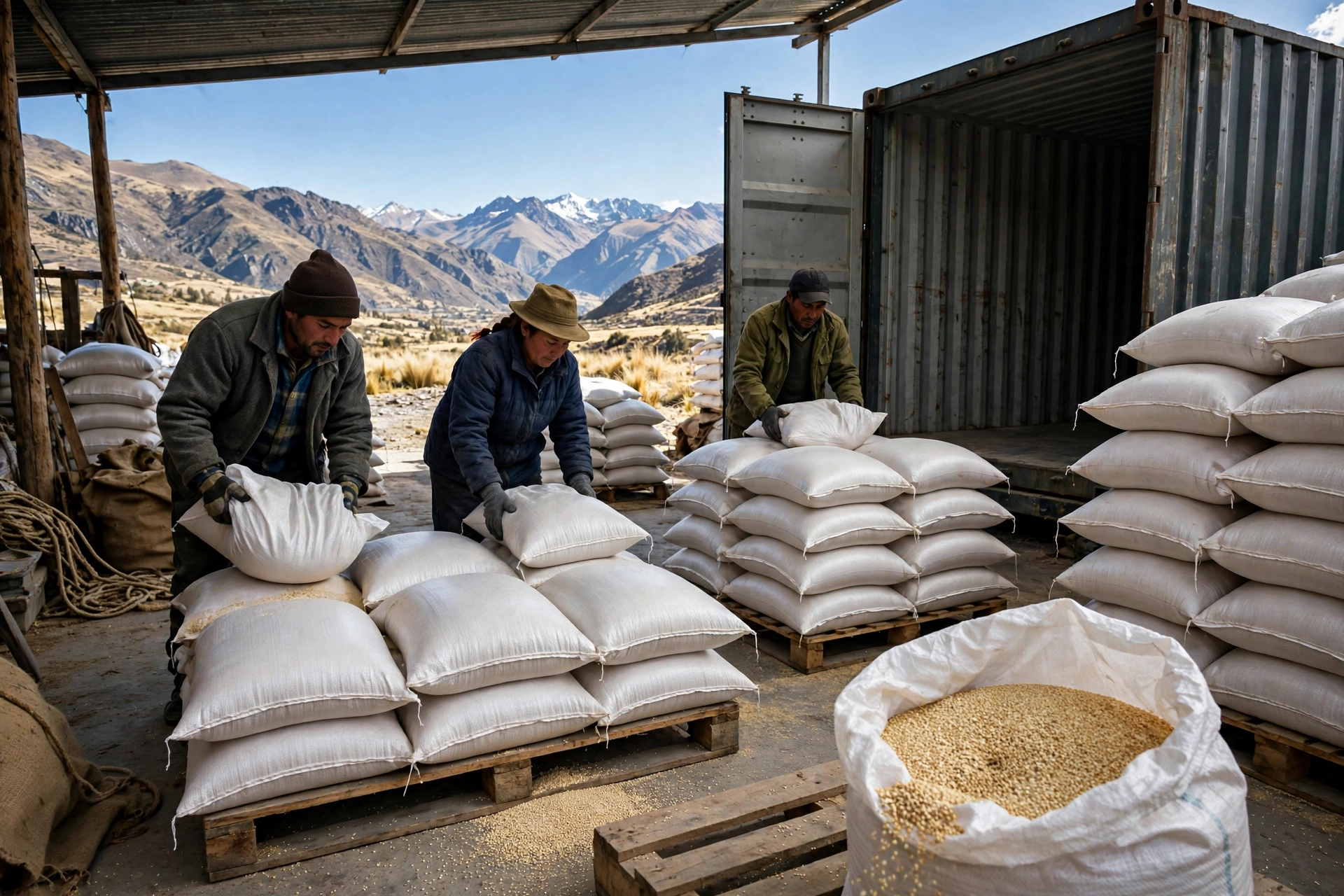
Put plainly, the Bolivia quinoa export warehouse bill is only half settled in the field. The other half is settled in the warehouse and on the road. In 2024 Bolivia grew about 50,000 tonnes of quinoa and exported nearly 30,000 tonnes worth roughly $85 million. That is a small volume for the world's second-largest producing country, which means the margin for error is far thinner than with bulk grain. One bad container is not a discount negotiation — it is a rejected load and a buyer who switches suppliers. Look at it from both sides: on one side, the highland air is dry and quinoa stores well by nature; on the other, that natural advantage is exactly what makes people careless, and moisture and breakage both happen precisely where people assume nothing can go wrong.
I have seen too many Andean farm exporters fall into the same trap: assuming that because the origin is dry, the cargo cannot get damp. A few years ago, an exporter of Andean produce came to me after a container arrived at a European port. The outside of the bags looked fine. Open them up and the grain inside had caked and gone moldy, and the buyer rejected the whole container. The fault was not in the ocean leg. It was in the warehouse: after the saponin was washed off, the grain had not been dried thoroughly enough. Once the bags were sealed, the trapped moisture had nowhere to go, and over several weeks at sea the mold grew. The cargo was ruined in the warehouse. It was only discovered at the port.
The Highland Ledger: Where the Quinoa Comes From, Where It Goes
Bolivian quinoa grows on the Altiplano, a high plateau averaging about 3,750 meters above sea level. The main producing belt is the Intersalar region around the Salar de Uyuni salt flat, centered on the departments of Oruro and Potosi. The flagship variety is Royal quinoa, a large-grain type that grows only around the salt flats. High altitude, wide day-night temperature swings, and little rain give the grain a small, hard kernel with naturally low moisture. That is the good news and the bad news at once: the grain comes in dry, so people relax — and the moment they relax, moisture control slips.
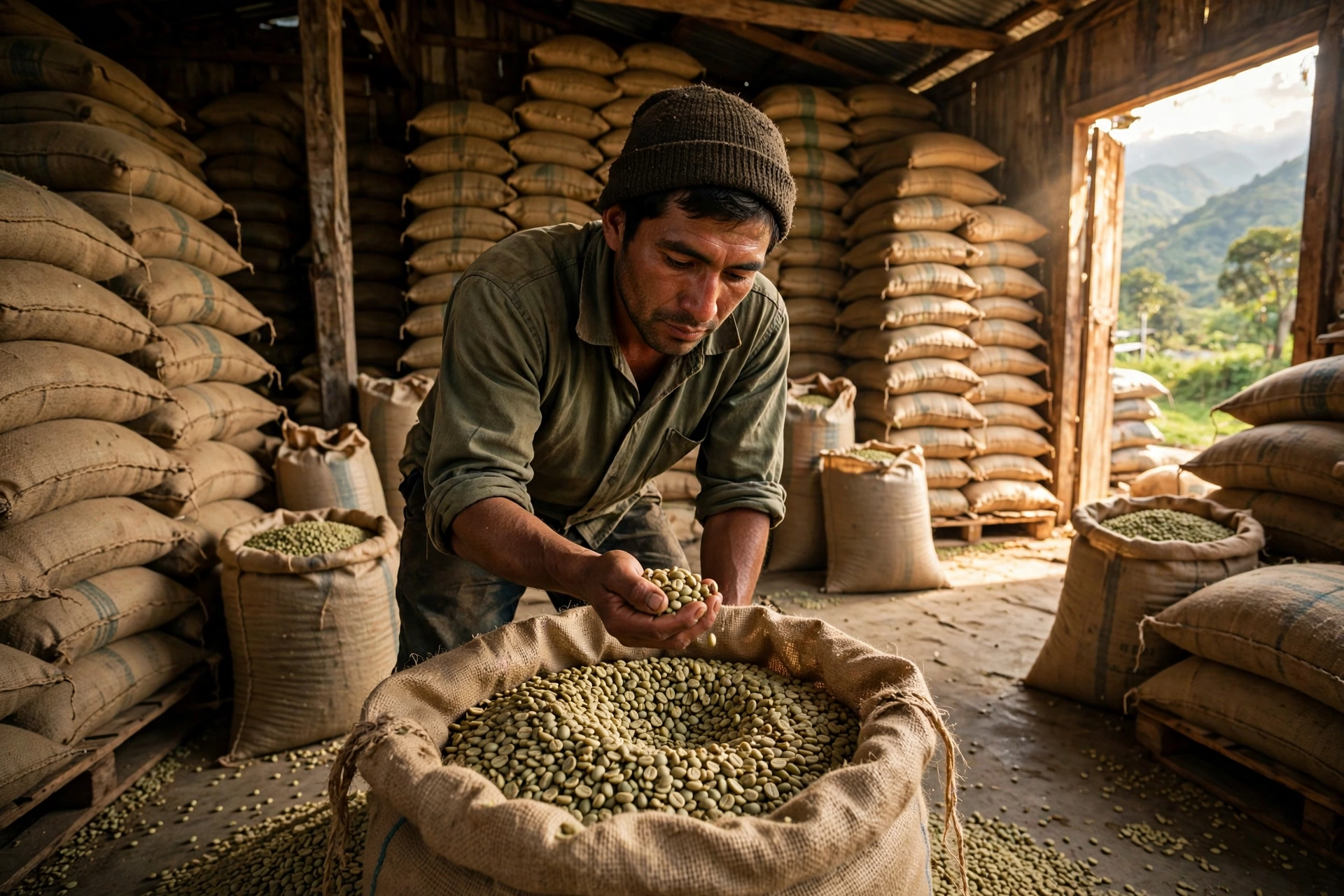
Collection is where the warehouse bill starts. Highland smallholders are scattered, so one shipment is assembled from dozens of farms, each with different moisture content and impurity levels. The first job on arrival is screening, cleaning, and moisture testing, then storing by batch. Good and bad lots are never mixed. Mix them and the wettest lot drags the whole store's average moisture upward, and mold starts in those few bags first. Batch intake, separate stacking, and a retained sample from every batch look old-fashioned. They are the precondition for everything downstream.
Organic status has to be secured in the warehouse too. Most Bolivian quinoa for export is organic, and buyers pay for certification and traceability, not for promises. Organic and conventional grain need separate stores, separate lines, and separate bags, with batch numbers that trace all the way back to the collection point and the farmer. One conventional bag mixed into an organic lot voids the organic identity of the whole lot. Certifiers audit the records, not your word. If the warehouse does not do traceability, nobody downstream can patch it in.
Keeping Quinoa Dry and Whole: The Washing and Drying Gauntlet
Every quinoa seed carries a layer of saponin on its coat — bitter, soapy-tasting, and inedible until removed. The processing route is fixed: abrade the grain to strip most of the coating, wash it several times to rinse away the rest, then dry it to safe moisture before bagging. Washing and drying are two sides of the same bill. Wash it poorly and the buyer tastes bitterness the moment the grain is soaked. Dry it poorly and the sealed bag becomes a mold incubator. The guidance from research and industry sources converges: keep quinoa storage moisture below 12%, with a prudent warehouse target of 8% to 10%, at 10 to 20°C and 50% to 60% relative humidity. Those numbers are not guesses. They are the line between safe storage and mold and insects.
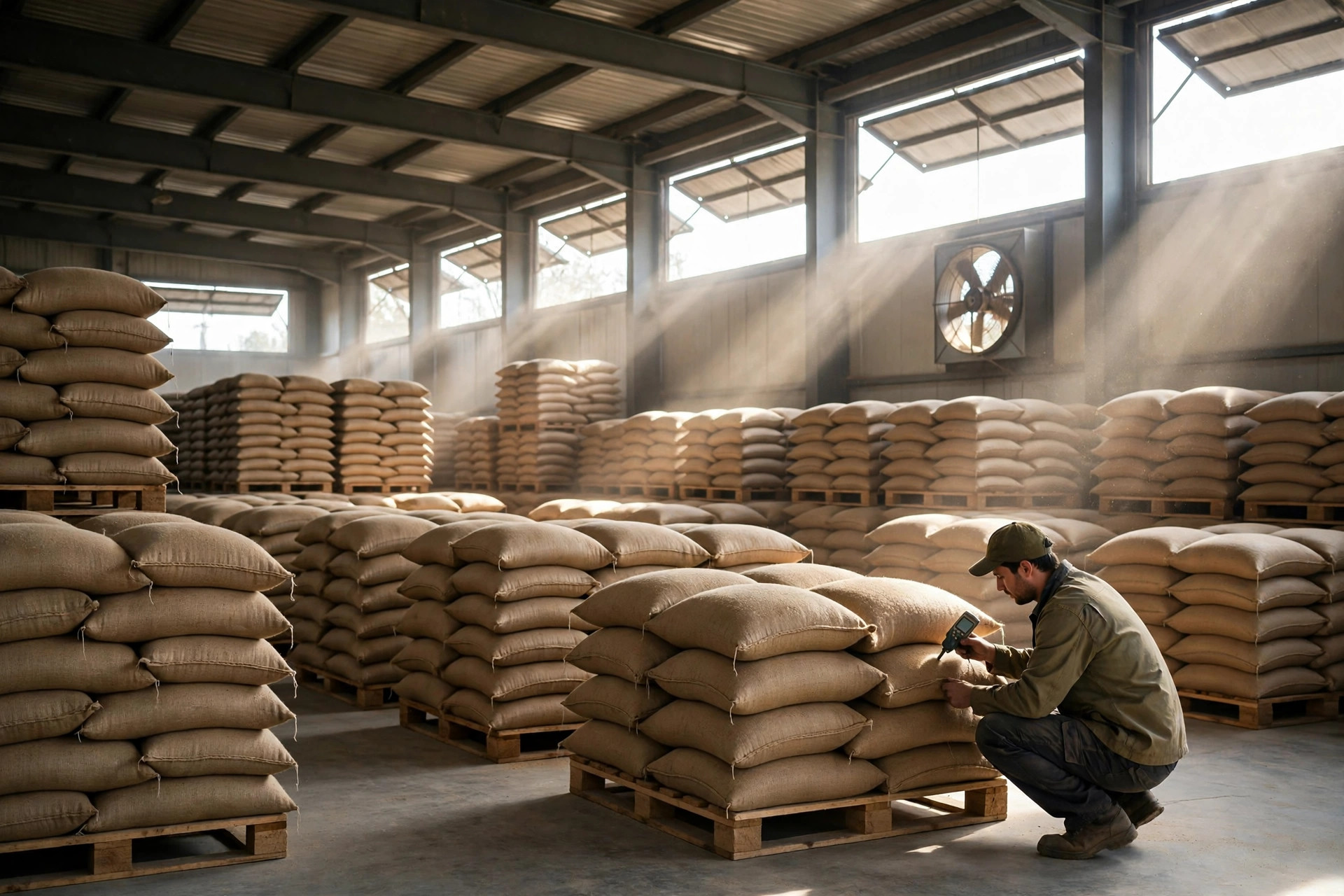
Here is the counterintuitive part: dry highland air does not mean a dry warehouse. The Altiplano's day-night temperature swing is wide. Bags warmed by the daytime sun cool at night, and the temperature gap condenses moisture on the inside of the bag. Grain that looks bone-dry at noon is quietly sweating inside its bag at midnight. So moisture control is not about keeping the warehouse door shut. It is about the bag itself: a moisture-barrier liner, pallets that keep bags off the floor, and ventilation gaps between stacks. Skip any one of the three and the condensation risk roughly doubles.
Breakage is the other bill. Quinoa kernels are small, and buyers check the whole-grain rate after color sorting. Breakage comes from two places: over-aggressive abrasion in processing, and rough handling in loading. Abrasion pressure has to be tuned per batch — old and new grain have different coat thickness, and one setting for everything breaks the same lot every time. Handling is even more direct: bags thrown off trucks, forklift forks catching bag corners, stacks piled too high — the broken-grain rate creeps up a little at a time. My rule is fixed: bagged grain is never thrown, stack height follows what the bags can bear, and the grain is screened for broken kernels and impurities before color sorting, not when the buyer inspects it.
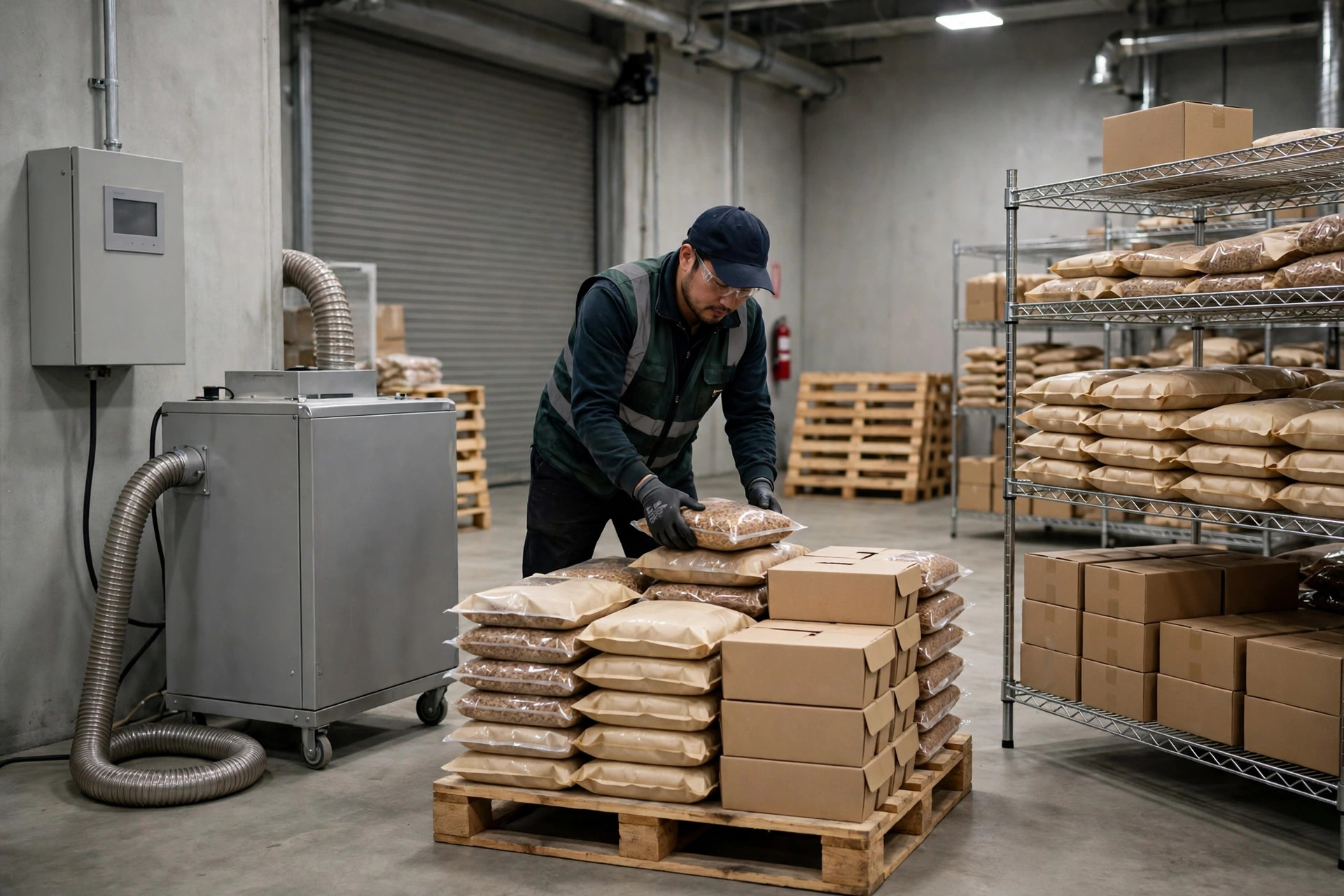
There is one more gate before bagging: retest the moisture. Every batch is tested again after drying and before sealing. Anything above 12% goes back to the dryer. No sealing on a hope. A moisture test takes a few minutes; skipping it gambles a whole container. And one detail that gets missed often: washed and dried quinoa needs woven bags with a moisture-barrier liner. Plain jute or cloth sacks hold up fine on the highlands. Inside an ocean container they are a leaky bucket.
From Landlocked Bolivia to the Container: The Quinoa Export Leg Tests the Warehouse
Bolivia is landlocked and has no seaport of its own. Export cargo travels overland to the Chilean port of Arica before it boards a ship. That is the longest overland leg in the chain, and the easiest place for warehouse discipline to break down: grain that was dry in the highland store meets a different climate while it waits at the port warehouse, and the moisture comes back.
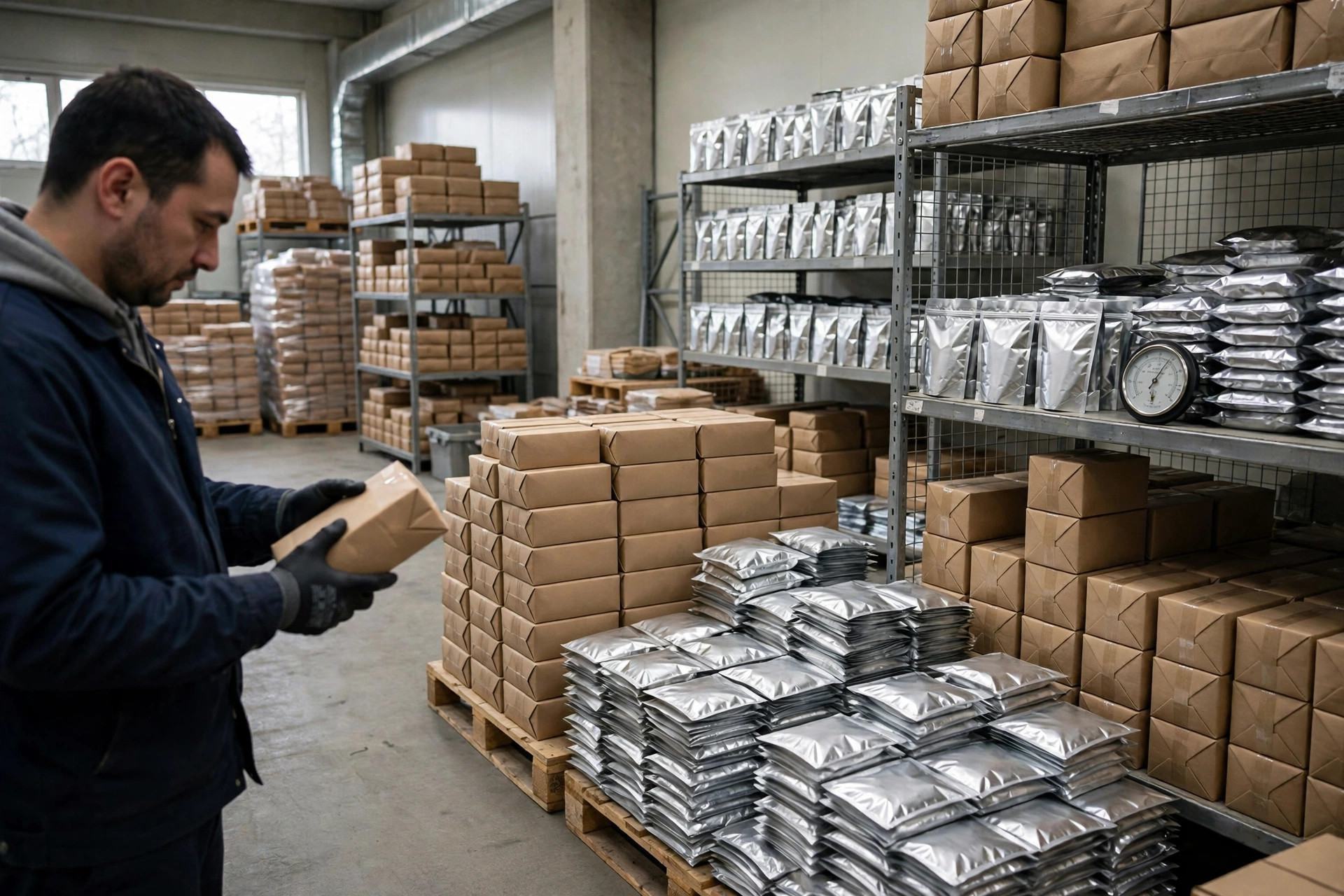
I insist on three things before stuffing. First, inspect the container: holes in the walls, worn door seals, stains or smells left by the previous cargo. A failed box is rejected on the spot — no making do. Second, leave a gap between the bags and the container walls, and keep the cargo on pallets or dunnage off the floor. Container walls condense at night, and the row of bags touching the wall suffers first. Third, put desiccant in the container, in quantities matched to the container size and the voyage, and record it on the packing list. The buyer sees it when the doors open, and in a claim it is evidence.
Run the hypothetical numbers and the value of moisture control is obvious. Assume a 20-foot container loaded with 24 tonnes of quinoa. At Bolivia's 2024 average export price of about $2,873 per tonne, the container holds roughly $69,000 of cargo — 24 times 2,873 equals $68,952. Moisture-barrier liner bags, desiccant, container inspection, and moisture retesting together add, say, $300 per container — about 0.4% of the cargo value. One container rejected for moisture costs the full cargo value plus return freight and re-shipping, tens of thousands of dollars. Three hundred dollars against $69,000. That calculation does not need a second pass.
Documents are part of the warehouse bill too, and they have to be ready before the cargo leaves the store: certificate of origin, phytosanitary certificate, organic certification, and batch test reports. Miss one and the cargo sits in the port warehouse, with storage and demurrage charges adding up day by day. Paperwork hates last-minute fixes most of all. Discovering at the port that the batch number on the phytosanitary certificate does not match the bags means opening the container and relabeling — ten times the cost of checking it before loading.
One last piece of advice: do not treat the highland dryness as insurance. The Altiplano only gives you a starting point. Cargo arrives dry and whole because four things all happen — the saponin is washed off properly, the grain is dried thoroughly, the bags block moisture, and the container is inspected. Whichever one you decide to skip is the one the buyer will write on the rejection notice. By Lao Mi, Supply Chain Veteran (20 yrs)