Let me be blunt about the etsy seller fulfillment warehouse question: almost every Etsy seller I know starts out convinced that shipping from home is the cheapest option, and almost every one of them learns the hard way in December that the money they saved came straight out of their sleep and their star rating. I have sold handmade and personalized goods for five years. I made this mistake in full. Here is the math I wish someone had shown me earlier.
Etsy is not Amazon. Amazon is standardized products racing on speed. Etsy is small batches, hundreds of SKUs, personalization, handwritten notes, and buyers who are paying for the feeling that a real person made and packed their order. Hand all of that to a warehouse that only knows how to slap on a label, and you lose exactly the thing your customers paid for. The real question is never warehouse or no warehouse. It is which part of your catalog stays with you and which part goes out.
The etsy seller fulfillment warehouse line: volume first, customization second
Here is the rough dividing line I have used for three years.
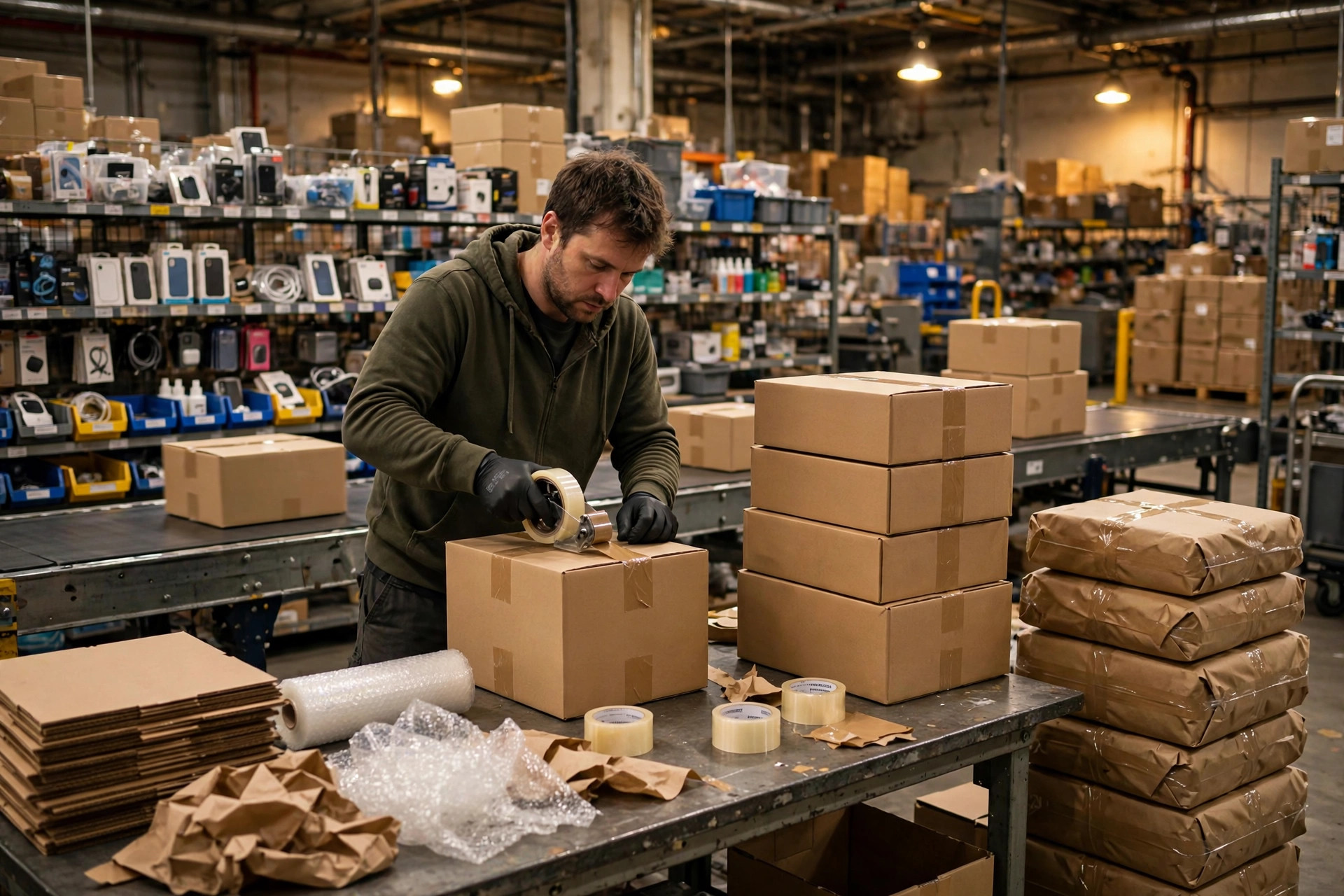
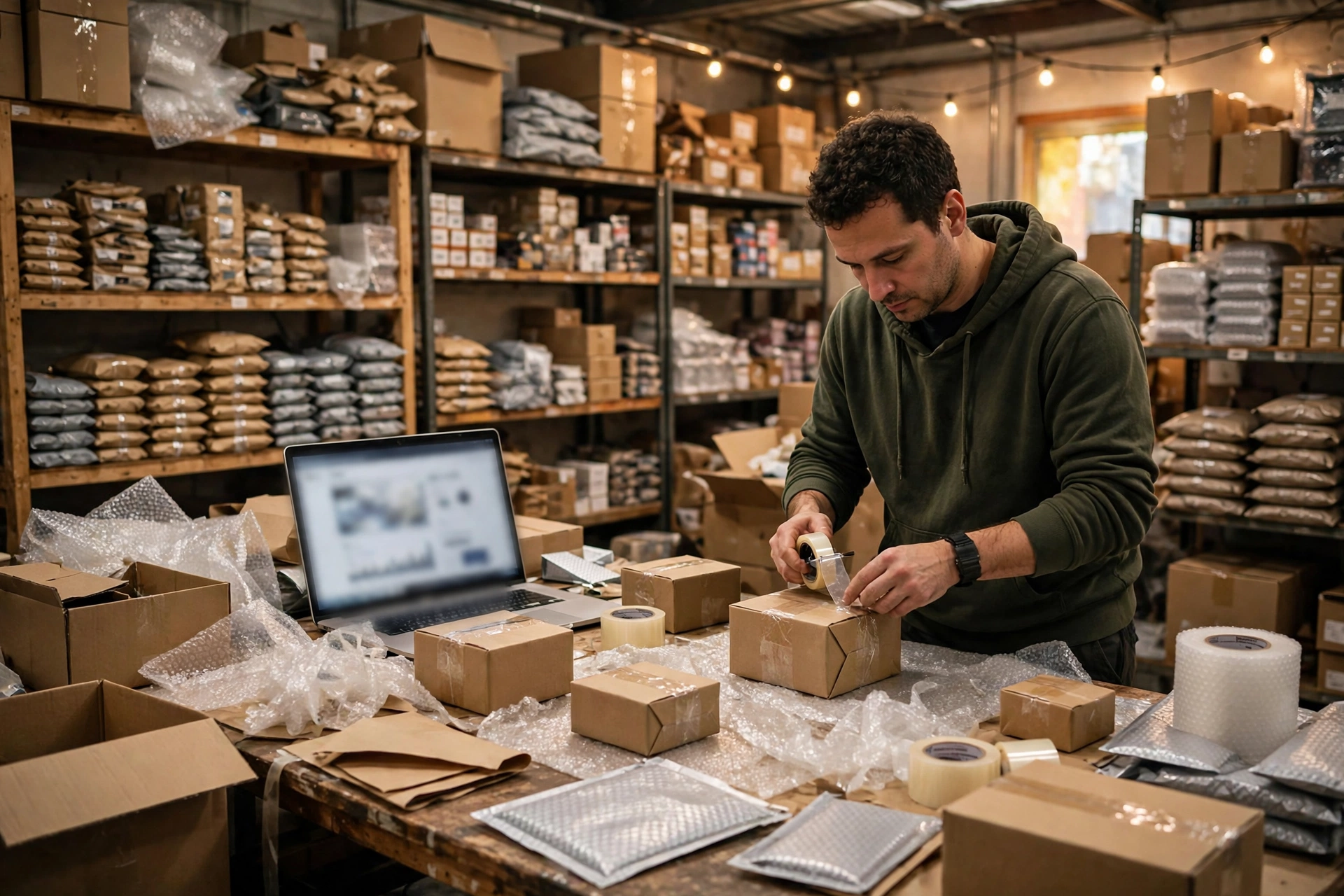
Under about 15 orders a day, under 200 SKUs, and personalization you can finish at the packing table in under three minutes? Ship it yourself. A garage or small studio, one packing bench, one thermal printer, and a laptop will do fine. Adding a warehouse at this stage mostly adds management work.
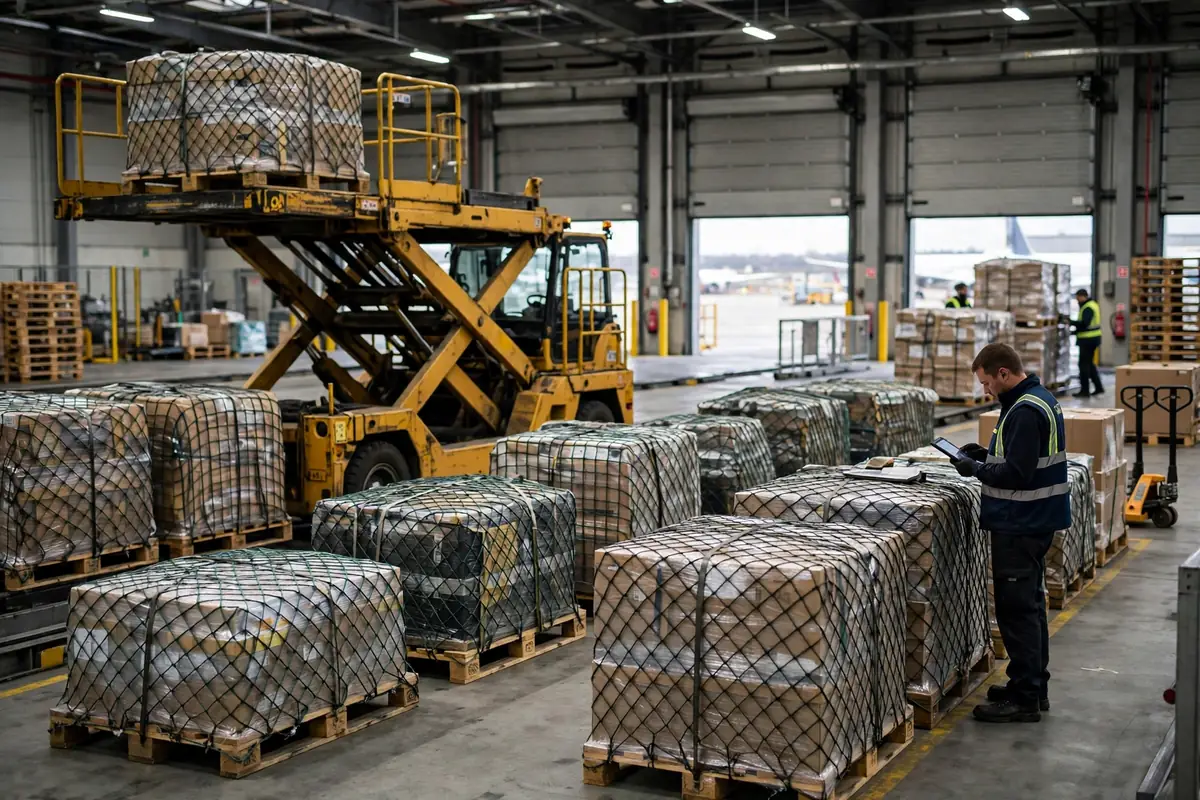
Once you are consistently above 30 orders a day, or past 400 SKUs, or your peak volume is three times your normal volume, seriously consider outsourcing the standard products. Note the wording: standard products, not everything. Engraved items, made-to-order pieces, and anything built from a buyer's note stay in your own hands. Fixed-size prints, finished jewelry, and pre-packed gift sets are perfect warehouse candidates because the process never changes.
There is one hidden signal most sellers ignore: hours. If packing and shipping eats more than 15 hours of your week, you are already paying for a warehouse, just in the worst currency. Those hours should go to new products, better photos, and answering messages. Tape and boxes do not grow a shop.
And here is the counterintuitive part. For an Etsy seller, a warehouse is rarely the cheaper option on a normal Tuesday. Your own per-order cost at home is often lower. What the warehouse actually sells you is peak-season survival. One wave of late shipments in December costs you more in search visibility and buyer trust than a whole season of small per-order savings. You are buying insurance, not a discount.
Two stories: a holiday blowup and a customization disaster
First one is mine. During the 2023 holiday season I was selling personalized pet portrait goods from a small studio in California. In late November I was doing about 20 orders a day and felt comfortable. No early stock build, no warehouse conversation. Then in the second week of December a small creator posted a casual video, and my volume jumped to more than 90 orders a day for three days straight. I could barely keep up with the personalized work. The standard tote bags and postcard sets buried us completely. My partner and I pulled five all-nighters, slept under four hours a night, and still shipped more than a dozen orders late. Three one-star reviews followed, all about slow shipping. If the standard items had been sitting in a warehouse, I could have taken at least twenty percent more orders without trading my health for them.
Second story belongs to a handmade soap seller I know in Ohio. Before Mother's Day in 2024 she sent everything, including gift boxes that had to be assembled to the buyer's chosen scent, to a cheap small warehouse. The warehouse crew had no feel for the product at all. Lavender and rose sets got mixed up in more than a dozen orders. Buyers opened the box, smelled the wrong scent, and complained the product was fake. She later told me she had saved less than a dollar per order and paid back several hundred dollars in refunds and reships, plus damage to a shop rating she had built over two years. Lesson: anything that needs sensory judgment or live assembly never goes out in bulk.
A detail sellers underestimate is the unboxing. Etsy buyers genuinely care about the handwritten thank-you card, the branded sticker, the twine bow. A warehouse can do all of that, but only if you write a photo-based packing guide that shows which side of the card faces up and exactly how the packaging should look, and only if you actually inspect samples. If you cannot inspect, do not outsource the most brand-sensitive step of your order.
Running the numbers on an etsy seller fulfillment warehouse
The table below is a hypothetical worked example, not a quote. Treat the figures as order-of-magnitude only. Prices move with the market, so always work from live quotes for your region and product mix.
| Cost item | Shipping yourself (20 orders/day example) | Standard items at a 3PL (worked example) |
|---|---|---|
| Space | Garage or small studio, low monthly share | No lease, charged per unit or per pallet |
| Labor | You or part-time help, extra hands needed at peak | Pick and pack fees, peak rates may rise |
| Packaging | Small-lot buying, higher unit cost | Warehouse bulk buying, usually slightly lower |
| Postage | Limited discounts on your own accounts | Warehouse carrier discounts often better, verify bills |
| Hidden costs | All-nighters, mis-picks, no time for new products | Communication, inbound QC, returns handling fees |
Neither column wins in every month. At low volume, doing it yourself wins on flexibility and zero fixed commitment. At higher volume, the warehouse wins on postage, materials, and the value of your recovered time. In my experience the break-even zone for standard items lands somewhere around 800 to 1,000 orders a month. Below that, home fulfillment usually wins. Heavy or low-priced products push that threshold higher, so run your own numbers before you sign anything.
Peak timing matters just as much. Etsy holiday traffic usually starts climbing in late October, with the main fight running from mid-November to mid-December. If standard items are going to a warehouse, get them inbound by mid-October at the latest, leaving time for receiving, inspection, and relabeling. For personalized items, stock your blanks, boxes, and cards at least six to eight weeks ahead. Every year sellers end up buying emergency materials at silly prices in early December. That is simply the cost of ignoring the calendar.
Choosing a warehouse without getting burned
I judge a warehouse on four things. First, will they genuinely accept small-batch, many-SKU inventory? Some warehouses only want clean full-carton volume. If you show up with hundreds of SKUs at a few dozen units each, you will feel unwelcome from receiving day. Second, do they have real examples of value-added work: inserting cards, building gift sets, swapping packaging? Get the scope and the charges in writing. Third, does their system connect cleanly with Etsy orders, how fast does it sync, and how are stock-outs flagged? Check current rules against Etsy's official site, and make the warehouse put its own promises in the contract too. Fourth, what are the peak-season cut-off times and staffing commitments? If a same-day dispatch promise for December will not go into the contract, treat it as if it was never said.
Returns are the quiet trap. Etsy returns are messier than standard e-commerce returns. What happens to a returned personalized item, who inspects it, and what can go back on the shelf all need answers before the first return arrives. Otherwise returns sit in a corner of a warehouse for three months and nobody knows what is still sellable.
My current setup, which you are welcome to copy, is a split model. Standard products live at the warehouse all year and carry the volume. Personalized products ship from my studio and protect the reviews. Two months before peak I build standard inventory to more than double the normal level, and I cap personalized orders at what we can truly make, even if that means closing some personalization options early instead of overselling.
It has worked for two straight holiday seasons. No all-nighters, and the late-shipment reviews stopped.
This trick worked for me, tested in real orders.
By Ah K, E-commerce Seller (5 yrs)