Which conveyor does your product actually belong on?
I get asked this almost every month. And most of the warehouses asking have already made the mistake: the line is installed, product is running, and then cartons start jamming between rollers, pallets gouge grooves into the belt, or someone realizes the layout needs an incline the chosen conveyor was never meant to climb. Conveyors are among the most painful equipment to change after the fact — tear out a section, reroute a section, shut down the whole line. There is no "good enough for now" with conveyor selection. You have to get it right the first time.
My answer is never "which one is better." It is "what are you moving." Belt and roller conveyors are not ranked on the same scale; they are two different machines built on two different logics. Once you draw the boundary between them, the decision becomes easy.
Start With the Product, Not the Brochure
Selection always starts with what you are moving, never with the equipment catalog. Three hard boundaries settle this for nine out of ten warehouses.
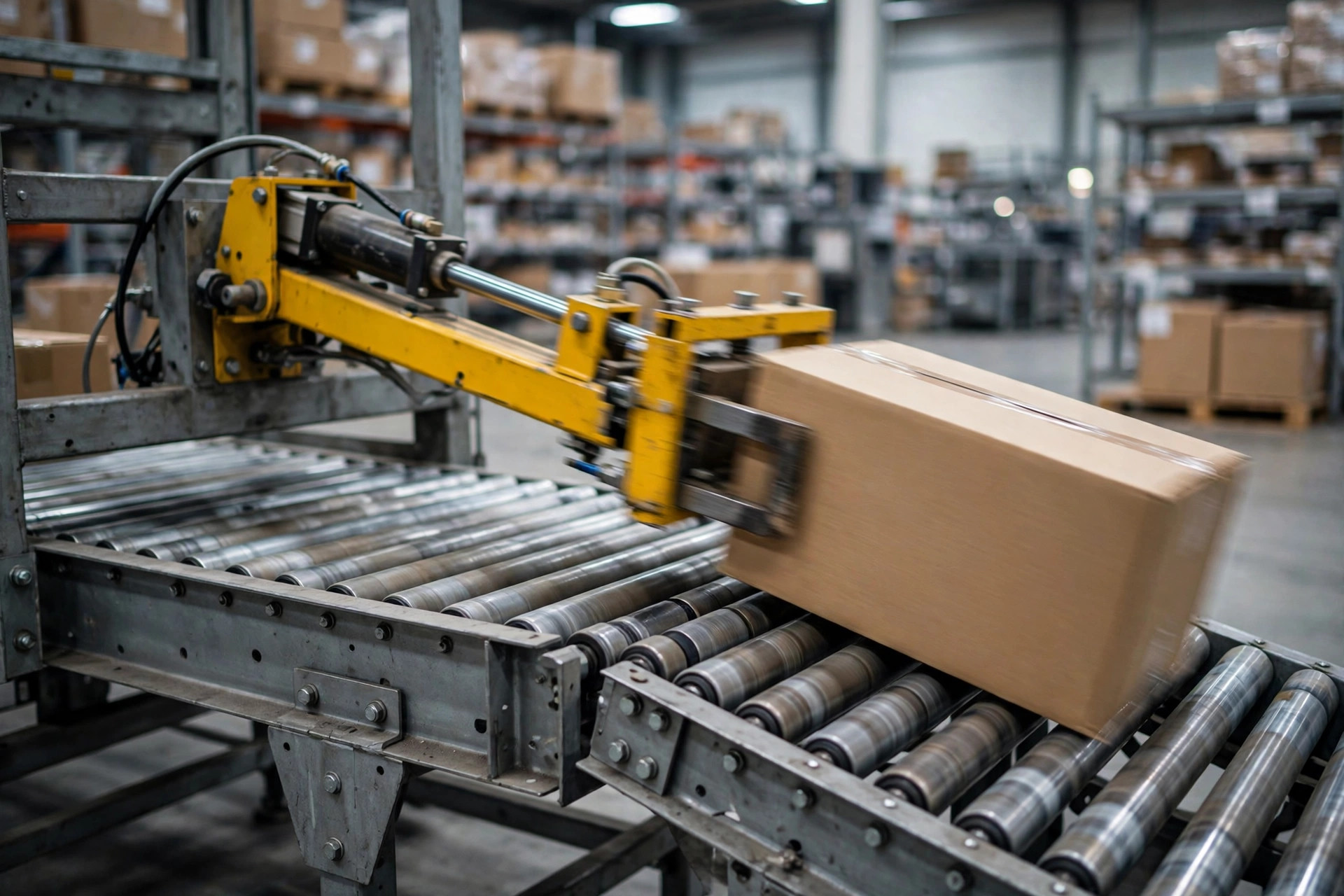
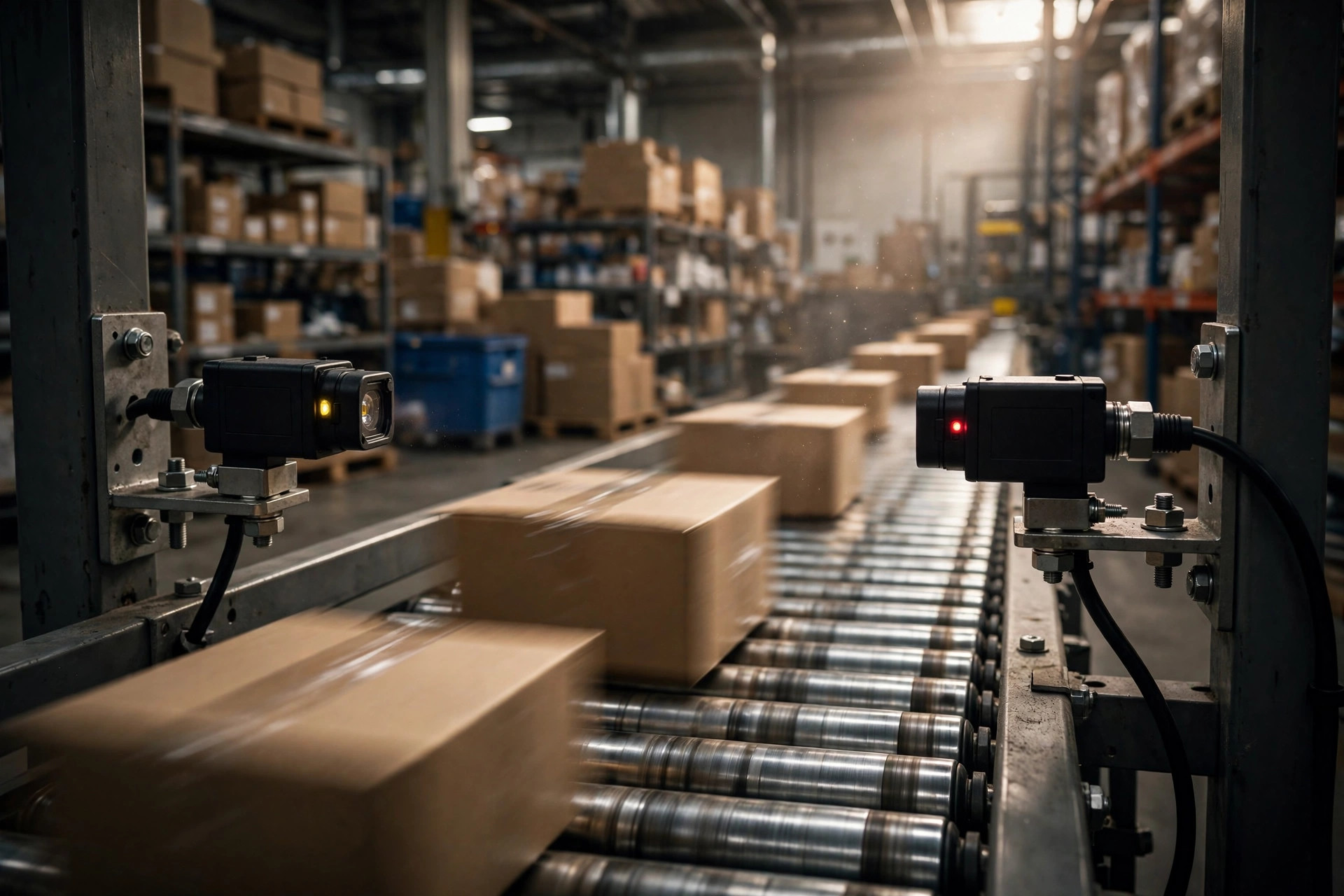
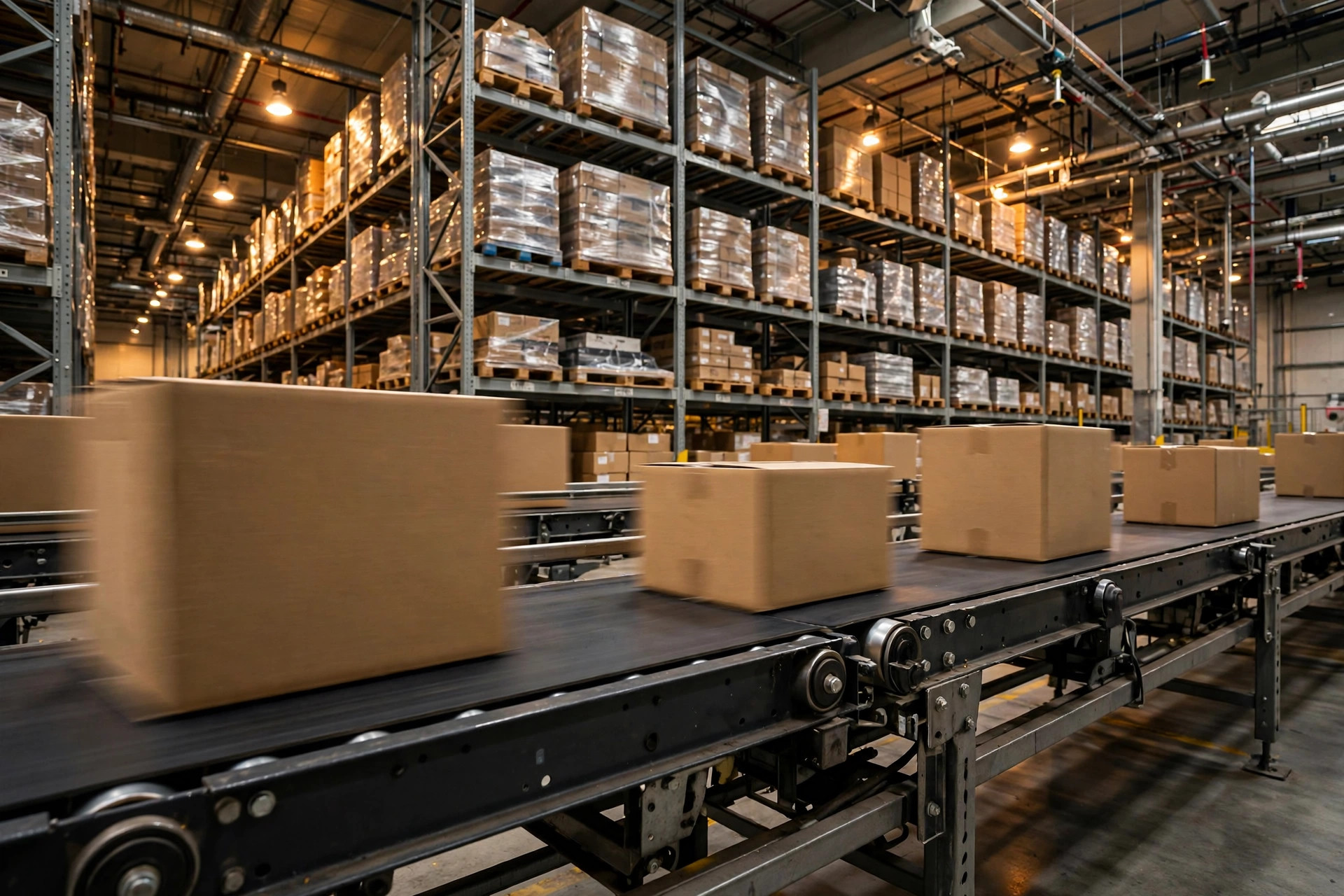
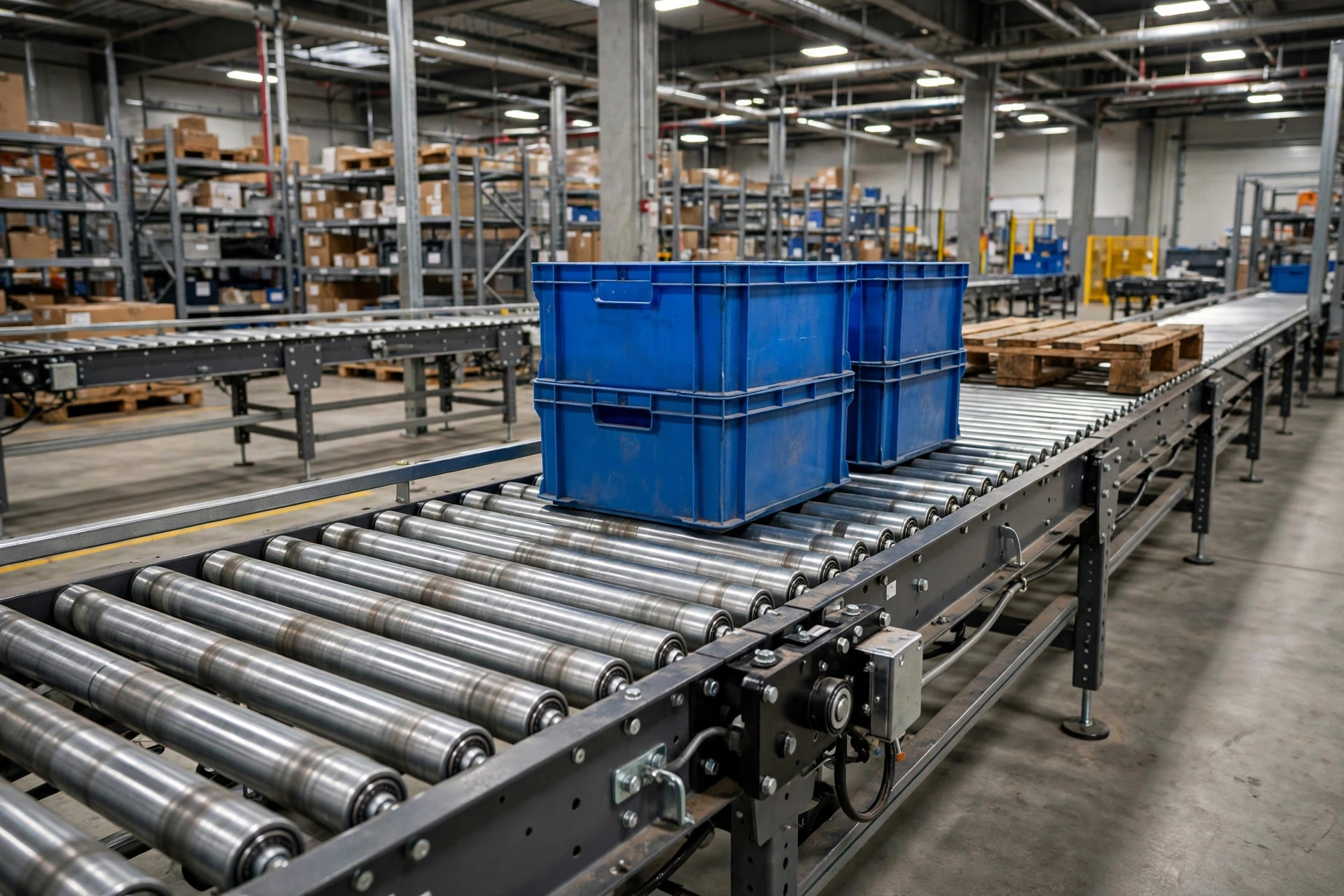
First, how flat is the bottom of your product. A belt conveyor supports from below across a full surface — the belt carries the load continuously. Cartons, polybags, oddly shaped items, anything with a reasonably flat base rides fine on a belt. A roller conveyor supports on points — the load sits on a handful of rollers. That is the whole game: soft-bottomed, small, or irregular items will wedge into the gaps between rollers and jam, while rigid-bottomed totes glide over rollers fast and stable. Totes on roller conveyor is the classic pairing you see in every automated warehouse, and there is rarely a reason to second-guess it.
Second, how heavy is it. Roller conveyor is built for heavy loads — pallets, full totes of raw material, cartons in the hundreds of pounds. Steel rollers take it, and heavy-duty roller frames are designed for exactly that. Belt conveyor fears weight, especially point loads: one sharp-cornered heavy item pressing the same spot day after day will dent the belt, and once the belt deforms it starts tracking off-center. For anything routinely over a hundred pounds per piece, I steer people straight to roller or chain conveyor and take belt off the table.
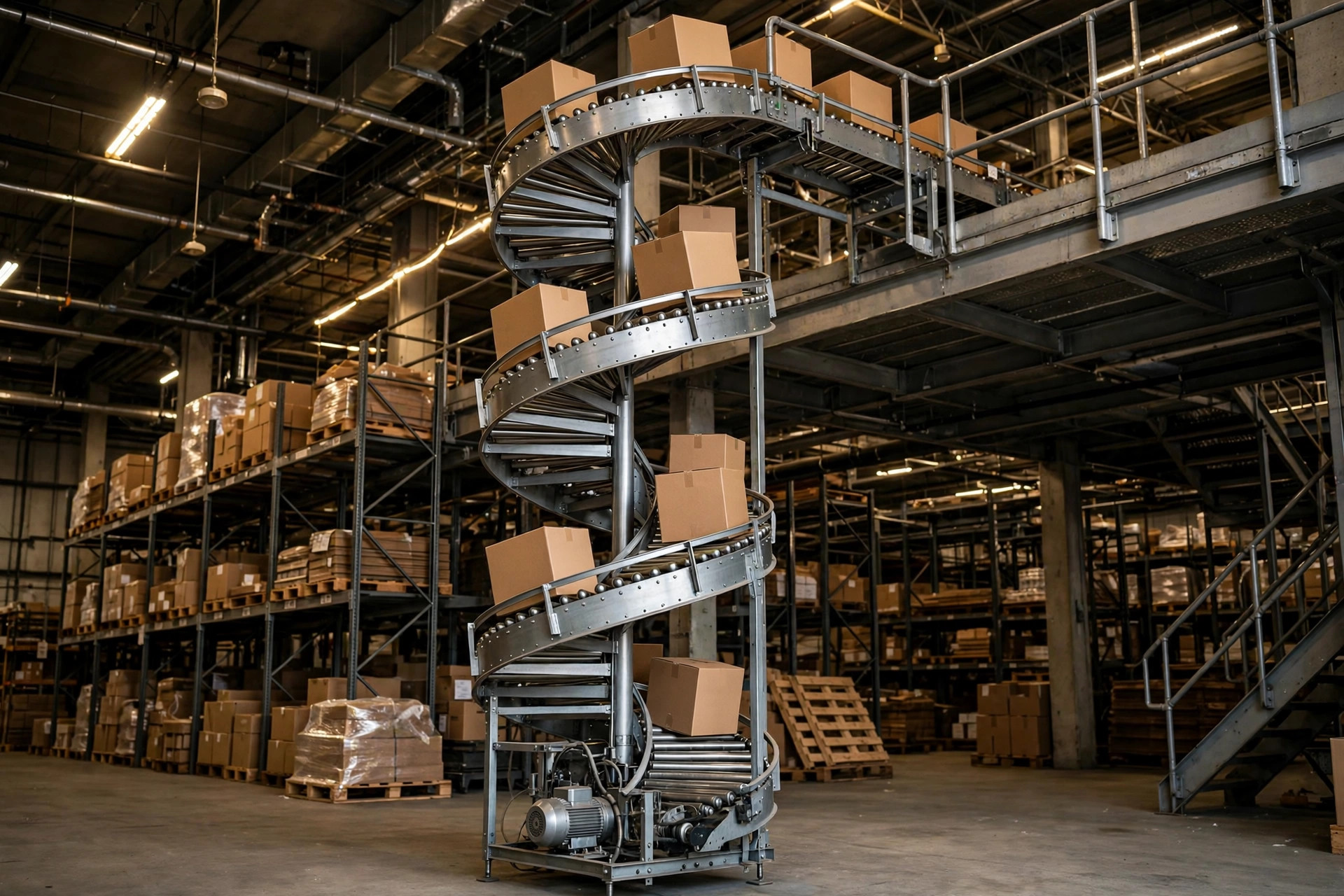
Third, do you need inclines or sortation. Belt's superpower is elevation — a flat belt handles roughly twenty degrees of incline, and a cleated or textured belt goes steeper. It is the simplest way to move product uphill in a warehouse. Roller conveyor is essentially horizontal; what people call a "roller incline" is really a gravity section going downhill. For high-speed sortation and diverting, belt's smooth surface mates cleanly with sorters and transfers, while roller lines need pushers or lift-and-transfer units that add a whole layer of complexity.
The Failure Modes Nobody Puts in the Brochure
Both types have their own temperament, and the maintenance crew always knows more than the sales brochure.
Belt's number-one problem is mistracking. The belt is a soft loop. If one roller frame is slightly out of square, or product keeps landing off-center, the belt drifts to one side. Mild cases shed rubber dust and fray the edge; bad cases tear the belt outright. The fix is unglamorous: align the centerline at install, check the tracking adjustments regularly, and keep product centered. A lot of tracking problems are installation sins — uneven floor, uncalibrated stands — and no amount of adjustment later will save them. A couple of years ago I walked into an e-commerce warehouse in Southern California where the belt edge was chewed like a dog toy. They ended up replacing the whole belt and lost two days of production.
Belt's second problem is the splice. A belt is a loop, so it has a joint, and that joint is the weakest point on the entire line. Heavy loads, hard starts and stops, chronic mistracking — the splice fails first. Ask about the splice method before you buy: a vulcanized splice outlasts a mechanical laced joint by a wide margin, and this is not the place to save money.
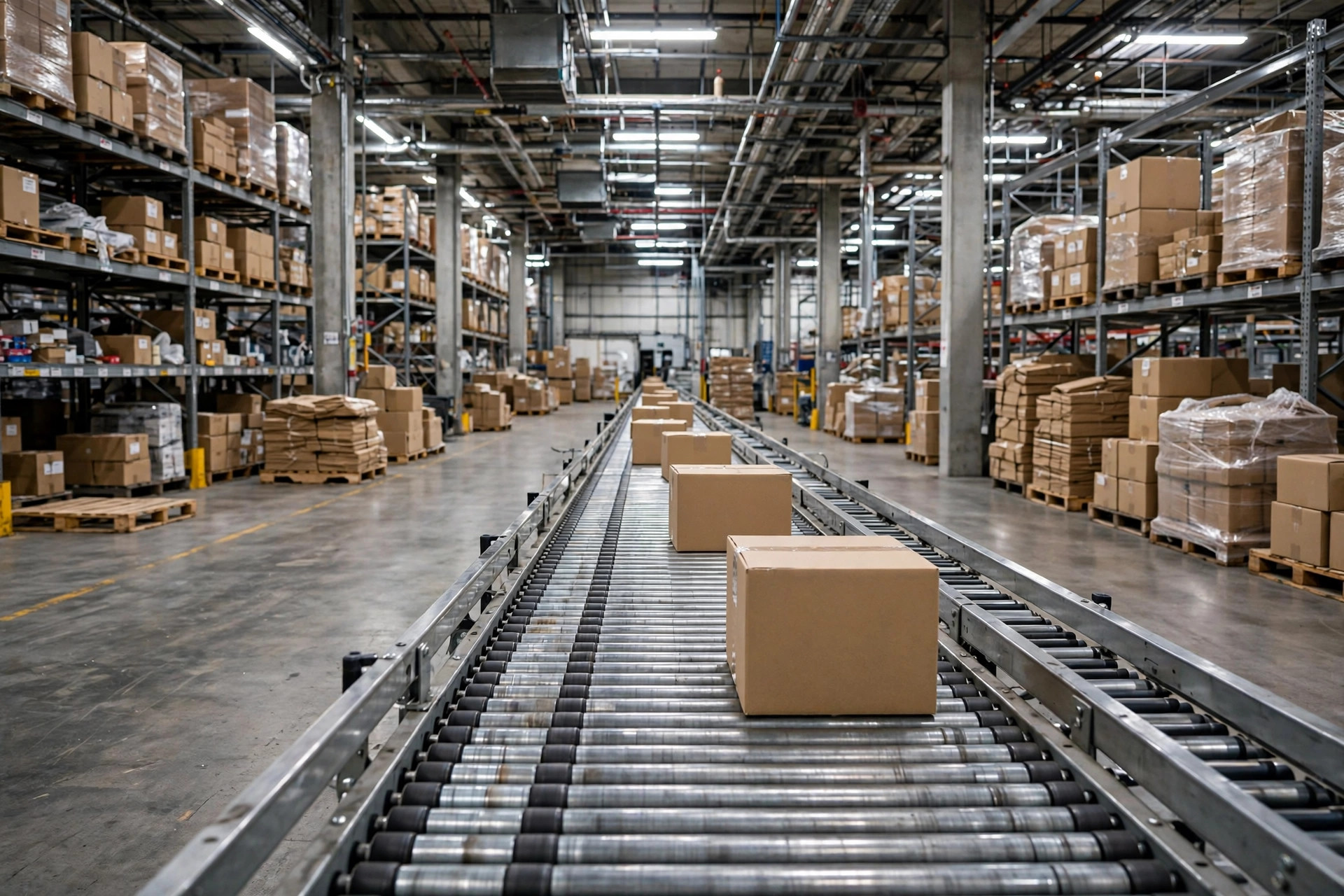
Roller's number-one problem is jamming. There are gaps between rollers, and if the smallest footprint of your product spans fewer than three rollers, it drops in — tilts at best, dead-stops the line at worst. So roller conveyor has one iron rule: roller spacing is set by your smallest product, not your largest. Plenty of warehouses spec for the big cartons and then watch every small item jam.
Roller's second problem is noise and dust. Steel rollers are loud, especially noticeable on night shifts. Worse, dust and debris work into the roller bearings until a roller stops turning — a dead roller the product just skids across. Roller conveyor looks rugged, but it is a machine that needs scheduled maintenance. Bearing and chain upkeep has to be in the SOP, or in three years the whole line runs like a tractor.
Three Scenarios Everyone Asks About
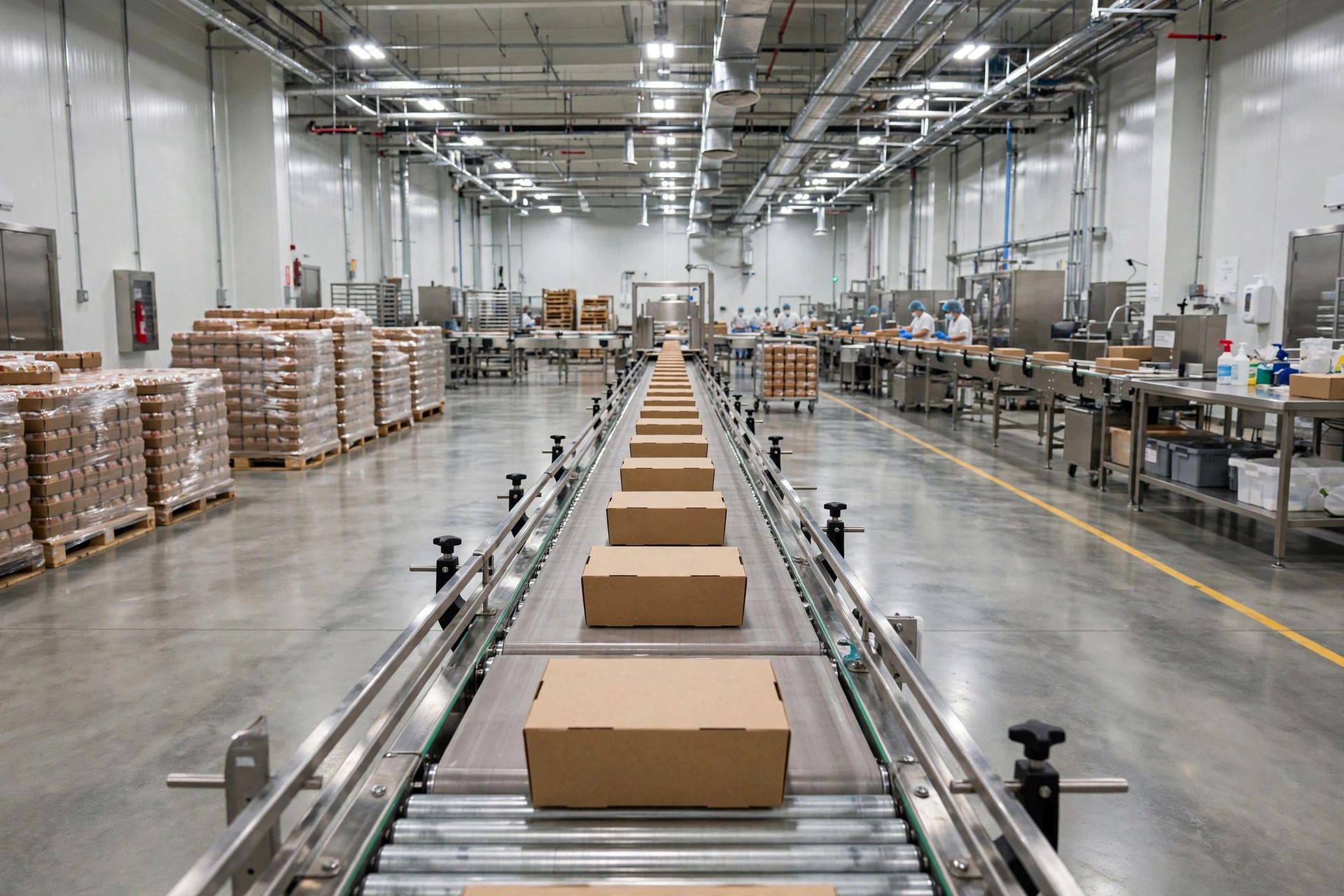
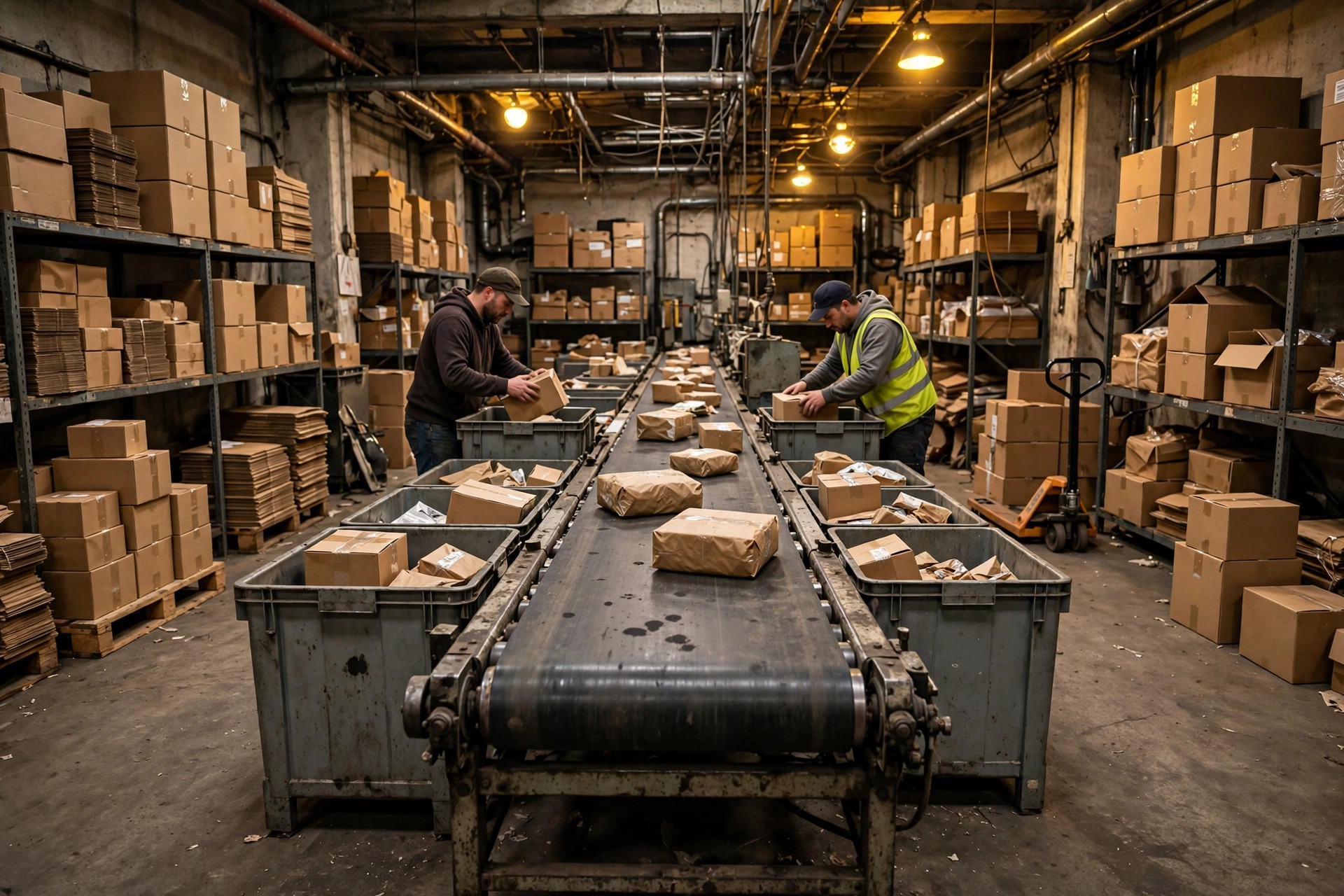
Cartons — which line? Look at the carton bottom. Standard cartons with flat bases run beautifully on belt, especially for long runs, inclines, and feeding sorters. But if your carton sizes vary wildly and you have lots of small pieces, roller with proper spacing works too and usually costs less to install. My call: uniform cartons, inclines, sorter induction — belt. Mixed cartons, mostly horizontal — roller is plenty.
Totes — which line? Roller, no debate. Totes have rigid, uniform bottoms that ride rollers smoothly and quietly. Belt can move totes, but it is overkill with an extra maintenance item you did not need.
Can pallets go on a belt conveyor? My answer: don't. The standard US pallet is 48 by 40 inches, and a wood pallet has deck-board gaps and nail heads that chew up a belt surface. Add a thousand-plus pounds of pallet plus load, and the belt tension and drive motor are both out of their depth. Pallets belong on heavy-duty roller or chain conveyor. A belt can be engineered for pallets, but it is a specialty build whose cost and maintenance will make you wish you had just picked roller.
The Hybrid Answer: Belt Trunk, Roller Branches
Mature warehouses rarely run a single conveyor type. The most common hybrid: belt for the trunk line — long distance, inclines, speed, sorter induction — and roller for branches and workstations, where it is cheaper, tougher, and easier to maintain. Totes and heavy items travel the branches. You get the strengths of both, and the installed cost lands well below an all-belt system.
One more money-saving thought: install roller frames now, but leave the interfaces for belt sections. When volume grows and you need speed and sortation, convert locally. The worst thing you can do with conveyors is lock the design in stone. Leave room to grow, and three years from now you will thank yourself.
The one-line selection formula: soft, small, or uphill — belt. Heavy, rigid, or horizontal — roller. Pallets never on belt, totes never need belt.