Let me start with the math. A client showed me an automation quote: $1.4 million — equipment, installation, training, warranty, all in. The ROI model said 2.9-year payback. Signed off without much debate. Eighteen months after go-live, I sat down with their controller and reconciled every actual dollar spent. The real number: just over $2 million.
The missing $600K-plus is what this article is about: automation's hidden soft costs. They never appear as line items on the ROI spreadsheet, but they absolutely appear on the bank statement.
A note before we go further: the figures below are illustrative ranges drawn from six automation project reviews I have done, presented as an assumptive framework — not industry statistics. Run your own numbers with your own contracts and reconciliations.
Soft Cost #1: System Integration
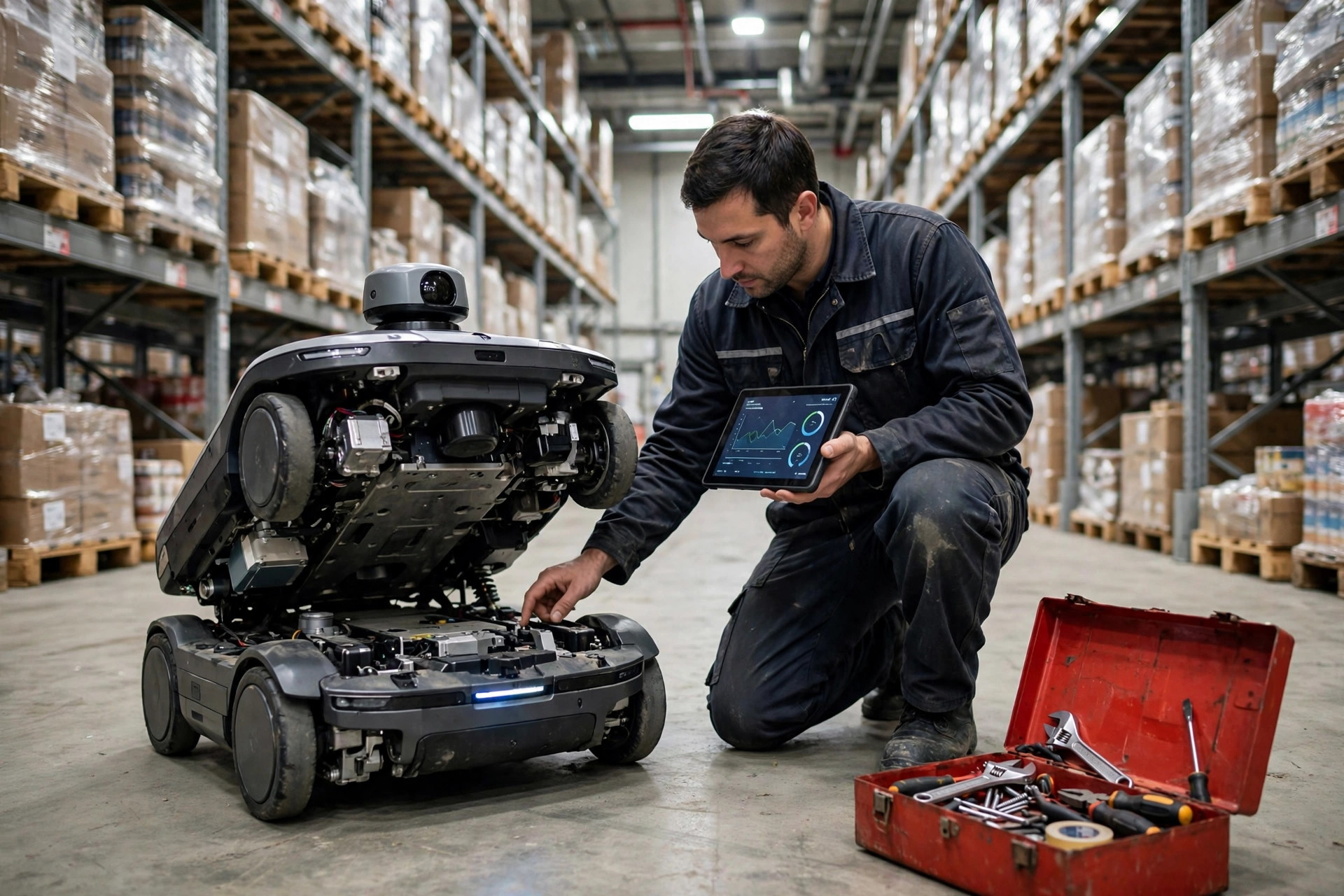
Buying the equipment is the easy part. Making it talk to your WMS, ERP, conveyor line, and packing stations — that is where the money burns.
Three drains here. First, interface development and integration labor-days. Vendor quotes typically say "interface reserved," which means the development is extra. A real case: a 2024 cosmetics warehouse in Southern California bought a four-way shuttle system for about $4.5 million, then discovered its WMS slotting logic didn't match the shuttle's dispatch strategy. Rewriting the interface took 46 days — two vendor engineers plus three of the client's IT staff, overtime included, roughly $30K in labor. That is 6.6% of the project, on one line nobody quoted.
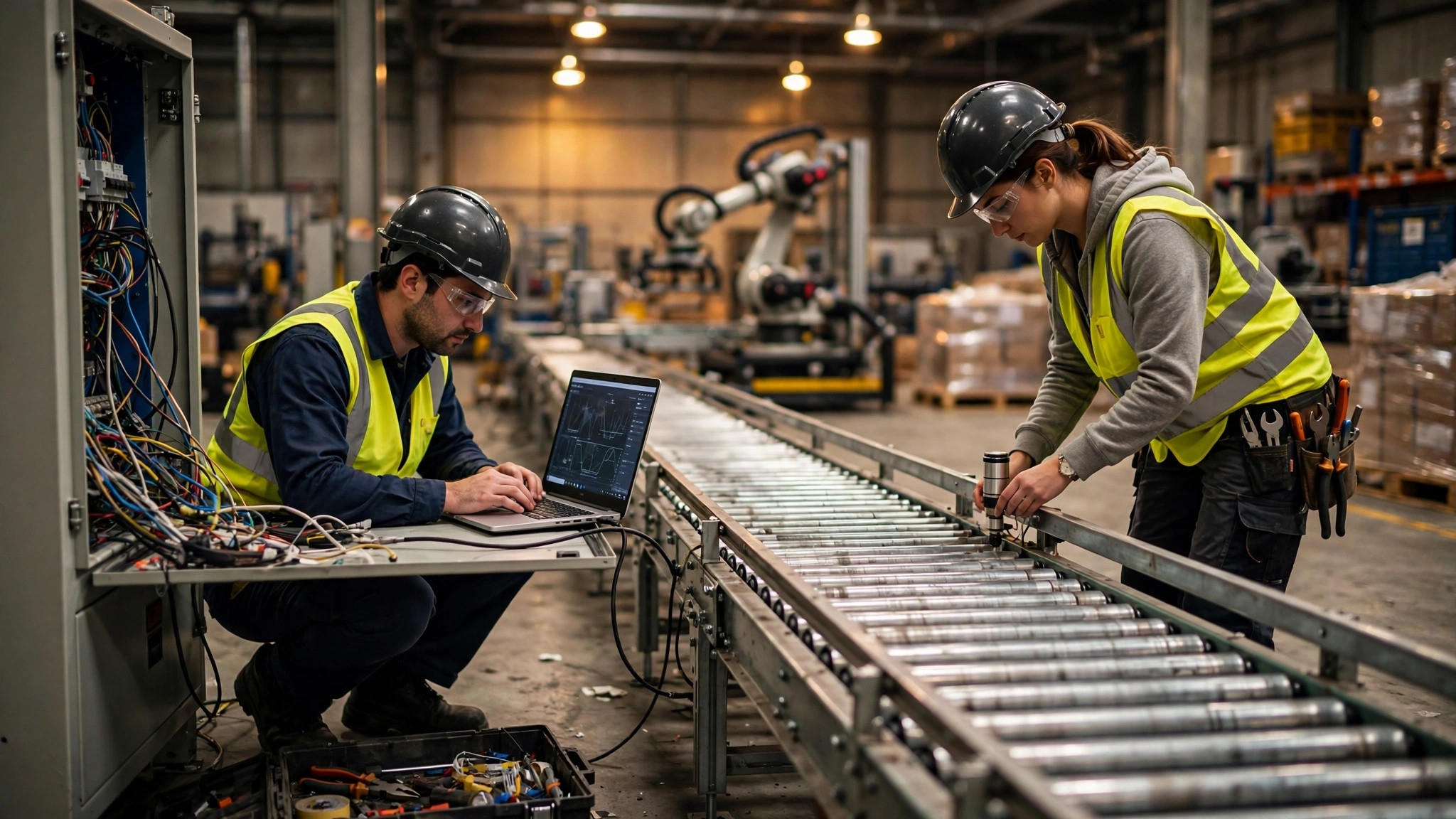
Second, multi-vendor finger-pointing. Equipment vendor, software vendor, network vendor — when something doesn't talk to something else, everyone blames everyone else, and the standoff costs weeks. The worst I saw: a WCS-to-conveyor PLC protocol mismatch, two teams camped on-site for 11 days, root cause turned out to be a firmware version. During those 11 days, half the outbound volume ran through a manual emergency lane. Which ROI line does that go on? None. It just cost money.
Third, master data cleanup. Before automation goes live, every SKU's dimensions and weight must be accurate, or the racks, shuttles, and vision systems all get it wrong. A 3PL I reviewed measured 70,000 SKUs over three weeks with four people full-time — and 12% of the measurements were wrong and had to be redone. The labor cost alone was real; the rework was pure loss.
My typical range for integration soft costs: 8–15% of the contract value. And note — the cheaper the contract, the higher this percentage usually runs. I will explain why below.
Soft Cost #2: The Commissioning Ramp
The equipment is installed, you press the button, and the line runs? Not quite. Between "it moves" and "it runs at rated speed," there is a 3-to-6-month ramp that nobody puts in the model.
Two cost centers. Lost throughput is the direct one. A line designed for 1,200 cartons per hour runs 600–700 in month one, with jams, faults, and emergency stops daily. The missing volume gets covered by overtime, outsourcing, or lost orders. One project I reviewed: four months of ramp, an average 18% monthly outbound shortfall, about $42K in extra overtime and temp labor. In the ROI model that line was labeled "efficiency gains." In year one, it was negative.
Parallel operations is the other. You cannot tear down the manual line until the automated one is stable, so you staff both for months. An apparel warehouse ran dual lines for five months with 22 extra people — roughly $77K in added labor over five months. That excludes the management chaos and rising error rates from running two processes side by side.
Ramp-phase soft costs typically land at 10–18% of the contract value. The more complex the project, the more SKUs, the more fragmented the waves — the higher it goes.
Soft Cost #3: Unplanned Downtime
Ramp is over, the line is stable — now the costs are "holding costs," and the ROI sheet usually lists just one: annual maintenance, 3%. Real holding costs have three parts.
Spare parts inventory. Critical spares — motors, drives, sensors, belts — must sit on your shelf, or a single failure stops the line for three days waiting on parts. Spares typically tie up 3–5% of equipment value. It's sunk capital the ROI never mentions.
Stoppage losses. When an automated line stops, it doesn't slow down — it stops. A 1,000-carton-per-hour line down for four hours is 4,000 cartons of missed outbound. In peak season, one day's shortfall means flooded customer service lines, platform penalties, and chargebacks. I costed one mid-size e-commerce warehouse's six-hour stoppage: about $11K in direct losses (overtime, outsourcing, penalties). Two or three of those a year, and it's real money.
Emergency repair premiums. Scheduled maintenance and emergency callouts are priced in different worlds. A vendor field engineer dispatched for an emergency — travel plus labor — runs 2–3x the normal rate, worse in remote areas. And many warranty terms promise 48-hour response for software, 24 for hardware. When the line is down, every hour is money.
Annual downtime soft costs typically run 5–10% of equipment value per year. Over a full holding period, that's a sustained expense.
The Full-Cost ROI Correction Framework
Put the three soft costs together and you get a reusable table:
| Cost item | Typical range | Basis | Notes |
|---|---|---|---|
| Contract quote | 100% | — | The only line on the ROI sheet |
| Integration soft costs | 8–15% | Contract value | Interfaces, joint debugging, vendor disputes, master data |
| Ramp-phase soft costs | 10–18% | Contract value | Lost throughput, dual-line staffing |
| Downtime holding costs | 5–10%/yr | Equipment value | Spares, stoppages, emergency premiums |
| True total investment | 125–145% | Contract value | Over a 3-year holding period |
How to use it: multiply your quote by 1.25–1.45, get the true investment, and re-run the ROI and payback. If the payback stretches from 2.9 years to 4.3 years and your depreciation window is 5 years — the project needs a second look.
Now the counterintuitive part, and the real reason I wrote this: the lowest bid usually carries the fattest soft costs.
Why? Cheap quotes save money in three places: interfaces quoted as "reserved" not implemented, integration labor-days squeezed to the minimum, and warranty response terms written loosely. Every dollar saved there gets spent anyway — it just moves from "contract value" to "soft costs," and thanks to rework, disputes, and downtime, it comes back larger. Of the six projects I reviewed, the highest true-cost overrun belonged to the one with the lowest initial bid: a $4 million contract that landed at $5.75 million all-in, 43.6% over.
Conversely, the vendor whose quote itemizes interface development days, integration schedules, on-site commissioning duration, spare parts lists, and response SLAs may be 10% more expensive on paper — but the soft costs are bounded, and the true total comes in lower. When you buy automation, you are not buying equipment. You are buying the total price from quote to stable operation.
One Computable Conclusion
Three steps, each producing a number:
- When the quote lands, first re-run the model at 1.35x (the midpoint) and check whether the payback is still acceptable.
- Make the vendor quote the three soft costs line by line: interface development days, integration schedule, on-site commissioning duration, spare parts list with prices, and fault response SLAs. A promise that isn't in the contract doesn't exist.
- Before signing, compute two numbers: the true payback period (re-run with 1.35x investment) and the true-cost gap between the cheapest and the most expensive bid (it is usually shockingly small).
The biggest trap in automation soft cost ROI isn't that the numbers are large — it's that they aren't on the sheet. Complete the sheet, and the decision becomes obvious.
By Lao Zhou, Logistics Cost Analyst