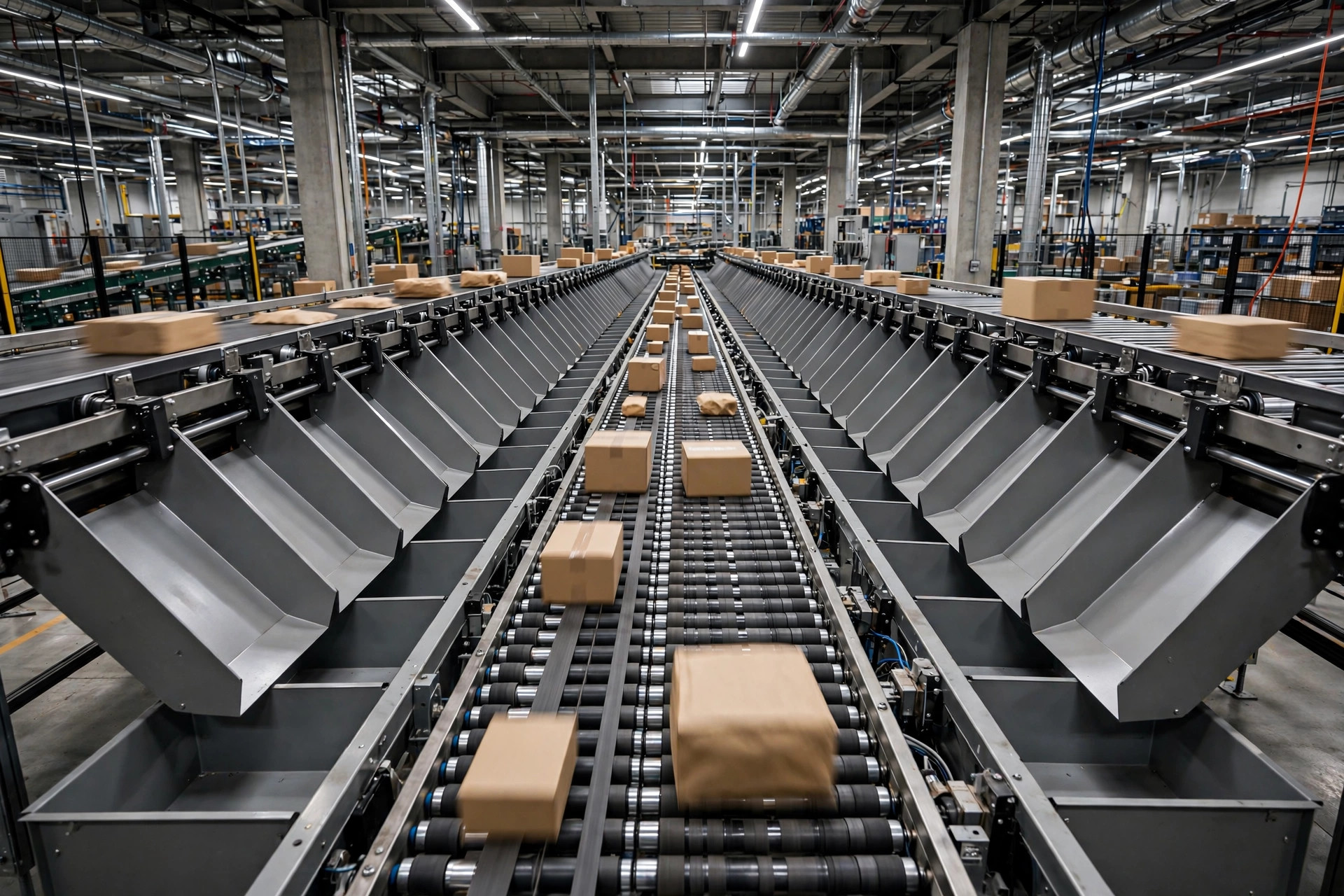
Two years ago, an apparel e-commerce client showed me their automation business case: a $600,000 cross-belt sorter with a 2.8-year payback. Clean numbers, sound logic. I glanced at it and said: you're missing three lines. Add them back and the payback is at least four years.
"Which three?" Downtime, spare parts, and software licenses. Finance reran the numbers: 4.2 years. The project still went ahead — but the decision was based on a real 4.2 years, not a pretty 2.8. That difference is everything. People who approve on 2.8 years spend year three wondering where the money went — doubting the vendor, doubting automation itself.
The most common way automation ROI dies isn't miscalculated benefits. It's uncounted costs. Here are the three most frequently missed lines, priced out one by one.
Line one: downtime — what does one hour actually cost?
Vendor ROI templates typically assume 90%, even 95% equipment availability. Twenty years in, here's the truth: if a new system holds 80% steady in year one, that's a good result.
Downtime comes in two flavors. Planned: seasonal maintenance, software upgrades, wear-part replacement — dozens of hours a year, unavoidable. Unplanned: jams, sensor false alarms, control-system freezes — a few incidents a month in year one is normal for new systems.
The key insight: downtime cost isn't "idle equipment." One hour of a dead sortation line means thousands of orders' worth of capacity made up by hand — overtime, temp labor, missed carrier cutoffs and rebooked linehauls. Every one of those is money. I modeled this for a client: a warehouse doing 20,000 orders a day loses roughly $3,000–5,000 per hour of sorter downtime, all in. Multiply by your estimated annual downtime hours and put it in the ROI sheet — most people discover for the first time how expensive that line is.
How to estimate downtime hours? Get the vendor's MTBF and MTTR commitments in writing, in the contract. If a vendor can't produce them, discount using industry experience: 75% availability in year one, 85% in year two, improving after. Conservative beats being blindsided.
Line two: spares and maintenance — what happens after the free first year
Many automation quotes include year-one maintenance free. So the ROI sheet prices five years of maintenance at zero. That's the most common hallucination in this business.
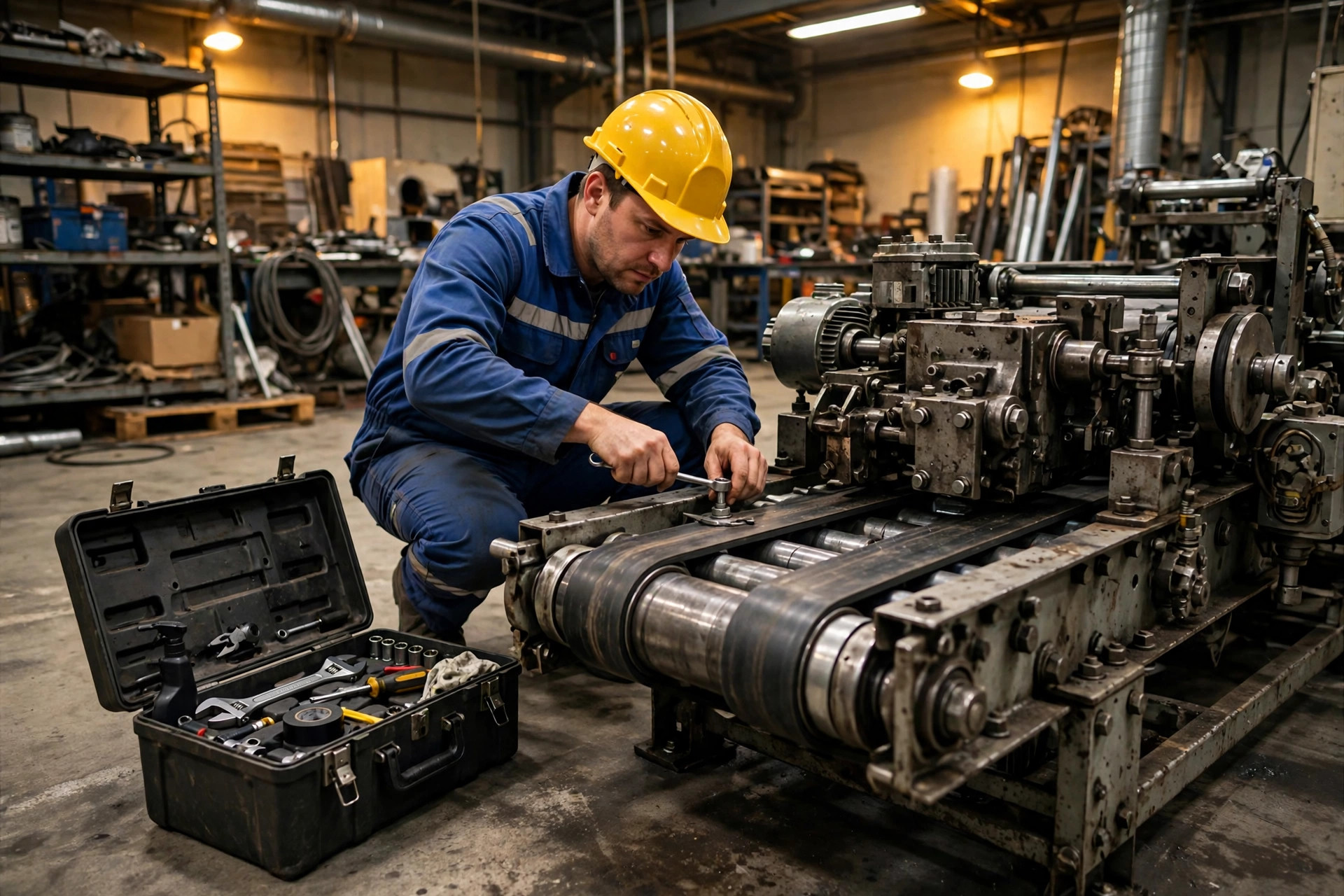
After year one, maintenance contracts typically run 8–12% of equipment value per year. On a $600,000 system, that's $50,000–70,000 a year — $250,000–350,000 over five years. Leave that out and your payback is off by more than a year.
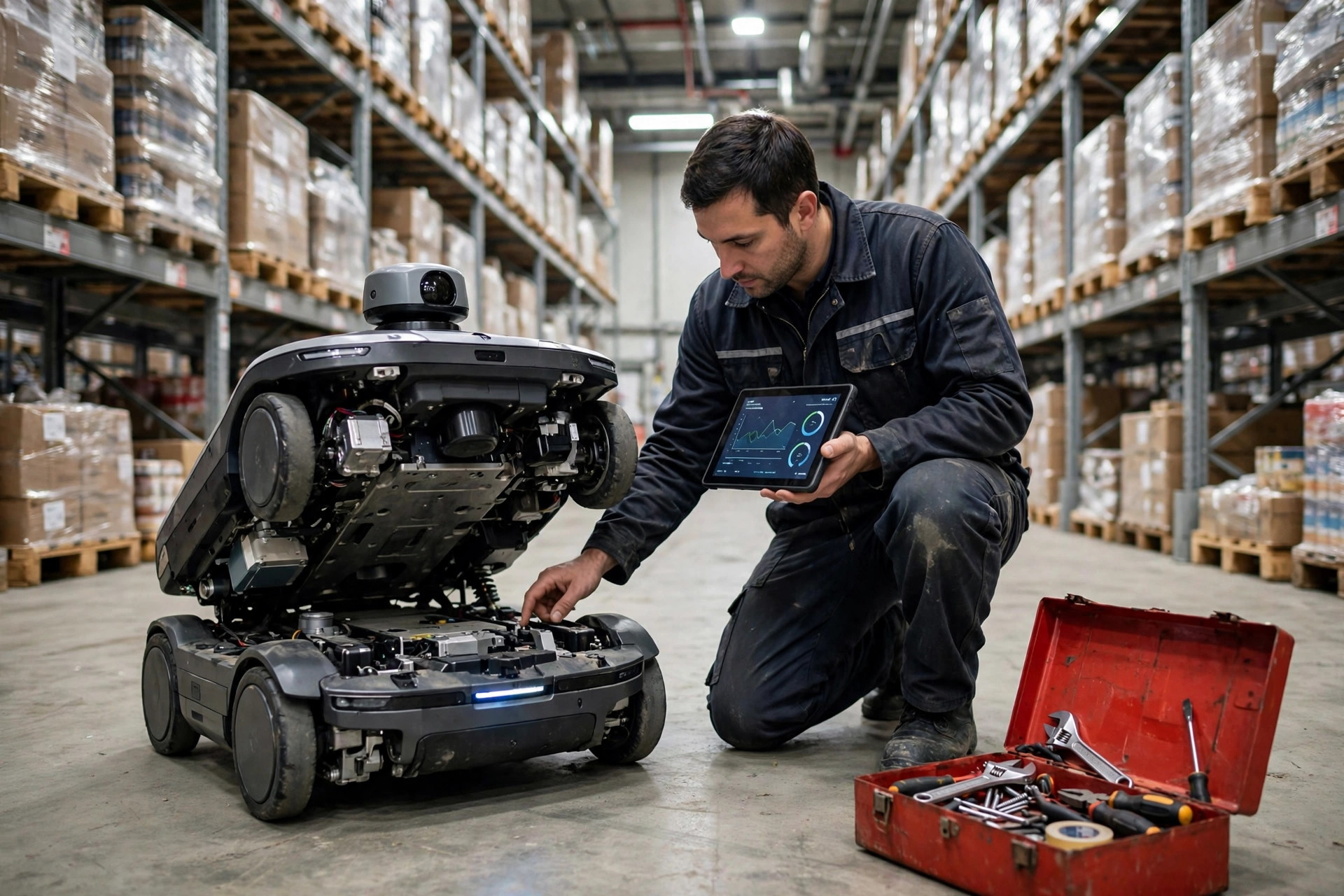
Spares are the other half. Wear parts (belts, rollers, sensors, batteries) need safety stock; the first spares order usually runs 3–5% of equipment value. Critical components (controllers, drives) carry 8–12 week lead times — skip the safety stock and one failure stops you for a week. And we already priced a week of downtime above.
One more trap: response tiers in the maintenance contract. Four-hour on-site versus next-business-day can differ 2x in price. Buy the cheap tier and wait two days for a repair — everything you saved goes straight into downtime losses. My rule: highest response tier for critical equipment, lower tiers for the rest. Negotiate them separately, not as one bundle.
Line three: software licenses and upgrades — it gets more expensive over time
Automation is half software, and software pricing is shifting from perpetual licenses to annual subscriptions. WCS, fleet orchestration, digital-twin monitoring — more vendors charge annual license fees in the tens of thousands.
Sneakier still are upgrade fees. Adding chutes, adding equipment, integrating a new WMS interface — every change is an "engineering change order" billed per engineer-day at $1,500–2,500. A small change takes two weeks; tens of thousands gone. If your ROI sheet says "software: included in year one" and prices nothing for years two through five, that sheet is half-finished.
Negotiate these before signing: a cap on license-fee increases for three years, in the contract. How open the interfaces are — full API documentation decides whether you're held hostage when you want a different integrator later. Whether minor-version upgrades are free. Negotiating the software side matters as much as the equipment — because equipment finishes depreciating, while software keeps drawing blood.
Add the three lines back and rerun the math
Back to that $600,000 project. With the three hidden lines added, five-year total cost of ownership rose by nearly $400,000, and payback moved from 2.8 to 4.2 years.
Is 4.2 years investable? Yes — if your cost of capital and strategic patience support it. Many automation projects are genuinely good projects; they die on expectation management. Budgets approved on 2.8 years, KPIs set on 2.8 years — by year three everything collapses, the project gets killed, and the equipment sits there half-dead.
So my advice is simple: build two versions of the ROI sheet. The "vendor version" and the "Lao Mi version" — with downtime, spares, and software licenses all in. Take the Lao Mi version to your boss. Projects approved on real numbers let you sleep at night.
What was the gap between your last automation project's projected payback and the actual one? Share it in the comments so the rest of us can dodge the same hole.