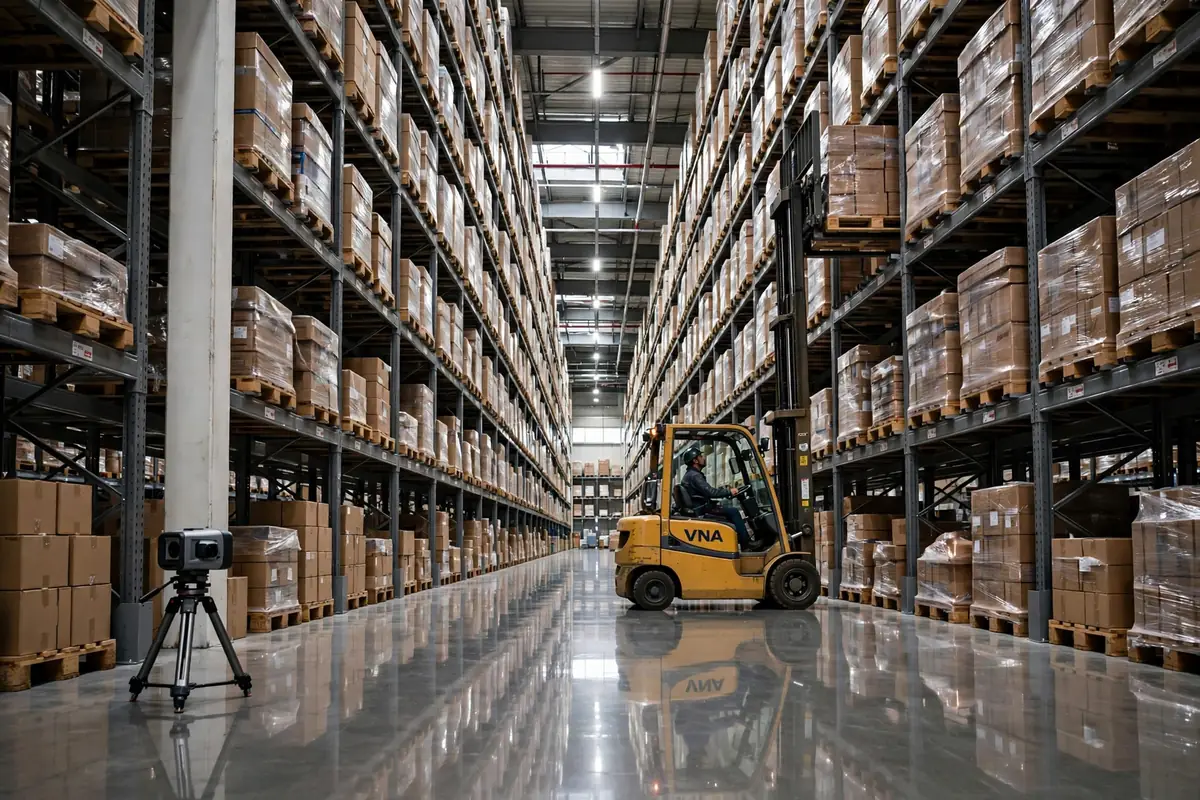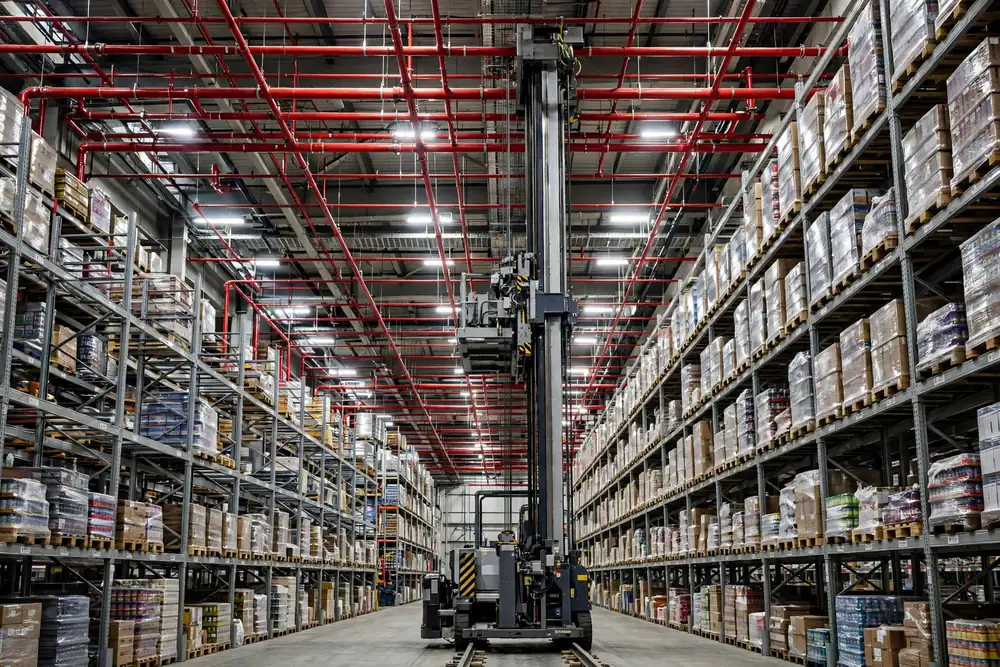
Automated warehouse fire sprinkler rack storage is the part of a project that looks fine on paper and falls apart on site. Racking, stacker cranes, and sprinklers each get their own drawings, their own budgets, their own schedule — and then all three have to share the same three-dimensional space above aisles twenty-plus meters tall. Move one thing and everything else moves with it.
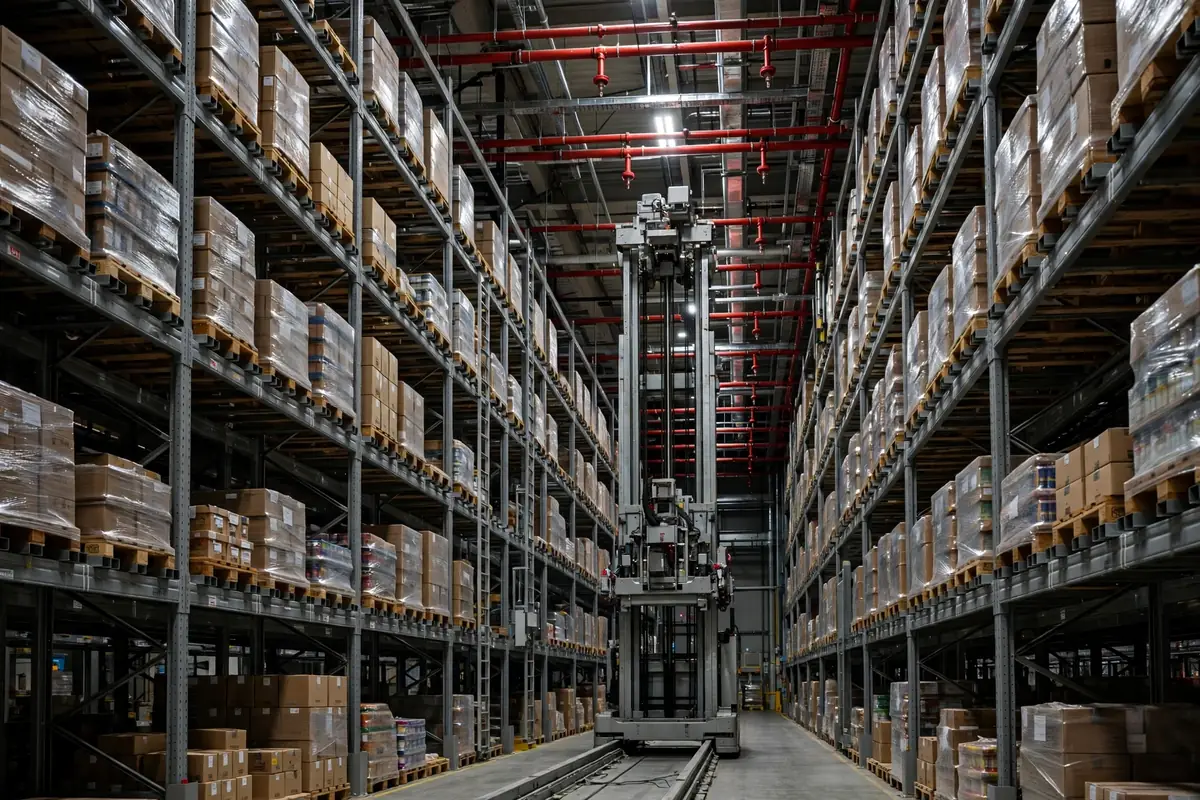
In the fall of 2023 I was called in to review a home-appliance warehouse in Jiangsu. The high-bay store was twenty-four meters tall with more than a dozen aisles, and the stacker cranes were already in commissioning. A week before the fire inspection, the problem blew up: the sprinkler main ran straight across the top of an aisle, right where the crane rail and the load-handling device needed clearance. The fire reviewers wanted the pipe moved. The racking supplier said moving the pipe meant taking down two rows of uprights. The crane vendor said shifting the rail elevation meant re-teaching positioning parameters for the whole aisle. Three weeks of arguing, the warehouse sitting idle, peak-season stock diverted to a flat overflow building. That job taught me the real lesson: fire protection in a high-bay store is not the fire contractor's problem alone. It is three trades fighting over the same space, and whoever draws first wins.
Why Sprinklers and Rack Beams Keep Colliding
Start with the physics. You can think of it like this: a sprinkler only works if water actually reaches the fire. In a high-bay rack, the fire is rarely at the top. It is buried in the middle of the rack, behind steel beams, decking, pallets, and cartons, layer after layer. Water from a ceiling head has to punch through all of that. By the third level down, most of it is blocked. It is like pouring water off a rooftop and expecting it to find its way into every room on every floor below. It does not work that way.
So the real question is how water gets through the rack. There are basically two answers: put more heads at the ceiling, or put sprinklers inside the rack itself. Ceiling heads are cheap and easy to install, but their reach fades fast as the rack gets taller. In-rack sprinklers run pipework between the levels, so water comes out at the level where the fire actually is. That works far better, and it costs far more in coordination: every level needs openings in the rack, and the crane has to clear those pipes on every cycle. Plenty of projects get this wrong by picking the cheap option and hoping the inspector will not notice. The inspector notices. That is the central problem in automated warehouse fire sprinkler rack storage: getting water to the level that is actually burning, not just to the ceiling.
Sprinkler heads are also vulnerable to the machine working underneath them. A stacker crane runs fast down a narrow aisle, forks extending and retracting, pallets sliding in and out. Put a branch pipe too close to the travel path and sooner or later something clips it. In the winter of 2024, a cold-storage warehouse in Guangdong learned that the hard way. Overnight, a pallet edge caught an in-rack branch pipe. The pipe did not break; a fitting just loosened. Water seeped all night, and by morning two levels of cartons were soaked through. The stock loss was modest. The two days of downtime for cleanup and re-checking were not. When we checked the drawings, the branch pipe sat less than a hand's width from the fork's travel envelope. Nobody had ever measured that number.
Picking the Right Sprinkler Setup: Look at the Goods First, Then the Height
Is there a dividing line for selection? Yes, and it is not about which brand of sprinkler you buy. It comes down to three things: how fast your goods burn, how tall the rack is, and how narrow the aisle is. Cartons, foam, and plastic parts catch fast and spread fast, so they lean hard toward in-rack protection. Metal parts and stable, slow-burning loads can often be covered by ceiling heads plus early detection. The taller the rack, the weaker the ceiling heads become. The narrower the aisle, the harder the crane and the pipework fight for space, and the more expensive every mistake gets.
| Situation | Typical approach | Cost | Main risk |
|---|---|---|---|
| Low rack, slow-burning goods | Ceiling sprinklers mainly | Low, fast to build | Any change in product mix forces a rethink |
| Tall rack, carton and foam-heavy goods | Ceiling plus in-rack sprinklers | Complex pipework, rack needs openings | Branch pipes exposed to crane strikes |
| Narrow aisles, fast cranes | Pipework tucked to beams, generous clearances | Long design cycle, heavy coordination | One wrong clearance number means rework |
Do the rough math with me. Getting fire, racking, and crane teams to design together up front costs about two extra weeks and three or four joint meetings — almost nothing in project terms. Finding the clash a week before inspection costs two or three rows of racking torn down, a section of main re-routed, crane parameters re-taught, and two to three weeks of downtime, plus overflow rental while peak season waits. That is tens of times the cost of the coordination you skipped. Every dollar saved on the drawing board gets repaid with interest on site.
Here is the counterintuitive part: more sprinklers does not mean more safety. Pack the ceiling with heads and you still cannot punch water through a dozen rack levels — that money is reassurance, not protection. What matters is whether water can reach the level that is actually burning. The same logic applies to height. Every extra rack level does not add fire risk in a straight line; the complexity and the inspection risk jump in steps. I have seen projects add two levels of storage and double their fire-protection cost and approval risk, while the extra rental income never came close to covering it.
Passing Inspection Is Not the Same as Being Protected
The most common failures show up after handover, not before it. A sprinkler system sits silent for months, and silent systems get forgotten. A valve gets shut for maintenance and never reopened. A head gets blocked by a new pallet position and nobody notices for half a year. Freeze protection gets skipped near a cold store and a pipe cracks in winter. Each one looks small on its own. Together they mean a system that passed inspection and would fail in a real fire.
An automated warehouse fire sprinkler rack storage system only stays reliable if someone keeps checking it. My maintenance list has three items, and I do not let owners shorten it. Check valve positions and pressure gauges monthly and confirm the valves are open. Walk the aisles every quarter, looking for heads blocked by stock and branch pipes with scuff marks from the crane. Run a full integration test once a year — I mean a full end-to-end test: alarm sounds, cranes drive to a safe position, smoke control and sprinklers act in sequence. If those three things happen, the system is alive. If they do not, the design on paper is decoration.
So is the money worth it? Look at one number: how many days of rework it took from the day the fire drawings were frozen to the day inspection passed first time. Zero days means the three trades settled the space on paper, and the money was well spent. More than a week means everything you saved by skipping coordination came back as downtime. On your next high-bay project, do not start by asking what sprinklers cost per meter. Start by asking when the three teams will sit down in front of the same drawing.
By Da Liu, Automation Engineer