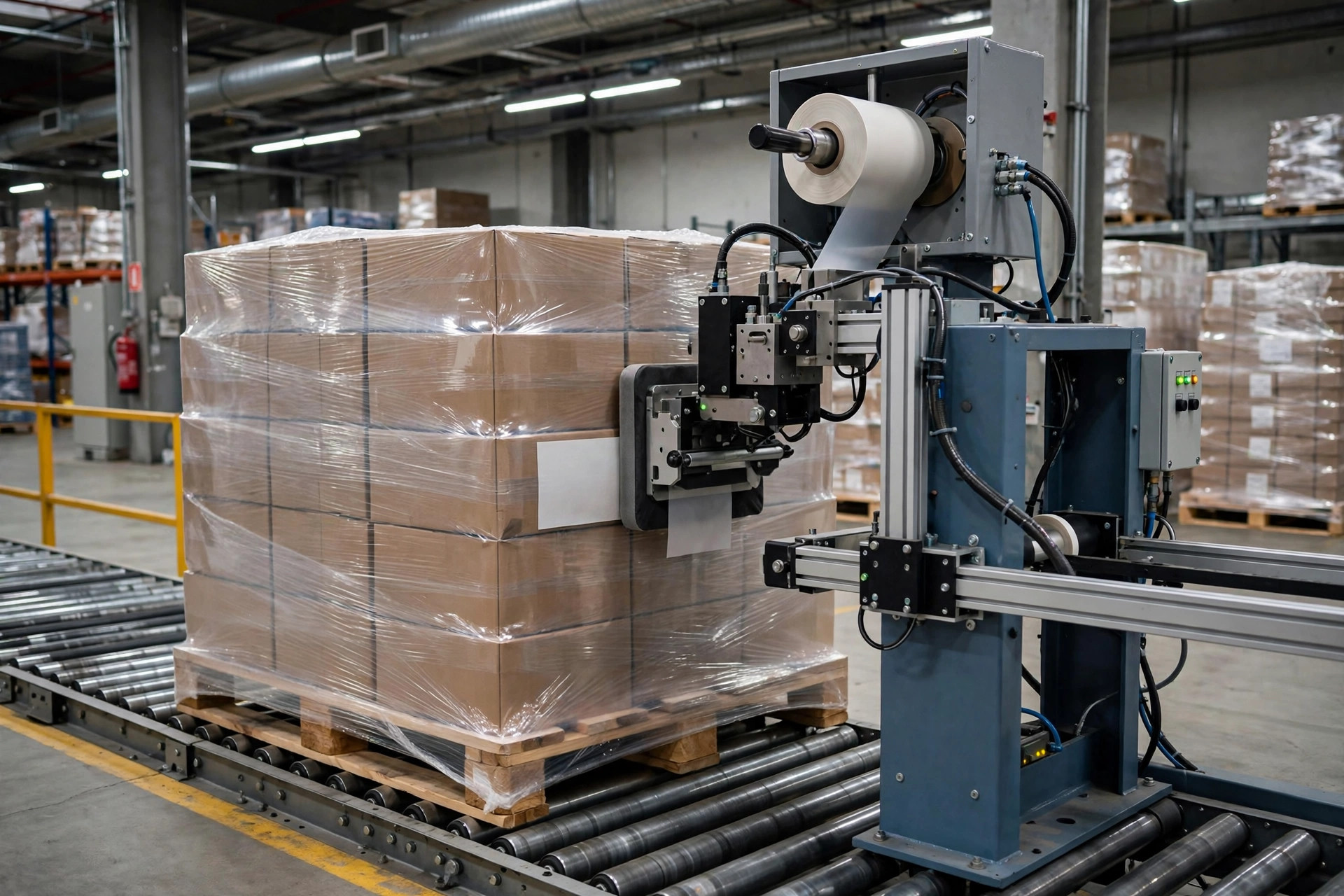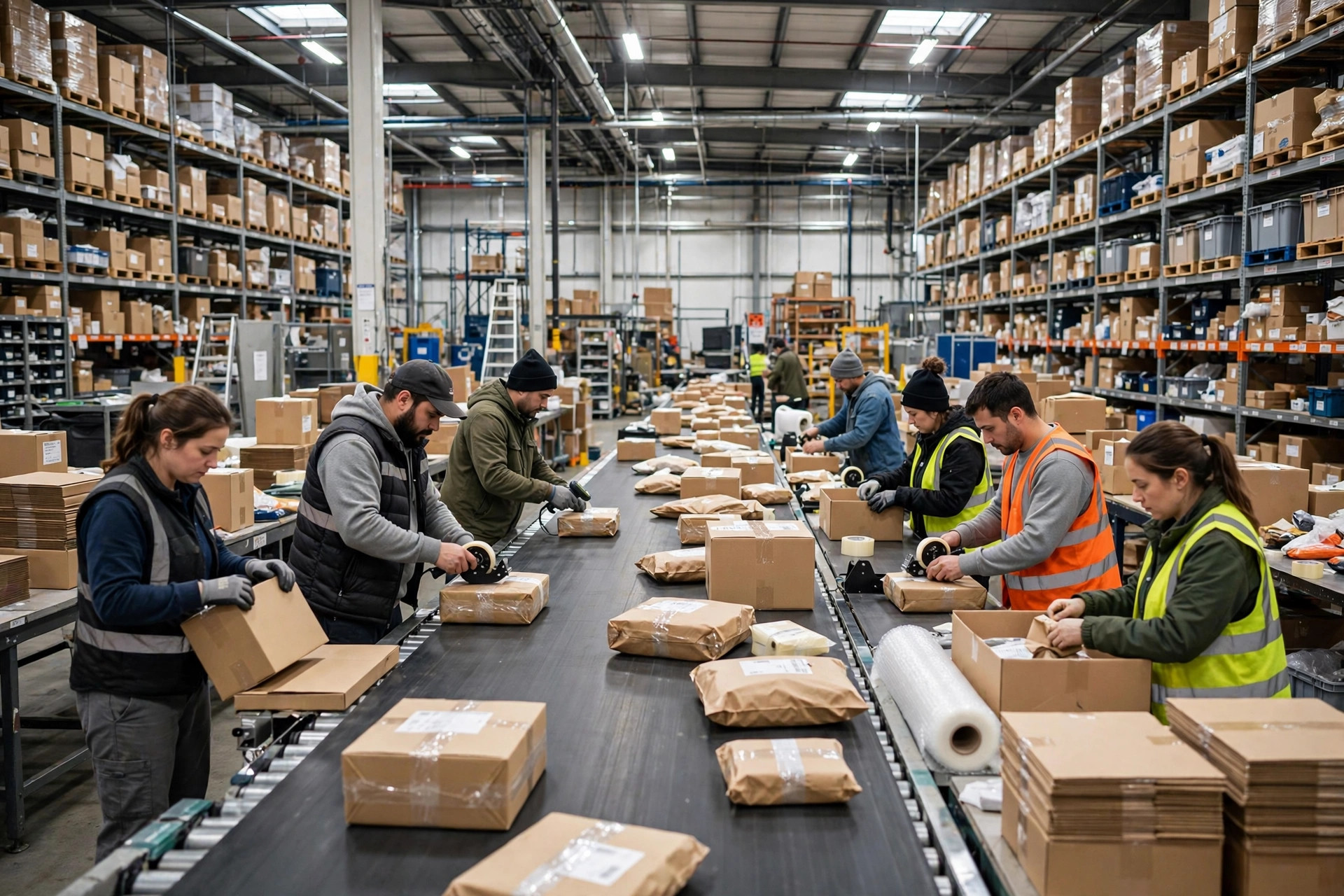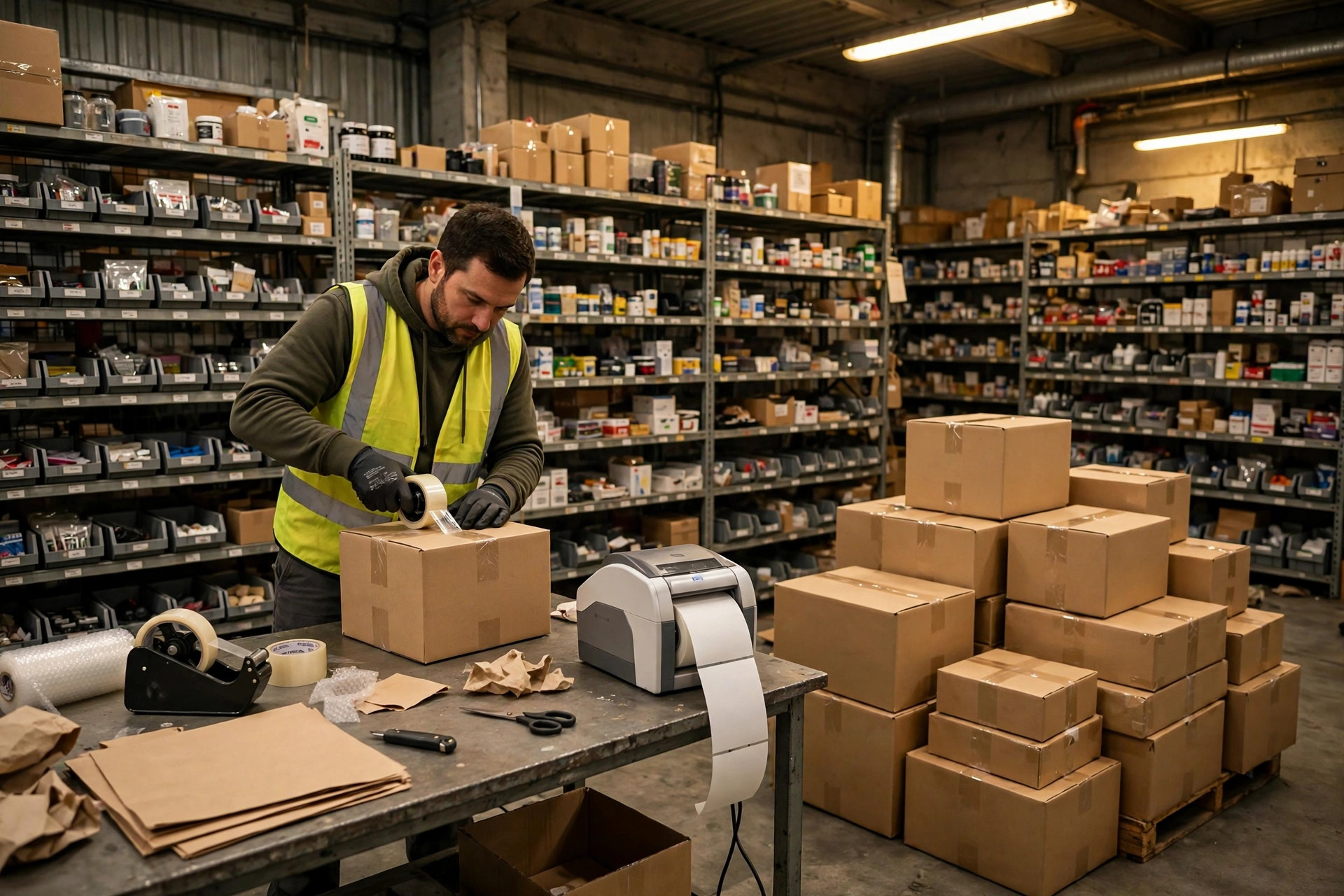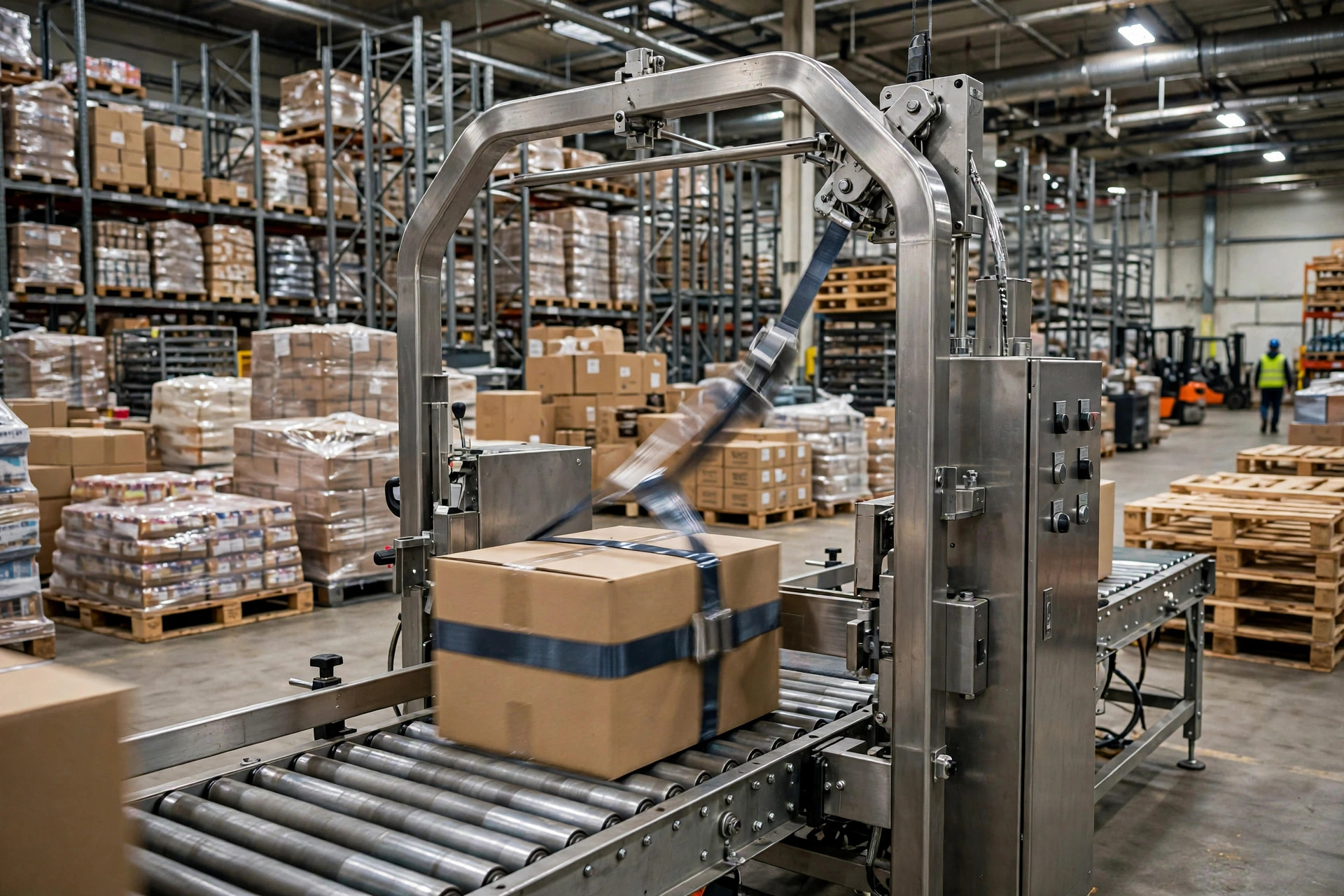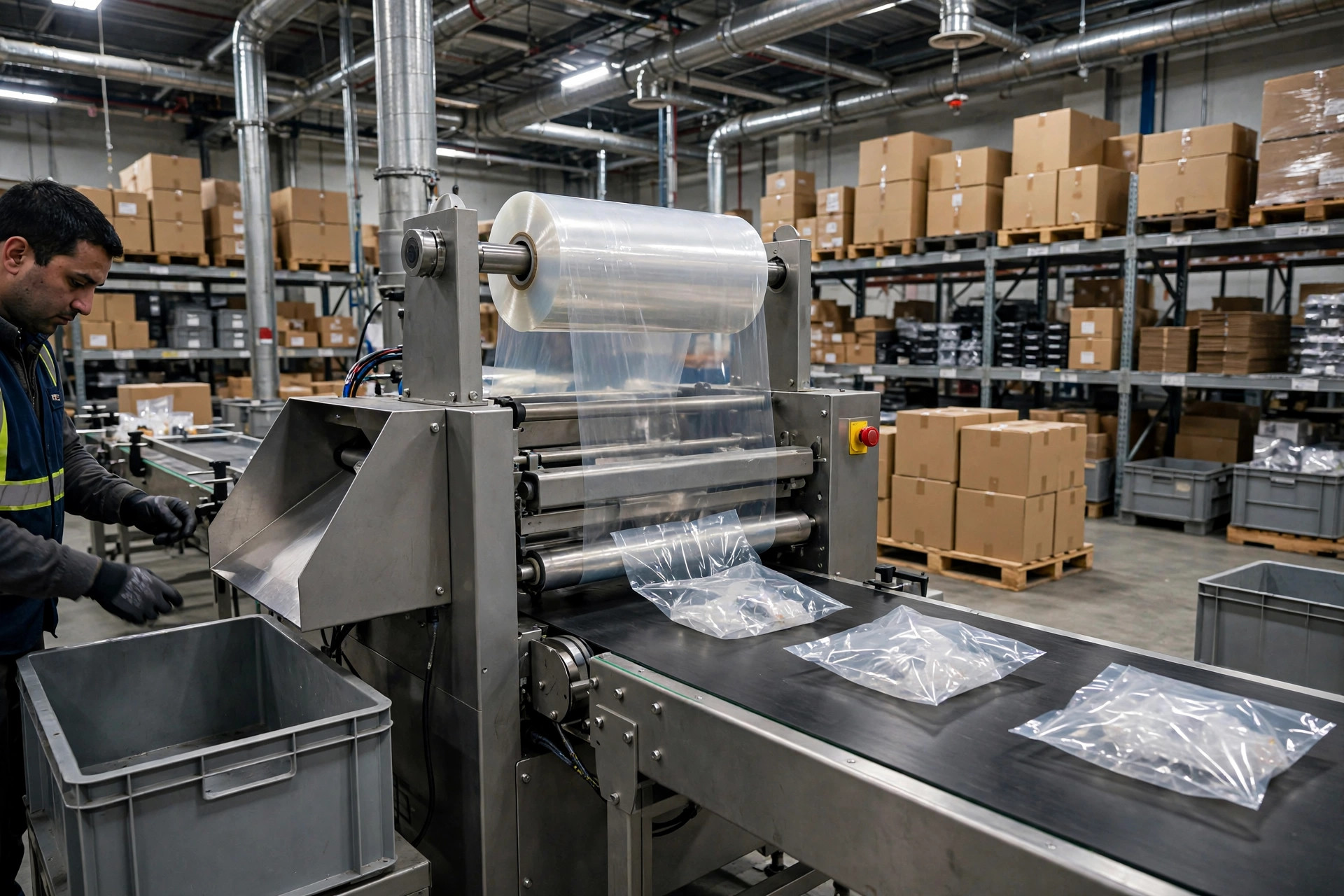
Early this year I visited an e-commerce warehouse selling phone accessories - 8,000 orders a day, 14 people in packing, 22 in peak season and still falling behind. The owner pointed at a corner and asked: an auto-bagging machine costs $150,000, is it worth it? I didn't answer directly. I walked him through three calculations. He placed the order himself after the third one.
My verdict up front: for small-parcel e-commerce doing 3,000-plus orders a day with small, light items, an auto-bagger is very likely worth it. Under 1,000 orders a day, or with heavy and irregular products, don't touch it. If you're in between, run the math below and judge for yourself.
Calculation one: five times the speed - and humans aren't built for this
Manual bagging: a skilled packer does 120 to 150 units an hour, and that's with tidy products and cooperative bags. An auto-bagger: mainstream models run 600 to 900 bags an hour - bagging, sealing, labeling, and conveying in one pass. One operator running one machine replaces five or six manual packers.
But rated speed understates the gap. The real difference is consistency: a human slows 20% by 3 PM and 35% by hour ten of a shift. That's human nature, you can't fix it. A machine runs the same speed at 8 AM and 8 PM as long as the film doesn't run out. In peak season, when the line runs around the clock, the gap stretches to eight times.
Calculation two: fully loaded cost - payback in 8 to 14 months
In California, a packer earns $18 to $22 an hour; add insurance, taxes, and management overhead and the fully loaded cost is roughly $25 to $30 an hour. A 10-person packing crew costs $500,000 to $600,000 a year in labor alone.
One auto-bagger: $120,000 to $180,000 for the machine, $20,000 to $30,000 for installation and conveyor rework - $150,000 to $200,000 all in. After that, one machine needs two or three people (loading, exception handling, film changes), under $150,000 a year in labor. Annual labor savings of $350,000 to $450,000 put payback at 8 to 14 months. Run two shifts and it drops to 6 to 8 months.
Don't forget consumables: machine film rolls cost 15% to 20% more than generic poly mailers, but you eliminate cartons, tape, and void fill. Net-net, per-unit packaging consumable cost drops $0.10 to $0.20. At 8,000 orders a day, that's over $200,000 a year in consumables alone.
Calculation three: not every product belongs on the machine
This is where most owners get overexcited. Stop. Auto-baggers have a hard applicability boundary, and forcing it ends badly:
Good fits: items under 5 pounds, regular shapes, non-fragile. Phone accessories, apparel, small novelties, stationery - perfect. Volume needs to be steady at 3,000-plus orders a day so the machine stays fed.
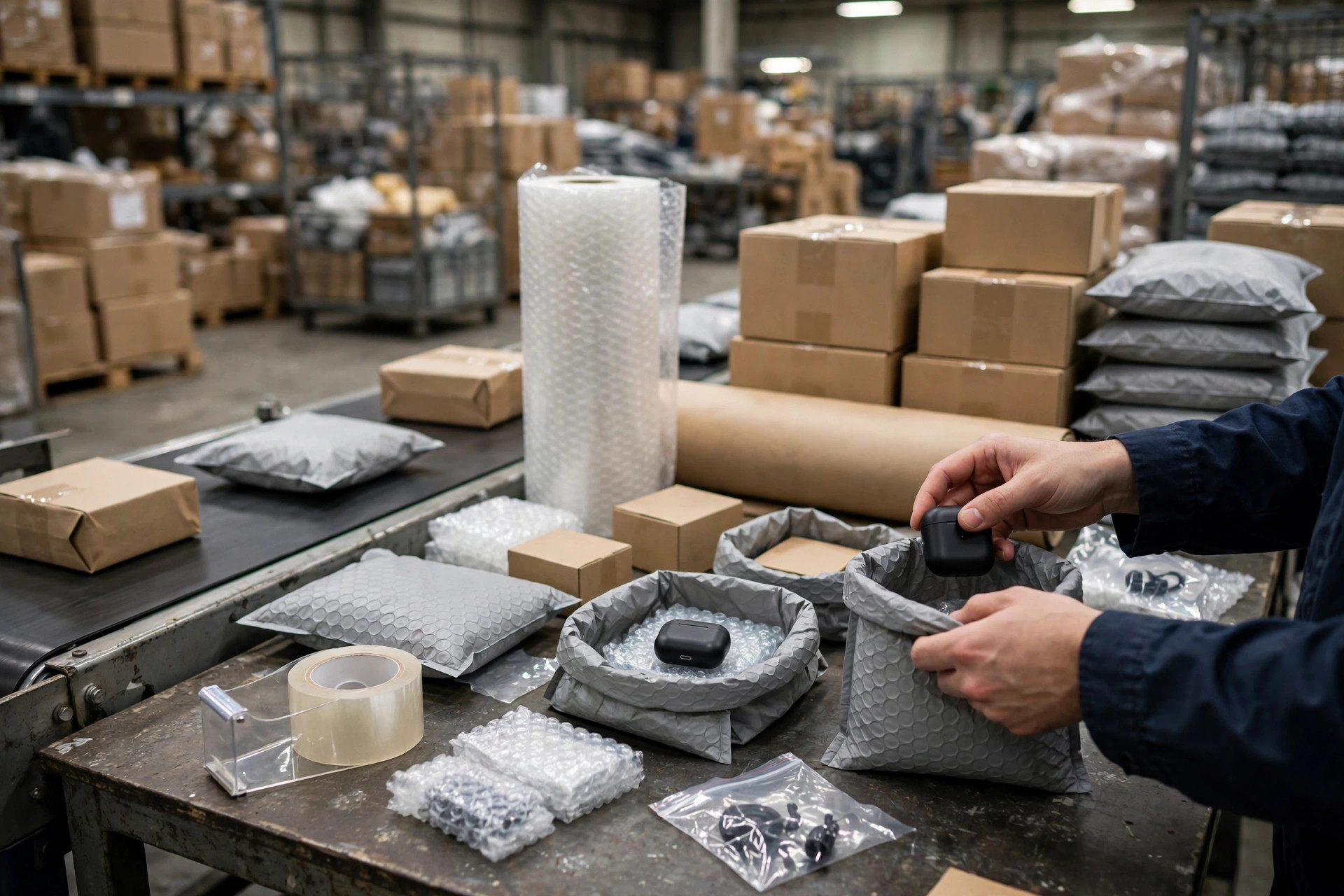
Bad fits: irregular shapes (jams at the sealer), fragile goods (baggers provide zero cushioning - damage rates run higher than manual), multi-item combo orders (five to eight different SKUs in one order; the machine wastes more time switching film than a human does), heavy goods (over 10 pounds, the bag and the seal both give up).
The worst case I saw: a ceramics warehouse installed a bagger and the damage rate went from 1% to 4%. Return shipping ate every dollar of labor savings, plus a pile of one-star reviews. The machine sat idle after three months.
Five questions before you buy
On the fence? Answer these five questions. Four or more "yes" answers and it's worth a serious look:
- Is daily volume steady above 3,000 orders?
- Are 70%-plus of orders single small items under 5 pounds?
- Is packing your labor bottleneck - adding temp workers in peak, overtime the rest of the year?
- Is your current damage rate under 1% - meaning the products can take it?
- Do you have at least 200 square feet for the machine and film rolls?
All yes? Don't order yet. Two things first: measure one week of your real manual UPH (units per hour) and damage rate - that's your baseline. Then have the vendor run a live trial on your floor with your products and your volume for four hours. Compare the trial numbers against your baseline. Only then talk price.
Buy or lease: a third path when cash is tight
$150,000 upfront hurts for a mid-size operation. Besides buying outright, two more paths:
Financing lease: equipment vendors or third-party lessors typically offer 3-to-5-year terms at $3,000 to $4,500 a month. Total cost runs 15% to 20% above cash purchase, but the cash flow pressure is far lighter. A warehouse doing 5,000 orders a day saves around $30,000 a month in labor - a $4,000 monthly payment is trivial against that.
Used machines: plenty of baggers hit the market when e-commerce operations shut down. Three-to-five-year-old machines go for 40% to 60% of new price. Two caveats: confirm the manufacturer still supplies parts and service, and run the trial with your own products on the actual machine. An old machine with unstable seal temperature will quietly eat your margin through damage.
My recommendation: if you're still ramping (3,000 to 5,000 orders a day), lease first and buy out after six months of proven data. Stable above 8,000 a day? Buy new and don't look back.
Picking the machine: four hard specs, ignore the sales pitch
When you're ready to spec a machine, these four matter. Everything else is secondary:
Bag width range. Measure your products - what width covers 90% of them? Too narrow and the fastest machine in the world is useless to you; too wide and you bleed film money daily. Make the vendor test with your actual products, not the brochure's "maximum supported" figure.
Sustained speed, not peak speed. The brochure says 1,200 bags an hour; on your floor it will hold 700 if you're lucky. Time a four-hour average during the trial - that number is your capacity plan.
Film compatibility. Some machines only take OEM film at 30% above market price. That's a consumables lock-in. Ask directly: does it run third-party film, and does switching film require re-tuning? This one question can save tens of thousands a year.
Label integration. Can the machine talk to your shipping system - auto-printing and auto-applying labels? A machine that can't integrate saves bagging labor and adds labeling labor. Net zero.
The three traps in week one
The machine arrives. Now the real test begins. I've watched people step in these three traps more than once:
Film stockouts. A bagger without film is a stopped line. Keep two weeks of film on hand minimum, a month before peak. Film lead times run two to three weeks - don't order when you run out.
Nobody can clear a film jam. Operators must be able to clear a jam in under five minutes. During training, don't just teach which button starts the machine - laminate a card with the three most common jams (film tracking drift, seal temperature faults, cutter sticking) and tape it to the machine. One 20-minute stoppage, five times a day, and your capacity advantage is gone.
The displaced workers. Packing goes from 14 people to 4. What happens to the other 10? Talk to them a month ahead - moves to picking, to QC, or natural attrition. Announcing it when the machine arrives kills morale, and the remaining crew won't cooperate. The smoothest rollout I saw had the plan settled two months early - zero resistance on day one.
One last honest word: a bagger eliminates repetitive labor, not people. After installation, keep two or three sharp operators on exception handling, film changes, and QC - when the film jams and nobody's watching, an afternoon of capacity disappears. Equipment is an amplifier. If management can't keep up, it amplifies the problems.