One Tuesday morning this past January, I opened three seller dashboards — Amazon, Walmart, and TikTok — and my stomach dropped.
Our Amazon OTDR had slid to 87%, flashing red. Walmart's on-time delivery rate was hovering at 89%, yellow. And TikTok went straight for the jugular: late dispatch rate over the limit, shop throttled for seven days. We run a 3,000-square-meter warehouse, fulfilling for about a dozen small sellers. One of our sellers called me that afternoon, and his first words were: "Ma, my traffic got cut in half this week — are you guys shipping late?"
We were not shipping late. Every box left on time. The problem was simpler and more painful: what the platforms call "on time" and what we call "on time" are two completely different things.
On-Time Metrics: Three Platforms, Three Different Exams
Here is the blunt truth: the three platforms' speed metrics sound similar but run on entirely different logic. Apply one playbook to all three and you will get burned.
Amazon grades you on OTDR (on-time delivery rate): at least 90% of your seller-fulfilled units must arrive by the promised delivery date. Three details matter. First, it measures delivery, not dispatch — if the carrier dawdles in transit, that is your problem. Second, only parcels with valid tracking scans count. Third, two companion metrics ride along: late shipment rate must stay under 4% (measured by ship date), and valid tracking rate must stay above 95%.
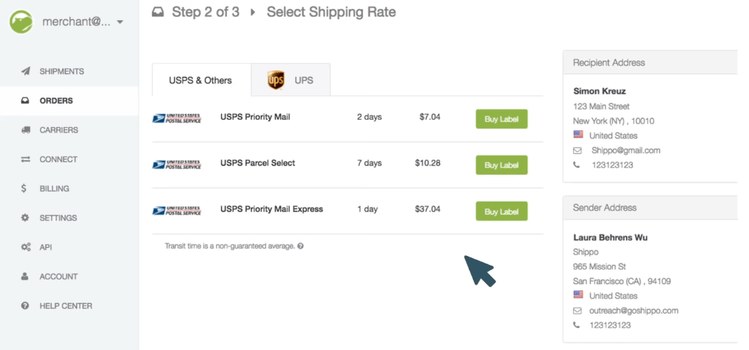
Walmart is stricter. Its on-time delivery rate (OTD) also has a 90% floor, also measured at delivery. But its valid tracking rate (VTR) requirement is 99% — read that again, ninety-nine. Out of 100 orders, you get roughly one tracking failure before you are in trouble. And Walmart only counts an order as shipped once the parcel is physically in the carrier's hands. A printed label means nothing.
TikTok has the quirkiest algorithm of the three. It watches your late dispatch rate (LDR): the platform recommends staying at or under 4%, but the line where enforcement actually kicks in is 10%. Cross it and you lose account health points, get throttled, and face extended settlement periods. There is also an on-time delivery requirement of at least 80% and valid tracking of 95% or better. And here is the iron rule that bit us: an order must be scanned by the carrier within two business days. Printing the label does not stop the clock.
Here is the comparison chart I taped to our warehouse wall:
| Metric | Amazon | Walmart | TikTok |
|---|---|---|---|
| Main speed metric | OTDR ≥ 90% (by delivery) | OTD ≥ 90% (by delivery) | LDR ≤ 4% recommended, enforced above 10% |
| Companion speed metric | Late shipment rate < 4% (by ship date) | — | On-time delivery ≥ 80% |
| Valid tracking rate | > 95% | ≥ 99% | ≥ 95% |
| "Shipped" means | Label + tendered | Physically handed to carrier | Carrier scan recorded |
| Falling short | Listing deactivation, warnings | Suppression, suspension, termination | Point deductions, throttling, longer settlement |
(Thresholds change — always check each platform's seller center for the latest policy. Do not treat my wall chart as gospel.)
See the pattern? Big sellers do not even play this game. They use the platform's own logistics — Amazon Buy Shipping, Walmart WFS, TikTok FBT — which come with built-in metric protection. Late delivery on those does not count against you. We cannot afford that luxury. The platform logistics rates run noticeably higher than the carriers we negotiated ourselves, and at a few hundred orders a day, that difference adds up to tens of thousands a year. So we do it the scrappy way.
What a Metric Meltdown Actually Costs: Our Two Tuition Payments
Tuition payment number one: the TikTok throttle. Back in November 2025, peak season, we were fulfilling about 120 orders a day for a pet-treats seller. One week the carrier driver skipped our afternoon pickup. Everything was packed, labels printed, boxes stacked at the dock — waiting. The driver grabbed everything the next morning, and the scan landed a day late. Our late dispatch rate for that week hit 12%, enforcement triggered automatically: seven days of throttling, daily orders collapsing from 120 to 40. That seller lost roughly $8,000 in sales that week and nearly fired us.
The lesson was brutal and simple: in the platform's eyes, a printed label equals not shipped. The clock only stops when the carrier's scanner goes "beep." That gap in understanding almost killed us.
Tuition payment number two came from Walmart, during the January 2026 cold snap that froze the Midwest. Highways closed, carriers delayed three to four days, our OTD fell from 96% to 84%. Force majeure — surely the platform grants exceptions? Naive. Walmart's appeal channel exists, but it demands an evidence chain, not your explanation. Our first appeal said "delayed due to weather." Rejected in seconds.
We got smarter. We built a standard appeal package: the carrier's own delay notification screenshot, tracking records showing "weather delay" scan events, and the National Weather Service alert link. Three items, submitted together. Second round: 29 of 37 orders reinstated, OTD back to 91%, account saved. Since then our warehouse has a standing rule — every carrier handoff record gets archived, every weather alert screenshot gets saved the same day. Costs nothing. Slightly annoying. Saves your life when it counts.
Quick math on that cold snap: no successful appeals would have cost that seller about 60 orders/day × $35 average order × 7 days × ~30% traffic loss ≈ $4,400. Our cost to assemble the appeal package: two people, half a day of screenshot-gathering.
The Scrappy Playbook: Four Zero-Budget Tactics for On-Time Metrics
The big-seller playbook is not available to us. These four moves are — paid for in our blood, sweat, and tears. They cost almost nothing. Steal them.
Tactic 1: Promise conservatively — add a day. This is the most counterintuitive one. Small sellers love aggressive promises: "Delivery in 2 days!" Promise 2 days and any carrier hiccup tanks your OTDR. Promise 3 days and you might lose 2–3 points of conversion — but your metrics stay rock solid. We tested it: adding one day cost us about 2% in conversion, but OTDR climbed from 88% back to 96%, and the traffic weight we regained brought in far more orders than that 2% ever cost. The platforms grade the percentage of promises kept, not your absolute speed.
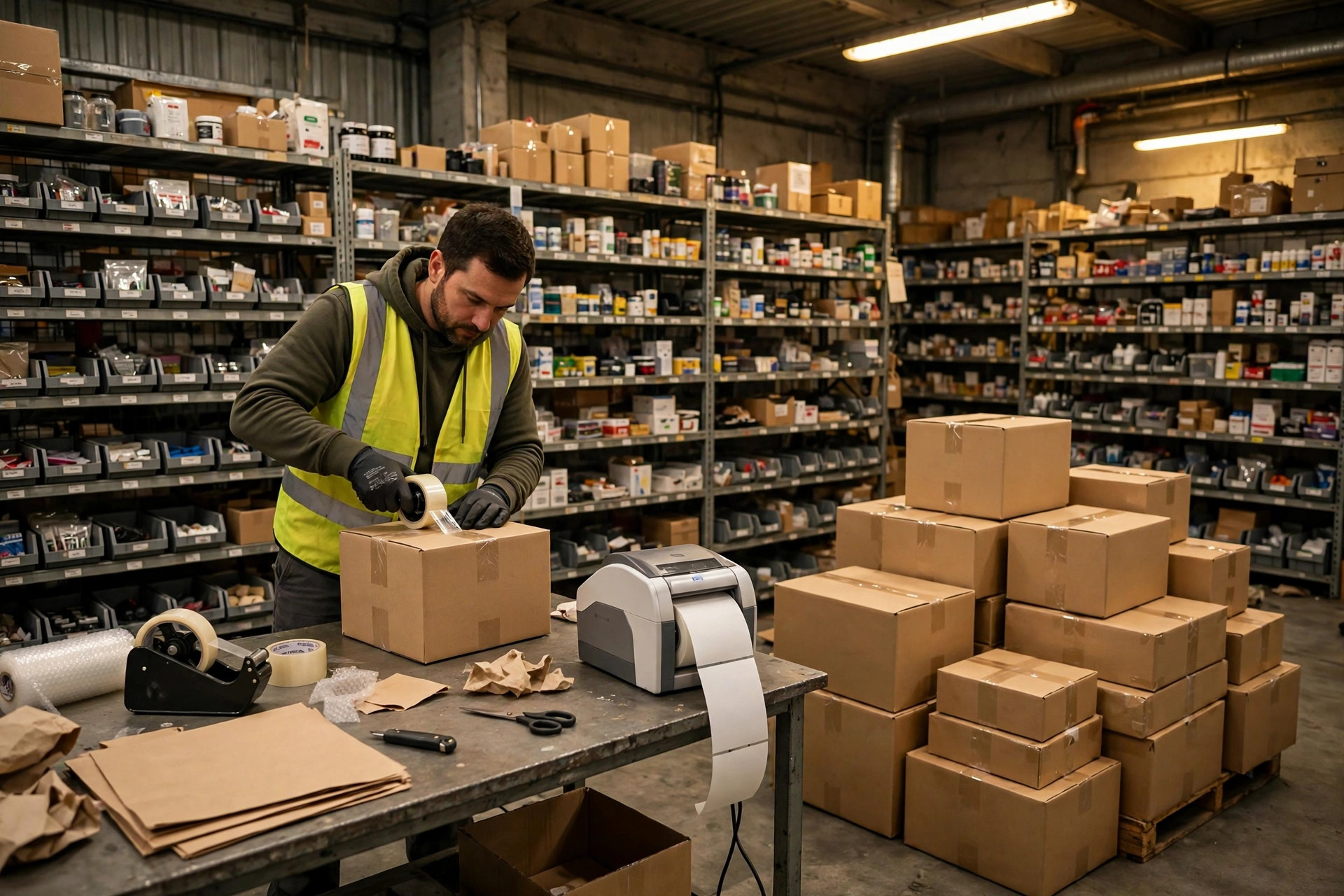
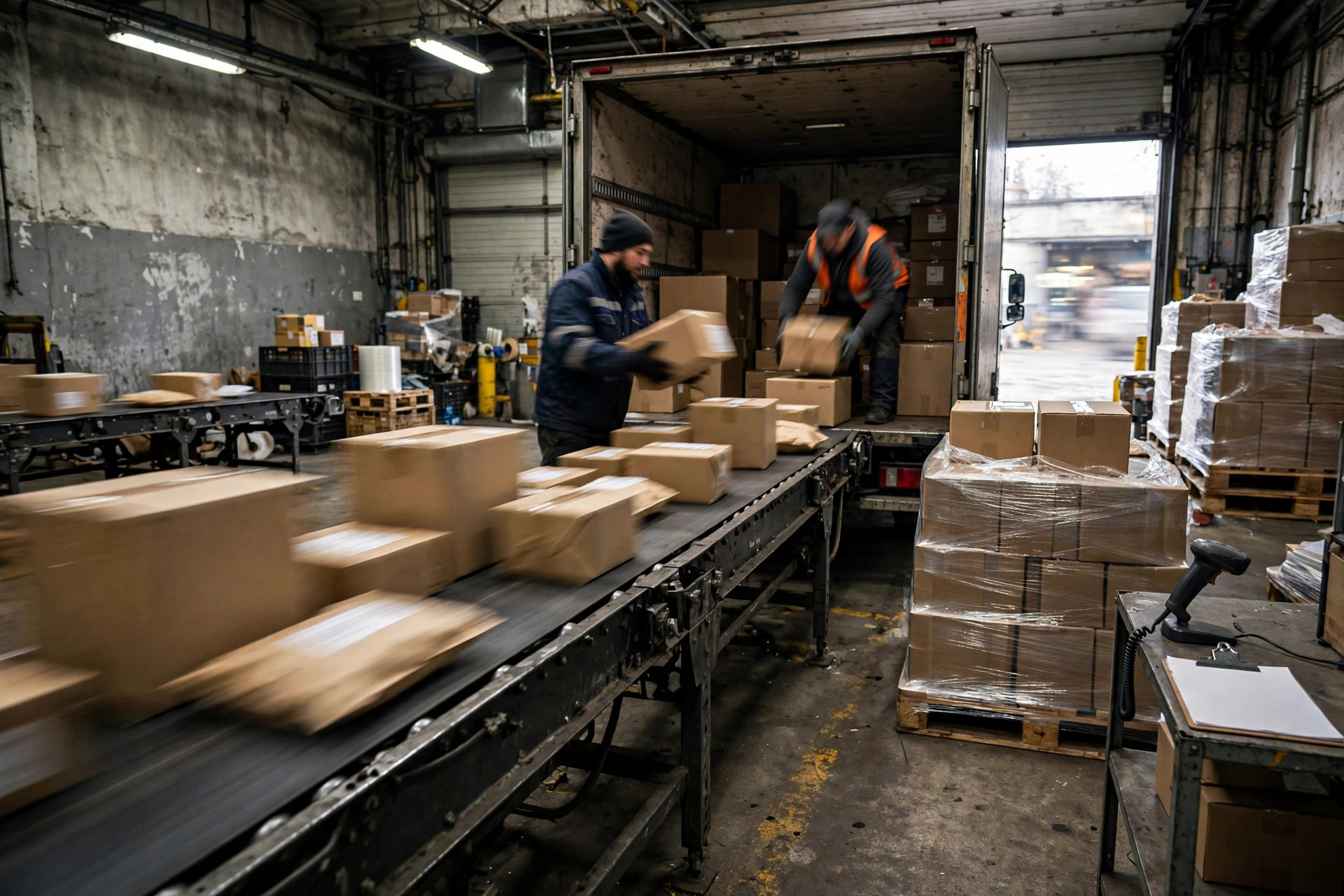
Tactic 2: A hard order cutoff — and no loading without a scan. Our warehouse cuts off at 3 PM daily; orders after 3 PM automatically get their promise pushed a day. More importantly, the driver must scan on the spot before we release the freight. We used to let drivers haul everything away and scan back at the depot — a 4-to-6-hour gap, and TikTok's two-day window cannot afford that. Our deal with the driver: no scan, no loading. He grumbled at first. Two coffees later, it is routine.
Tactic 3: A backup carrier — "dual labels." Our primary is a regional carrier, cheap. Our backup is a UPS account, pricier but rock solid. Every day at 2 PM we check the primary carrier's pickup status — driver hasn't shown, depot looks swamped — and that day's TikTok and Walmart orders get re-labeled to the backup immediately. A multi-carrier label platform costs a few dozen dollars a month. That is two orders of magnitude cheaper than one throttling event. Small warehouses cannot afford to go all-in. Eggs go in two baskets.
Tactic 4: An appeal evidence folder — free insurance. We keep a shared folder, organized by date, holding three things: daily carrier pickup sign-off records (driver signs, we photograph), news screenshots of weather events or strikes, and platform dashboard metric screenshots. When a metric drops, the appeal package takes ten minutes to assemble. Remember the unwritten rule of platform appeals: evidence must be independently verifiable. Your own written explanation is worthless. The carrier's scan records and the government's weather alerts are the hard currency.
One honest closing thought. These on-time metrics exist to protect the shopping experience — fair enough. But the system is built for big sellers: they get platform logistics as a shield, automated integrations, dedicated staff watching dashboards. Small warehouses and small sellers cannot outspend that. We out-care it. Write your promises a little conservatively. Enforce your cutoff a little harder. File your evidence a little more carefully. OTDR and late shipment rates look scary on a dashboard, but they are paper tigers once you know how the clock actually works.
Small warehouses have their own way of surviving.
By Xiao Ma, Small Warehouse Owner