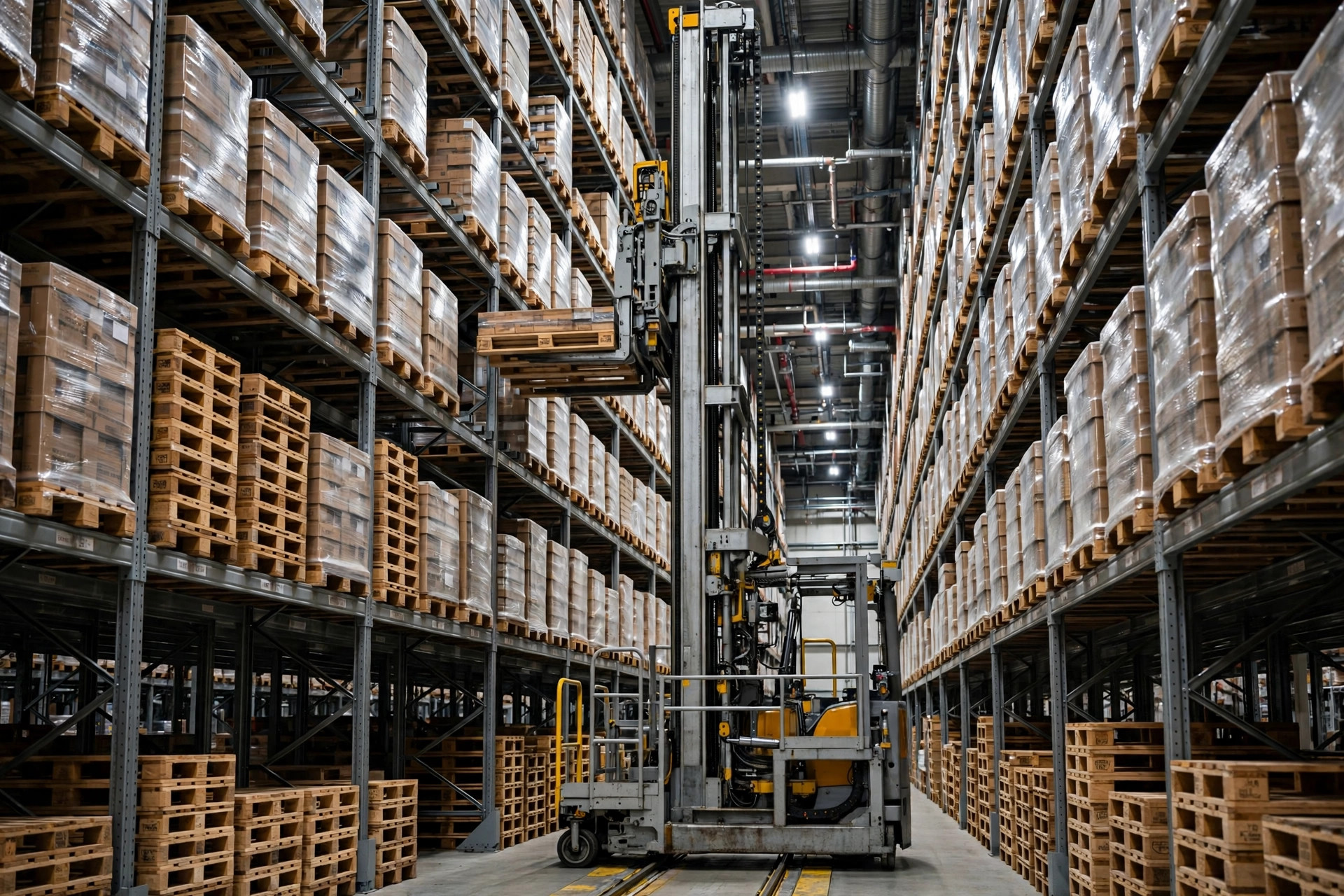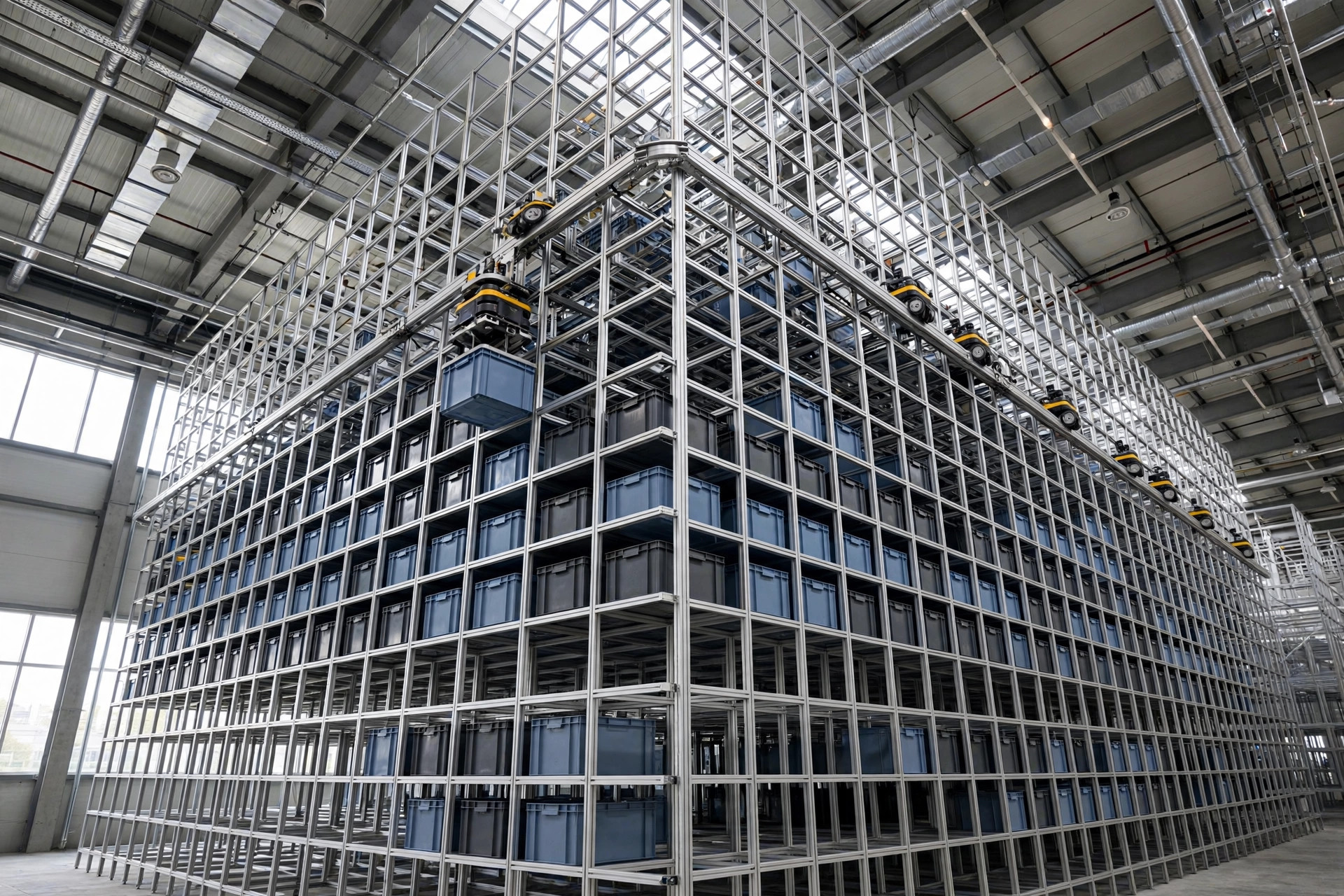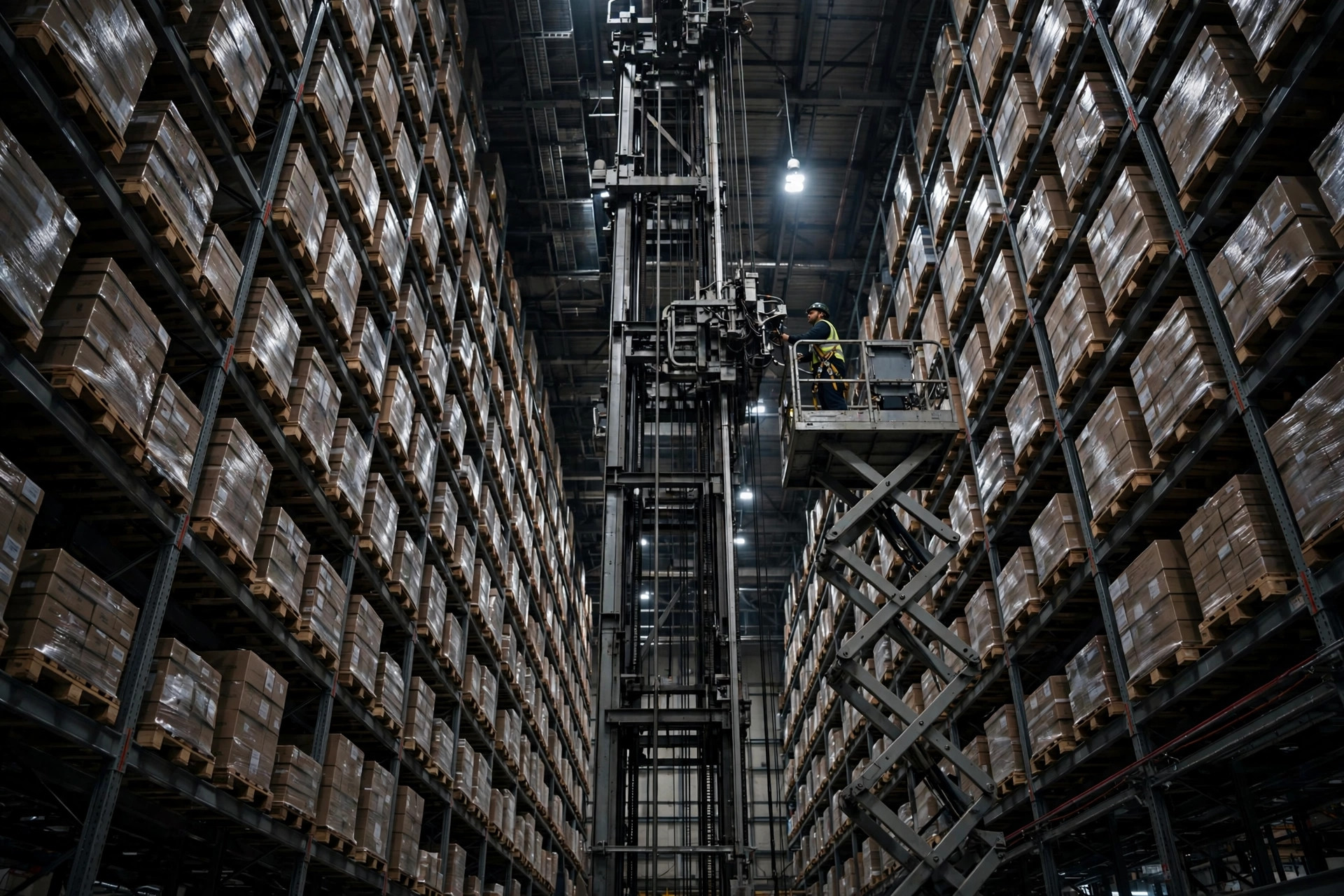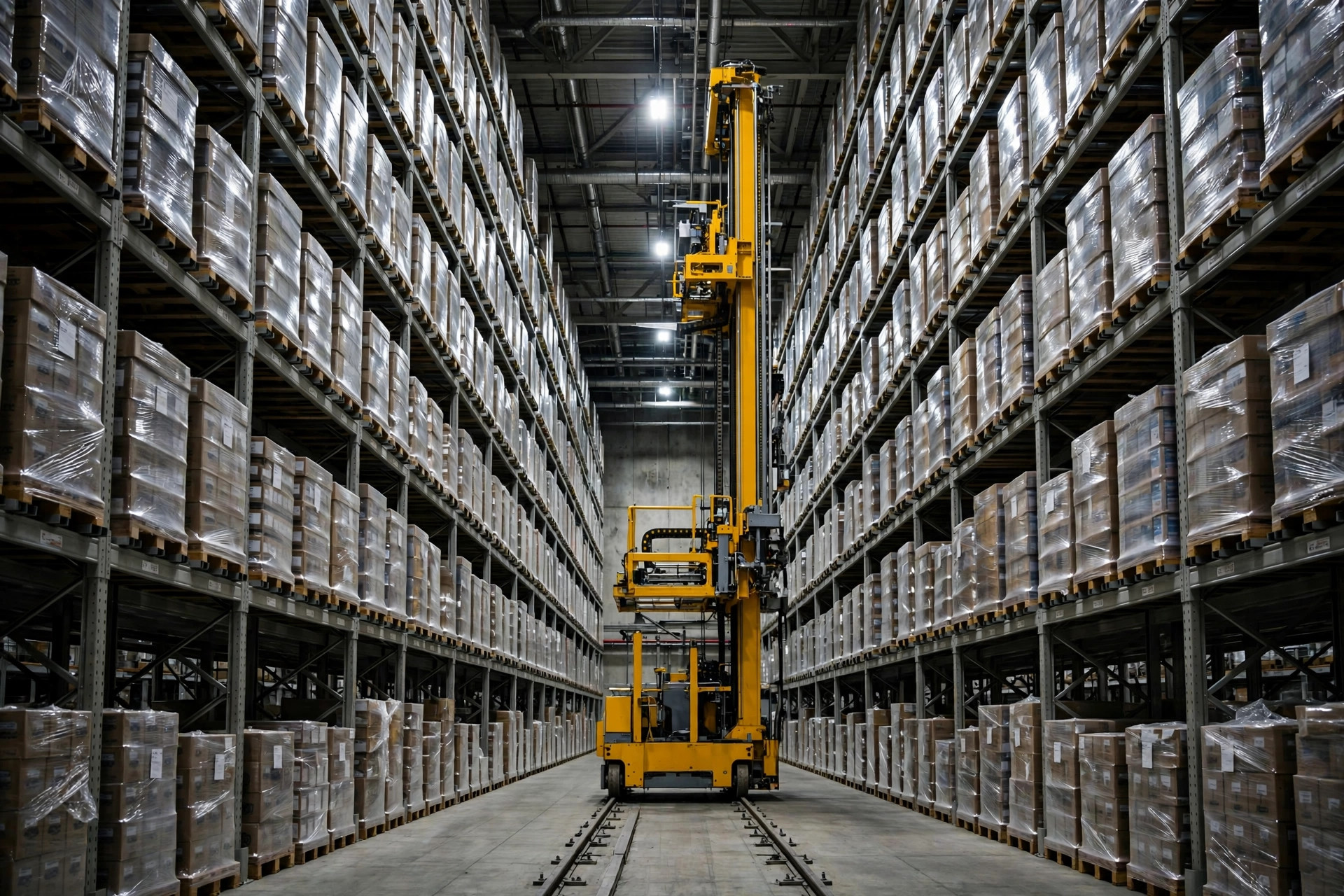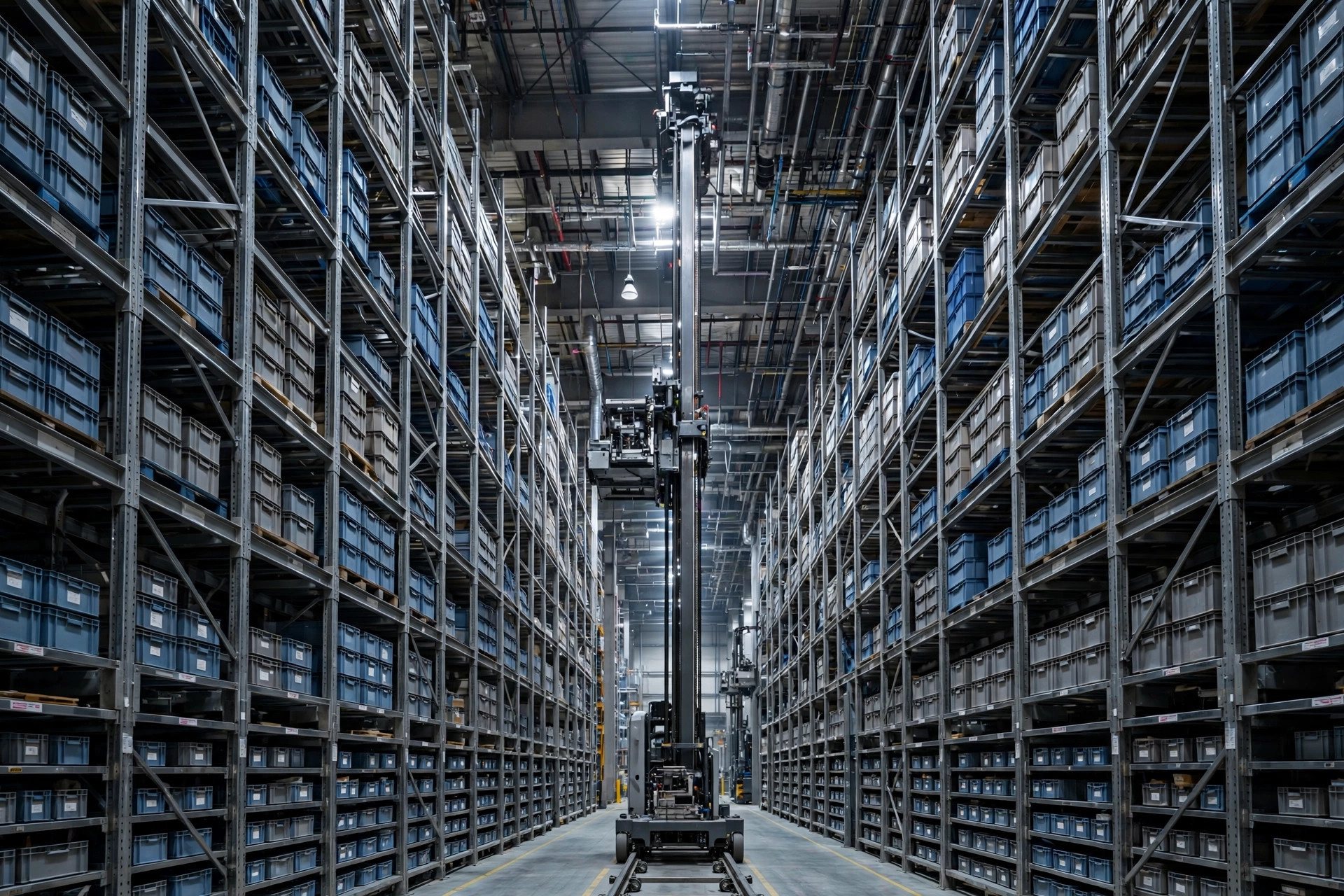
In the fall of 2022, a 3PL project in Fontana, California — a 24-meter-tall, six-aisle pallet ASRS — had its building drawings bounced back by the county plan checker. One line of explanation: the steel structure was engineered to Midwest seismic parameters, and this is California. Recalculate. The owner was stunned. The equipment contract was signed, the stacker cranes had a 40-week lead time, the drawing rework took six weeks, and the steel package went up 9%. If you take one thing from this article, let it be this: ASRS seismic design requirements are not a stamp you collect before topping out. They are system parameters you lock in on day one.
Think of it this way: seismic design for a conventional warehouse protects the building from collapsing. Seismic design for an ASRS protects the system from going blind. A stacker crane reads addresses with millimeter precision. Shift a 20-meter rack by 10 millimeters and the structure may be perfectly fine — but the machine can no longer see.
What ASRS Seismic Design Requirements Actually Cover: Two Things Ordinary Racking Never Worries About
First, the earthquake math is different. Ordinary pallet racking is checked against static plus amplified dynamic loads. In California, an ASRS is designed to ANSI/RMI MH 16.1 seismic provisions, the seismic design category starts at SDC D, and the importance factor is taken at 1.5. Think of it as a heavy-duty bulletproof vest for the rack — not because the rack is fragile, but because it holds tons of product and runs million-dollar machines down its aisles. The cost of failure is multiples of what a conventional rack failure costs.
Second, the pass/fail criterion is not "did it fall down." It is "does everything still line up." The floor rail, the top rail, and the rack uprights are three independently installed systems. When they move differently in a quake, the load handler can drive straight into a beam. After the 7.1-magnitude Ridgecrest earthquake in July 2019, a Southern California warehouse learned this the hard way: the racks had shifted as a unit by roughly 12 millimeters while the floor rails never moved. The laser positioning system threw "address deviation exceeded" errors nonstop. More than 8,000 pallet positions showed inventory in the WMS, and the cranes could not retrieve a single pallet. Two days of troubleshooting found nothing wrong with the electrics — the problem was structural. The rails had stayed; the racks had moved. Laser-tracker re-surveying and re-teaching every aisle took three days. During those three days, two e-commerce tenants in that building shipped nothing.
ASRS Seismic Design Requirements at Selection Time: Four Decisions That Get More Expensive Every Day You Delay
Here is the counter-intuitive part, up front: the tallest ASRS is not necessarily the most dangerous one. I have seen a 30-meter ASRS ride out a quake without a scratch, and a 14-meter e-commerce ASRS down for a week. Danger is not height. Danger is the racks moving while the rails stay put. Seismic design is really about making them move together — or making sure they can be re-aligned afterward.
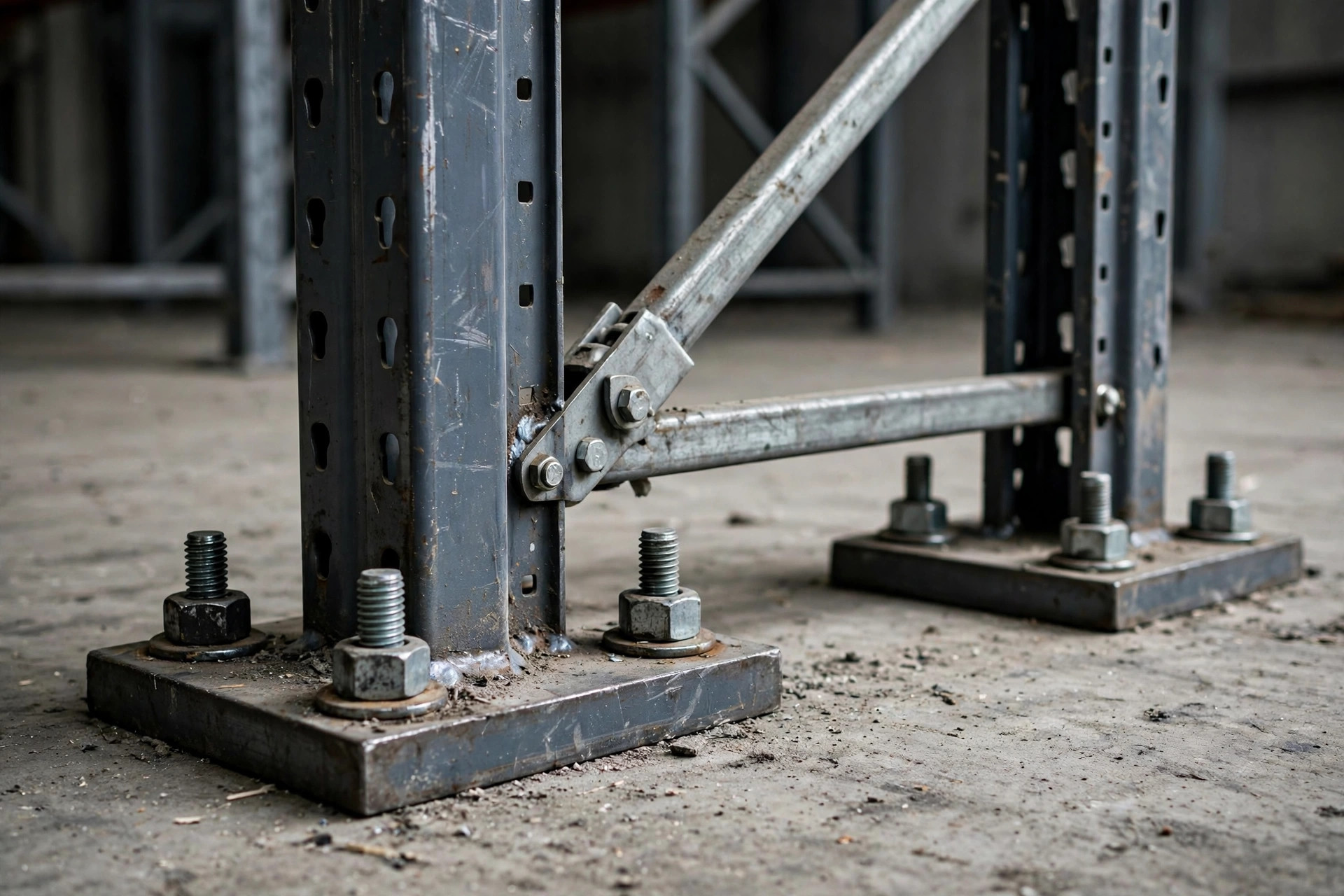
Decision one: cast-in-place embedment versus post-installed anchors. In seismic zones, rack column base bolts must be embedded when the slab is poured. Post-drilled chemical anchors lose pull-out capacity faster under repeated shaking. Embedment means the civil works and equipment schedules get locked together — one week late in selecting the crane vendor, one week later the slab. This decision belongs on day one. Retrofitting it later is the same as not doing it.
Decision two: connected to the building or structurally independent. The common California approach is a self-standing rack with seismic separation joints from the building shell. Very tall systems sometimes use rack-supported construction, where the rack is the load-bearing structure of the walls. The two approaches have completely different earthquake load paths; pick the wrong one and the entire calculation gets thrown out. People ask me whether they can "build it now and add seismic later." My answer: no. That is like asking whether you can pour the foundation after the house is finished — a pseudo-question.
Decision three: independent foundations for the rails. If the crane rails sit directly on the slab, a cracked slab takes the rail with it. The seismic approach is an independent strip foundation for the rails, decoupled from the rack footings, with leveling allowance built in. This is roughly a third of the seismic steel premium — and it is the line between three days of recovery and three weeks.
Decision four: the height and load break point. A 24-meter and a 12-meter ASRS do not scale linearly — the higher you go, the stronger the top-level amplification, so the top two levels get their own reinforced connection details. And a 1-ton pallet versus a light tote is a different order of slide-off risk; whether you add anti-slip retainers depends on per-pallet weight, not total building height.
The Maintenance Trap: After a Quake, the First Job Is Not Restarting — It Is Verifying Alignment
Many warehouses write "inspect racks for visible deformation after an earthquake" in their emergency plans. That is half the job. Post-quake recommissioning for an ASRS has a fixed sequence.
First, structures: check column bases, bracing nodes, and anchor bolts for visible displacement or loosening. If you find any, do not restart. Second, geometry: laser-check rail straightness and rack verticality on three to five sample aisles. If deviation exceeds the equipment maker's tolerance — usually a few millimeters, check the manual — fix the structure before touching the machine. Third, addressing: run the cranes at low speed through full-aisle addressing tests, confirm every location reads within tolerance, then ramp up gradually.
After Ridgecrest, several California ASRS owners I know added one rule: complete the geometry spot-check within 24 hours of any quake, regardless of magnitude. Small quakes do not hurt structures, but they can quietly nudge a rail. Running misaligned for three months and then slamming a fork into a beam costs far more.
Running the Numbers: What the Seismic Premium Actually Buys
Take a representative project for scale (your structural engineer's quote governs): a six-aisle, 24-meter, 12,000-pallet-position ASRS with steel supply and installation around $3.8 million. Doing the full California seismic package — embedments, densified bracing, independent rail foundations, reinforced nodes — adds roughly 8% to 12%, or $300,000 to $450,000.
Now the other side. After a moderate quake, without those measures:
| Loss item | Order of magnitude |
|---|---|
| Fallen product from upper levels (2% of positions affected, about $800 average per pallet) | about $190,000 |
| Five days down (4,000 pallets/day throughput, 3PL per-pallet handling fees) | $250,000–$400,000 range |
| Structural repair plus laser re-survey and re-teaching | $80,000–$150,000 |
| Customer claims and lost contracts | Hard to quantify — and the one 3PLs fear most |
That is easily $600,000-plus per event, 1.5 to 2 times the seismic premium. And insurance: many California warehouse policies carry exclusions for automated equipment "not designed to applicable seismic standards." When something happens, the insurer reads your design documents first.
So I will end with the one line I give every time someone asks whether seismic can be value-engineered out: whether this money is worth it comes down to a single number. Take your cost of one day of downtime, multiply by five, and compare it with the seismic premium. If the first number is bigger, this is not a cost. It is an insurance premium.
By Da Liu, Automation Engineer