Excerpt: ASRS fire sprinkler racking coordination is where most automated warehouse projects quietly go wrong. This guide explains why sprinkler layout must follow the racking design, where rework usually hides, and how to judge whether the money was well spent.
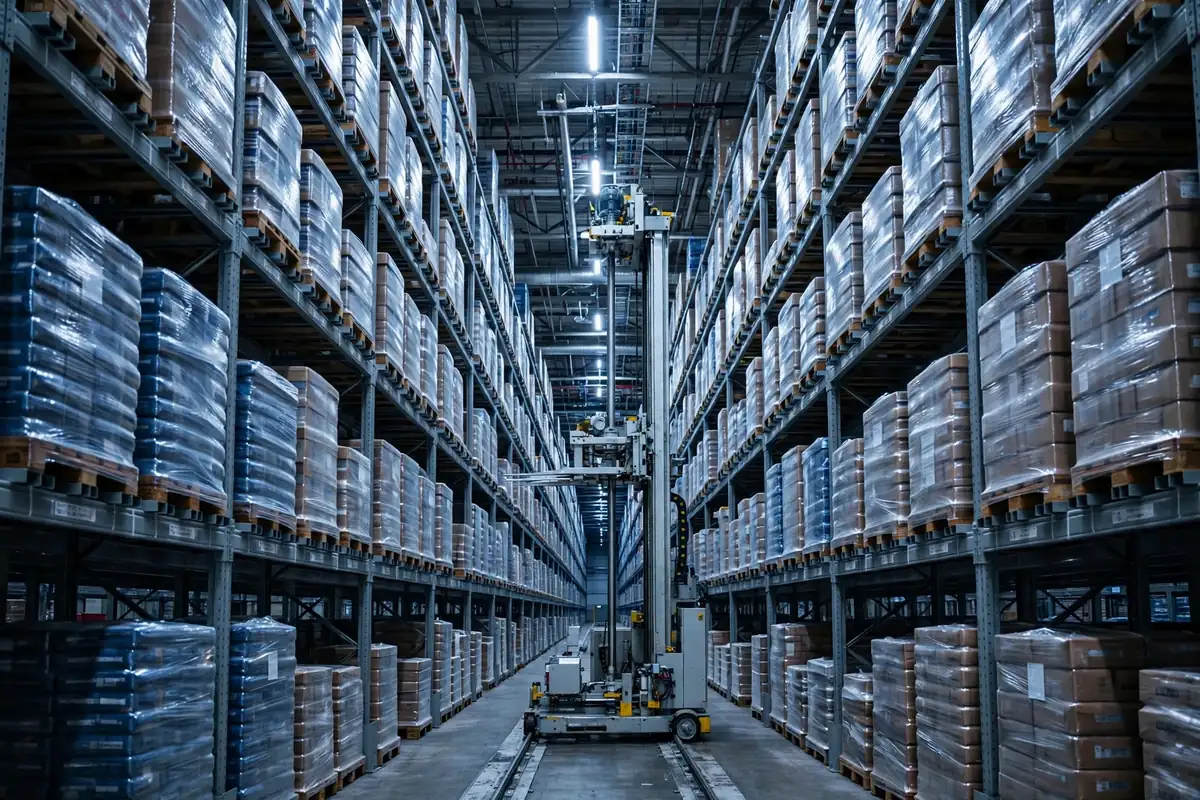
Ask a warehouse owner about their new automated storage and retrieval system and you will hear about crane speed, throughput per hour, and uptime. Almost nobody opens with fire protection. That is like buying a sports car and only discovering on delivery day that the garage door is too low. The machine can be brilliant and still useless if it cannot get through the door. In a high-bay AS/RS, fire behaves differently: smoke rises fast, water falls slowly, and layers of beams and pallets stand in between. Sprinklers cannot simply be hung from the ceiling and forgotten. They have to be designed together with the racking, or acceptance day will be painful.
Let me start with a lesson from the field. In 2023, an auto parts warehouse in Suzhou installed a crane-based AS/RS with racking 12 meters high, storing mostly plastic components in cardboard cartons. The racking vendor drew its own drawings. The fire protection contractor drew its own sprinkler layout. Neither side checked the other's work. By the time the racking stood and the crane moved in, the fire inspector walked the aisles and found the problem immediately: the top rack level sat too close to the ceiling heads, and the in-aisle sprinklers were blocked by beams, so water could never reach the goods. Two rows of top-level beams came down, the sprinkler piping was rerouted, and the schedule slipped by nearly two months. The rework bill alone would have covered a full set of crane spare parts. The lesson is simple and expensive: in an AS/RS project, the sprinkler scheme must be locked before the racking drawings are finalized. Get the sequence backwards and you pay for it in real money.
Why ASRS Fire Sprinkler Racking Coordination Has to Follow the Racking
The physics is not complicated. In a low conventional warehouse, ceiling sprinklers can cover most of the risk. In a high-bay AS/RS, a fire starting at floor level sends hot smoke upward while the goods on every level in between start catching one by one. Think of it like holding an umbrella in a storm: the higher you hold it, the more rain blows in sideways. You need protection at each level, not just at the top. That is why in-rack sprinklers are common in high-bay systems: water needs to act on the level where the fire starts, not wait until flames reach the ceiling.
But in-rack sprinklers bring their own headaches. Does the head sit under the beam or beside the upright? Where does the pipe run so it never blocks the crane fork? Will the main foul the lift track? Every one of these questions has to be settled on paper first. I have seen a main routed straight across an aisle, directly into the path of a crane mast. The pipe had to be moved, the reroute ate into clear height, and the top level lost 40 pallet positions outright. Each vendor had optimized its own drawing; combined, they produced the worst possible result.
Here is a piece of bluntness that some owners dislike: demanding "the highest standard everywhere" regardless of what you store is not safety, it is waste. Metal parts shipped bare and plastic goods in foam packaging do not carry the same fire risk. Setting a sprinkler scheme without classifying your goods first is like prescribing the most expensive medicine without a diagnosis. It will not kill anyone, but your wallet dies first. Classify goods by combustibility and packaging, then set density and layout, and take the goods list with you to the fire review. If the classification does not match the design, you will fail the review however many times you submit.
ASRS Fire Sprinkler Racking Coordination: Three Lines That Set the Design
When I select a scheme, I draw three dividing lines. Get them right and the design almost settles itself.
The first line is rack height. The taller the rack, the less ceiling sprinklers alone can do, and the stronger the case for in-rack sprinklers. There is no universal number I can responsibly quote here: the threshold depends on your local fire authority and your design institute, and where you are unsure, the latest official policy governs. Do not take a salesperson's word for "you don't need it at this height." The salesperson does not sign the acceptance.
The second line is goods type. Combustibility drives everything. The same 12-meter rack holding metal parts versus foam-packed consumer goods can carry a scheme costing twice as much. And here is the counter-intuitive judgment: more sprinkler heads do not automatically mean more safety. Heads packed too densely mean tangled pipework, more accidental discharge, and more maintenance trouble. Real safety is water reaching the right place at the right time, not a head count. Enough is enough; piling on heads is how you buy yourself problems.
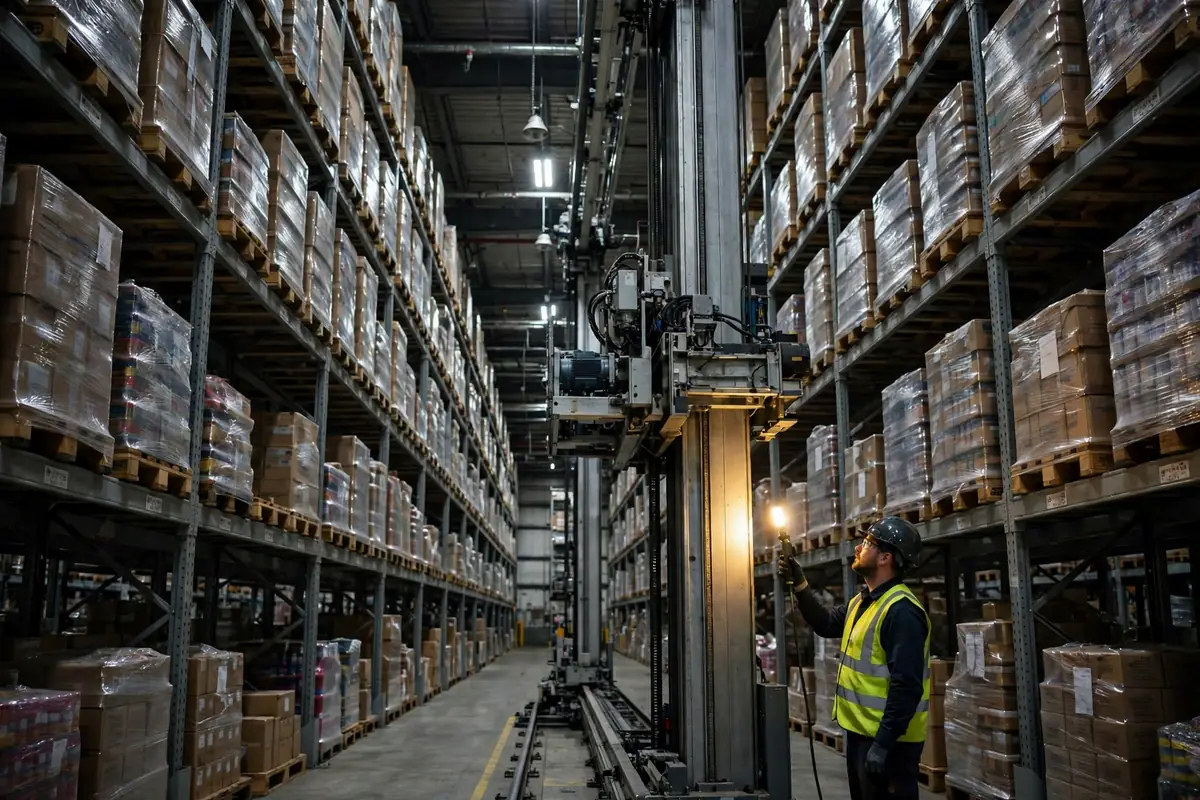
The third line is interference with moving equipment. Crane forks extend and retract, lifts travel, shuttles change levels. Every moving part has an envelope, and sprinkler pipework must keep clear of it. My hard rule on projects: at drawing review, the racking vendor, the crane vendor, and the fire contractor sit at the same table and walk every main and branch through the 3D model until interference points hit zero. That meeting costs time. Site rework costs far more.
A second case shows the other way of doing it. In 2024, an e-commerce warehouse in Dongguan retrofitted a 9-meter AS/RS with six aisles shipping roughly 8,000 cartons a day. They brought the fire design institute in before the racking tender, developed the sprinkler scheme in parallel with the racking drawings, and even rechecked the pump house supply capacity against the AS/RS scheme. Acceptance passed first time, saving at least six weeks against the Suzhou experience. And that time is not free: every week of delay means rent, labor, and a missed selling season, adding up to many times the cost of early coordination.
The Maintenance Trap: Installation Is Only the Start
Many owners think acceptance is the finish line. It is not. In-rack heads in an AS/RS get knocked by goods and clipped by handling equipment far more often than ceiling heads in a flat warehouse. A head knocked out of position sprays in the wrong direction, which is the same as not being there. Worse, product mix changes: metal parts this year, carton goods next year, and the fire risk moves while the sprinkler scheme stays frozen in the old assumption. That is a buried hazard.
So across the full life of an ASRS fire sprinkler racking system, the maintenance list must carry three items: regular inspection of in-rack head position and condition, a fresh fire-risk review whenever the product mix changes, and periodic pump and pipe pressure tests with records kept. It sounds bureaucratic. On the day of a real fire, those records are your standing with the insurer and the fire authority.
| Option | Fits | Cost feel | Main risk |
|---|---|---|---|
| Ceiling sprinklers only | Lower racks, hard-to-burn goods | Lowest | Slow response to low-level fire in tall racks |
| Ceiling + in-rack sprinklers | Tall racks, mostly combustible goods | Medium-high | Pipe-equipment interference, heavier maintenance |
| Ceiling + in-rack + zoned separation | Tall racks, high-value or highly combustible goods | Highest | Long design cycle, needs multi-party coordination |
The decision framework is straightforward: classify goods first, pick the layout that matches rack height, then close out with an interference check. Skip any step and you will pay for it as rework later.
So was the money well spent? Judge it with a single number: multiply the probability of fire-protection rework by the cost of one rework episode in time and money, and compare that against the cost of early coordinated design. In Suzhou, two months of rework cost enough to have paid for that coordination meeting ten times over. Run that arithmetic and you will know whether the early meeting was worth it.
By Da Liu, Automation Engineer