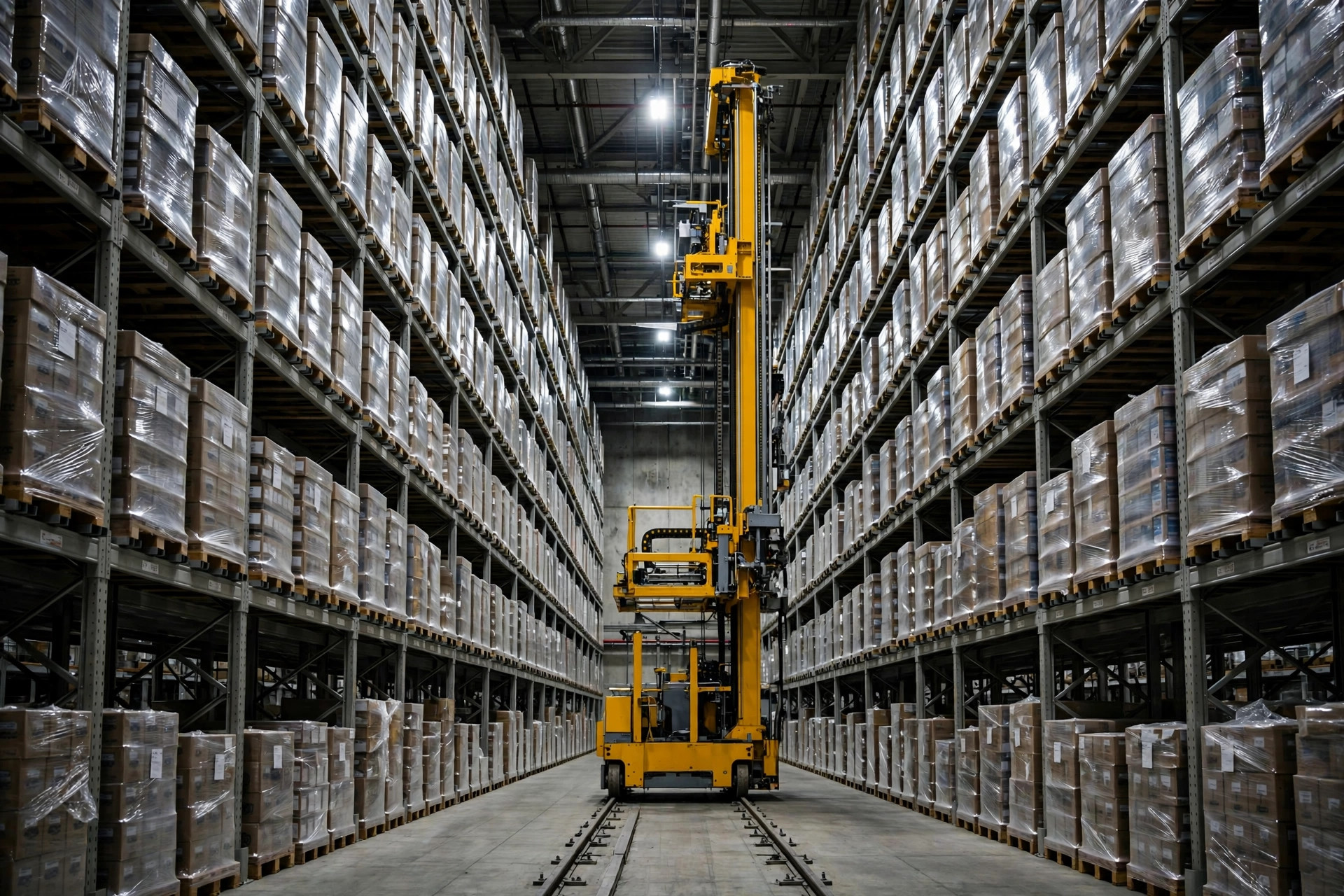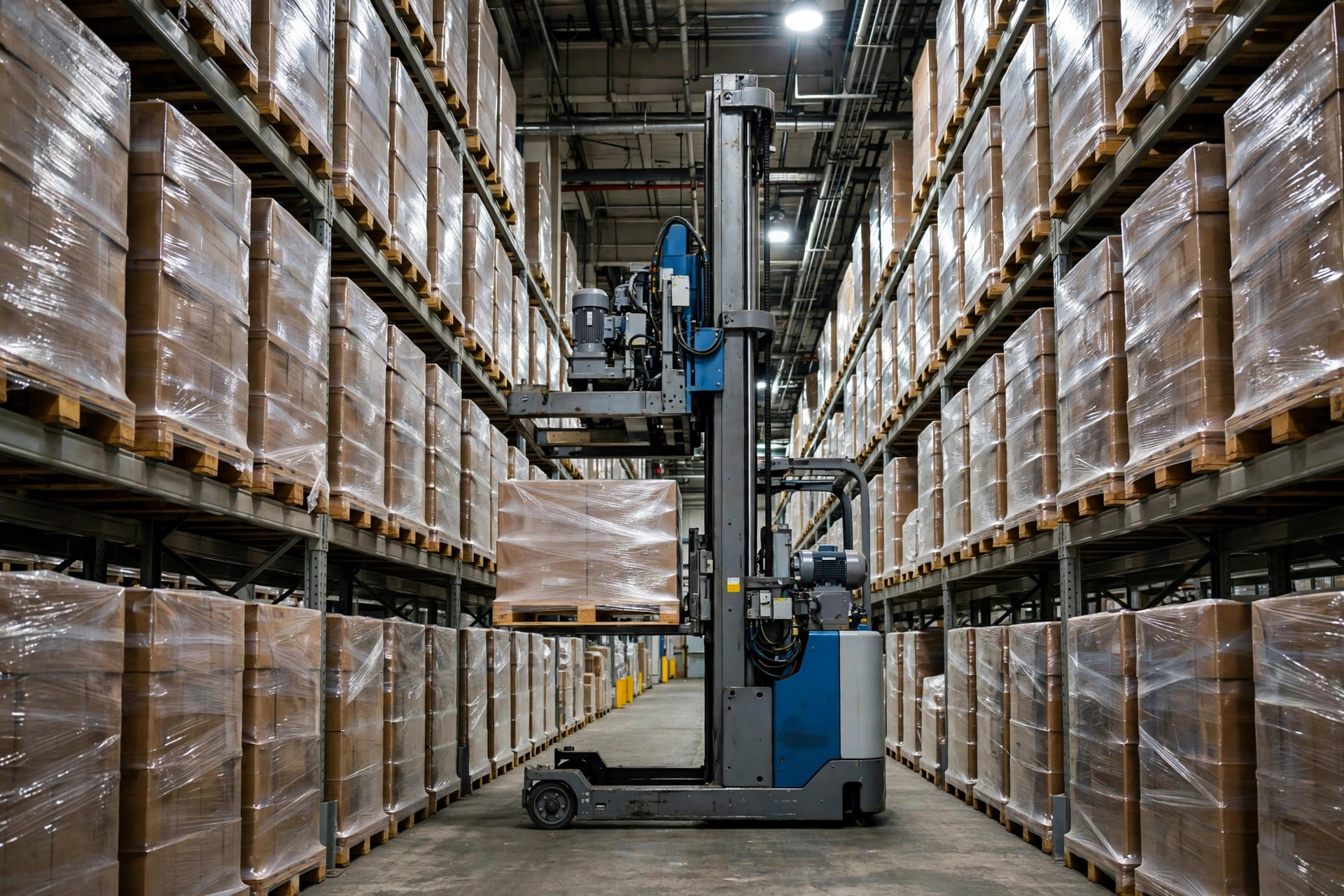
ASRS single cycle vs dual cycle stacker crane — I get asked this question at least twenty times a year, and every time the person asking carries the same expectation: a dual cycle does two jobs in one trip, so throughput should double, right?
Short answer: no. A dual cycle saves travel, not work. Simulation studies put the magnitude at roughly a 50% cut in travel time and a 10-15% gain in throughput. Half the travel gone, barely a tenth more throughput. The gap between those two numbers is the whole story, and it is worth doing the math.
Single Cycle vs Dual Cycle: Start With the Definitions
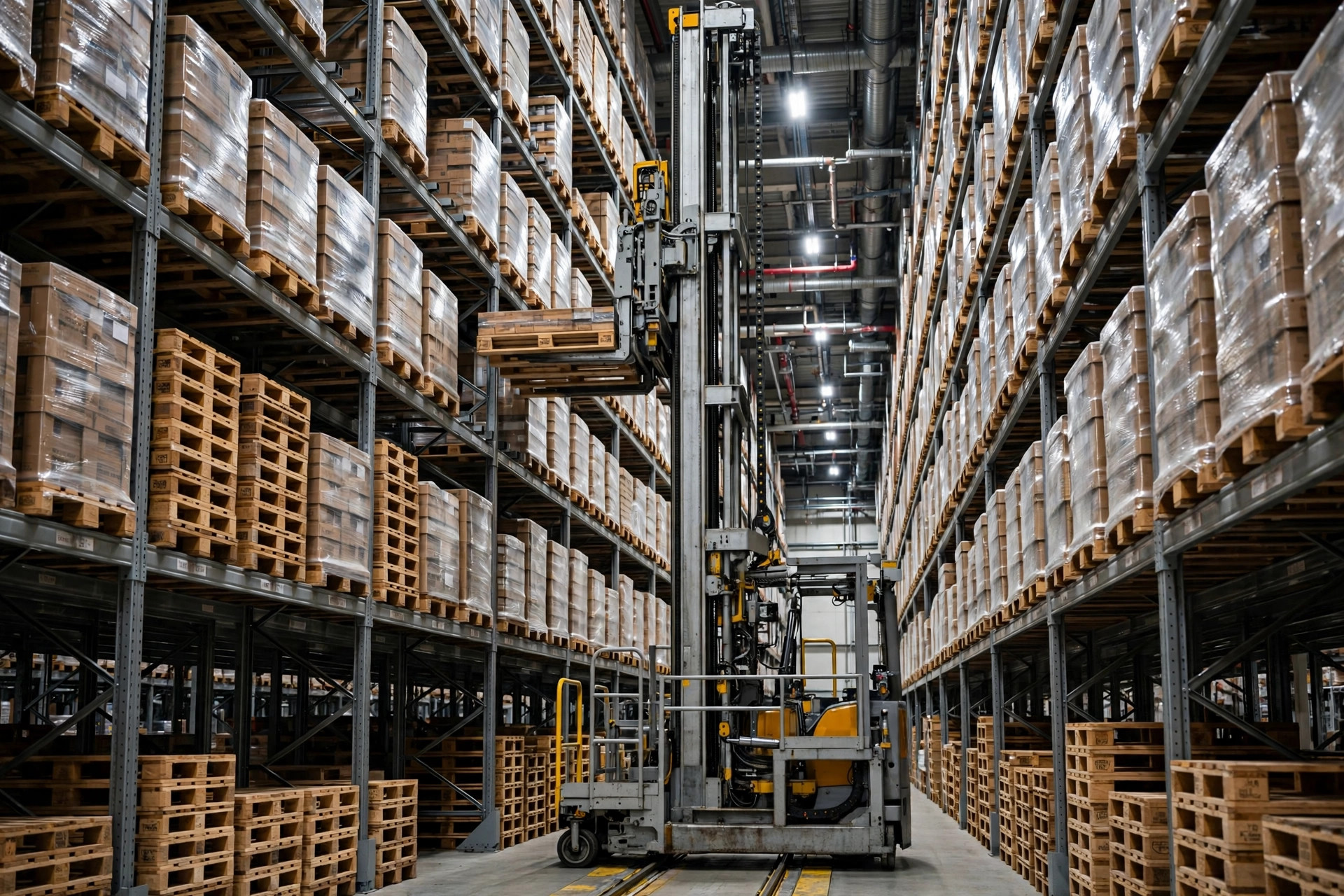
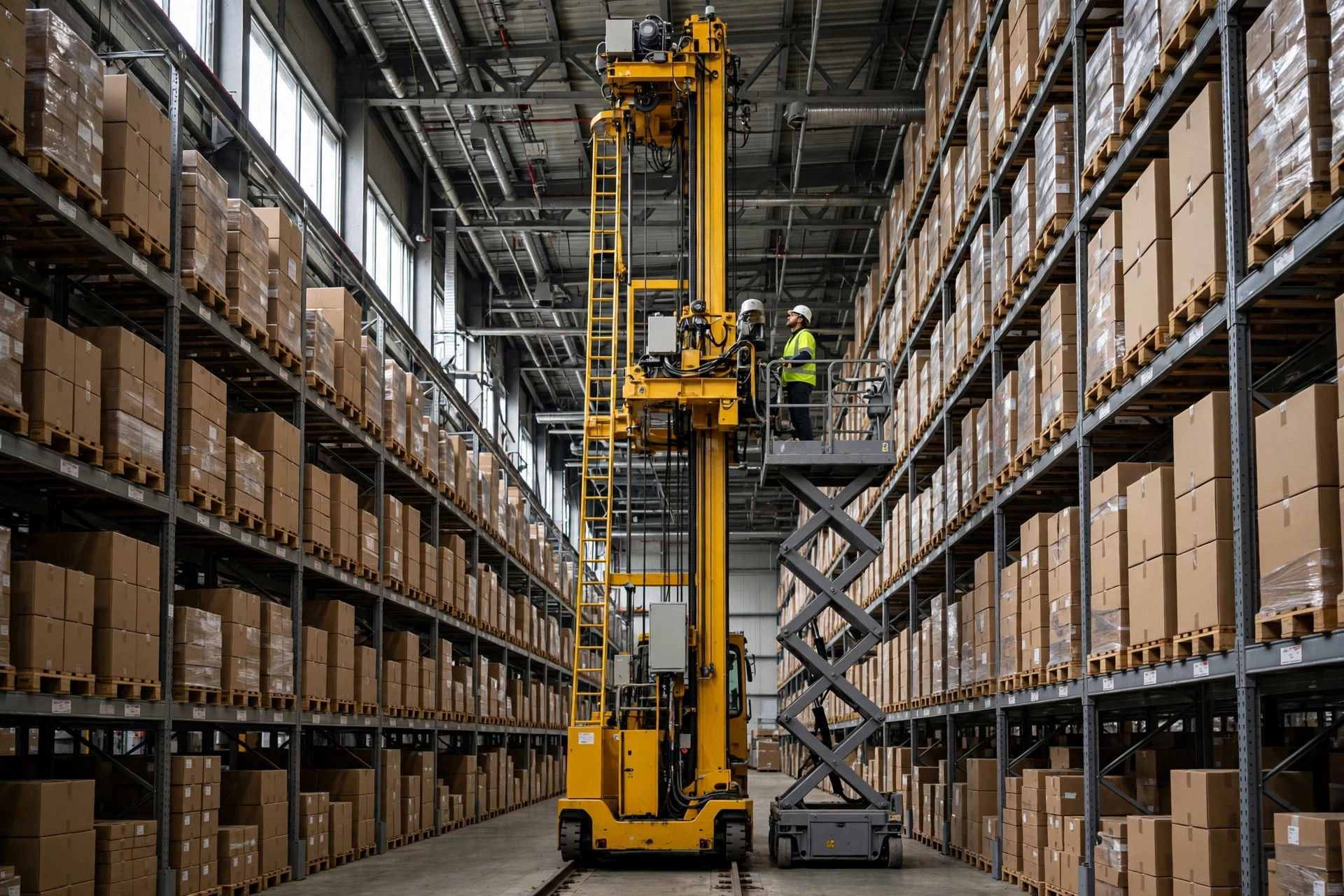
A single-command cycle does one job per trip into the aisle: either store one pallet or retrieve one pallet. The crane leaves the pick-up/deposit (P/D) station, travels to the target location, stores or retrieves the load, and comes back. Half of every round trip is empty running.
A dual-command cycle does two jobs in one trip: store one pallet, then retrieve another, then return to the P/D station. Think of it as a taxi that drops off one passenger on the way out and picks up another on the way back, instead of deadheading home.
The point most people miss: a dual cycle eliminates the second full round trip, not the two fork extensions, the two positionings, or the two load handoffs. The walking is saved. The work is not.
The Dual Cycle Time Budget: Where the Saved Seconds Actually Go
Take one store plus one retrieve and lay out the work. Two single cycles mean two round trips. One dual cycle means one round trip plus a short leg between the storage location and the retrieval location:
| Mode | Trips to finish one store + one retrieve | Travel involved |
|---|---|---|
| Two single cycles | 2 trips into the aisle | 2 full round trips, including one empty return and one empty outbound leg |
| One dual cycle | 1 trip into the aisle | 1 round trip + a short leg between the store and retrieve locations |
Time saved = one full empty round trip − the short leg between the two locations. That one equation contains the entire truth about dual cycles. The closer the store and retrieve locations are, the more you save. The farther apart they are, the less you save. If the store location sits at one end of the aisle and the retrieve location at the other, that "short" leg is nearly a full trip by itself, and the dual cycle buys you almost nothing.
So dual-cycle gains are not handed to you by the equipment spec sheet. They are handed to you by your slotting. The same crane, with well-paired locations, delivers 10% or more extra throughput. With poorly paired locations, dual cycle and single cycle come out nearly even. I say this to every client: before you ask how fast the crane runs, ask what your slot map looks like.
When Dual Cycles Make Things Worse
Dual cycles have three failure modes, and they are more common than the brochure suggests.
First, a low pairing rate. I worked with an auto-parts finished-goods warehouse in eastern China where inbound pallets arrived before 9 a.m. and outbound waves went out in the afternoon. The two peaks never overlapped. The WCS tried to pair tasks, which meant either inbound pallets waited at the P/D station for a retrieval task to show up, or the crane ran empty to fetch one. Measured pairing rate came in around 35%, the dual cycle barely ran, and the P/D station picked up a queue. When inbound and outbound are out of sync, dual cycle is a fake requirement.
The flip side exists too. A third-party cold-storage warehouse in eastern China runs inbound and outbound interleaved all day, so a retrieval task is usually waiting whenever a pallet reaches the P/D station. Pairing rate holds above 70%. Their WCS also does two small things: a row of pairing slots for fast-moving outbound SKUs next to the inbound zone, and mid-aisle dwelling instead of returning to the P/D station when idle. Throughput gain landed inside the 10-15% band from the literature — no doubling, but real money. Same equipment, pairing rates of 35% versus 70%: that is the difference between a fake requirement and a real one.
Second, mismatched locations. Dual cycles need the store location and the retrieve location to be close together. But inbound goods, slotted by ABC logic, belong deep in the rack, while the fast-moving SKUs being retrieved sit near the aisle mouth. The two are naturally in different zones. To force a pairing, the WCS either drops inbound goods into a nearby open slot close to the retrieve point — breaking ABC slotting and pushing future picks further out — or accepts a long inter-location leg that eats the savings. Either way, you are robbing one pocket to fill the other.
Third, aisle congestion. With one crane per aisle, dual cycle is pure gain. But when several cranes share an aisle, or cranes cross aisles, a dual cycle occupies the aisle longer per trip, and other tasks queue longer at the P/D station. In peak hours, once the aisle jams, every second the dual cycle saved gets paid back in queueing. Here is the counterintuitive judgment: dual cycle is not "faster once switched on." It is faster only when pairing rate, slotting, and congestion are all favorable at the same time.
How to Schedule It in the WCS: A Checklist You Can Use Tomorrow
Dual cycle is not an equipment switch. It is a WCS scheduling policy. Set it up with this checklist, run it for two weeks, then tune against the data:
- Set a pairing window, and do not wait forever. An inbound task at the P/D station waits for at most one retrieval task. Size the window to your cycle time. If no pairing shows up, dispatch it as a single cycle. Never let pallets queue at the station while the system hunts for a match.
- Let pairing override slotting dogma, in a small area. Reserve a small block of "pairing slots" near the inbound zone for fast-moving outbound SKUs, sized to cover peak-hour pairing demand. It does not take much space to move the pairing rate.
- Set a sensible dwell point. Between tasks, do not always send the crane back to the P/D station. Park it mid-aisle, near the next batch of high-frequency locations, and the empty leg of the next cycle shrinks immediately.
- Run mixed mode, not dual-cycle-only. Use dual cycles in low-congestion, high-pairing windows. Switch back to single cycles in peak congestion to keep the aisle flowing. Build this into the WCS as a rule driven by time of day and queue length, not as one global toggle.
- Watch the pairing rate, not the cycle count. Pairing rate = dual cycles / total cycles. Below 50%, your inbound-outbound rhythm or your slot layout does not support dual cycles. Fix the business rhythm first, then the equipment.
The Maintenance Trap: Dual Cycles Wear Out the Parts You Forget
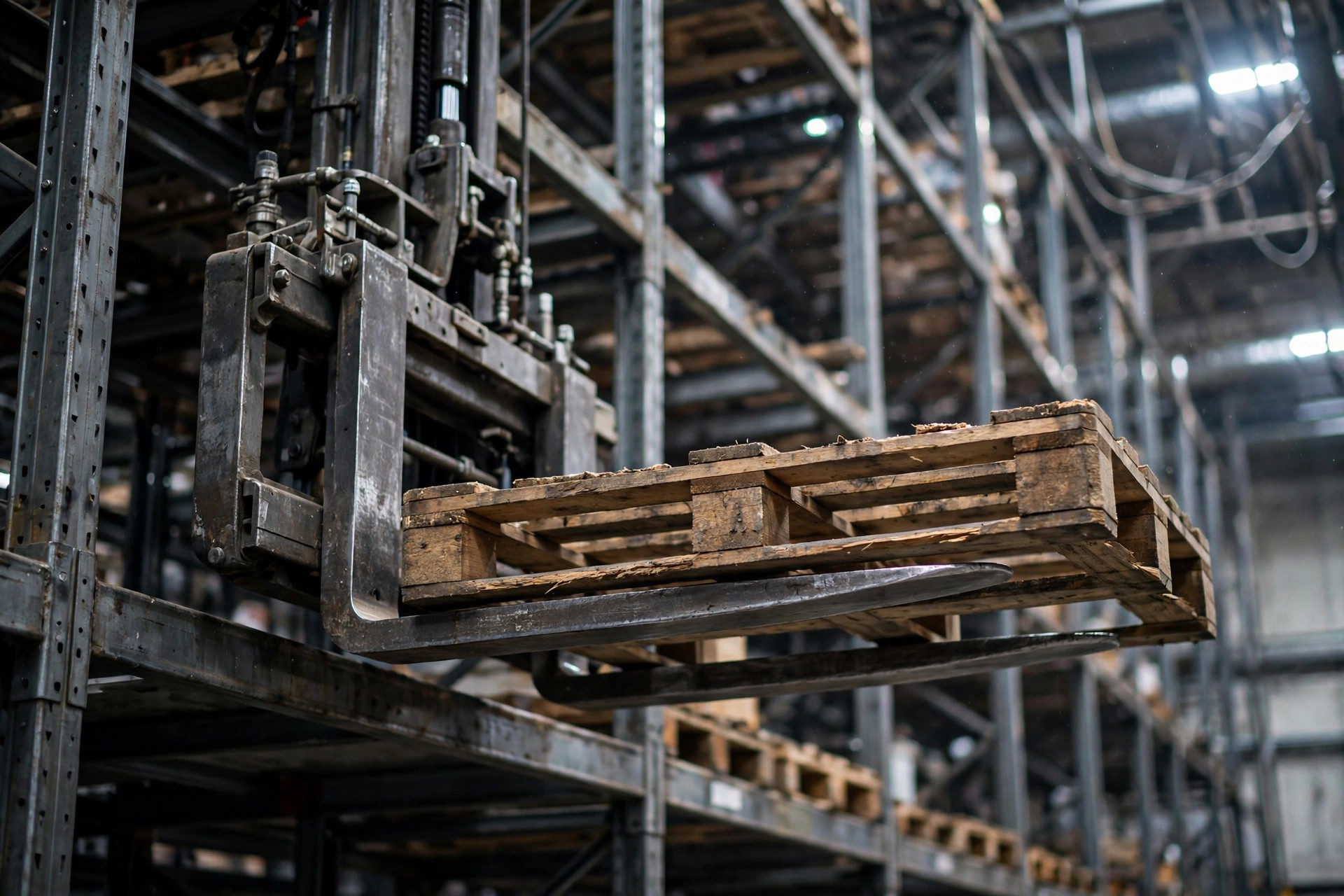
Two maintenance traps show up once dual cycles have been running a while. First, the fork extension mechanism. A dual cycle saves travel, not fork work — one dual cycle still extends and retracts the fork twice, exactly the same as a pair of single cycles. Set inspection intervals by fork-extension count, not by aisle trips. Count trips and you will undercount wear by half.
Second, the positioning system. One cycle now has to hit two different locations, so encoder drift and rail-joint wear stack their errors. If you see "occasionally misplaces a pallet, fine after a restart," check the encoder and the rail joints before you blame WCS logic. One more number to keep in mind: vendor specs for high-end unit-load cranes quote horizontal speeds around 787 feet per minute. The faster the crane, the tighter you need to watch positioning drift. Dual cycles also run motors and drives hotter, since loaded time is a bigger share of each cycle. In a warm warehouse, watch drive-cabinet temperature alarms instead of waiting for a trip.
So when someone asks me the ASRS single cycle vs dual cycle stacker crane question, I give them one number: their warehouse's dual-cycle pairing rate. If it holds above 60% for two straight weeks, the dual cycle is real money. If it sits below 50% long term, do not blame the crane. Go fix the inbound-outbound rhythm and the slot layout — that is where the saved seconds actually come from.
By Da Liu, Automation Engineer