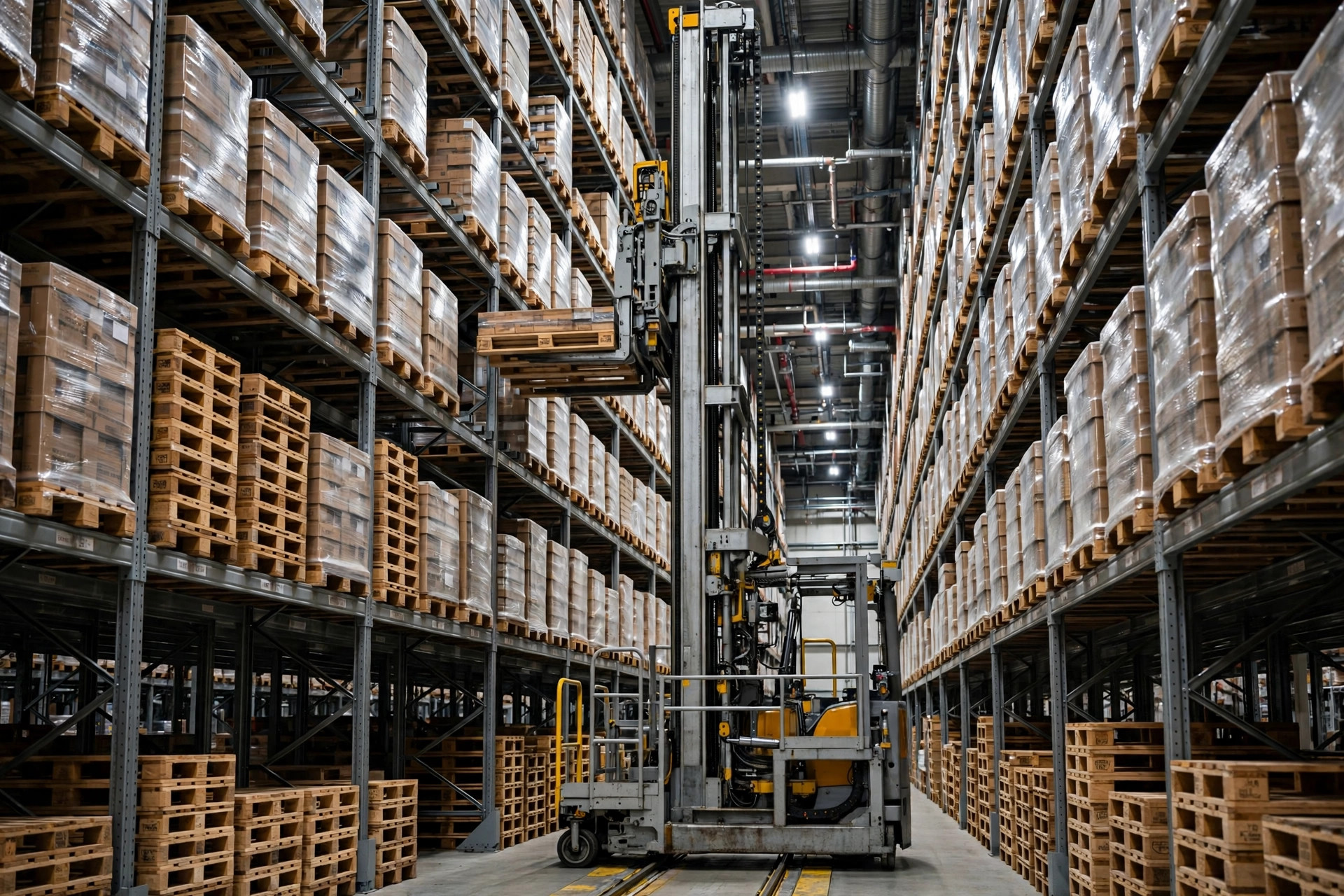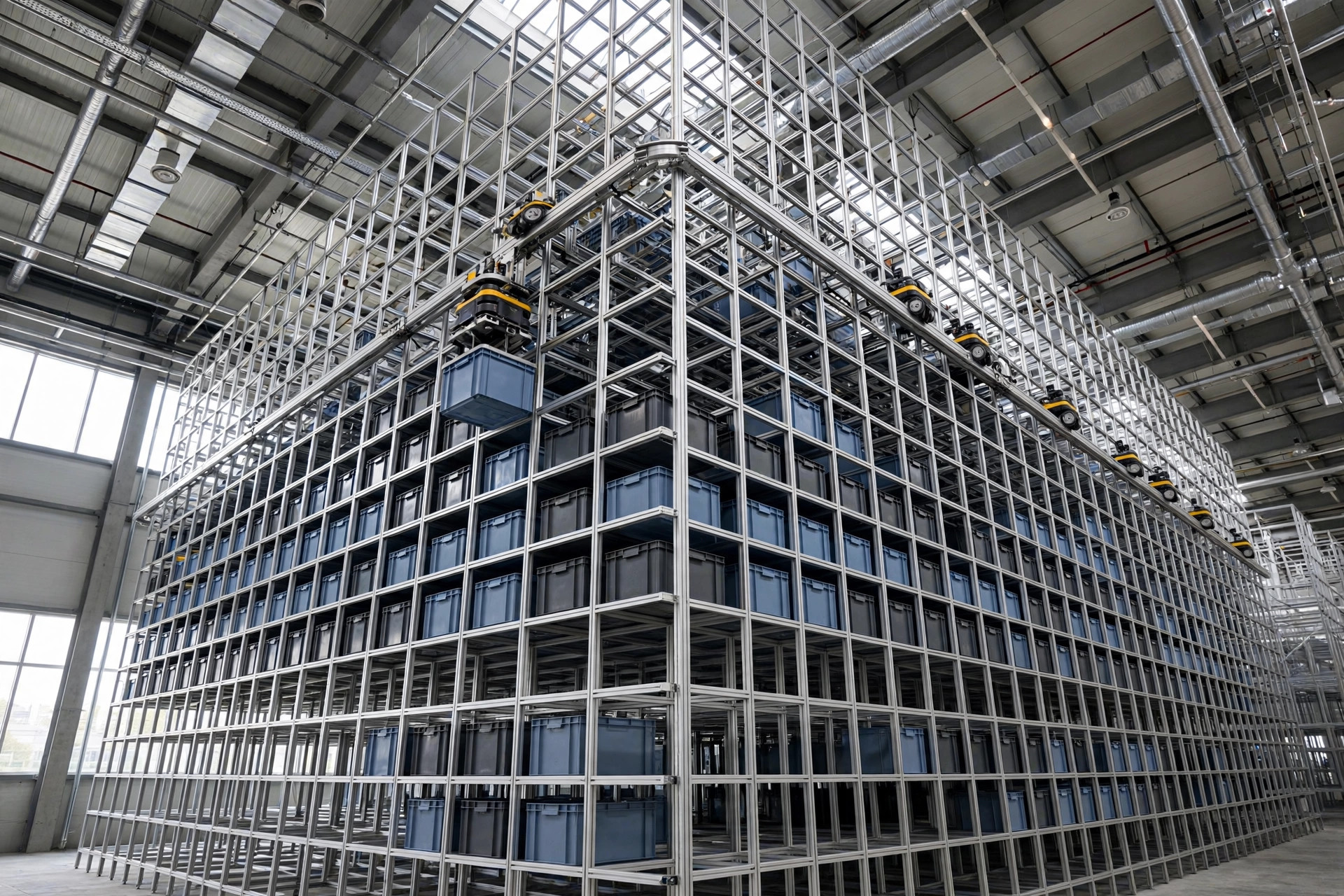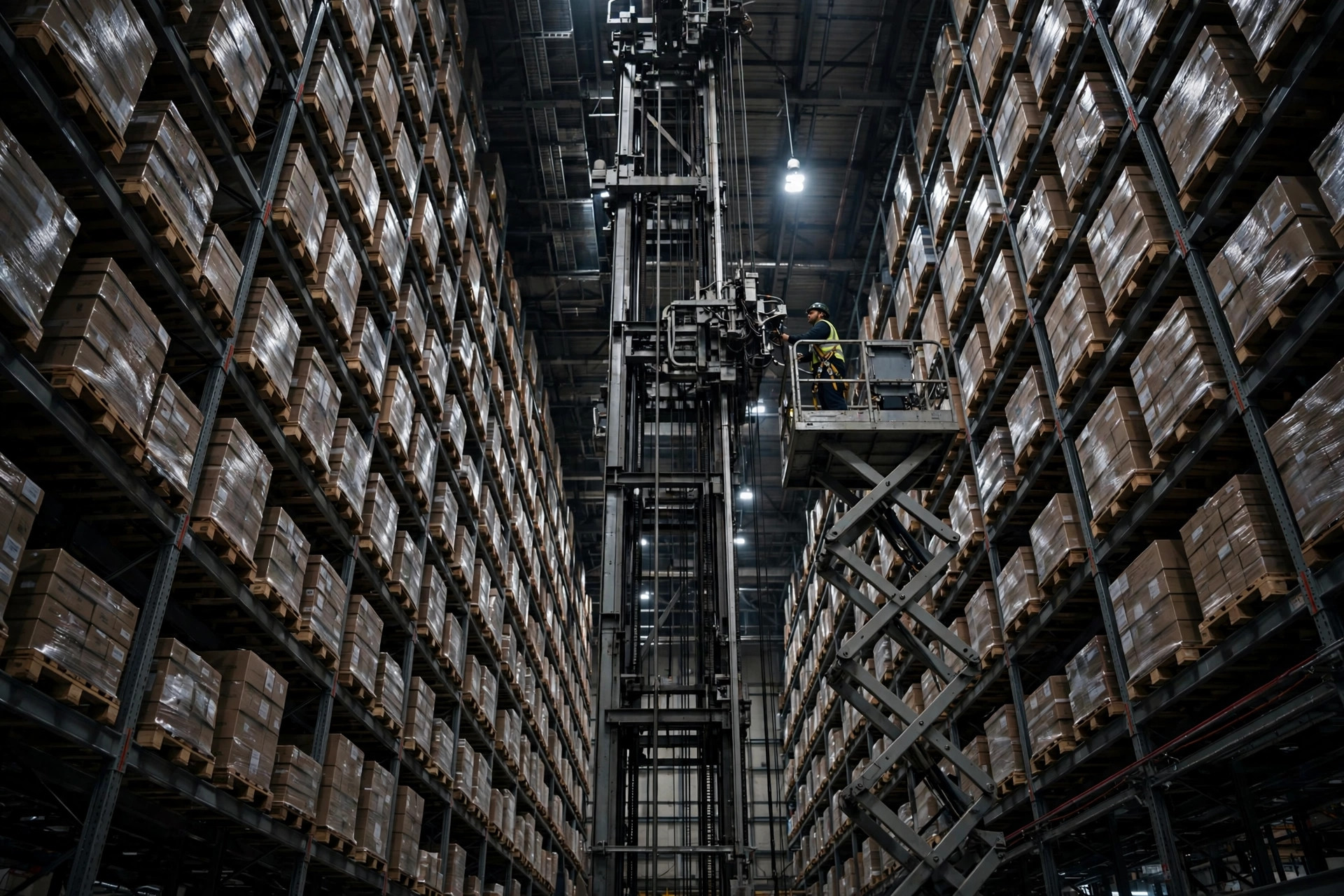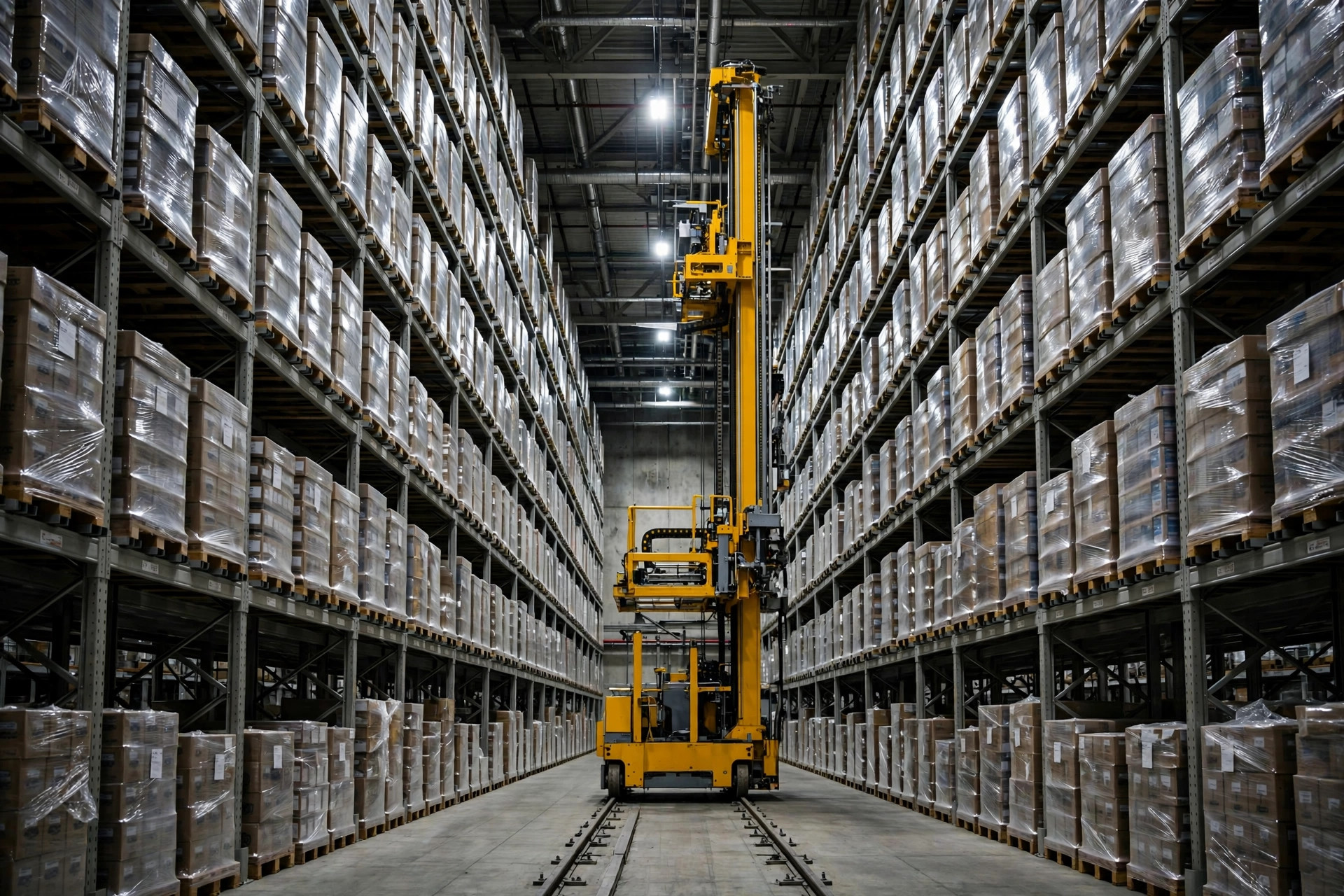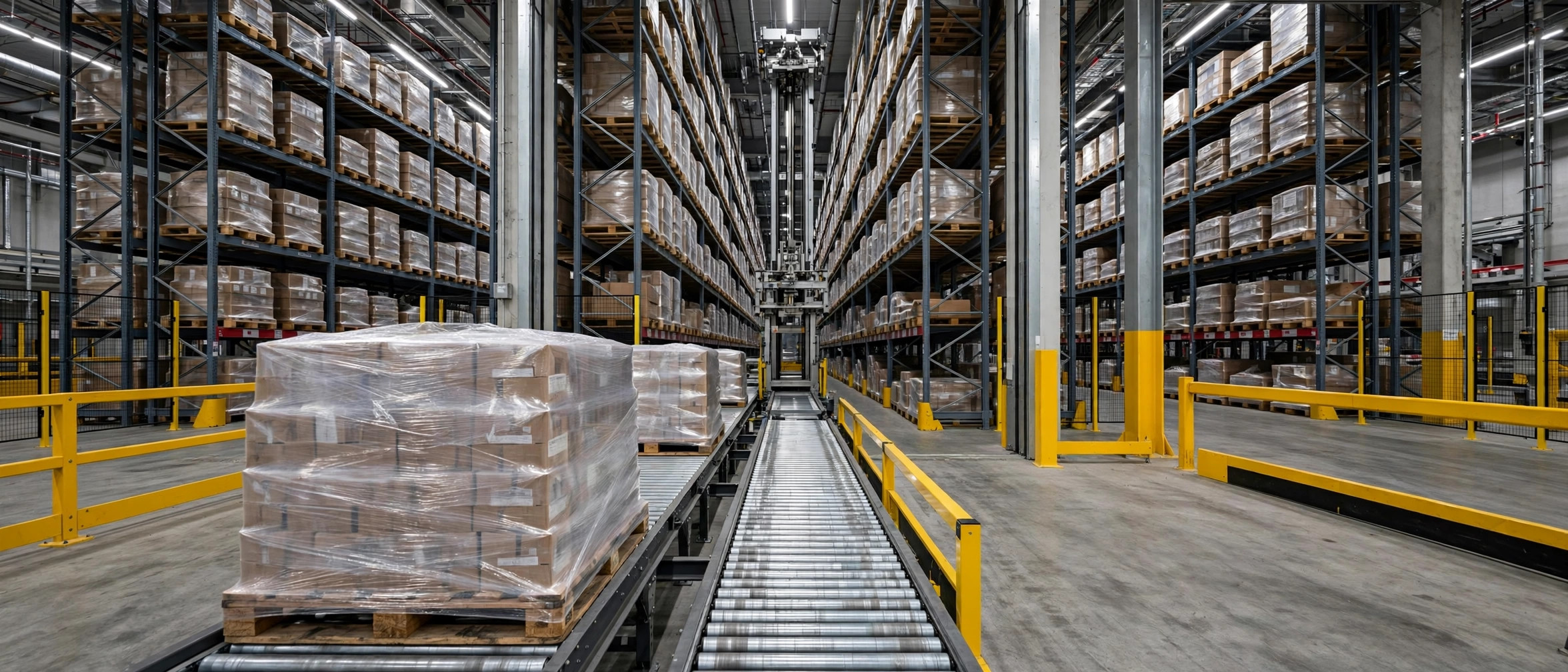
I'm telling you, last winter I hauled a load down to a cold-chain automated warehouse outside Langfang, and that trip opened my eyes. Minus six, seven degrees out, I rolled in at 4 a.m. to get unloaded. The truck ahead of me finished, my turn came, the forklift guy dropped my 24 pallets onto the conveyor, and I figured — one hour, tops. Three and a half hours later, I was still sitting in my cab.
Nobody was slacking. The pallets on the conveyor just weren't moving. I got out to take a look: a dozen pallets backed up in a line, and the one at the front had loose stretch wrap sticking out a couple of centimeters. It tripped the profile-check gate and the whole line stopped dead. That dock had two stations total — one was occupied by this "sick" pallet, the other was juggling inbound and outbound. And the funniest part? The stacker crane inside — a gleaming machine dozens of meters tall — was just sitting there idle. No pallets to pick up, nothing to do. I chatted with the shift lead, and he just shook his head: "The crane can run several cycles a minute, but if the dock can't feed it, who is it running for?"
Fifteen years behind the wheel, I've been in and out of more automated warehouses than I can count, and eight times out of ten the problem is the same spot. Everybody spends the big money on the stacker crane — comparing travel speeds, acceleration rates, arguing over single-cycle seconds in meetings. But when peak season hits, what actually jams is always the dock station: the conveyor feed rate, the pallet buffer at the station, and those reject pallets that show up out of nowhere. Get those three wrong, and your fancy crane is just expensive decoration.
How a Dock Station Dies: Two Ways I've Watched It Happen
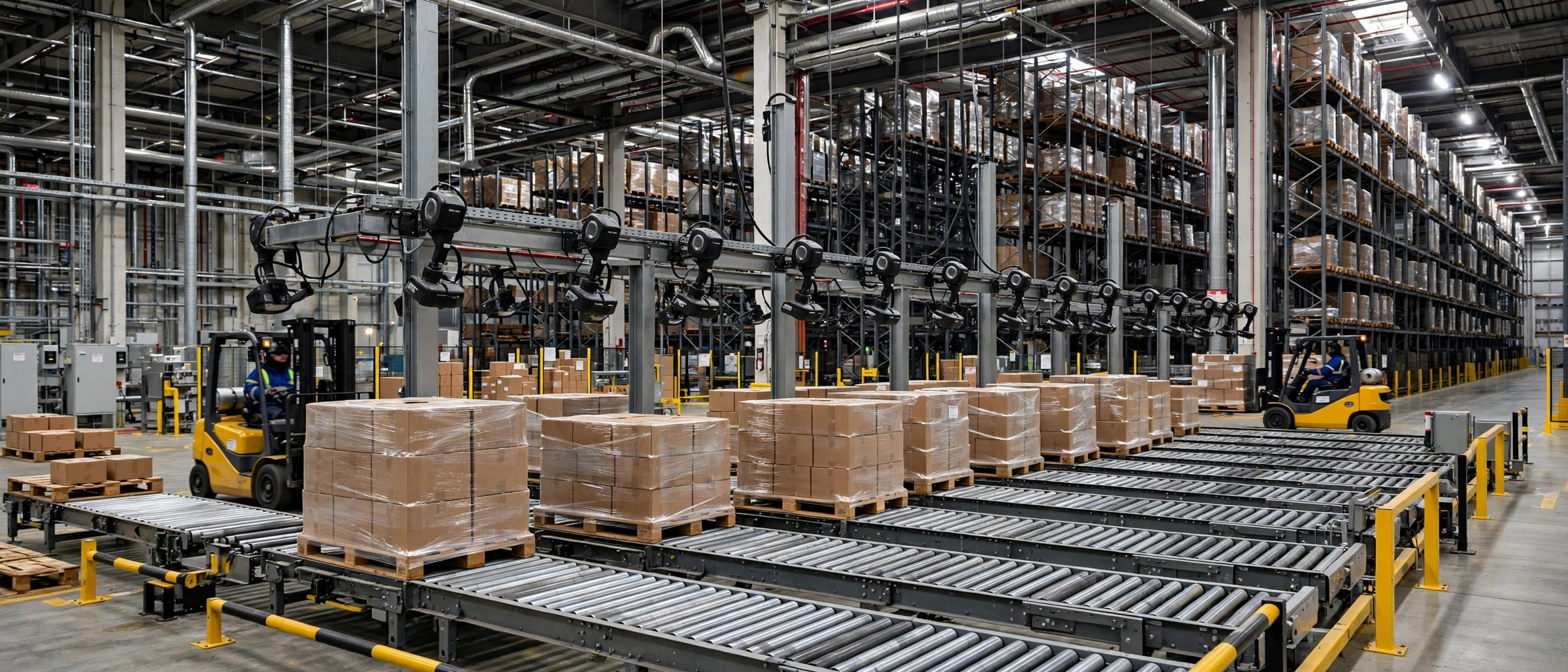
The first way to die is starvation. Before the big mid-year sale in 2025, I delivered to a huge e-commerce fulfillment center near Suzhou — eight crane aisles, seriously impressive machines. But during the outbound rush, the conveyor was running half empty. The cranes would come back from the racks with goods picked, and there'd be no pallet waiting at the station to set them on. The outbound conveyor just spun empty. I asked the dispatcher what was going on. Two outbound stations, he said. Forklifts hauling pallets over from the sort area were already slow, and each station needed labeling and verification — twenty, thirty pallets an hour per station, tops. Eight cranes could push four, five hundred pallets an hour. The dock was feeding them a fraction of that. You can't cook without ingredients.
The second way to die is choking. Back to Langfang: one pallet with loose wrap, two or three centimeters over width, trips the check gate, whole conveyor halts. Standard procedure says a reject like that goes to the reject spur for manual handling. But that day the reject spur was already occupied, and the maintenance guy spent forty minutes climbing around fixing it. One choke, a dozen pallets backed up behind it, and the cranes inside had inbound tasks queued up that simply couldn't get in. See the pattern? The question was never how fast the crane runs. It's that the dock — this narrow throat — gets blocked by a single bad pallet, and the entire line stops with it.
Doing the Math: Matching Crane Cycle, Conveyor Pace, and Station Count
This is really just arithmetic. Let's walk through it.
A typical aisle stacker crane does a single cycle — one store or one retrieve — in roughly 30 to 40 seconds. In theory that's close to 90 pallets an hour. But that's the brochure number. Real life has acceleration, deceleration, and waiting on tasks. Knock off thirty percent and you're looking at a solid, honest 60 pallets an hour. Double cycles (store one, retrieve one in the same trip) can hit 80 to 100, but let's work with the conservative 60.
Now the station. A pallet arriving at the dock goes through three checks: profile detection (too tall or too wide gets rejected), weighing, and barcode reading — then it waits for the crane to come take it. Total time a pallet spends occupying a station: about two to three minutes. So one station moves maybe 20 to 30 pallets an hour.
Now the picture is clear. One crane needs 60 pallets an hour. One station supplies 20 to 30. So a single crane needs at least two to three inbound stations — and the same again on the outbound side. And that's the perfect-world number. Real warehouses need margin: equipment needs maintenance, reject pallets need handling, peaks need absorbing. My rule of thumb is to multiply by 1.3.
Here's the field formula I give to warehouse managers:
Number of dock stations = (crane target throughput per hour, in pallets) ÷ (single station actual throughput per hour, in pallets) × 1.3
Plug in our numbers: 60 ÷ 25 × 1.3 ≈ 3.1, round up to 4 stations — split between inbound and outbound, or shared but time-sliced. Go look at the AS/RS sites that always jam up: nine times out of ten, nobody ever ran this math. Eight cranes, two stations — no miracle can feed that.
One more number people forget: the conveyor itself. Pallet conveyors typically run 0.1 to 0.2 meters per second — call it 6 to 12 meters a minute. If it's fifty or sixty meters from the truck dock to the station, a pallet spends five to eight minutes just traveling. Those pallets in transit are your natural buffer. Too short a conveyor and the station starves; too long and pallets queue up on the line, so one bad pallet backs up the whole stretch. Conveyor length has to be sized to the same rhythm — longer is not automatically better.
And here's a loss most people never account for: station changeover. When inbound and outbound share a station, every direction switch means clearing the conveyor and repositioning the crane — easily a minute or two gone per switch. Dozens of switches a day, and you've thrown away an hour or two of capacity. The control system matters too: a good WCS pushes tasks to the crane ahead of time and pre-stages inbound pallets at the station so the crane never waits; a dumb one leaves the crane sitting ten seconds between tasks waiting for its next instruction. Ten seconds, hundreds of times a day — it adds up to real money. Matching throughput isn't just counting hardware. The dispatch logic has to keep up.
Three Pieces of Honest Advice for Shippers and Warehouse Folks
First, size the dock stations before you pick the crane. Don't get the order backwards. Too many projects let the equipment vendor rave about crane specs while the station count and reject handling get a passing mention in the proposal. Once the building is up, adding stations is brutally expensive — civil work, conveyors, controls, all of it. Before you sign, run the formula above and write the station count into the technical agreement. If you can, make the vendor simulate your actual inbound and outbound waves — not the brochure numbers, but a simulation with reject rates and peak multipliers baked in. Whatever station count comes out of that is the real number.
Second, reject pallets need their own dedicated spur — and one isn't enough. Oversize, overweight, damaged, unreadable barcode — every warehouse gets them. The percentage is small, but one bad pallet at peak hour chokes the whole line. Size the reject spurs generously and put them where manual handling doesn't block the main line. If Langfang had had an empty reject spur that morning, those forty minutes of downtime would never have happened.
Third, separate inbound and outbound stations; don't cheap out by sharing. Sharing sounds efficient until the schedule gets complicated: inbound pallets waiting to go in, outbound pallets waiting to come out, the system flipping back and forth, both sides slowing down. Separated stations each do their own job, and the rhythm is easy to tune. If you must share, at least guarantee dedicated time windows during peak — don't leave the system torn between two directions.
At the end of the day, an AS/RS is like a long-haul rig: the strongest engine in the world won't move you an inch if the fuel line is clogged. Outsiders stare at the towering crane; insiders watch the dock. Next time you're delivering to an automated warehouse, don't just admire the crane zipping around — glance at the station. More than five pallets queued up, and that site's rhythm is out of tune.
There's an old saying among us drivers: put your money where the work gets done. On an AS/RS project, a dollar spent on dock stations beats a dollar spent on a faster crane, every single time.
By Shifu Zhao, Trucking Veteran (15 yrs)