Let me start with the conclusion: an ASRS stacker crane maintenance window is not downtime to hide. It is the price of keeping the aisle running. The question is never whether you can avoid stopping the crane. The question is which aisle, how long, and what you give up in return. Every maintenance plan that claims zero impact is hiding the impact somewhere else, usually in overtime, in backlog, or in the next breakdown.
The Night an Aisle Stopped on Its Own
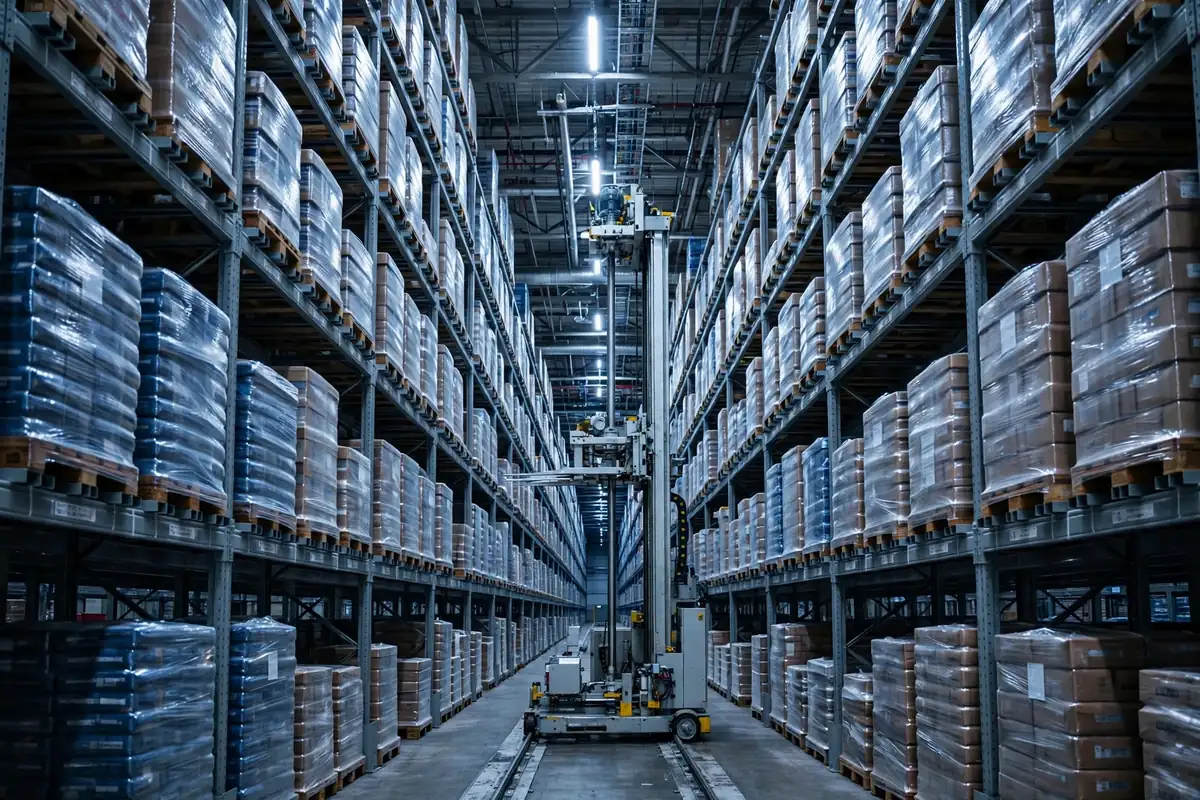
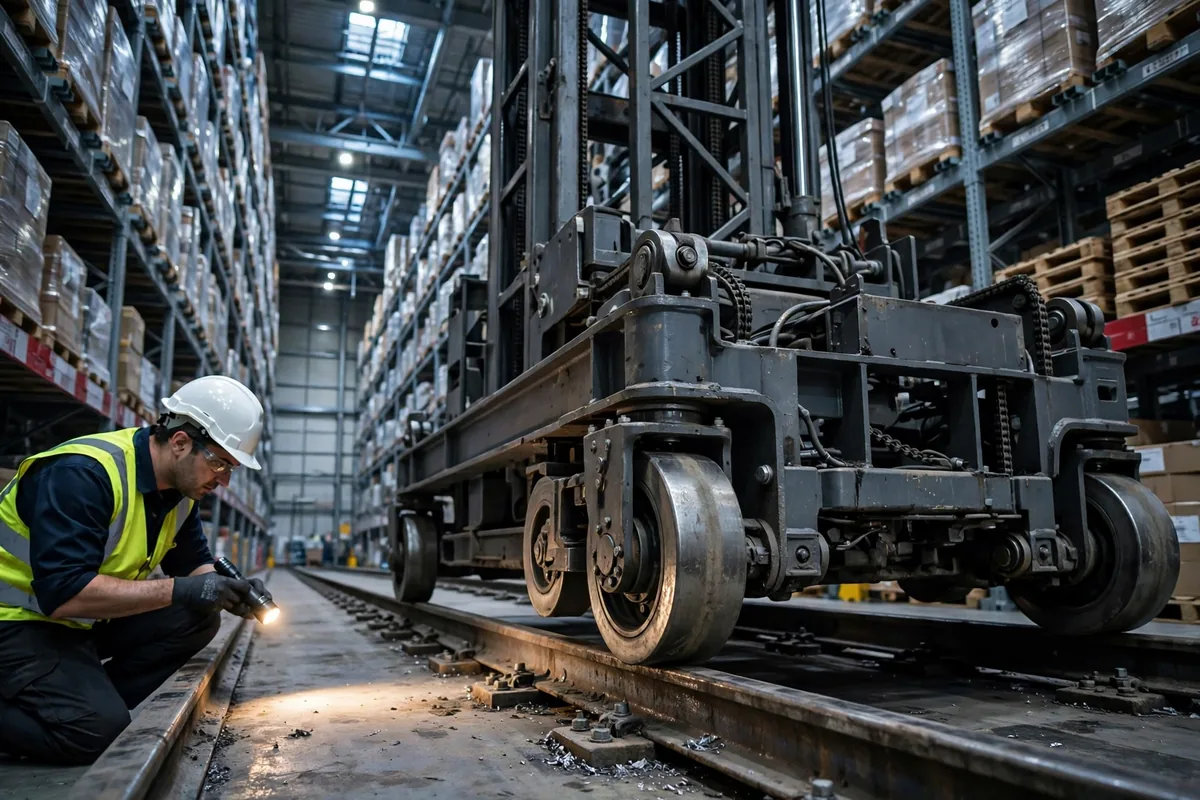
I have seen too many warehouses treat maintenance as a calendar event and breakdown as bad luck. A few years ago I visited an automated warehouse in Ohio with four stacker crane aisles, running roughly 1,800 pallets a day. The maintenance team had been postponing a scheduled rail inspection for months because the aisle was always busy. One Tuesday morning, the crane stopped mid-aisle with a pallet still on the fork. The aisle stayed down for most of the day. The other three aisles absorbed the work, overtime piled up, and the backlog took two days to clear.
Say it plainly: that breakdown was not an accident. It was the maintenance window they had skipped, collected with interest. The planned window would have taken about four hours on a Saturday. The unplanned stop took a full day, plus two days of catch-up. This is the first trade-off every warehouse manager should write down: planned downtime is cheap, unplanned downtime is expensive, and the difference is not the hours, it is who controls the timing.
A second warehouse in Texas handled the same problem differently. Same scale, four aisles, similar volume. Their rule was simple: one aisle per month, on a fixed Saturday, no exceptions unless a customer shipment was at risk. They kept a small buffer of fast-moving stock outside the automated area, so a single aisle out of service never stopped outbound flow. When I asked the operations manager whether the monthly window hurt throughput, he shrugged and said the window was the reason throughput stayed stable. That is the second side of this story. Maintenance windows do not reduce capacity. They protect it.
An ASRS Stacker Crane Maintenance Window Has Three Prices
The mistake most plans make is pricing a maintenance window in hours only. Hours are the cheapest part. The real prices are threefold.
First, the capacity price. Taking one aisle out of four does not cut throughput by a quarter, because the remaining aisles rarely run at full speed under surge load. In practice, the loss depends on how much of your fast-moving stock sits in that aisle. If your hottest SKUs are concentrated in one aisle, losing it hurts far more than the arithmetic suggests. Spreading fast movers across aisles is not a storage detail. It is a maintenance strategy.
Second, the labor price. A night window looks cheap on paper until you count the people. Night work needs a supervisor, a safety observer, and someone who can restart the system if the crane faults on re-entry. If the window runs over, the morning shift starts behind. The cheapest window on the schedule is often the most expensive one in payroll and morale.
Third, the risk price. Deferring work does not delete it. A worn rail, a tired cable chain, a sensor drifting out of alignment, each one quietly raises the odds of an unplanned stop. The trade-off table looks like this:
| Option | What you pay | What you risk | | Fixed monthly window | A few planned hours, some overtime | Very little | | Quarterly big window | One long planned stop | Drift between windows | | Run until it breaks | Nothing today | A full day, plus backlog |
Notice the pattern. The option that costs nothing today is the one that costs the most later. That is true of almost every piece of warehouse automation I have worked with, and stacker cranes are no exception.
Keeping the Aisle Running During an ASRS Stacker Crane Maintenance Window
So how do you service a crane without stopping the warehouse? You do not. You stop one aisle, and you design the warehouse so one aisle can stop. That distinction matters, because it changes where the work happens.
Start with the calendar. Pick a fixed window and protect it the way you protect a customer ship date. The Texas warehouse used one Saturday a month. Another site I know uses two short weeknight windows instead, because its weekend volume is too high. Either pattern works. What does not work is a window that moves every time someone asks for the aisle back. A movable window is a cancelled window.
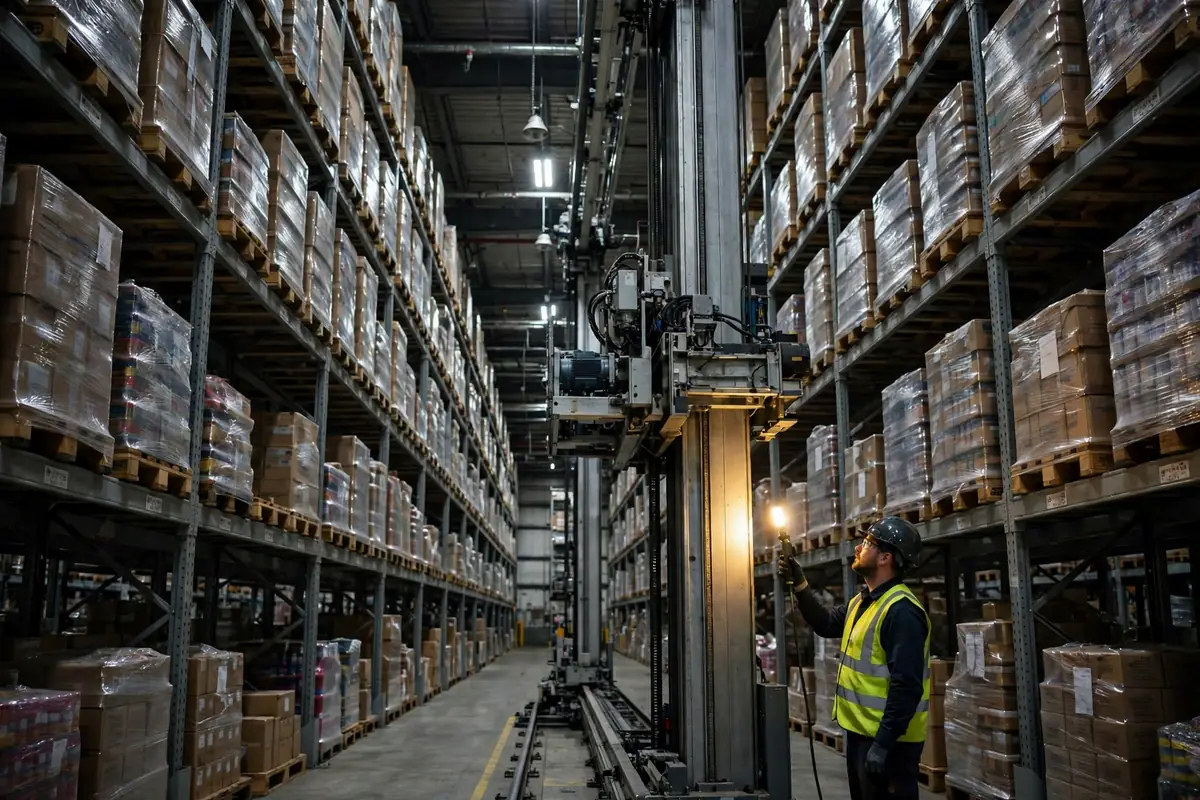
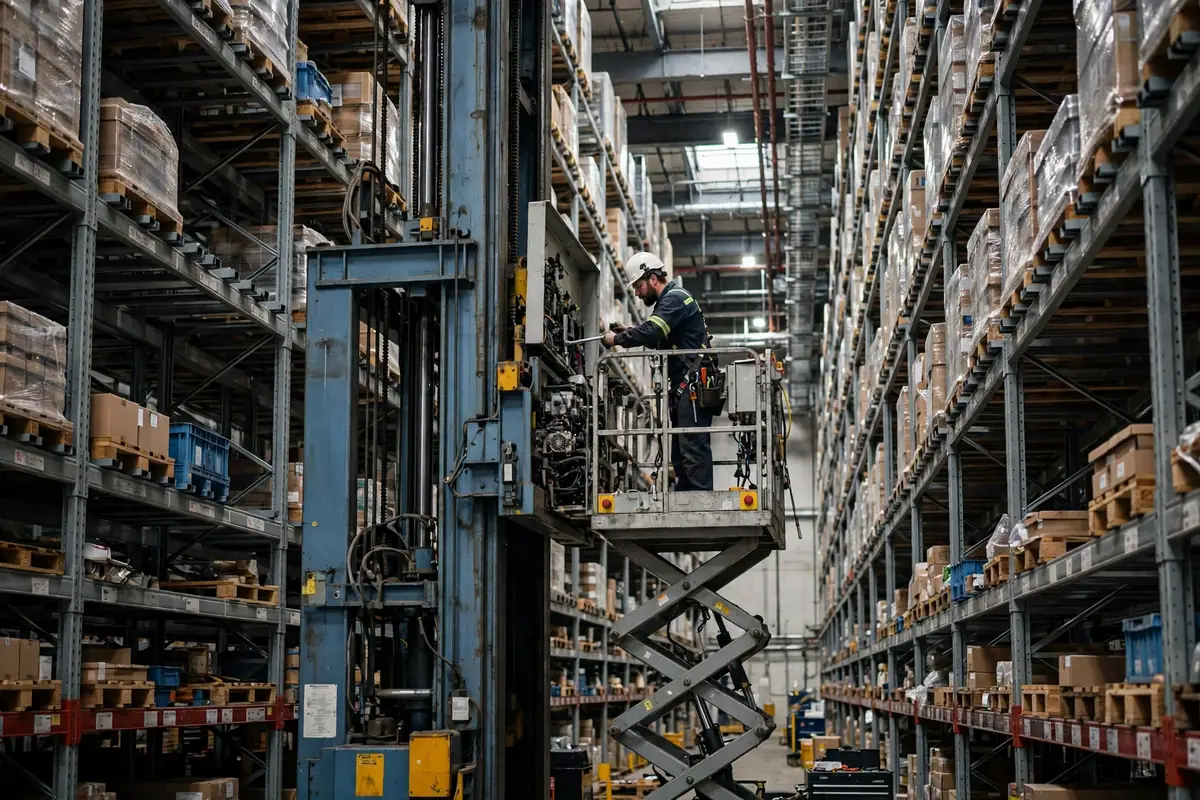
Next, split the work by risk. Rail cleaning, sensor checks, and lubrication fit a short window. Cable chain inspection, drive checks, and load testing need a longer one. Do not cram a long job into a short window and hope the crane restarts cleanly. A window that overruns into the morning shift costs more than a second window would have.
Finally, keep a buffer where it counts. A small manual pick face for the fastest movers, a staging lane for inbound, a pre-staged outbound wave, any of these buys you hours when an aisle is down. The buffer is not waste. It is the insurance that lets the maintenance window stay a window instead of becoming a crisis.
Every window should also close with a work order: what was replaced, what was found, what to watch next time. Too many warehouses file a one-line note saying it was fixed, and the next technician starts from zero. The more specific the work order, the shorter the next window, because nobody has to re-diagnose an old problem. That is where maintenance compounds. Over a year of good records, breakdowns get rarer, not more frequent.
Here is the counterintuitive part: the warehouse that maintains most aggressively is often the one that looks least busy doing it. No drama, no heroics, no all-night recovery. Just a crane that stops on schedule, gets serviced, and comes back. If your maintenance program keeps producing emergencies, the program is not too strict. It is too loose. Ask yourself one question before the next window: if this aisle stopped on its own tomorrow, would we be ready? If the answer is no, the window is not a cost. It is the cheapest readiness you can buy.
By Lao Mi, Supply Chain Veteran (20 yrs)